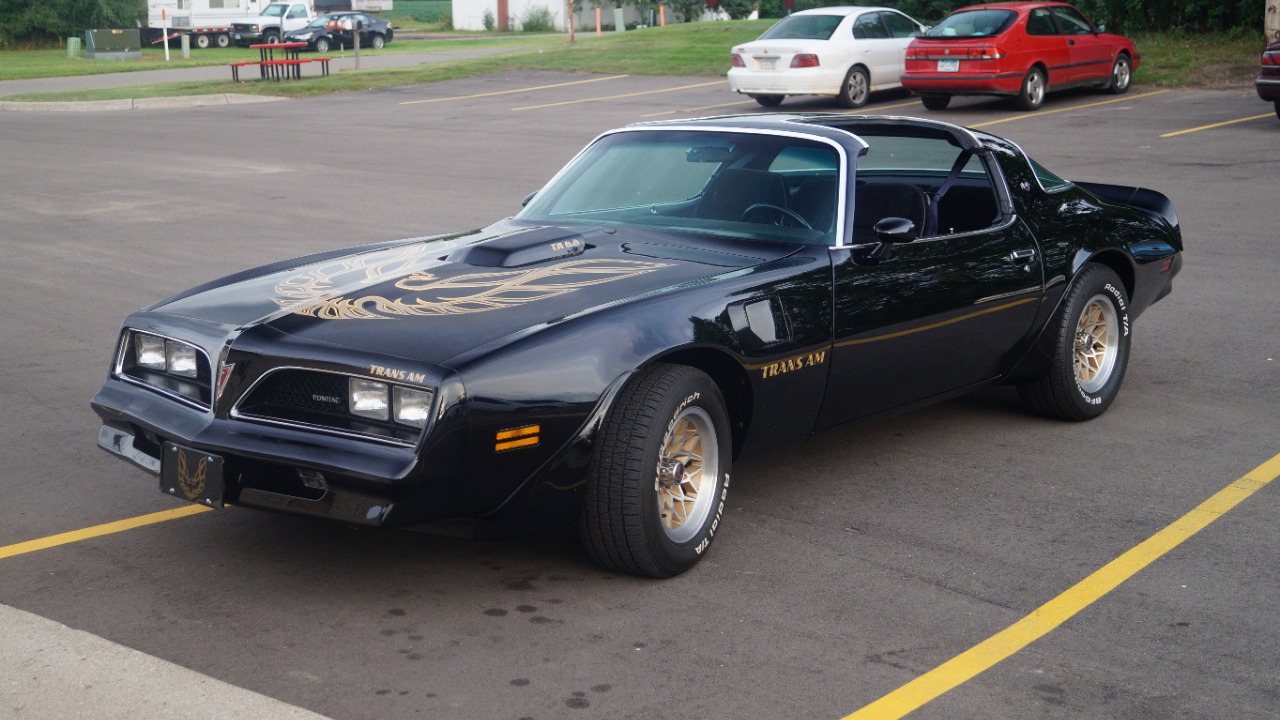
The 1978 Trans Am WS6 arrived just as the classic muscle era was running out of road, yet it refused to fade quietly into history. You see it in the stance, the shaker hood, and the way the car tried to trade crude straight-line bravado for real finesse. In a decade defined by fuel crises and regulations, this Trans Am became a last loud statement that American V8 performance could adapt rather than surrender.
By the late 1970s, most of the big names from the Muscle Car Era and your childhood posters had either shrunk, slowed, or disappeared. The WS6 version of Pontiac’s Trans Am did something different: it sharpened its handling, leaned into its movie-star image, and turned into a bridge between old-school muscle and the more balanced performance cars that would follow.
The late‑70s squeeze on muscle
To understand why the 1978 Trans Am WS6 feels like a final act, you have to look at the pressure closing in on performance cars. Automakers were redesigning and downsizing coupes like the Monte Carlo, which was deliberately lightened to satisfy Corporate Average Fuel Economy rules and drivers’ demands for better mileage, a shift that pulled the market away from big cubic inches and burnouts toward comfort and efficiency instead of raw speed, as seen in the reworked Monte Carlo. Pontiac felt the same squeeze, trimming engines in models like the Grand Prix in response to emissions rules and Corporate Average Fuel Economy standards, which pushed the brand toward smaller, thriftier powerplants beginning in 1978 and away from the big torque monsters that had defined its image, a shift documented in the way Pontiac reworked its lineup.
At the same time, the brand’s heritage was rooted in a long line of V8 performance machines, from The GTO and Pontiac GTO to the Ventura and Bonneville, all of them part of a culture where There was no shortage of muscular Pontiac V8s even if the company never actually built a traditional big block V8, a technical nuance that still surprises some fans when they dig into the engine myth. Against that backdrop of shrinking displacements and tightening rules, the 1978 Trans Am WS6 stood out because it tried to keep that V8 legacy alive while acknowledging that the world around it had changed.
Why the 1978 Trans Am WS6 mattered
By 1978, the Pontiac Trans Am had become more than just another performance option, it was a cultural icon that you could recognize instantly from its screaming hood bird and shaker scoop. Enthusiasts still point to the 1978 Pontiac Trans Am as a classic American muscle car that is widely regarded as one of the era’s defining shapes, a reputation that keeps the car in constant circulation across enthusiast pages. The second generation Pontiac Firebird that underpinned it had been in production for most of the decade, and by 1978 the Trans Am variant had evolved into a car that mixed showmanship with genuine performance, a combination that helped cement the Pontiac Trans Am as a cultural icon in period listings.
What made the WS6 package so important is that it shifted the Trans Am’s focus from pure straight-line bravado to a more rounded performance profile. While muscle cars were traditionally judged on quarter-mile times, the 1978 Firebird Trans Am was notable for its Improved Handling, with upgrades that targeted cornering and control rather than just horsepower, a change that enthusiasts still highlight when they talk about the Improved Handling. That pivot toward balance is a big part of why the car feels like a closing chapter for old-school muscle and an opening paragraph for the modern performance coupe.
Styling that shouted while others whispered
Even if you never drove one, you probably know the 1978 Trans Am from its presence alone, because the exterior design included a prominent front end with a distinctive split grille and a more aerodynamic body compared with earlier years, a look that gave the car a sleeker, almost futuristic profile for its time, as detailed in period descriptions. The rear of the car carried wraparound taillights and a unique bumper design that made the Trans Am look wider and more planted, while inside you got bucket seats and a driver-focused cockpit that leaned into the idea of the car as a symbol of American muscle and style rather than just another personal luxury coupe.
That visual drama mattered because it arrived just as other brands were toning things down. Where some rivals chased chrome and opera windows, the Pontiac Firebird Trans Am doubled down on bold graphics, the iconic screaming chicken, and a stance that made it look ready to pounce, a combination that has led enthusiasts to keep calling the 1978 Pontiac Firebird Trans Am a true American muscle legend in modern tributes. That contrast, loud Trans Am versus subdued competition, is part of why the car still feels like the last muscle coupe of a fading decade rather than just another late-70s survivor.
WS6: the handling package that changed the conversation
Under the skin, the WS6 package is where the 1978 Trans Am really stepped away from its drag-strip-only past and into something more sophisticated. Owners like Gary, whose 78 Trans Am is documented with the WS6 suspension package, talk about stiffer springs, upgraded sway bars, and specific 15-inch performance tires that gave the car sharper turn-in and more grip, details that show up clearly in coverage of Gary and his Trans Am. Another detailed look at Gary and his 78 Trans Am notes that the WS6 setup paired those suspension tweaks with specific 225/70R15 tires for improved grip, reinforcing how the package turned the car into something you could enjoy on a winding road rather than just a straight highway, a point that stands out in the way enthusiasts describe Gary.
Fans still debate whether the WS6 is overrated, but even the skeptics tend to acknowledge what you actually got when you checked that box. With the WS6 package, you got a functional ram air hood, beefier suspension, and upgraded brakes, a combination that turned the Trans Am into what some owners call a true handling beast whether you were at the drag strip or carving corners, a description that shows up in modern discussions that start with the phrase With the. That mix of real chassis upgrades and still-healthy V8 power is what made the WS6 feel like a last stand for analog muscle that could finally turn as well as it could roar.
Powertrains, heritage and the way enthusiasts see it now
Under the hood, the 1978 Trans Am WS6 leaned on the same V8 tradition that had powered Pontiac’s greatest hits, even as regulations chipped away at compression and output. The History of the 1978 Pontiac Trans Am notes that the second generation Pontiac Firebird, which includes the Trans Am, carried a 6.6 liter V8 and could be paired with a 4-speed manual transmission, a combination that kept the car firmly in the performance conversation even as rivals softened, a point that stands out in detailed listings. Another breakdown of the same car highlights the Transmission: 4-speed manual and repeats that the Pontiac Trans Am is a cultural icon, underlining how the drivetrain and the car’s image are inseparable in the way collectors talk about the Trans Am.
More from Fast Lane Only