Two Tesla Cybertrucks parked on the roof of a Santa Monica parking garage caught fire this week, destroying both trucks and damaging nearby vehicles. The incident has raised questions about how these stainless steel electric trucks perform during severe failures.
Authorities have not yet identified a cause, and early accounts agree that the fire appeared to start suddenly and spread fast across the top level of the structure. The unclear cause of the fire has raised concerns among owners, residents, and regulators.
What happened on the Santa Monica rooftop
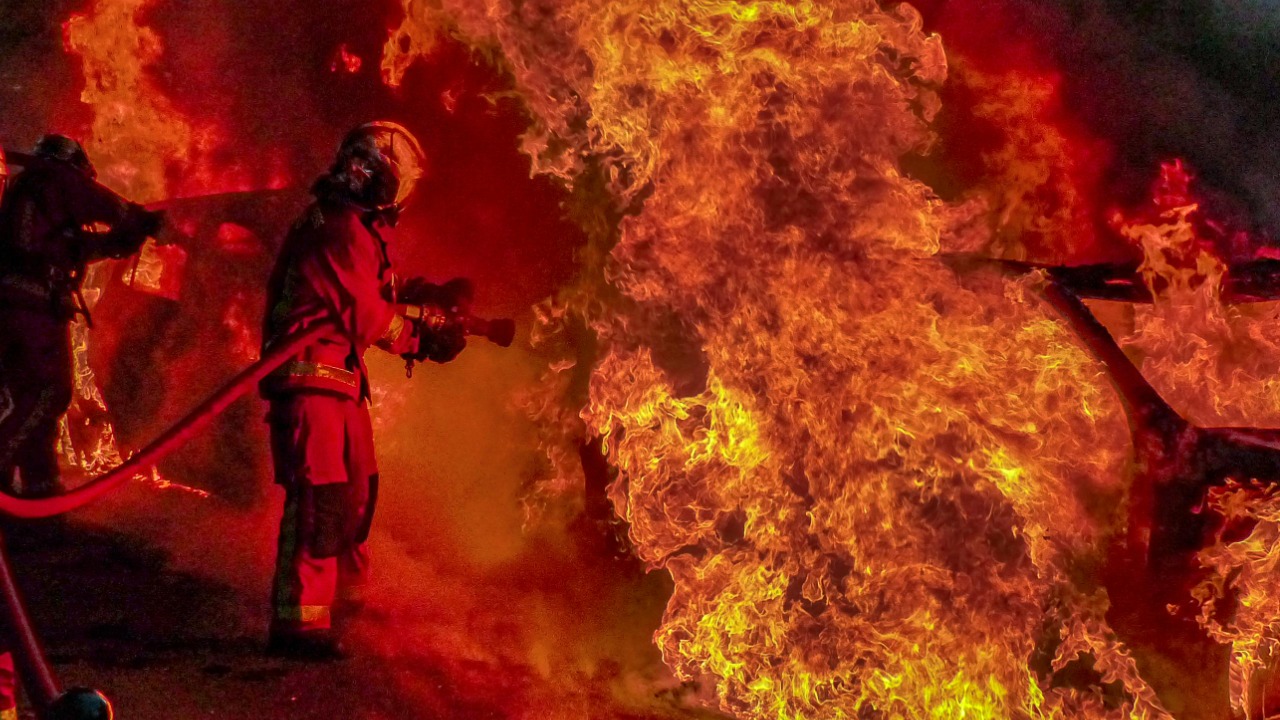
The Santa Monica Fire Department was called to the top level of a seven-story garage after reports of heavy smoke pouring from the roof. According to Santa Monica Fire, crews arrived to find flames engulfing vehicles on the open-air deck, with thick smoke visible from blocks away.
Two Tesla Cybertrucks were parked near one another on that rooftop and both were ultimately destroyed. Images from the scene show burned Tesla Cybertrucks reduced to twisted metal shells, with their distinctive exoskeletons blackened and warped from the heat.
Local television coverage reported that two Tesla Cybertrucks were destroyed and others damaged in the blaze, which was confined to the top floor of the Santa Monica structure. Several neighboring vehicles suffered melted bumpers, shattered glass and smoke damage as the fire raced across the parking area.
Witnesses described a chaotic scene as firefighters attacked the flames from multiple angles to keep the blaze from spreading to lower levels. One report noted that firefighters worked around concerns that high-voltage battery packs can reignite after a fire appears to be out, a known challenge with modern electric vehicles.
A tightly packed rooftop, and a fast-moving fire
Video from the scene shows the rooftop crowded with a mix of pickups, sedans and SUVs, with the two Cybertrucks parked prominently near the center. A detailed account of the incident described how two Tesla Cybertrucks were destroyed and several other vehicles were damaged on the roof of the Santa Monica parking structure, with the surrounding area temporarily shut down while crews worked to secure the site and monitor for flare-ups.
One observer who stopped by the garage shortly after the fire began described seeing the Cybertrucks already engulfed, with flames licking at nearby cars and smoke drifting across Colorado Avenue. That account, shared through coverage of the Santa Monica parking garage fire, reinforced the impression that the blaze developed quickly before firefighters could get hoses in place.
Officials have not publicly said whether the fire started in one Cybertruck and then spread to the second, or whether both vehicles ignited separately. Investigators have also not confirmed whether either truck was charging at the time, or whether any work was being done on the vehicles before the flames appeared.
Police and fire investigators are now trying to reconstruct the sequence of events, reviewing security footage from the seven-story garage and interviewing witnesses who saw the smoke rising above downtown Santa Monica. For now, they have simply confirmed that the cause remains under investigation and that no injuries were reported.
“What Caused It?” and what is known so far
Coverage of the incident has framed the central question in blunt terms: What Caused It. Regardless of the angle, the consensus is that the Cybertrucks went up in flames under circumstances that are still unclear, and that neither pickup has yet been tied to any specific mechanical failure or outside trigger.
One report noted that regardless of the reason the Cybertrucks were parked on that rooftop, police are examining how they came to ignite in the first place, and whether a single point of origin can be identified. Investigators are also looking at whether any external factor, such as debris, vandalism or another vehicle, might have contributed to the blaze.
At this stage, officials have not cited any evidence of foul play, nor have they ruled it out. They have also not indicated that other Tesla models in the same garage experienced any electrical issues, which keeps the focus squarely on the two Cybertrucks that were destroyed.
Unverified based on available sources is any claim that the trucks had been modified, involved in previous collisions, or subject to recent repairs. Without those details, analysts are left to work with the limited facts that two nearly new electric pickups burned intensely in close proximity on a sunny afternoon.
How electric truck fires behave
The sight of two Cybertrucks in flames naturally revives broader concerns about high-voltage battery fires. Lithium-ion packs, which power Tesla vehicles, can burn at extremely high temperatures and can reignite even after appearing to be extinguished, which explains why firefighters remained on the Santa Monica rooftop for an extended period.
Previous incidents involving electric vehicles have led departments across California to update training and tactics. Fire crews now often use large volumes of water to cool battery packs and may isolate damaged vehicles for hours to ensure they do not flare up again.
In Santa Monica, firefighters battled flames on the top level of the garage and then stayed on scene to check for hot spots around the Cybertrucks and adjacent vehicles. That approach reflects lessons learned from earlier electric vehicle fires, where hidden damage inside the battery pack sometimes only becomes apparent later.
Experts caution that internal combustion vehicles also catch fire regularly, often due to fuel leaks, electrical shorts or overheating engines. What makes electric truck fires stand out is the intensity of the heat and the difficulty of fully cooling a damaged pack in a confined space like a rooftop parking deck.
Tesla’s futuristic truck under scrutiny
The Cybertruck is Tesla’s angular, stainless steel pickup, marketed as a durable workhorse with a distinctive design that stands apart from conventional trucks. The company promotes the model on its official site, where Tesla Cybertrucks are described with an emphasis on strength, performance and advanced electronics.
That futuristic positioning is part of why the Santa Monica fire has attracted so much attention. The trucks are still relatively rare on public roads, and each high-profile incident shapes public perception of a model that Tesla has framed as a bold step into the pickup market.
The company has faced other fire-related questions in recent years, including a separate event at a construction site where representatives from both ONCOR and Tesla were present after a blaze that damaged part of the facility. In that case, officials said the cause of the fire had not yet been released, a reminder that complex electrical systems can complicate investigations.
So far, Tesla has not issued any public technical explanation for what happened in Santa Monica, and regulators have not announced any formal defect probe tied specifically to Cybertruck battery packs based on the available sources.
Local reporting and community concern
Local coverage has provided some of the most detailed glimpses into the aftermath. One report showed burned Tesla Cybertrucks sitting on the rooftop, with firefighters still on scene and tow trucks preparing to remove the wreckage from Santa Monica.
Another account highlighted that 2 Tesla Cybertrucks were destroyed, others damaged in Santa Monica rooftop garage fire, with residents expressing concern about parking next to large electric trucks in tight urban structures. That same report noted that the Santa Monica Fire Department (SMFD) coordinated with building management to assess structural damage to the top deck.
Reporter Lily Dallow was identified as the journalist who covered the event in depth, with the segment labeled as Posted and later Updated in PST. The coverage by Lily Dallow emphasized how quickly the fire drew a crowd of onlookers and how relieved officials were that no one was hurt.
More from Fast Lane Only