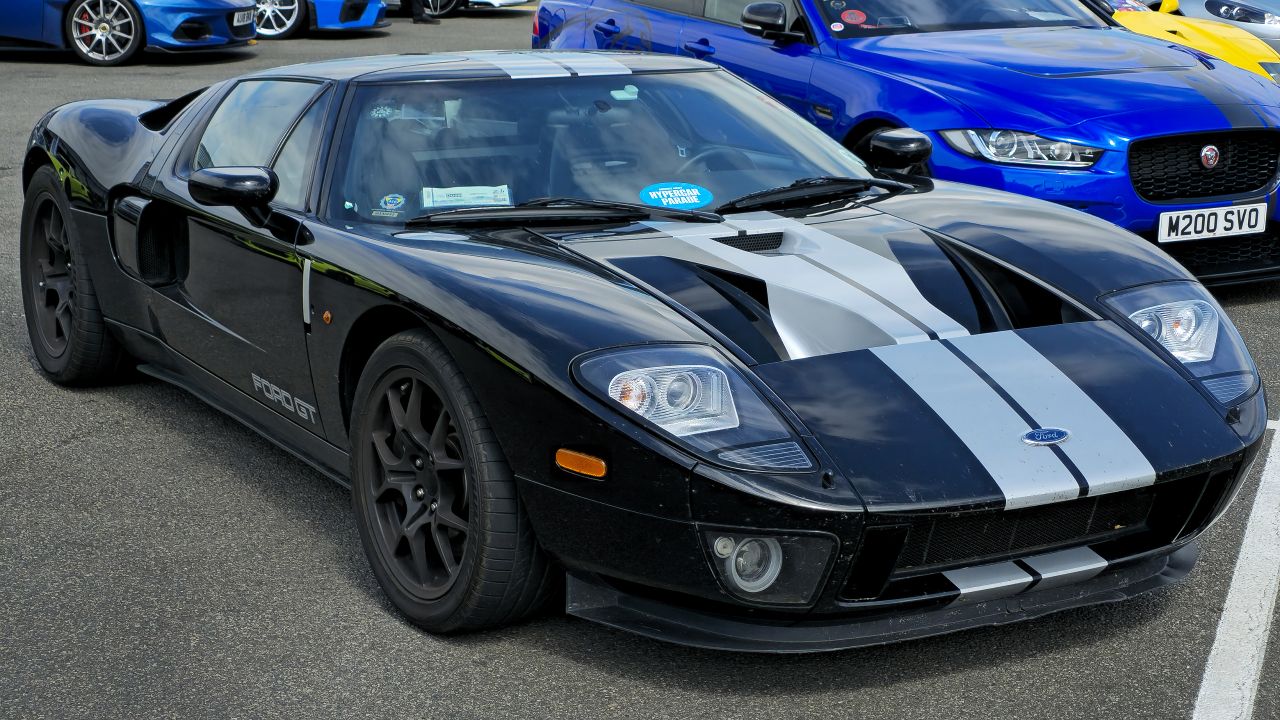
The 2005 Ford GT arrived as a road‑legal tribute to Ford’s Le Mans dominance, but it quickly proved to be far more than a nostalgia exercise. It was the first modern Ford supercar to channel the GT40’s racing DNA into a usable, high‑performance street machine, pairing brutal speed with surprising refinement. Two decades on, it stands as one of the clearest links between Ford’s 1960s endurance glory and today’s collector‑grade performance cars.
By reviving the GT nameplate with a mid‑engine layout, a supercharged V8, and track‑focused hardware, Ford created a car that could credibly trace its lineage from the Mulsanne Straight to the interstate. I see the 2005 Ford GT as the moment Ford proved it could still build a world‑class supercar on its own terms, rooted in American engineering rather than borrowed European platforms.
From GT40 legend to modern Ford GT icon
The original GT40 was built so Ford could beat Ferrari at Le Mans, and that four‑year run of victories from 1966 to 1969 turned the car into a motorsport legend. When Ford revived the idea decades later, the 2005 Ford GT was explicitly conceived to honor that heritage, with styling that echoed the low, wide GT40 silhouette and a mission to bring that race‑bred character to modern buyers. Reporting on the car’s background notes that the GT40’s spirit lives on in Ford’s modern supercars, and that the 2005–2006 Ford GT was a retro‑inspired road car that carried forward the Le Mans story into a new era of performance.
That connection to endurance racing was not just a marketing line, it shaped how the car was positioned and received. Contemporary coverage describes the 2005 Ford GT as “American Heritage in Supercar Form,” conceived specifically to celebrate Ford’s Le Mans dominance and to become an analog supercar legend in its own right. By tying the car so directly to Ford’s victories at Le Mans, the company framed the GT as a bridge between the 1960s works racers and a new generation of enthusiasts who wanted that history distilled into something they could actually drive on public roads.
Engineering a street‑legal Le Mans weapon
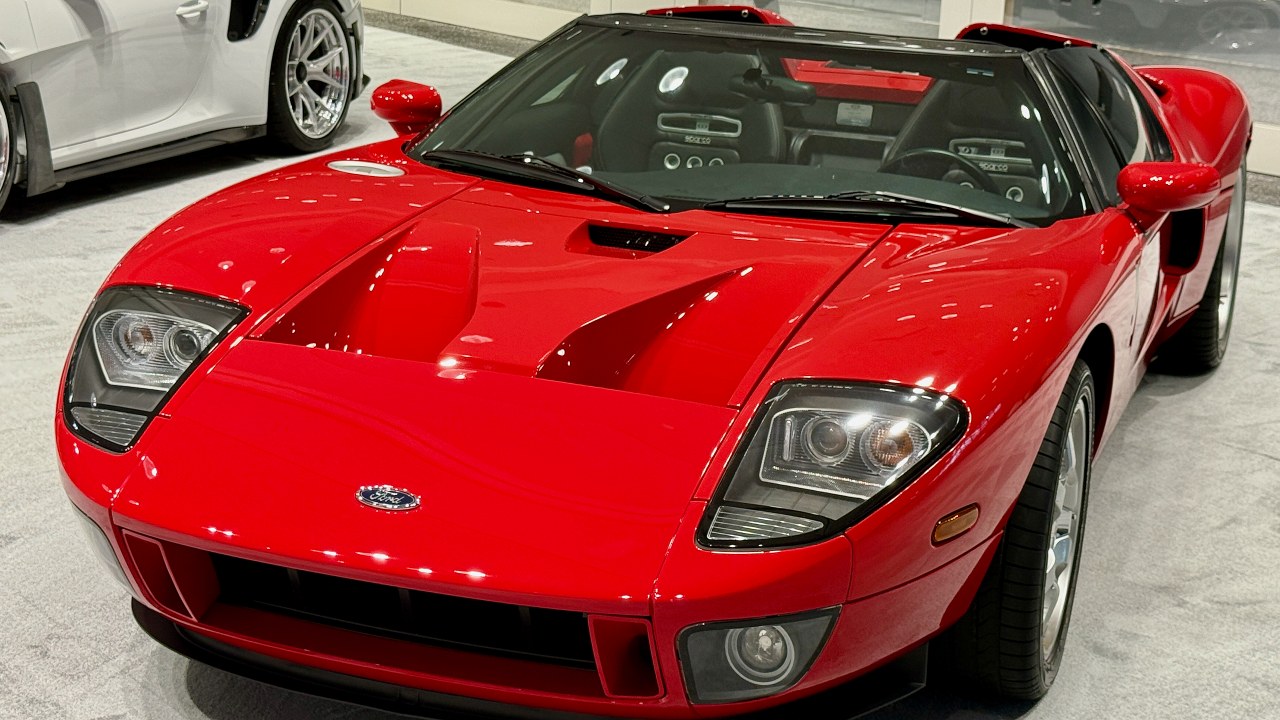
Under the retro bodywork, the 2005 Ford GT was engineered with the kind of hardware you would expect from a car inspired by endurance racing. The centerpiece was a 5.4‑liter V8, Supercharged, mounted behind the driver and tuned for serious output. Official specifications list Horsepower at 550 hp, with the engine paired to a six‑speed transaxle by Ricardo, a combination that delivered both brutal acceleration and the durability expected from a car with track ambitions. The same data notes that the 2005 GT boasts 550 horsepower and a 0–60 time of 3.3 seconds, figures that placed it firmly in contemporary supercar territory and underscored how far Ford was willing to push its engineering.
The chassis and braking package were equally serious, reflecting lessons learned from racing. Performance and engineering details highlight four‑piston aluminum Brembo calipers with cross‑drilled and vented rotors at all four corners, a setup that gave the GT the stopping power to match its straight‑line speed. Performance metrics list a Top speed of 205 mph (330 km/h), a 1⁄4 mile (402 m) time of 11.8 seconds, and rapid acceleration benchmarks such as 0–62 mph (0–100 km/h) in the low‑to‑mid three‑second range, all of which confirm that the car was engineered to run with the world’s quickest exotics rather than simply look like a historic Ford.
Performance numbers that joined the world’s fastest
On paper and in practice, the 2005 Ford GT did not just nod to Le Mans, it joined the ranks of the fastest road cars of its time. Period reporting on the launch emphasized that the 2005 Ford GT Joins Ranks Of World’s Fastest Cars With A 205 Mph Top Speed, explicitly calling out the car’s ability to reach 205 Mph Top Speed as a headline achievement. That figure aligned with the Performance data that lists a Top speed of 205 mph (330 km/h), confirming that Ford had built a machine capable of running beyond 200+ MPH in real‑world conditions, not just in theoretical simulations.
Those numbers were backed up by independent tests and enthusiast impressions. Coverage of the GT’s Performance notes that the car could cover the 1⁄4 mile (402 m) in 11.8 seconds, a benchmark that placed it squarely in supercar territory and ahead of many rivals of the era. Later commentary on the model describes the Ford GT as surprisingly luxurious for a street legal race car while still sporting impressive performance including a top speed beyond 200 mph, reinforcing that the car’s acceleration and maximum velocity were not marketing exaggerations but repeatable results that helped cement its reputation among the world’s Fastest Cars With genuine track‑grade capability.
Analog driving, modern usability
What sets the 2005 Ford GT apart from many later supercars is how deliberately analog it is to drive. Analysis of the model’s place in the market notes that in 2005, Ford made an audacious decision to build a supercar with a manual transmission, no traction control, and a focus on the love of performance rather than electronic intervention. That choice gave the GT a raw, mechanical feel that echoed the GT40’s era, where the driver’s skill, not software, determined how close you could get to the car’s limits. It is a configuration that has become rarer as modern performance cars lean heavily on stability systems and multi‑mode drive electronics.
Yet the GT was not a stripped‑out race car with license plates. Owners and reviewers have consistently pointed out that the Ford GT is surprisingly usable and even comfortable for a street legal race car, with a cabin that, while snug, offers enough refinement to make highway miles realistic rather than punishing. Official Ford GT Specs, Features & Options data underline that the car was engineered as a complete package, with Features and Options that balanced its track‑ready performance with basic amenities. Fuel Economy figures of 14 combined mpg and a tiny Cargo Volume of 1.6 cu ft show that it was never meant to be practical in the conventional sense, but the blend of analog controls and modern build quality made it far more approachable than a pure competition machine.
Collector status and investment appeal
Over time, the 2005 Ford GT has shifted from new‑car curiosity to blue‑chip collectible, and its market behavior reflects that transformation. Used pricing data highlights that the car’s core mechanical package, centered on the 550 hp V8, Supercharged engine and limited production, has helped it retain exceptional value compared with many contemporaries. Analysis of its market performance describes the model as The Best Investment Of The Modern Era among modern supercars, pointing to the way early buyers who treated the car as a long‑term hold have seen values climb rather than slide, a rarity in a segment where depreciation is usually brutal.
That investment appeal is tightly linked to the car’s heritage and driving character. Commentators who track high‑end collections describe the 2005 Ford GT as a collector sweet spot, noting that Ford built a supercar with a manual gearbox and minimal electronic aids at a time when the industry was moving in the opposite direction. Combined with its direct visual and conceptual link to Ford’s Le Mans victories and the Modern legacy of the Ford GT nameplate, those traits have turned the car into a must‑have for enthusiasts who want a tangible connection to Ford’s racing past. For anyone who manages to buy one today, the 2005 Ford GT offers not only a visceral driving experience but also a piece of Ford and Le Mans history that the market increasingly treats as irreplaceable.
More from Fast Lane Only: