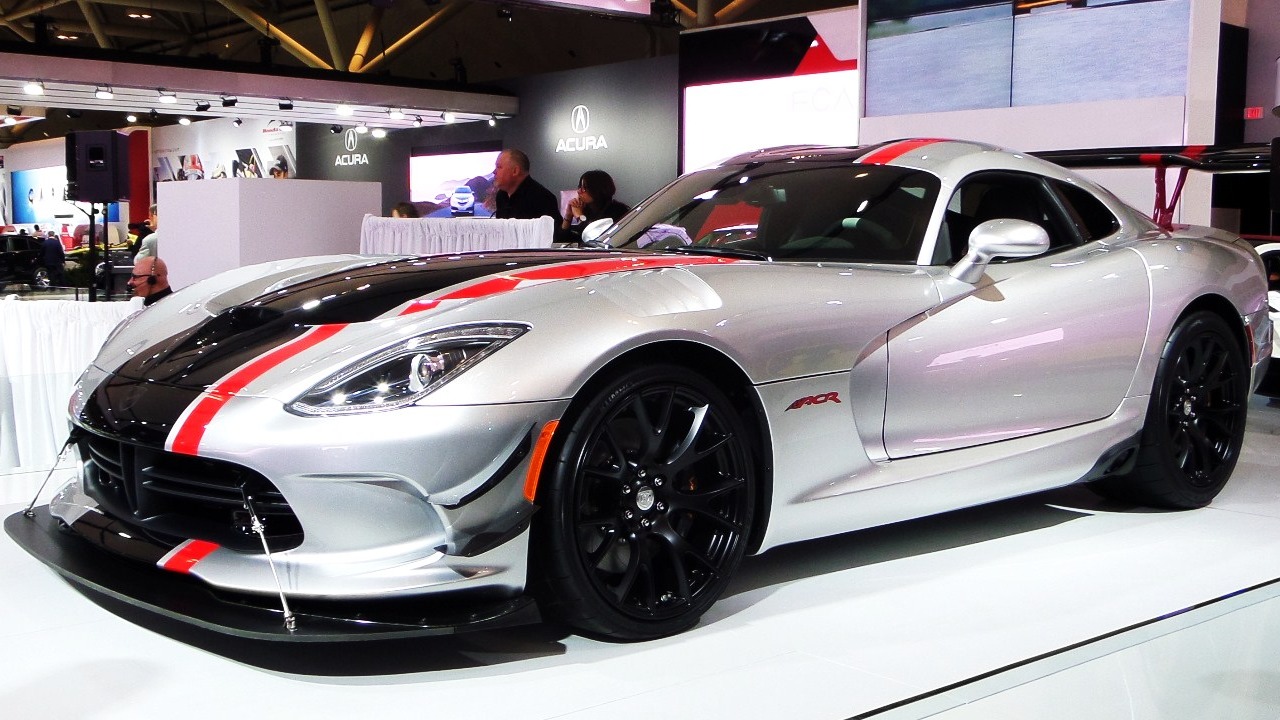
The 2016 Dodge Viper ACR arrived with a singular mission: turn raw American power into precise lap time and chase down established circuit benchmarks around the world. Instead of softening the Viper’s reputation as a brutal, analog supercar, it doubled down on that character and wrapped it in serious aero and chassis engineering. In the process, it became the first modern Viper conceived from the outset as a record hunter rather than a straight-line bruiser.
When I look at what this car achieved, from domestic club tracks to the Nürburgring Nordschleife, it feels less like a special edition and more like a rolling thesis on how far a front‑engine, rear‑drive, manual‑only machine could be pushed. The ACR did not just nibble at lap charts, it reset them, and it did so while staying street legal and unmistakably Viper.
The ACR brief: a street‑legal race car with a singular purpose
From the start, the 2016 Viper ACR was framed as the most focused evolution of the nameplate, a car that honored a long legacy of track specials by going further than any previous version. The official description called it the “new Viper ACR” and emphasized that it honored its long‑standing role as the ultimate street‑legal race car through significant aerodynamic, suspension, and tire upgrades that were previously reserved for off‑road only race tires and setups, a mission spelled out clearly in the factory’s own Viper ACR materials. That brief set the tone: this was not a styling exercise or a power bump, it was a comprehensive rework aimed squarely at lap times.
What made the ACR stand apart in the modern supercar landscape was how unapologetically it stuck to an old‑school formula while chasing very contemporary performance numbers. There was no dual‑clutch gearbox, no hybrid assist, no all‑wheel drive safety net, just a massive naturally aspirated V10, a six‑speed manual, and a chassis tuned to reward commitment. In an era when many track specials leaned on electronics to flatter the driver, the ACR’s mission statement read more like a challenge.
Aero, suspension, and that awe‑inspiring V10
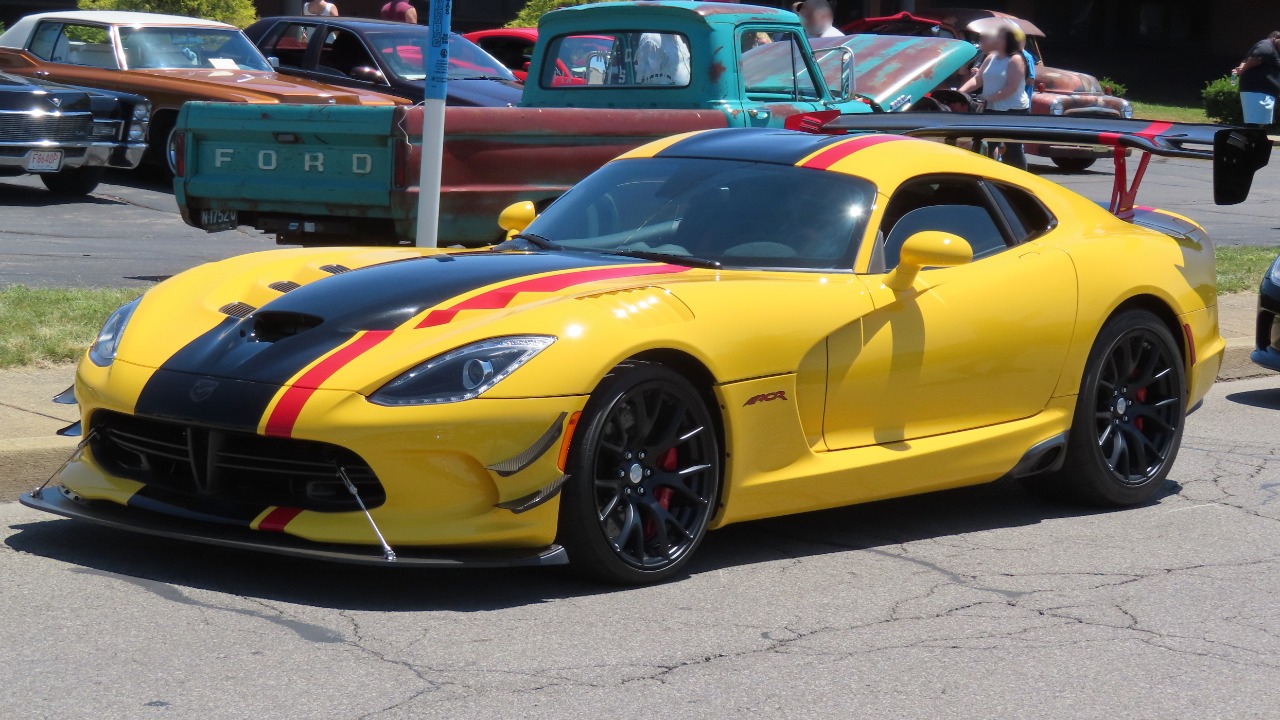
Under the hood, the ACR relied on the same basic architecture that had defined the Viper for years, but it was anything but ordinary. The car’s awe‑inspiring V‑10 powertrain was paired with a TR6060 six‑speed manual transmission, a combination highlighted in detail in coverage of the Dodge Viper ACR as the fastest street‑legal Viper track car ever. That drivetrain delivered the kind of instant, linear shove that suits a car built for consistent lap‑after‑lap punishment rather than one‑shot drag runs.
The real revolution, though, happened in the airflow and under the skin. The ACR’s package of front splitter, dive planes, massive rear wing, and underbody work was designed to generate extreme downforce at speed, turning the Viper’s long hood and wide stance into assets in high‑speed corners. On track, that aero worked in concert with a track‑focused suspension and race‑bred rubber to create a car that, as one on‑board video of a SCARY Torque! ACR lap makes clear, could carry astonishing speed while still demanding real respect from the driver.
From American brute to precision instrument
What fascinated me most about the 2016 ACR is how it sharpened, rather than diluted, the Viper’s famously American personality. In a detailed first‑drive video review, the host notes that if you are a fan of the series you already know they love the Viper, and calls it a very unique supercar that is very American in flavor. That sense of national character did not disappear with the ACR; instead, the car channeled it into a more precise, track‑ready form, turning the once‑wayward tail‑happy coupe into a scalpel in the right hands.
Yet the ACR never pretended to be easy. The steering weight, the manual gearbox, and the way the chassis communicated grip levels all reinforced that this was a car for drivers who wanted to be part of the process, not just along for the ride. That is why so many enthusiasts still talk about the ACR as a kind of last stand for analog supercars, a machine that could run with the latest technology‑laden exotics while staying true to the raw, mechanical feel that defined earlier generations of Viper.
Undisputed track record king at home
The ACR’s ambitions were not theoretical, they were written into lap charts across the United States. Official materials described the 2016 Dodge Viper ACR as “Undisputed Track Record King,” a phrase backed up by a long table of circuits and configurations where it set new benchmarks, a list that appears under the heading Dodge Viper ACR Is Undisputed Track Record King. That roster of tracks reads like a greatest‑hits album for American road racing, and the ACR’s presence at the top of so many categories underlines how comprehensively it delivered on its mission.
Look closer and you see how geographically broad that dominance was. The car set records at Laguna Seca in Salinas, Calif, at Road Atlanta in Braselton, at Waterford Hills in Waterford, Mich, at the Motown Mile in Detroit, Mich, at Grattan Raceway in Belding, Mich, and at Buttonwillow Raceway Park in Buttonwillow, Calif, all documented in the same Laguna Seca, Salinas, Calif, Road Atlanta, Braselton record rundown. That spread of venues, from tight club circuits to flowing national‑level tracks, shows that the ACR was not a one‑trick pony tuned for a single hero lap, but a consistent performer across very different layouts.
Beating the world’s best, from Laguna Seca to the Nordschleife
The ACR’s domestic dominance would have been impressive enough, but the car also went hunting for global scalps. At Laguna Seca, for example, it set a lap that outpaced some of the most advanced hypercars on sale, including machines like the McLaren P1 and the Porsche 918 Spyder, a feat highlighted in coverage of how the Dodge Viper ACR set 13 lap records and outmuscled the P1 and 918 Spyder. The fact that a front‑engine, manual‑only coupe could embarrass cutting‑edge hybrid flagships on a technical circuit like Laguna Seca said everything about how effective its aero and mechanical grip package really were.
Across the Atlantic, the ACR took on the Nürburgring Nordschleife, the de facto global yardstick for performance cars. In officially recorded testing, the Dodge Viper ACR completed a full lap of the Nordschleife in 7:10.92, a figure documented in a detailed Dodge Viper ACR, Nordschleife, Track timing breakdown. That time placed it in rarefied company and, crucially, it did so without the benefit of turbocharging or hybrid assistance, relying instead on downforce, mechanical grip, and driver commitment.
Why its Nürburgring lap still matters today
Years later, the ACR’s performance at the Green Hell continues to resonate, especially as new contenders arrive. When Ford’s Mustang GTD set a headline‑grabbing lap at the Nürburgring, some analysts pointed back to the Viper’s achievement and argued that the older car’s 7:10.92 remains more impressive in context, given its lack of modern driver aids and its purist layout. One detailed comparison notes that on December 10, 2024, the Mustang GTD grabbed attention at the Nordschleife, but that the Viper ACR had already claimed a key lap record back in 2016, and did so with a more old‑school toolkit.
For me, that ongoing comparison underscores why the ACR feels like a turning point. It represents the outer edge of what could be achieved with a big naturally aspirated engine, a manual gearbox, and a focus on aero and suspension rather than software. As newer cars chase similar or slightly better times with far more technology, the Viper’s lap stands as a reminder that outright speed is only part of the story; how you get there matters just as much to enthusiasts who care about the driving experience.
Factory backing, media buzz, and a swan song with teeth
The factory did not shy away from framing the ACR as a benchmark car. In a detailed press kit, the company described the 2016 Dodge Viper ACR as “Undisputed Track Record King” and called it the “Ultimate” street‑legal race car, highlighting how development drivers like Randy Pobst were able to translate the engineering into headline lap times, including a standout run at Laguna Seca that was singled out in the Dodge Viper ACR Is Undisputed Track Record King, Ultimate materials. That kind of official backing, complete with data and driver testimony, helped cement the car’s reputation among serious track‑day regulars.
Enthusiast media amplified that message. One early report noted that the car was unveiled in a press release as the 2016 Dodge Viper ACR and stated that, according to the release, it was the fastest street‑legal Viper track car ever, with the most aggressive aero package ever used on a Viper, a claim laid out in detail when it was Unveiled, Dodge Viper ACR, According. Later, coverage framed the ACR’s record‑setting spree as big news about a new, undisputed track weapon arriving just as the Viper line was preparing to bow out, with one piece even slotting it into a “Drive Wire” roundup that opened with the tagline “The biggest car news and reviews, no BS. Sign Up. Terms of Service & Privacy Policy. Big news today about the new, undisputed record‑setting Viper,” language that appears in a Sign Up, Terms of Service, Privacy Policy, Big write‑up of yet another record.
A legacy that still looms large
Looking back now, I see the 2016 Viper ACR as the car that finally aligned the Viper’s wild reputation with the kind of precise, repeatable performance that track‑day data nerds crave. Its monster V10, its track‑focused suspension, and its extreme aero package turned it into a purist’s weapon at the road course, a combination that on one legendary circuit delivered a new all‑time record for a production car, a feat captured vividly in the Drive Wire coverage of its achievements. That blend of brutality and sophistication is why its lap times still get pulled into conversations about modern track specials.
Even as the industry moves toward electrification and ever more complex driver aids, the ACR’s formula continues to resonate with enthusiasts who value involvement as much as outright speed. It stands as proof that a front‑engine, rear‑drive, manual‑only coupe can be engineered to hunt down and, in some cases, beat the most advanced machinery in the world. For a final modern Viper built to chase lap records, there could hardly have been a more fitting send‑off.
More from Fast Lane Only: