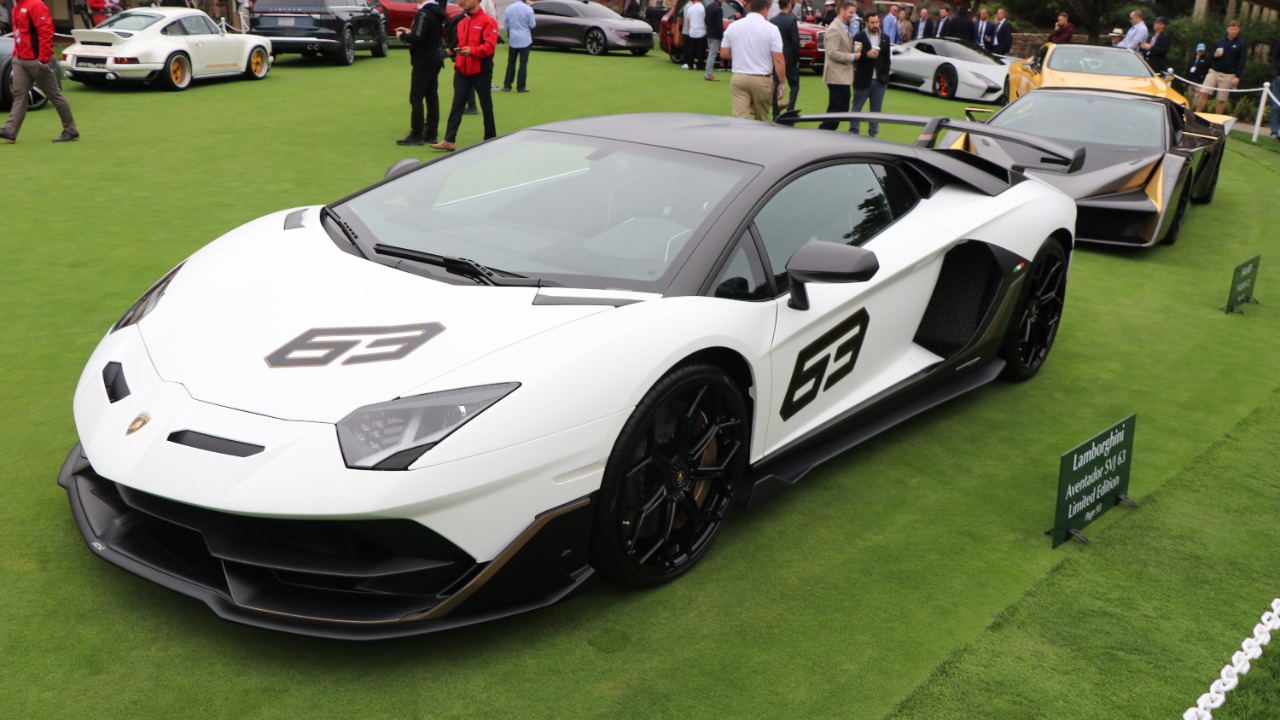
The Aventador SVJ arrived as the wildest evolution of Lamborghini’s V12 flagship, but its real revolution hid in the airflow rather than the exhaust note. For the first time on a twelve‑cylinder Lambo, active aerodynamics did not just add drama, it fundamentally reshaped how the car turned, braked, and put power down. I want to unpack why that matters, and how this limited‑run monster quietly became the first big Lambo whose aero trickery genuinely worked in the driver’s favor.
The last wild V12, sharpened by science
When I think about the Aventador SVJ, I see it as the moment Lamborghini finally fused its theatrical V12 formula with serious, measurable aero discipline. The car was positioned as the new generation of the iconic flagship and capped at 900 units, which instantly turned every example into rolling unobtanium. Under the skin sat the Aventador SVJ LP powertrain, with the designation Aventador SVJ LP tied to a ferocious output of 770 metric horsepower, but the real story was how the bodywork and airflow finally caught up with the engine. Measures such as extensive use of carbon fibre and titanium in the exhaust system helped trim mass, yet the defining change was how the car used its shape to generate grip rather than just spectacle.
From the front, the Aventador SVJ looked like a wind‑tunnel sketch brought to life, with a deep splitter, towering side intakes, and a rear wing that seemed almost cartoonishly large. Those pieces were not just styling flourishes, they were part of a package that significantly improved total downforce and stability at speed. The SVJ’s body integrated a large rear diffuser and carefully sculpted channels that guided air around the wheels and under the floor, turning what had been a relatively blunt supercar into something far more precise. In my view, that is the key shift: the car still shouted “Lamborghini” from a block away, but for once the drama served a clear aerodynamic purpose rather than simply filling out a poster.
From fixed wings to Aerodinamica Lamborghini Attiva
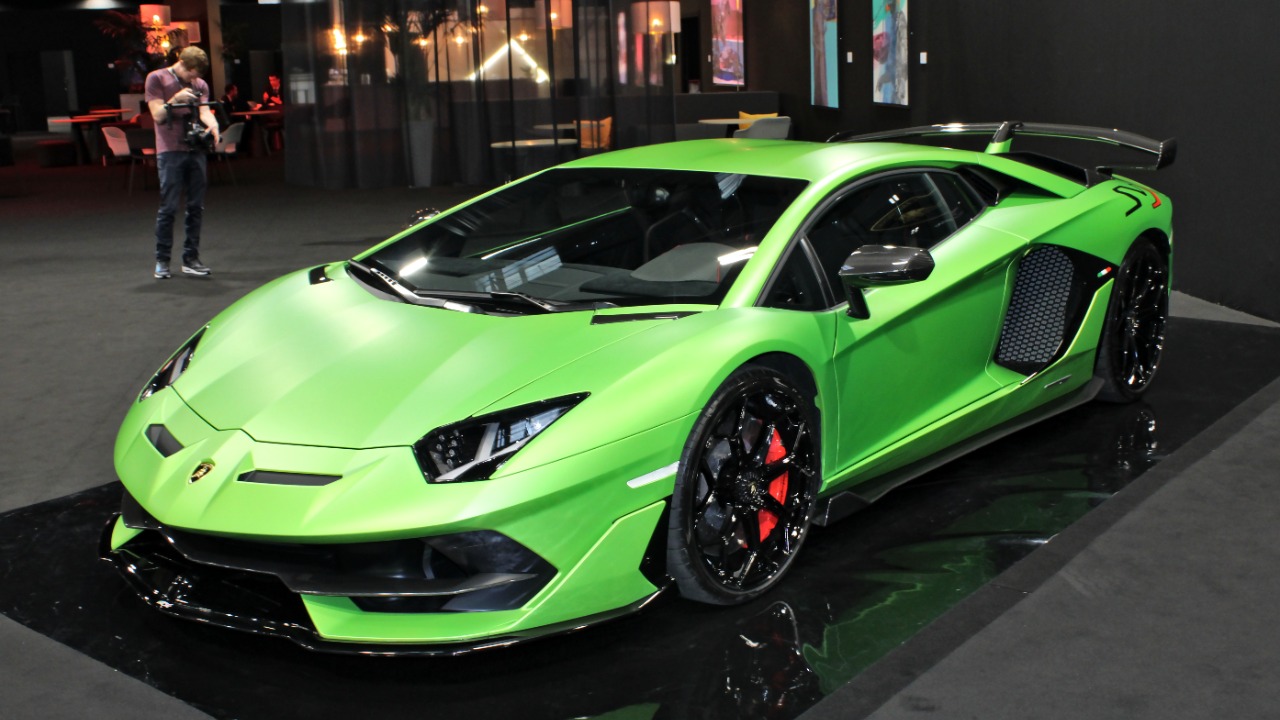
Earlier Aventadors relied on a familiar recipe of fixed wings, passive ducts, and a pop‑up rear spoiler, which worked well enough but could never be optimal in every corner or straight. The SVJ changed that by embracing Aerodinamica Lamborghini Attiva, the active aero philosophy that had already started to reshape the brand’s smaller models. In its second generation, branded as Aerodinamica Lamborghini Attiva 2.0, the system used electronically controlled flaps to open and close air channels within the front splitter and rear wing. Instead of a single compromise setting, the car could chase maximum downforce in one moment and low drag in the next, all without the driver lifting a finger.
What impressed me most about this approach is how seamlessly it integrated with the rest of the chassis. The active elements did not feel like add‑ons, they were baked into the SVJ’s identity, working with the suspension, steering, and stability systems to change the car’s balance in real time. At high speed, the system could seal off certain ducts to reduce drag, then, as you turned in, reopen them to pile on downforce over the loaded axle. That constant adjustment is what finally made the Aventador platform feel agile rather than merely brutal, and it is why I see the SVJ as the first big Lambo where active aero genuinely earned its keep.
Huracán Performante: the test bed that proved the concept
To understand why the SVJ’s aero worked so well, I always trace the story back to the smaller V10 sibling that served as Lamborghini’s laboratory. The Lamborghini Hurac, Performante arrived focused on raw lap time, and its development centered on an Active aerodynamics package explicitly called Focused Performance, with the system itself branded as Active Aerodinamica Lamborghini Attiva. That car used a network of internal channels and flaps to either stall or load the rear wing and front splitter, effectively turning the body into a dynamic aero kit that could adapt corner by corner. It was a bold idea, and the Performante’s headline lap times showed that the concept was more than marketing.
The technical heart of that system was explored in detail in coverage of How the Lamborghini Hurac, Performante Active Aerodynamics system works, where Zach Bowman April broke down how the flaps could independently manage airflow to each side of the car. By selectively opening channels on one side of the rear wing, the system could increase downforce on the inside or outside wheel, helping the car rotate with less steering angle. That asymmetric control is what made the Performante feel so eager on turn‑in, and it gave Lamborghini the confidence to scale the idea up. When I look at the SVJ, I see a direct descendant of that experiment, with the same core logic refined for a heavier, more powerful platform.
Scaling ALA 2.0 to the Aventador SVJ
Transplanting Aerodinamica Lamborghini Attiva from the Huracán to the Aventador was not as simple as copying code. The Aventador SVJ LP carried a larger frontal area, a longer wheelbase, and that 770 metric horsepower V12, which meant the aero system had to manage far greater loads. In the SVJ, ALA 2.0 used redesigned internal channels within the front bumper and engine cover, along with a new rear wing profile, to handle the extra airflow. The flaps could react in fractions of a second, switching between high‑downforce and low‑drag modes as the car transitioned from braking zones to straights, and then into long, loaded corners. In practice, that meant the SVJ could brake later, change direction more cleanly, and still hit towering top speeds on the straights.
What really set the SVJ apart, in my experience, was how natural this complexity felt from behind the wheel. Rather than bombarding the driver with settings, the car simply interpreted throttle, brake, and steering inputs, then quietly adjusted its aero stance to match. On a fast circuit, you could feel the nose bite harder as you trailed the brakes into a corner, then sense the rear wing easing off as you unwound the steering and fed in power. That fluidity is why I call the SVJ the first Lamborghini where active aero truly worked: it did not just add numbers to a spec sheet, it made the car more intuitive and less intimidating at the limit.
Why the SVJ still matters in a hybrid era
Looking at today’s landscape of hybrid and electric supercars, it might be tempting to see the Aventador SVJ as a loud, fossil‑fuel relic. I see it differently. To me, the SVJ represents a bridge between old‑school V12 excess and the data‑driven, aero‑obsessed future that modern performance cars now inhabit. By proving that a big Lamborghini could use active aerodynamics like a scalpel rather than a sledgehammer, it set expectations for every flagship that followed. The combination of a naturally aspirated V12, a limited run of 900 units, and a body that constantly reshaped the air around it turned the SVJ into a kind of rolling thesis on how emotion and engineering can coexist.
That legacy matters because the lessons from Aerodinamica Lamborghini Attiva 2.0 are not tied to internal combustion. The same principles of channeling air through the body, stalling wings for efficiency, and loading specific wheels for rotation can apply just as well to hybrid or fully electric platforms. When I think about the next generation of halo Lamborghinis, I expect their designers to look back at the Aventador SVJ LP as the moment the brand proved it could do more than shout. It could listen to the air, shape it, and use it to make a 770 horsepower V12 feel almost approachable, which is exactly why that first truly effective active aero system still deserves attention today.
More from Fast Lane Only: