The 2020 SSC Tuatara arrived as a kind of line in the sand, the moment when a small American builder decided that the modern hypercar era needed a new speed benchmark. Rather than chasing lap times or plug-in bragging rights, it was conceived first and foremost as a land-speed missile that could still wear a license plate. In a landscape dominated by European badges, it tried to prove that the first truly headline-grabbing speed run of its generation could come from a low-volume shop in the Pacific Northwest.
What fascinates me about the Tuatara is not just the numbers, wild as they are, but the way its story captures both the ambition and the vulnerability of modern record chasing. It is a car built to dominate the spec sheet, yet its legacy is just as much about transparency, controversy, and the messy process of proving that a claimed speed is real.
The American upstart that aimed at 300 mph
The SSC Tuatara is a sports car designed, developed, and manufactured by American automobile manufacturer SSC North Ame, and from the outset it was framed as the successor to the company’s earlier record chaser, the Ultimate Aero. Where that earlier car felt like a brute-force answer to the Bugatti Veyron, the Tuatara was meant to be a more modern, almost aerospace-inspired response to the new generation of hypercars. Its name, borrowed from a New Zealand reptile, hinted at something exotic and evolutionary, and the company’s decision to go after a verified production-car speed record signaled that this was not just another boutique supercar.
Design and development of the Tuatara stretched over years as Design and SSC Tuatara evolved from concept sketches into a low, needle-like coupe with a distinctive Tuatara Side View that prioritized aerodynamics above all else. The car’s proportions, with its teardrop canopy and long rear deck, made clear that this was a machine optimized for slicing through the air on long, flat stretches of tarmac rather than carving mountain passes. In an era when many hypercars were adding hybrid systems and complex active aero, SSC’s approach felt almost old-school: keep it light, keep it slippery, and give it as much power as the tires and transmission can reasonably handle.
Engineering a land-speed missile you can actually sit in
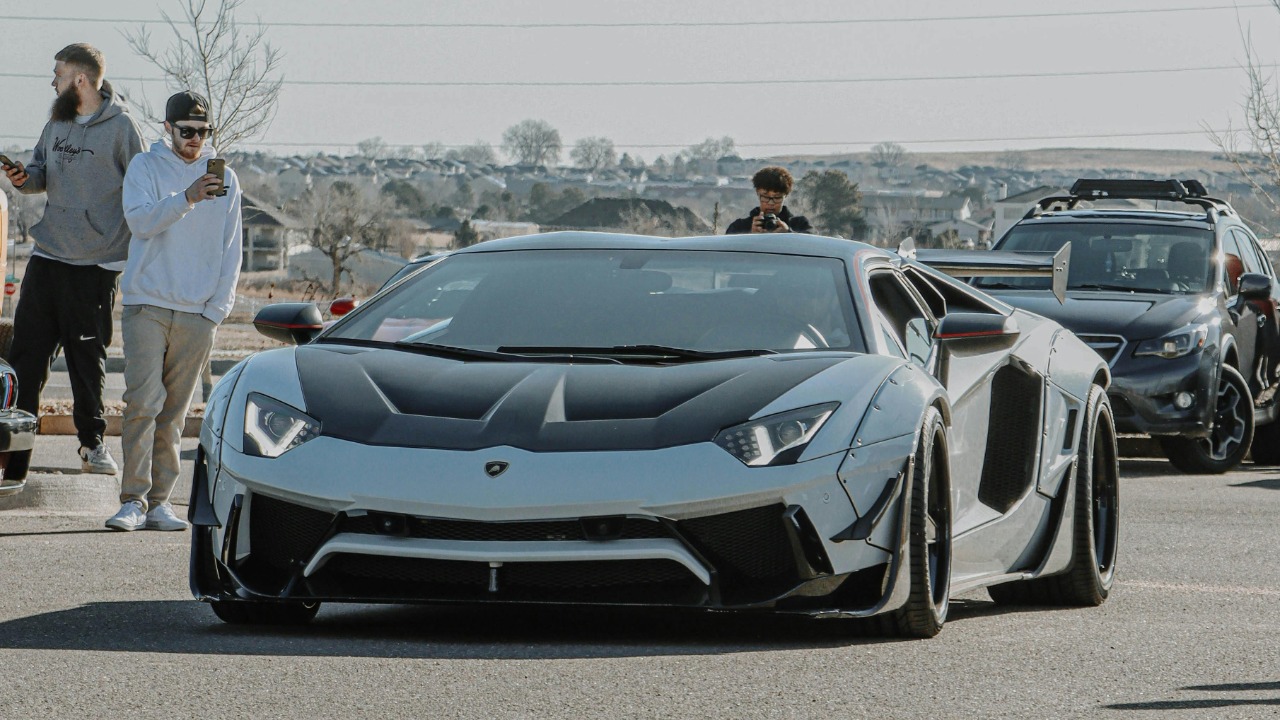
Underneath the dramatic bodywork, the Tuatara’s engineering brief reads like a checklist for a modern speed-run weapon. The heart of the car is a 5.9 liter twin turbo V8, described as the beating heart of the Tuatara’s Engine and Performance, tuned to deliver four-figure horsepower and a torque curve that does not fall off as speeds climb. Because the shape of the car is so focused on minimizing drag, the Tuatara is able to keep pulling deep into triple digits, with gearing and aero that are explicitly set up for runs well beyond 200 mph. It is the kind of powertrain that only makes full sense when you imagine the car on a closed runway, still accelerating where most supercars have already hit their electronic limiters.
All of that power is routed through a CIMA 7 speed transmission that is integrated with a state-of-the-art Automac AMT system, a setup that The Tuatara uses to balance brutal acceleration with some semblance of drivability. The Tuatara’s unprecedented power is transferred cleanly enough that the car can still be marketed as a road-legal production model rather than a thinly disguised race car. That duality is reinforced inside the cabin, where Passengers as tall as 6’5″ are said to fit comfortably even with a race helmet, a detail SSC highlighted when it described how Passengers would experience the car’s intake system, shifting, and overall drivability.
From debut promise to the first controversial run
When the production-spec Tuatara was formally presented, SSC leaned heavily into the idea that this was not just a fast car but a new standard for what a hypercar could be. The company’s own language framed The SSC Tuatara as a machine that personifies over a decade of research and development, with founder Jerod Shelby quoted as saying that the journey was only just beginning, a sentiment captured when The SSC Tuatara was introduced to the world. That confidence set expectations sky high, and it made the subsequent record attempts feel like the natural next chapter rather than a publicity stunt.
The first big attempt came on a stretch of Nevada highway, where SSC claimed that the Tuatara hit 331.15 mph in one direction with driver Oliver Webb at the wheel, a figure later described in detail in an account of how Webb told the team the car felt extremely stable and planted. On October 10, SSC North America claimed its Tuatara set a new record for the world’s fastest production car, a declaration that quickly spread but also triggered intense scrutiny of the video and GPS data, scrutiny that led SSC to promise a rerun after On October the company’s initial footage was challenged.
The official record, the walk-back, and the numbers that still matter
Faced with that backlash, SSC went back to work on a more tightly controlled record attempt, this time on a closed runway with independent verification. The result was a two-way average that gave the Tuatara a credible claim as the fastest production car in the world, even if it fell short of the original 300 mph narrative. On a later run, the car achieved a certified two-way 282.9 m Speed Run Average, using its high speed CIMA robotic manual transmission to shuttle through the gears. That figure, while lower than the headline-grabbing 300-plus claims, still put the Tuatara at the sharp end of the hypercar world and gave SSC a more defensible place in the record books.
At the same time, the company had to publicly acknowledge that its earlier claims had not held up. In October 2020, SSC had claimed that a Tuatara owned by Larry Caplin and driven by Oliver Webb set a new production-car record, but later it admitted that the hypercar did not break the 300 mph barrier, a point made explicit when In October was revisited in a follow-up statement. A second attempt in December ran into heat-related issues in the engine that limited its top speed to 251.2 m, a detail that In December was cited as evidence that the 300 mph mark remained elusive even for a car built so single-mindedly for speed.
How the Tuatara reshaped the modern hypercar conversation
Even with the walk-backs, the Tuatara’s verified numbers forced the rest of the hypercar world to take notice. One detailed breakdown noted that the Tuatara’s claim as the fastest production car in the world gained legitimacy once the official record was set, even if it was not 330 mph, and that context is important when assessing how The SSC Tuatara fits into the broader arms race. Another account of the record day described how the Tuatara beat the previous world mark on a pair of runs, with British racing driver Oliver Webb pushing the car to its limits as SSC chased a production-car world speed record. Those stories, taken together, show a car that did not quite meet its most extreme marketing but still reset expectations for what a small manufacturer could achieve.
The Tuatara’s place in history is also colored by how obscure it remains outside hardcore enthusiast circles. One writer described it as America’s most obscure hypercar that is still the fastest ever made, noting that of course, the Tuatara is a rare sight and that some observers were unable to verify the data behind its most ambitious claims, a tension captured in a piece that framed how Nigel approached the story. Yet for those who have experienced it, even virtually, the car’s ferocity is undeniable, whether in a first-person video showing what it is like to drive the SSC Touittara Striker from behind the wheel, as seen in an SSC Touittara Striker clip, or in the way fans still debate its numbers online.
Why the Tuatara still feels like the first hypercar of its era
Looking back now, I see the 2020 SSC Tuatara as the first modern speed-run hypercar of its era because it crystallized a new set of expectations around transparency, data, and what it means to call something a production car. Earlier last month, SSC North America’s claim that its Tuatara had set a new record for the world’s fastest production car triggered a wave of internet sleuthing that forced the company to rerun the attempt, a dynamic captured when readers were urged to Follow Kristen Lee through the backlash. That cycle of claim, challenge, and correction has since become the norm for any manufacturer chasing extreme numbers, and in that sense the Tuatara helped define the rules of engagement for the 2020s hypercar wars.
At the same time, the car’s core achievement remains simple: it showed that a small American outfit could build a machine capable of verified speeds that only a handful of factory-backed exotics can approach. The Tuatara hit 331.15 mph on that controversial early run, even if that figure was later questioned, and the fact that Shelby and his team were willing to come back with a more modest but defensible 282.9 mph average speaks to a kind of stubborn honesty that I find oddly endearing. In a world where numbers are often treated as marketing copy, the Tuatara’s bumpy path to its record might be exactly what secures its place in hypercar history.
More from Fast Lane Only: