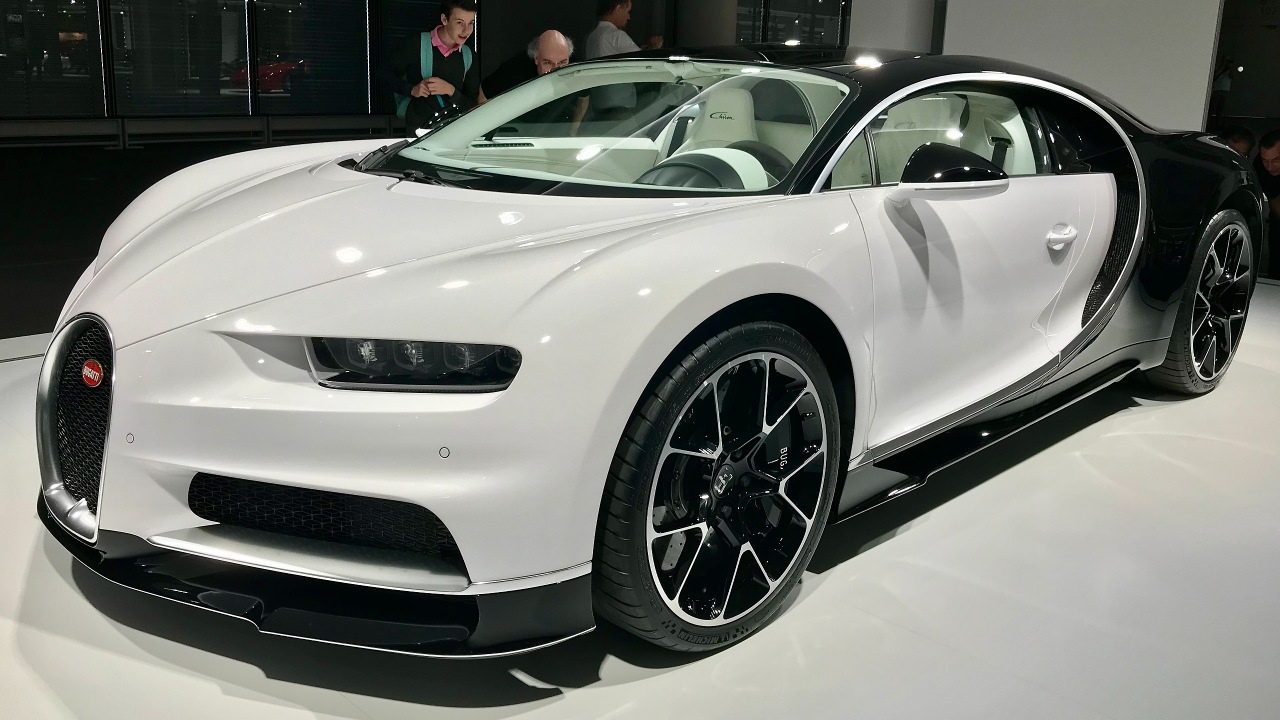
The 2019 Bugatti Chiron Super Sport 300+ did more than nudge the speedometer a little higher. It forced the entire performance world to confront a simple, audacious question: what happens when a road‑legal car edges into territory once reserved for experimental aircraft. By turning a Chiron derivative into the first production‑based machine to breach 300 miles per hour, Bugatti reframed the limits of engineering, safety, and even common sense in the hypercar arms race.
That record run, and the limited‑run production car it inspired, were not marketing stunts bolted onto an existing model. They were the result of a focused program to stretch the Chiron platform to its absolute limit, then tame that speed for a handful of customers willing to buy into a car that treats 250 mph as a cruising pace.
From Chiron to 300 mph record breaker
The leap from a “regular” Chiron to a machine capable of more than 300 mph started with a clear objective: create a derivative that could sustain unheard‑of speeds while remaining recognizably related to the series car. Bugatti describes the record machine as a pre‑production vehicle of a Bugatti Chiron derivative, a crucial distinction that ties the achievement directly to the road car rather than a one‑off prototype. In testing at Ehra‑Lessien, the car reached a verified 304.773 mph, making it the first hyper sports car to break the 300 mph barrier and validating the Chiron architecture as a platform for speeds that previously lived only in simulations.
The run itself was not a single heroic blast but the culmination of a long development program that shook down every system in the laboratory before Bugatti gunned it on the track. Engineers treated the car as a complete ecosystem, refining aerodynamics, powertrain, and stability control until the package could survive the enormous loads generated at more than 300 mph. Independent verification by technical inspectors confirmed the 304.773 mph figure, and Bugatti framed the achievement as a “World record for Bugatti,” underscoring that this was not a theoretical top speed but a measured, repeatable performance by a car that shared its DNA with customer vehicles.
Engineering a 300 mph production car
Turning that record‑setting derivative into the 2019 Bugatti Chiron Super Sport 300+ required more than simply detuning a prototype. Bugatti committed to a small production run of just 30 cars, each shaped by the lessons learned at Ehra‑Lessien. The company completed a two‑year testing and development program before the first eight customer cars were declared ready for launch, a timeline that reflects how much re‑engineering was needed to make 300‑mph capability compatible with road use, warranty expectations, and day‑to‑day drivability. The result was a hyper sports car that promised owners a tangible sense of the record car’s speed, even if their opportunities to approach that limit would be vanishingly rare.
Under the skin, the Chiron Super Sport 300+ drew on the most extreme version of Bugatti’s powertrain. The car uses a quad‑turbocharged W16 engine rated at 1,600 PS, which corresponds to 1,175 kW and 1,580 hp, figures that match the specification shared with the Bugatti Centodieci. That output is channeled through a drivetrain and aero package tuned for very high‑speed stability rather than low‑speed lap times. Bugatti’s own description of the record car as a Bugatti Chiron derivative, combined with the shared 1,600 PS engine specification, anchors the Super Sport 300+ as a legitimate production expression of the 304.773 mph run rather than a cosmetic tribute.
Aerodynamics, stability, and the art of going absurdly fast
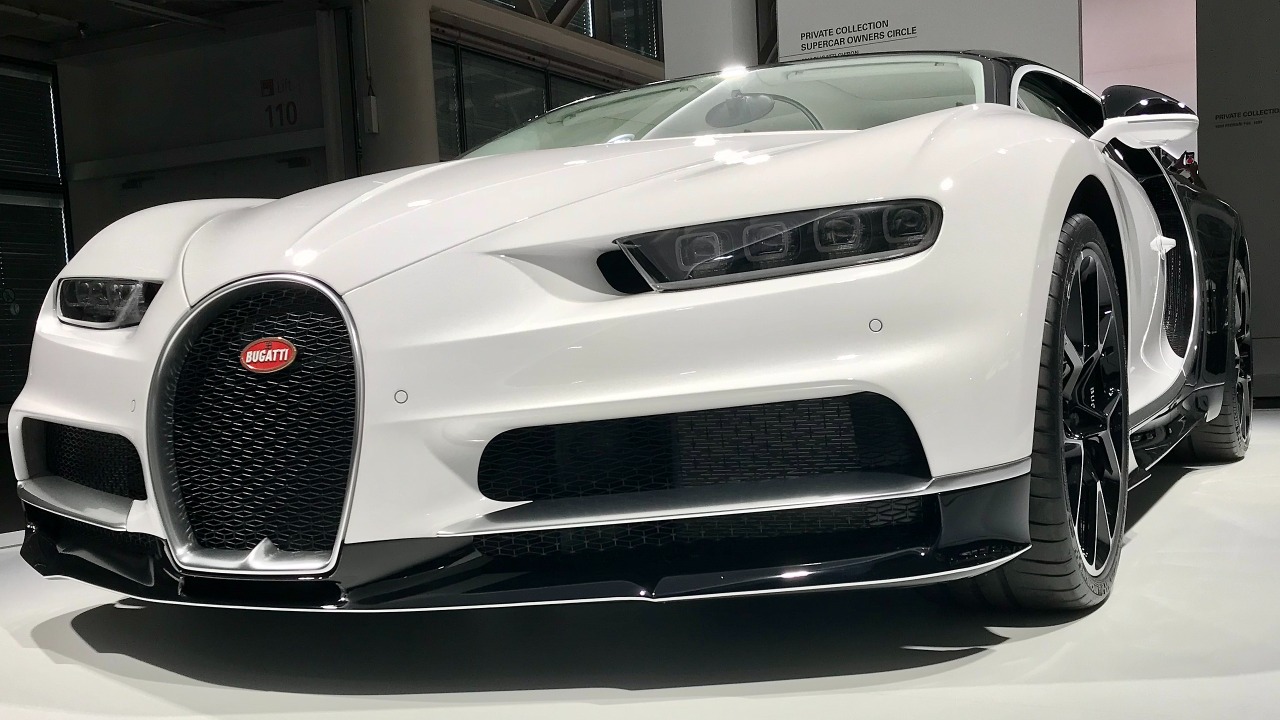
At 300 mph, air behaves less like a gentle flow and more like a dense, shifting wall, so the Chiron Super Sport 300+ had to be sculpted to survive in that environment. Bugatti’s development work focused on managing pressure zones around the car, particularly at the front corners where turbulent air can generate lift and instability. The production car uses carefully shaped air corners on the front corners of the hyper sports car to lead excess air pressure towards the sides, reducing the load on the front axle and helping the car track straight at extreme speed. This is not styling for its own sake but a functional response to the aerodynamic realities that appear once a car passes roughly 250 mph.
The rear of the Super Sport 300+ is equally purposeful. The elongated tail, often described as a “longtail” configuration, extends the bodywork to reduce turbulence and drag behind the car, which is critical when the goal is to push beyond 300 mph rather than maximize downforce for cornering. Every vent, fin, and surface was refined during the two‑year development program that preceded customer deliveries, with the aim of keeping the car stable enough that a driver could, in theory, experience a significant portion of the record car’s performance. The fact that a pre‑production Bugatti Chiron derivative could reach 304.773 mph, and that the production Super Sport 300+ carries over its fundamental aero philosophy, shows how tightly linked the record and the showroom model really are.
From record run to customer garages
Once the engineering was locked in, Bugatti faced a different challenge: translating a world‑record halo into a customer experience that felt both exclusive and complete. The company limited the Chiron Super Sport 300+ to 30 units, and after the two‑year development phase, the first eight cars were prepared for delivery to owners who had effectively bought into the project long before the final specification was frozen. That early batch signaled that the car had moved from engineering experiment to real product, with Bugatti emphasizing that these customers would feel the “incredible sensation of speed behind the wheel” that the record run had previewed.
The story reached its epilogue when the very last Bugatti Chiron Super Sport 300+ was delivered in Jul, marking the completion of all 30 cars. Reporting on that final handover noted that Bugatti had now finished delivering every example of the model, confirming that the production run remained capped at its original figure. Coverage of the final car highlighted that it shared all of the main components with the earlier examples, reinforcing that Bugatti had not diluted the specification as the series progressed. Separate reporting described the Final Bugatti Chiron Super Sport 300+ Has Been Delivered, again in Jul, aligning with the narrative that the project moved from record to prototype to limited production and then closed the chapter once the last customer car left the factory.
What the Chiron Super Sport 300+ changed
The impact of the Chiron Super Sport 300+ goes beyond its own 304.773 mph headline figure. By creating a pre‑production Bugatti Chiron derivative that could break the 300 mph barrier, then building 30 road‑legal cars that embodied that achievement, Bugatti effectively reset expectations for what a production‑based hypercar could do. The record run, verified by technical inspectors and widely reported as a world record for Bugatti, established a new benchmark that competitors would have to acknowledge, whether or not they chose to chase it directly. It also raised uncomfortable questions about where the practical and ethical limits of road‑car speed should lie, given that public roads offer no safe environment for anything close to 300 mph.
From my perspective, the Chiron Super Sport 300+ represents a pivot point in the hypercar story, where the pursuit of top speed collided with the realities of physics, regulation, and customer use. The car’s 1,600 PS engine, its carefully managed air corners on the front corners, and its longtail rear all exist to serve a single purpose: stability and survivability at speeds that most owners will never see. Yet the fact that Bugatti built 30 of these cars, completed a two‑year development program to civilize them, and delivered the final example in Jul shows that there is a market, however small, for a machine that treats 300 mph not as a fantasy but as a validated capability. Whether or not any future production car officially goes faster, the 2019 Bugatti Chiron Super Sport 300+ will remain the moment when the 300 mph dream stepped out of the realm of theory and into customer garages.