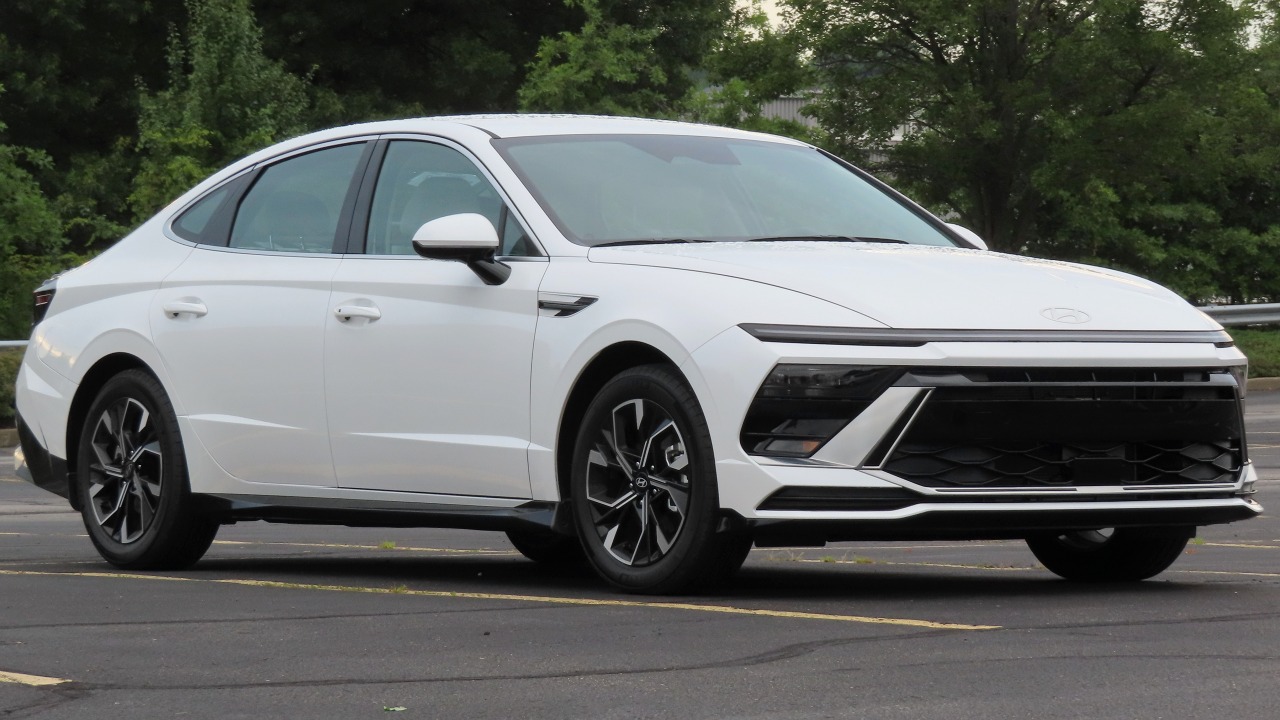
The mid-size sedan segment has spent the past decade fading into the background, but Hyundai is preparing a very different kind of comeback. The 2027 Sonata Heritage is being shaped as a direct shot at the Toyota Camry, pairing retro cues with new technology to give buyers a reason to care about a body style many had written off.
Instead of chasing crossovers, Hyundai is leaning into nostalgia, boxier proportions, and a more characterful cabin while promising meaningful tech upgrades. If the company executes on what early reporting describes, the Sonata Heritage could turn a once forgettable four door into a design-led flagship that forces Toyota to respond.
A retro shape with a strategic target
Hyundai is not hiding its ambition for the next Sonata, and I see the Heritage treatment as the clearest sign that the company wants to confront the Camry on identity, not just price. Reporting on Hyundai’s upcoming mid-size sedan describes a car explicitly aimed at Toyota’s long standing best seller, with bolder styling and more expressive details positioned as the differentiator. Rather than smoothing the Sonata into anonymity, Hyundai appears to be doubling down on a distinctive silhouette and stronger visual presence to stand out in a parking lot full of conservative sedans.
That strategy is reinforced by descriptions of the car’s proportions and surfacing. The next Sonata is expected to adopt boxier, 1980s inspired lines under Hyundai’s so called Art of Steel design language, a deliberate pivot away from the swoopy, coupe like profile of the current car. Squarer shoulders and a more upright stance evoke the sedans that built the Camry’s reputation in the first place, but with sharper detailing that aligns with Hyundai’s recent design confidence. By framing the Sonata Heritage as a style forward alternative to Toyota’s more restrained approach, Hyundai is betting that nostalgia, when paired with modern execution, can be a competitive weapon.
Art of Steel and the return of the three box sedan
What makes the Heritage concept intriguing to me is how it uses retro cues to reassert the classic three box sedan form. Under the Art of Steel banner, Hyundai is reportedly moving toward stronger horizontal lines, flatter body sides, and a more defined trunk, a clear break from the fastback trend that blurred the distinction between sedans and hatchbacks. This shift is not just cosmetic. A boxier roofline and more upright glass can improve headroom and visibility, two areas where style driven sedans often compromise everyday usability.
The 1980s inspiration is not about costume design or superficial throwbacks. Instead, the references to that era’s Sonatas and other family sedans suggest a focus on clarity of form and structural honesty, which fits neatly with the Art of Steel name. Early descriptions of the upcoming Sonata for 2026 to 2027 point to a car that looks more like a modernized version of a traditional sedan than a low slung four door coupe. In a market where many buyers still value a clear trunk and a straightforward silhouette, that could be a practical advantage wrapped in a nostalgic package.
Heritage cues inside and out
On the surface, the Heritage label signals a styling package, but I expect it to reach deeper into the way the car feels to sit in and operate. Exterior details such as squared off wheel arches, simpler light signatures, and more upright grilles can all nod to earlier Sonatas without turning the car into a retro caricature. The key will be restraint, using just enough period flavor to create familiarity while keeping the overall design crisp and contemporary. That balance is what allows a heritage model to appeal both to long time brand loyalists and to younger buyers who simply want something distinctive.
Inside, the retro influence is likely to show up in layout and materials rather than in overtly old fashioned elements. A more linear dashboard, physical switchgear for core functions, and color palettes that echo 1980s and 1990s sedans could all support the Heritage story while still accommodating large screens and modern connectivity. Reporting on Hyundai’s plans for the upcoming Sonata highlights a focus on comfort, flexibility, and subtle retro touches, suggesting that the cabin will be designed to feel familiar and intuitive rather than aggressively futuristic. By grounding the interior in clear ergonomics and tactile controls, Hyundai can differentiate the Sonata Heritage from the more tablet dominated environments that define many current rivals.
Technology as the quiet disruptor
For all the attention on styling, I see technology as the Sonata Heritage’s most important weapon against the Camry. The next generation Sonata is expected to debut a significant new feature for Hyundai, with reporting indicating that it will be the first vehicle from the brand to introduce a major technology upgrade. While the exact system is not fully detailed in the available information, the emphasis on “exciting new technology” suggests a step change rather than a minor software update, and it positions the Sonata as a test bed for innovations that will later filter through the lineup.
That approach fits Hyundai’s broader pattern of using its mid-size sedan to showcase advanced features before they become mainstream. The upcoming model is described as bringing new levels of connectivity and driver assistance, with the Sonata likely to be the first to receive this next wave of capability according to KCB. If Hyundai can pair a nostalgic design with cutting edge safety systems, over the air updates, or more sophisticated semi automated driving, the Heritage trim could appeal to buyers who want character without sacrificing modern convenience. In that scenario, the Camry is no longer just a benchmark for reliability, it becomes a target for technological one upmanship.
Reframing a “lackluster” segment
The Sonata Heritage is arriving in a context where the mid-size sedan is often dismissed as a default choice rather than a desirable one. That perception has been reinforced by years of conservative design and incremental updates, particularly from segment leaders like the Camry. By contrast, Hyundai appears to be using the Heritage model to argue that a family sedan can be both practical and emotionally engaging. The combination of Art of Steel styling, retro cues, and new technology is a direct challenge to the idea that buyers must choose between a sensible appliance and a characterful car.
Reporting on Hyundai’s upcoming sedan strategy underscores how deliberate this repositioning is. The company is described as targeting the Camry with bold updates, including a stronger design identity, improved flexibility, and heritage inspired touches that give the car a story to tell, as highlighted in coverage by Karl Furlong. If Hyundai can deliver on those promises, the 2027 Sonata Heritage will not just be a retro themed trim. It will be a statement that the mid-size sedan still has room to surprise, and that Toyota’s long standing dominance is no longer a given.
More from Fast Lane Only