Kia is preparing a new flagship electric model that it openly describes as a halo car, and the early teasers have ignited a familiar argument among enthusiasts. Some see a long awaited spiritual successor to The Kia Stinger, while others expect a larger, more upright EV7 style crossover that fits the brand’s current sales momentum. I see a company trying to reconcile those two impulses in a single statement car, using design and performance to bridge its enthusiast past and electric future.
A halo brief shaped by sales and strategy
Kia has earned the confidence to pursue a dedicated halo EV after another record year of global volume, and that commercial backdrop matters for understanding what comes next. The company has said it is ready for a new range topping model to showcase its future design language and technology, positioning the project as a flagship rather than a niche experiment. That ambition follows earlier work on a high performance electric car that was targeted at roughly 310 miles of range, a figure that was described as comparable to Tesla, and framed as proof that the brand could compete directly with established EV leaders.
Executives have also been explicit that an all electric grand tourer is under active study as a new halo for the brand, with Song confirming that “that kind of model is under study” when asked about a successor to the Stinger GT. Such a product has been described as a way to keep performance minded customers inside the fold as the lineup electrifies, rather than ceding that space to rivals. When I put those comments alongside the company’s broader EV rollout, including high volume models like the Niro EV and the upcoming Kia EV2 that is set for a major Auto Show unveiling, the pattern is clear: the halo car is meant to sit at the top of a pyramid built on mainstream electric crossovers, not replace them.
Teasers point to a low slung grand tourer
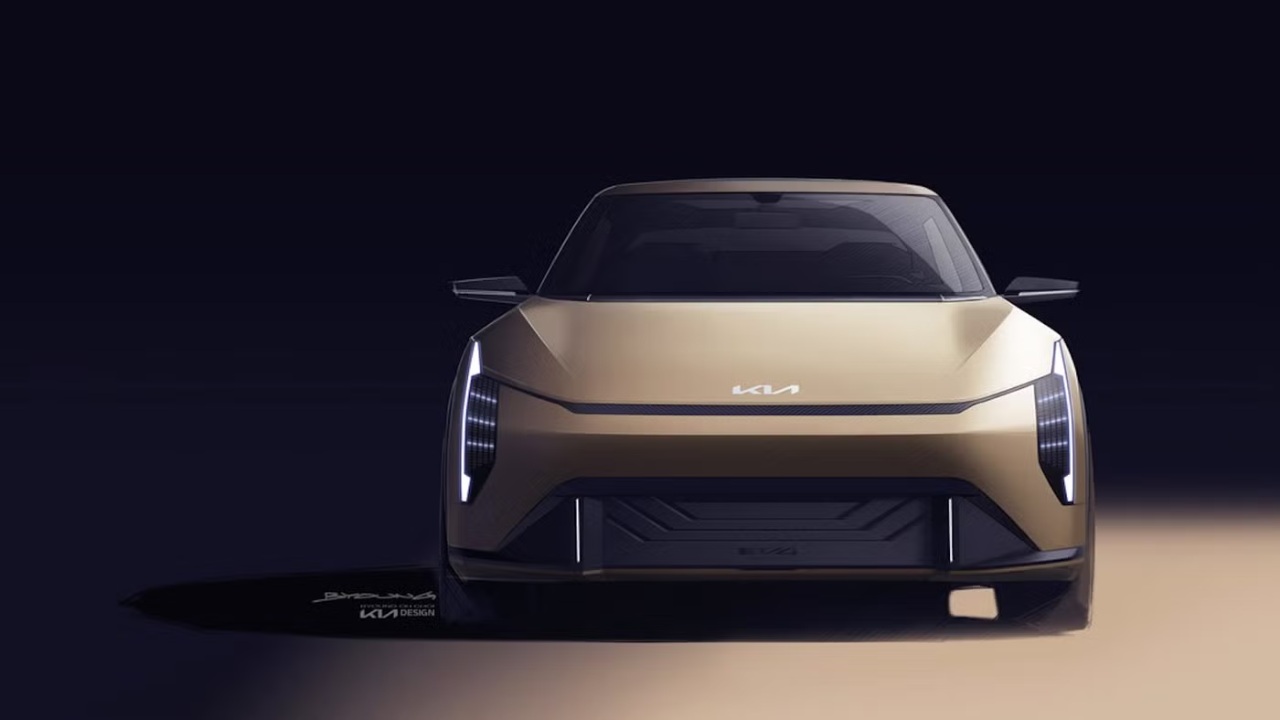
The shadowy images Kia has released so far do not look like another tall crossover, and that is where the Stinger faithful see their opening. The concept appears as a sleek four door coupe with a fast roofline, muscular rear shoulders and a low stance, details that echo the proportions of the original Stinger more than any current SUV. In brightened versions of Kia Instagram shots, observers have picked out square shoulders similar to the EV4, a wraparound glass treatment and surfacing that aligns with the brand’s Opposites United design language, all of which suggest a car intended to turn heads rather than blend into the family parking lot.
Up front, the teasers show a short, almost stubby nose that some have compared to the Honda 0 Saloon concept, with slender LED lighting elements perched high on the body. The overall silhouette reads as a modern electric grand tourer, not a lifted utility vehicle, and that impression is reinforced by a separate Vision Meta Turismo concept that previews a fully electric flagship sedan with a dramatic glass roof and geometric body panels. When I look across these design studies, I see a consistent attempt to evolve the Stinger’s long hood and fastback profile into an EV specific shape that takes advantage of a skateboard platform while still signaling performance intent.
Stinger successor or EV7 style flagship
The core debate among fans is whether this halo EV is primarily a successor to The Kia Stinger or the first in a new line of numbered flagships such as EV7 or EV8. On one side are those who point to the car’s low roof, four door coupe layout and explicit references to a spiritual successor to the Stinger, arguing that Kia is finally giving its discontinued sports sedan a second life in electric form. They note that The Kia Stinger bowed out quietly in 2023 despite a loyal following, and see the new concept as a way to correct that by delivering similar driving excitement without gasoline.
On the other side are observers who focus on the naming space Kia has left open in its EV lineup, with EV7 and EV8 both available for a larger, more premium model that could serve as the brand’s equivalent to the Hyundai Io based halo from its corporate cousin. From that perspective, Whatever Kia chooses to call the car matters less than its role as a technology and design showcase that sits above existing EV crossovers. I find the most convincing reading is that Kia is trying to do both at once, using a single flagship to satisfy Stinger nostalgia while also creating a numbered EV7 or EV8 style nameplate that can expand into a family of high end electric models over time.
Hardware hints at serious performance
Beneath the styling, the available technical clues point to a car that is meant to be more than a design exercise. The halo EV is expected to use the more expensive 800-volt version of the E-GMP platform, with a rear wheel drive bias that enthusiasts associate with playful handling and, as some reports put it, even drift friendly behavior. That architecture would align with earlier plans for a high performance electric model with around 310 miles of range, and it would give Kia the charging and efficiency headroom it needs to compete with premium rivals while still delivering the long distance capability grand tourer buyers expect.
Power figures being discussed are equally ambitious. One publication has long reported that the Stinger’s EV successor could produce up to 450 kW in dual motor, all wheel drive form, which would place it firmly in the territory of established performance EVs. Separate rumors around a GT1 variant suggest configurations with a 160 kW motor at the front and rear, or an alternative setup with a 200 kW unit in front and a 250 kW motor at the rear, combinations that would comfortably clear the 600 horsepower mark. When I connect those numbers to talk of a 500 mile electric flagship sedan previewed by The Kia Vision Meta Turismo Concept, it becomes clear that Kia is not content with a modest step up from its current EVs, it is targeting headline grabbing specifications.
What the halo EV means for Kia’s identity
For a brand that once struggled to be taken seriously by performance enthusiasts, the decision to invest in a dedicated halo EV is as much about identity as it is about sales. The original Stinger was often described as the first truly fun gas powered Kia, and its discontinuation left a gap in the lineup that crossovers could not fill. By pursuing an electric grand tourer that blends Stinger like proportions with cutting edge hardware, Kia is signaling that it wants to carry that enthusiast credibility into the battery era rather than letting it fade as combustion models retire.
I also see the project as a test of how far mainstream brands can stretch into premium territory without losing their core audience. Kia has built its recent success on practical EVs such as the Niro EV and the upcoming EV2, but a halo car asks customers to see the badge as a rival to more established luxury players. If the new flagship arrives with the kind of design drama previewed by Vision Meta Turismo, the 800-volt E-GMP platform, and outputs in the 450 kW range, it will give the brand a powerful symbol of its ambitions. Whether fans ultimately call it the Stinger’s heir or the first true EV7, the car’s real job will be to convince drivers that Kia can be both a volume leader and a maker of genuinely desirable electric performance cars.
More from Fast Lane Only