Across major cities, automated cameras are transitioning from pilot projects to continuous, 24/7 monitoring on streets and highways. Instead of officers pulling over drivers for speeding, running red lights, or blocking bus lanes, systems equipped with sensors, radar, and artificial intelligence are beginning to handle much of that work on their own. The promise is fewer dangerous encounters during traffic stops and more consistent enforcement, but the tradeoffs around privacy, equity, and due process are only starting to come into focus.
From New York to California, 24/7 monitoring is no longer a futuristic concept but an increasingly standard feature of traffic management. City leaders, state agencies, and technology vendors argue that automated enforcement can reduce crashes and free officers for other duties, while critics warn of constant surveillance and the risk of revenue-focused enforcement. How those tensions are resolved will determine whether cameras truly replace a large share of traditional traffic stops or simply sit alongside them as another contested tool.
From patrol cars to permanent cameras
Automated enforcement is expanding most visibly in large metropolitan areas that already manage complex transportation networks. In California, officials in Los Angeles, San Francisco, Oakland, San Jose, and Long Beach are preparing or deploying camera networks that can watch traffic continuously rather than relying on sporadic patrols. These systems do not tire, are not delayed by other calls, and can monitor lanes or intersections without an officer present. The shift reflects a broader belief that technology can deliver steadier enforcement than human officers, particularly on high-injury corridors where speeding and red-light running are entrenched habits.
New York City has already converted that theory into practice by activating speed cameras on a 24/7 schedule after Mayor Adams, working with Governor Hochul and the state Legislature, formally expanded the program. City officials framed the change as a life-saving measure, and advocates such as Felicia Park Rogers publicly praised Governor Hochul, Mayor Adams, and the Legislature for backing automated enforcement in school zones. A similar safety-first narrative is emerging on the West Coast, where advocates in Oakland highlight that Six percent of Oakland streets account for 60% of collisions and argue that concentrating cameras on those segments can prevent severe crashes. The result is a growing assumption among policymakers that, at least on some streets, an automated camera is more effective than a patrol car waiting for violations to occur.
How the new systems actually work
Behind the political debate sits a dense layer of engineering that makes automated enforcement possible. A modern speed camera system relies on radar, LIDAR, or another type of sensor to detect when a vehicle crosses a threshold above the posted limit, then pairs that reading with a high-resolution image of the license plate and vehicle. Technical guides describe an Automated Speed Camera as a setup that can operate without an officer at the scene, using embedded loops, side-mounted radar, or overhead LIDAR to measure speed with precision. Products such as The Guardian Pro Speed Radar Camera are marketed as state-of-the-art systems that combine radar detection with digital imaging so that a single unit can monitor multiple lanes and capture usable evidence in varied weather and lighting conditions.
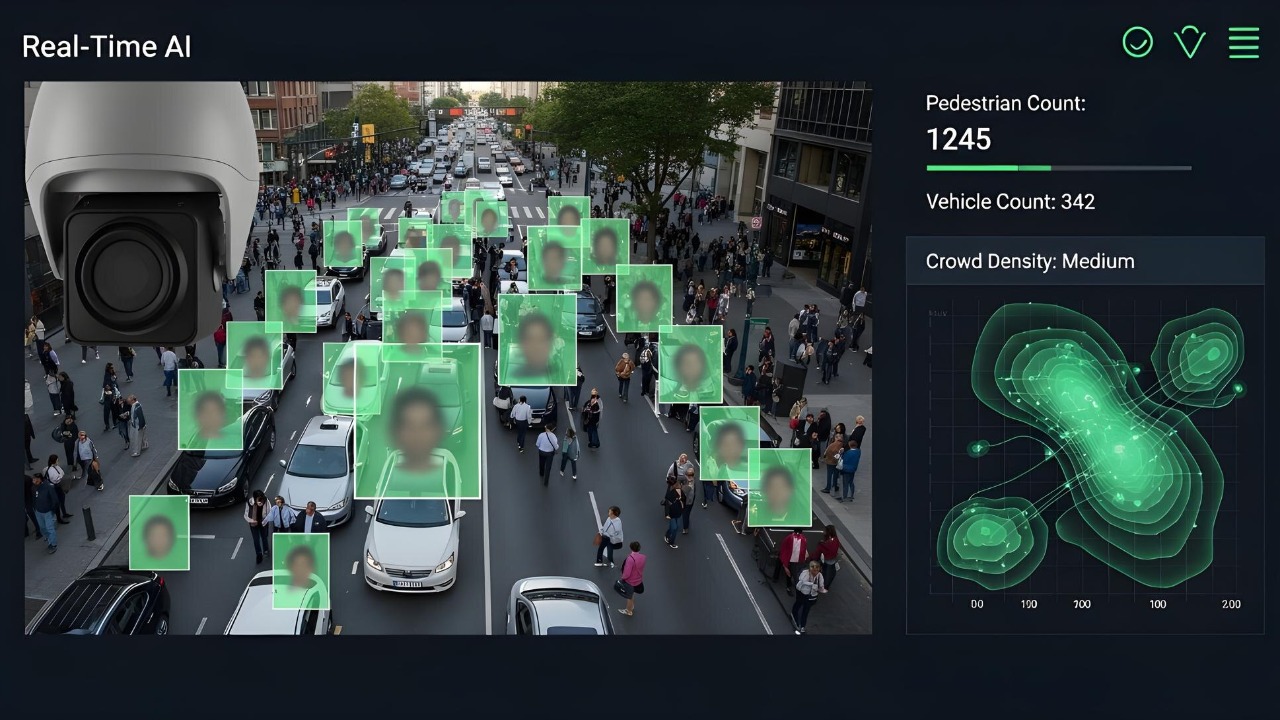
Artificial intelligence is increasingly layered on top of these hardware foundations. In the United Kingdom, AI traffic cameras capture vehicle images and use software to detect speeding, red-light violations, and lane encroachments automatically. In Australia, Feb guidance from authorities in Victoria describes cameras that detect and take photos of drivers who are using a portable device or not wearing their seatbelt correctly, extending automation beyond speed into distracted driving and restraint use. Similar approaches are visible in smart traffic monitoring systems promoted abroad, where The Royal Oman Police highlight AI-powered cameras, sensors, and real-time data analysis as tools to spot speeding, signal violations, and other offenses more efficiently through continuous analysis of sensor feeds.
Evidence that cameras change driver behavior
Supporters of 24/7 monitoring argue that the technology does more than issue tickets; it reshapes how people drive. National traffic safety researchers describe Speed Safety Camera Enforcement (often abbreviated SSC) as an effective countermeasure, with evaluations linking SSC programs to measurable reductions in speed and crashes when cameras are placed and managed carefully. Local results are starting to mirror those national findings. In San Francisco, transportation officials report that Our Speed Cameras are Working and that an Initial Evaluation Shows Drivers are Slowing Down where devices have been installed, suggesting that the presence of a camera can deter risky behavior even when a driver never receives a citation.
Other cities have documented similar shifts. In Philadelphia, a program of automated speed cameras on Roosevelt Boulevard is administered by the Philadelphia Parking Authority, which notes that the devices have become a central piece of a broader safety strategy and that fines are routed through a defined process rather than left to officer discretion. In New York City, camera-equipped transit buses began issuing $50 tickets to vehicles blocking bus lanes, a targeted enforcement tactic that aims to keep buses moving and discourage drivers from treating transit lanes as temporary parking. Internationally, distracted driving and seatbelt detection cameras described in Feb guidance from Victoria are positioned as part of a long-term road safety agenda that treats constant monitoring of high-risk behaviors as a public health tool rather than a narrow policing tactic.
Revenue, privacy, and the fear of constant surveillance
For all the safety data, automated enforcement faces persistent skepticism about motives and methods. Perhaps the most vocal criticism, as one local debate in Centre County summarized, is that automated speed enforcement would be exploited as a revenue source for municipalities and not as a genuine safety intervention. That concern has surfaced in Washington, where Jan commentary on efforts to change the District of Columbia camera program highlighted residents who see tickets as a regressive tax on drivers. Individual motorists echo that sentiment; Jan remarks from Rudy Alesandro described frustration at receiving multiple tickets and a perception that cameras are more about generating money than preventing injuries and deaths.
Privacy advocates focus on data collection risks. The ACLU warned that Flock cameras could share driver information even if police opt out, raising concerns that license plate scans and travel records might be used beyond traffic enforcement. Similar concerns have surfaced in El Paso, where Feb reporting on local Flock cameras noted that The ACLU questioned how long data should be stored and how to ensure that monitoring remains consistent with constitutional rights. As cities adopt dynamic parking rules and stricter license plate enforcement, private vendors provide platforms for 24/7 monitoring, emphasizing continuous data collection in urban traffic management.
Designing camera programs that replace, not replicate, bad stops
Policymakers acknowledge that the design of automated programs will determine whether cameras reduce or exacerbate inequities historically seen in traffic stops. In Oakland, advocates point to evidence that Black Oaklanders are three times more likely to be killed in traffic crashes and argue that automated speed enforcement, if focused on the limited network where Six percent of Oakland streets account for 60% of collisions, can save lives while avoiding discretionary stops that disproportionately affect communities of color. Bernalillo County Announces Start of Automated Speed Enforcement Program with an explicit goal to Improve Road Safety, and county leaders in Bernalillo County, NM have tied camera enforcement to graduated penalties that include fines and, in some cases, four hours of community service, a structure meant to balance accountability with education.
More from Fast Lane Only