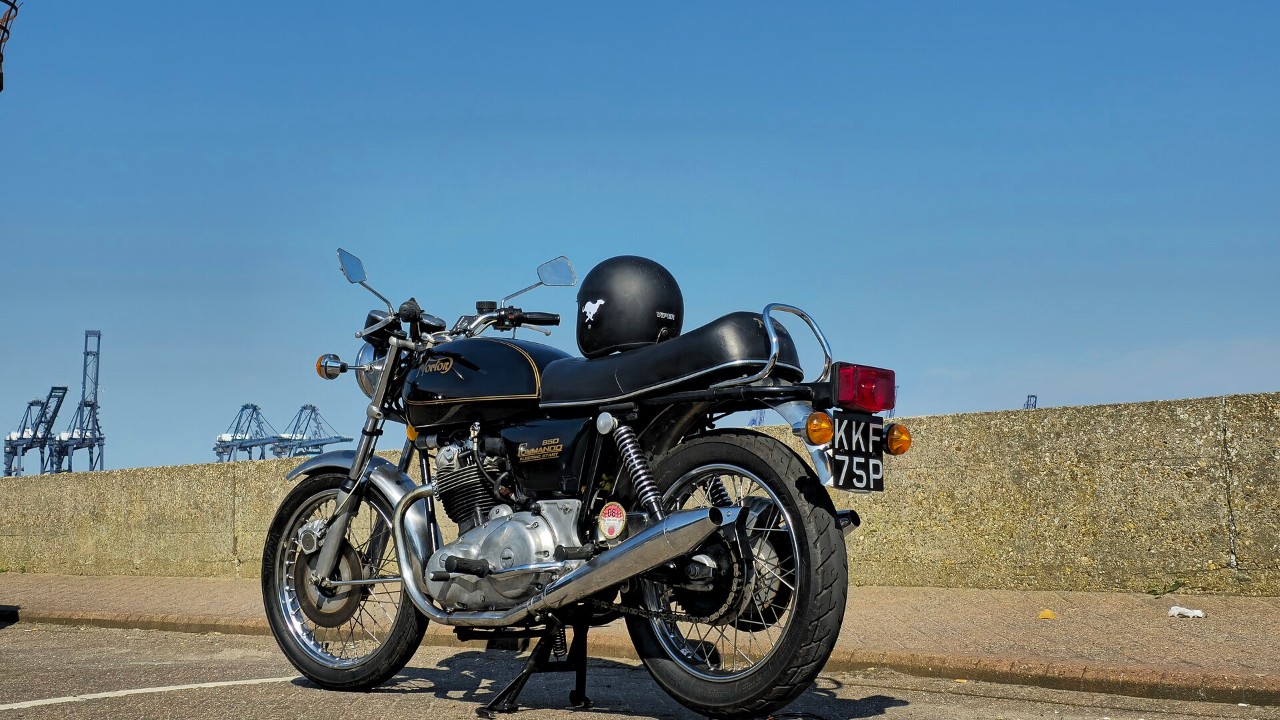
Norton’s road to the Norton Commando 850 began with a single-cylinder engine. The Model 18 of the early 1920s was the company’s first overhead-valve design, and the 828cc Commando 850 arrived in 1973. In between came racing singles, the Featherbed frame and a run of parallel twins.
Because dates vary, each machine below is sourced to the Norton Owners Club, a period road test, a museum or a specialist history. Where the sources disagree on a date, the entry says so.
1. Norton Model 18, the first overhead-valve Norton
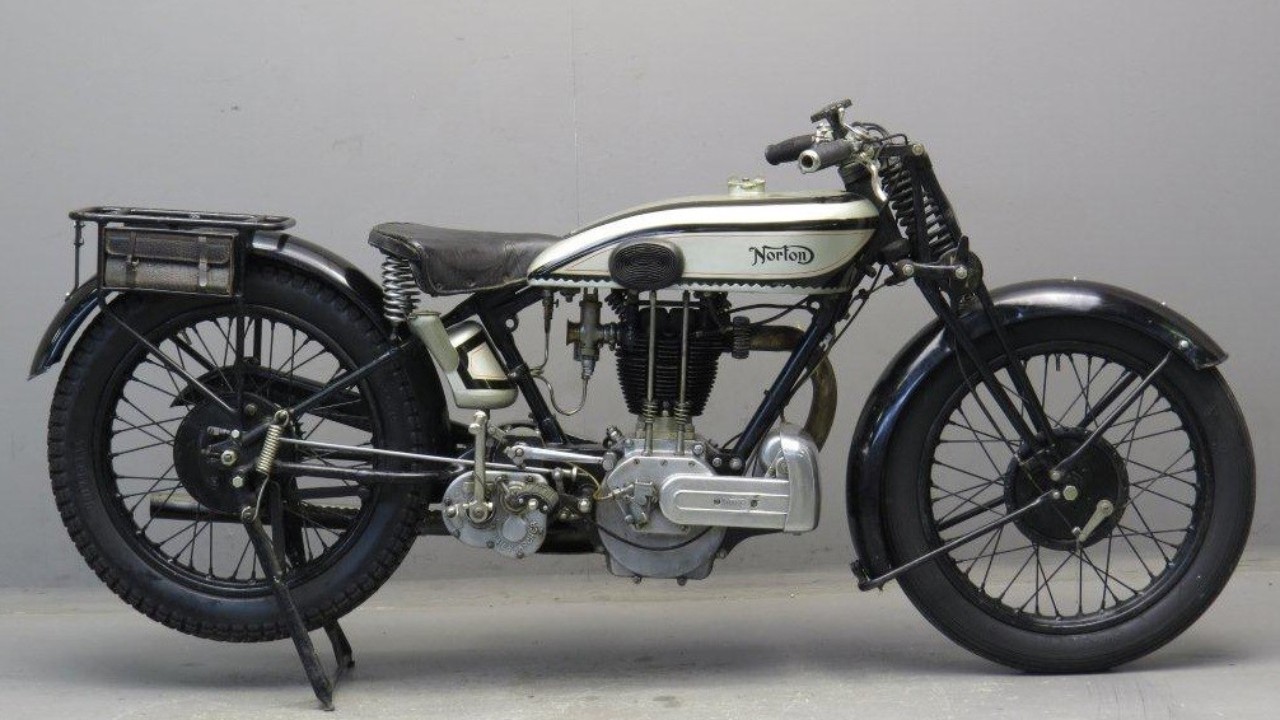
The Model 18 was Norton’s first overhead-valve engine. It followed two decades of side-valve machines. Its 490cc single had a 79 mm bore and a 100 mm stroke.
The Norton Owners Club dates the launch to 1922, while Hagerty gives 1923 and rates it at about 20 bhp at 5,000 rpm. Both agree on the win that made its name: Alec Bennett took the 1924 Senior TT on one. Production then ran into the mid-1950s.
2. 1927–1939 Norton CS1
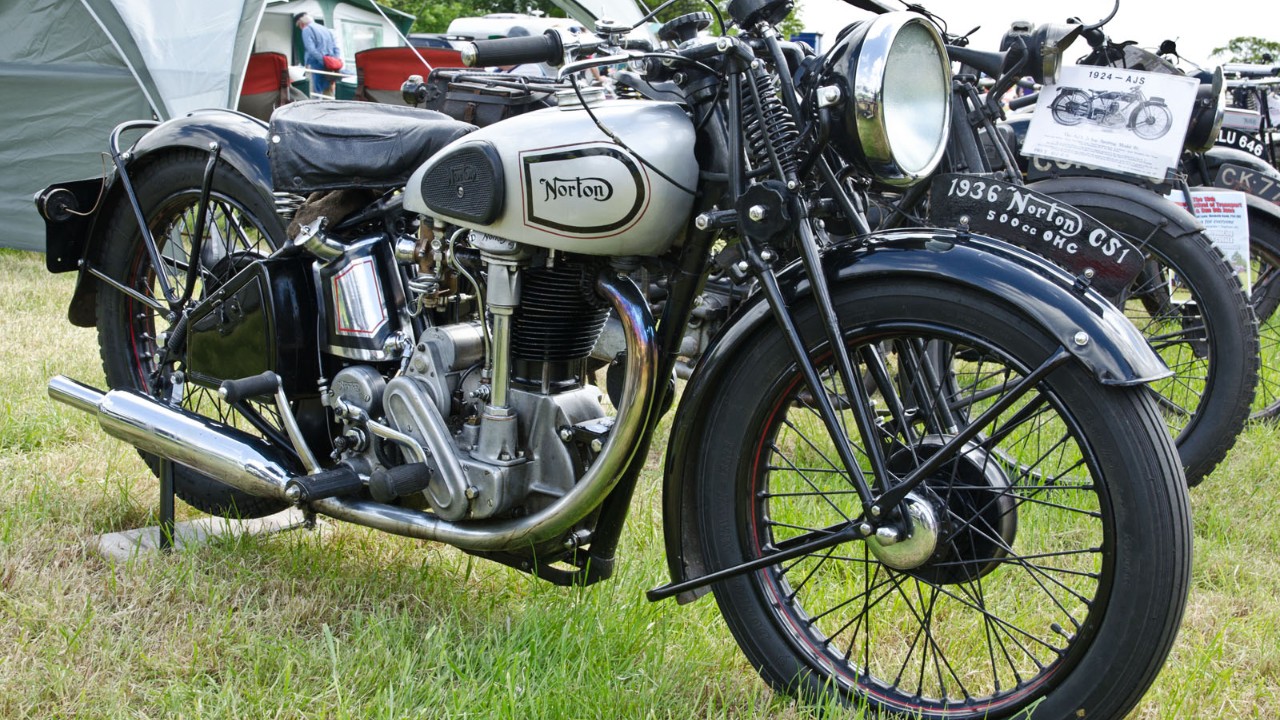
The CS1 put an overhead camshaft on the same 79 x 100 mm dimensions, according to Cybermotorcycle. Walter Moore designed it, and bevel gears with a vertical shaft drove the cam. Despite the “500” often attached to it, the specification lists 490cc.
It debuted at the 1927 Isle of Man Senior TT, where Alec Bennett won by a full eight minutes. Meanwhile, Stanley Woods, also on a CS1, set a lap record of 70.99 mph. Hagerty notes that the CS1 then became Norton’s sports flagship, which pushed the Model 18 into a sports-touring role.
3. Norton Manx
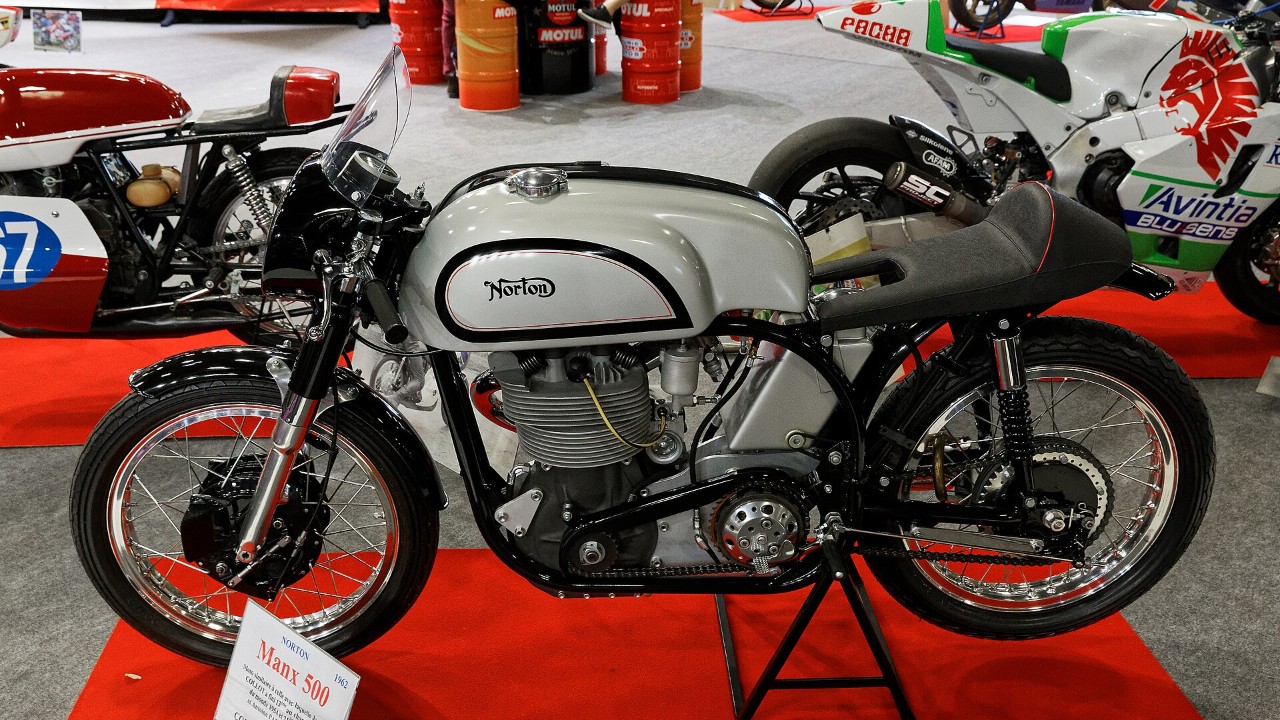
The Manx was a pure racing single. Hagerty describes a 500cc engine with gear-driven double overhead camshafts, magnesium cases and a large Amal GP carburetor.
Its bronze-welded double-cradle frame arrived in 1950. According to Hagerty, that frame set the handling standard until aluminum perimeter chassis appeared in the 1980s. The magazine also says the Manx won on the international circuit from 1950 to 1969. In fact, the writer’s own Manx 30M was one of 62 500cc grand prix machines hand-built in Norton’s London race shop for 1961.
4. 1952 Norton Dominator 88
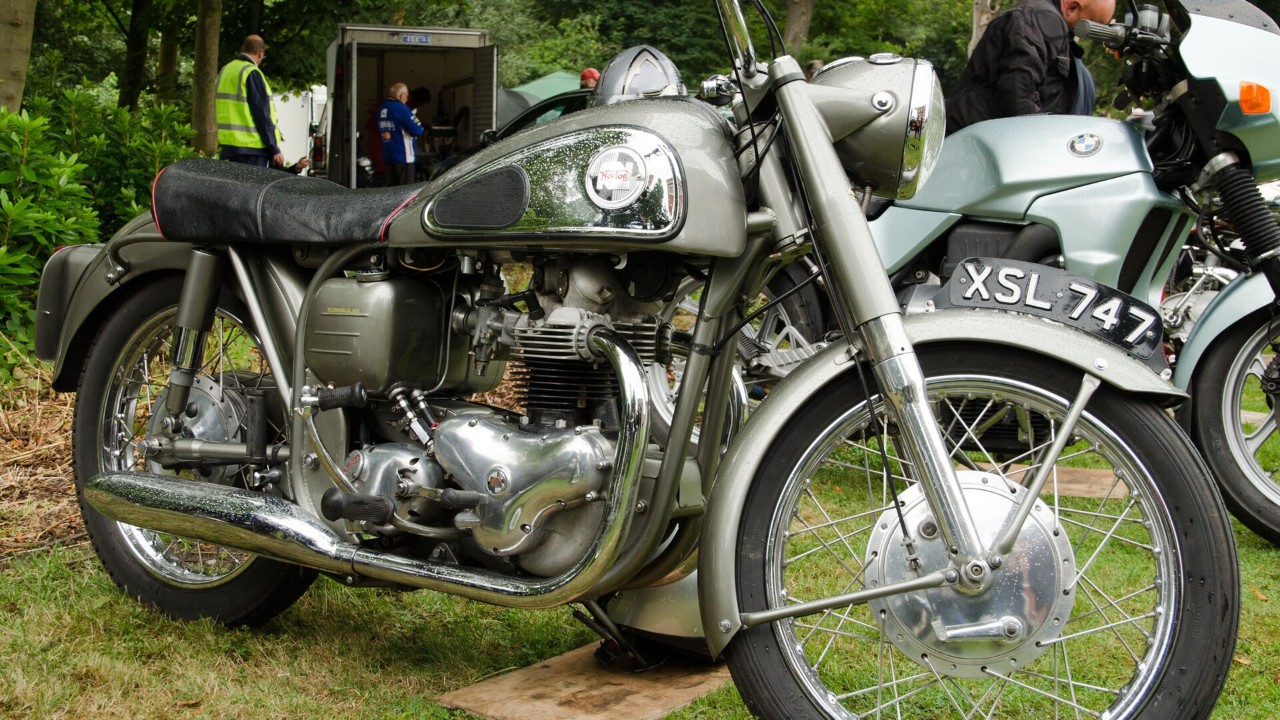
Norton introduced the Dominator in 1949 as the Model 7, a 500cc-class parallel twin built to take on Triumph’s Speed Twin. Bert Hopwood designed the engine, according to Hagerty UK.
The 88 then became the first roadster with the Featherbed frame, designed by Rex McCandless. Racer Harold Daniell coined the name in 1950, who said riding his Manx was “like riding on a feather bed.” After that, the 88 went on sale for export in 1952 and in Britain in 1953. Its 497cc twin made 30 bhp at 7,000 rpm, good for about 95 mph.
5. Norton Atlas
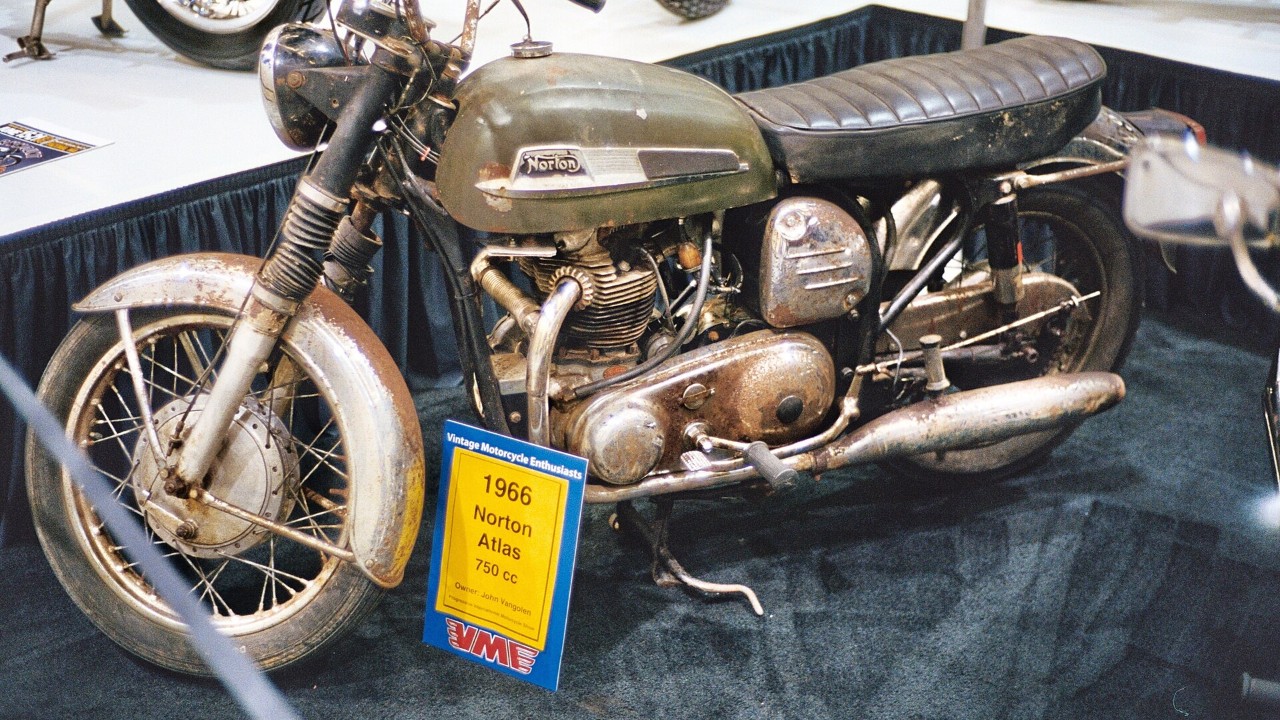
The Atlas stretched Norton’s twin to 745cc, up from the Manxman’s 646cc. Cycle World tested one in March 1963 and found the bore enlarged from 2.68 to 2.98 inches. The magazine quoted more than 60 bhp, with power peaking at 6,500 rpm.
Its frame, Cycle World said, was a two-loop design adapted from Norton’s Featherbed racing frame. The test bike cost $1,124 and ran just short of 120 mph. By the AMA’s account, the Atlas also fathered the next Norton on this list.
6. Norton Commando 750
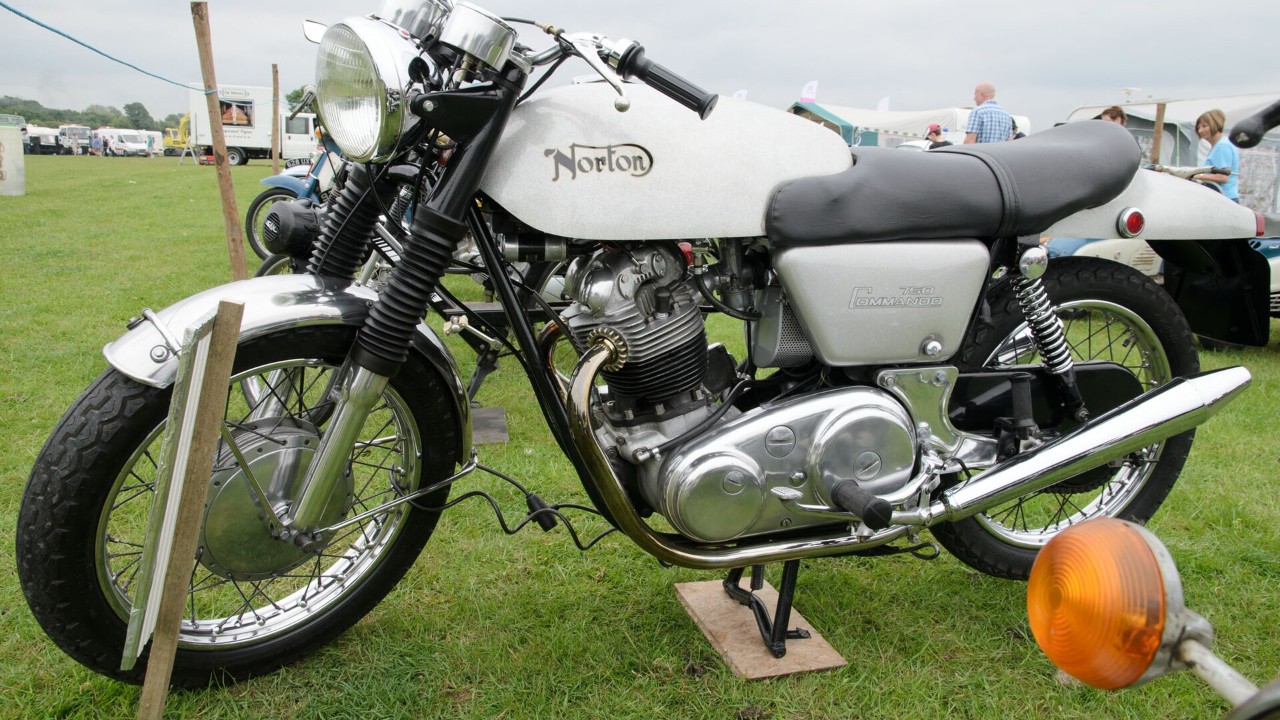
The Commando used a Bert Hopwood-designed engine, but it changed how that engine met the frame. According to Rider, chief engineer Bernard Hooper and Stefan Bauer developed the Isolastic rubber-mount system to cut vibration. The National Motorcycle Museum explains that it carried the engine, transmission and swingarm in a separate subframe on rubber mounts.
The museum lists a 745cc air-cooled parallel twin and dates the Commando Fastback to 1968, as Rider does. However, the AMA Hall of Fame says Norton launched the 750 in 1967. Later, for 1972, Norton added a high-compression Combat engine claimed at 65 hp, but Rider says it could not hold up.
7. 1973 Norton Commando 850
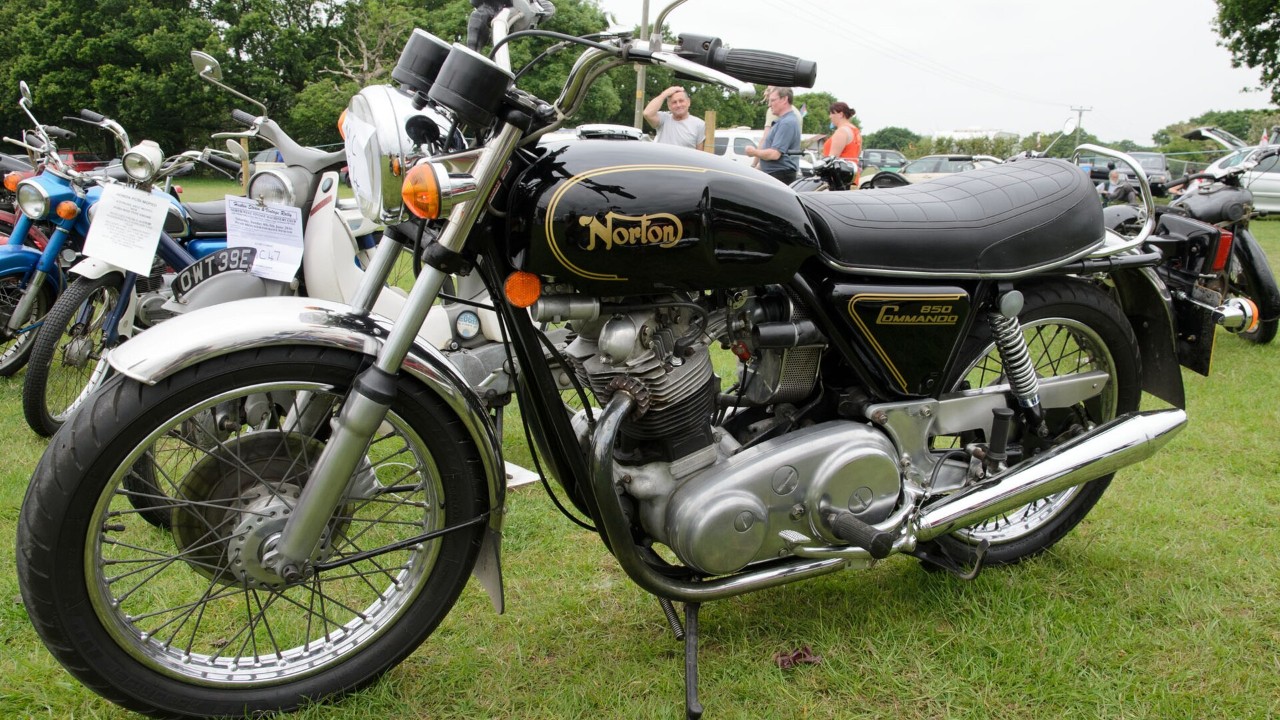
For 1973, Norton bored the twin to 77 mm, which gave 828cc. Rider says the company called it an 850 and claimed 60 hp at 6,200 rpm. The AMA Motorcycle Hall of Fame says the Norton Commando 850 succeeded the 750 with quality and reliability improvements.
The 1975 Mark III added an electric starter, a pedal swap for U.S. shift rules and a rear disc brake. Then Norton’s finances collapsed, and the final Norton left the line in October 1977, according to Rider. Finally, the AMA put one early 850 on display in its museum lobby. Donated by Al Lankford and his family, it was No. 41 from the first batch built at Andover, England.
More from Fast Lane Only
- Unboxing the WWII Jeep in a Crate
- 15 rare Chevys collectors are quietly buying
- 10 underrated V8s still worth hunting down
- Police notice this before you even roll window down
This article was created with the help of AI and was reviewed and edited by Fast Lane Only editors before publication.