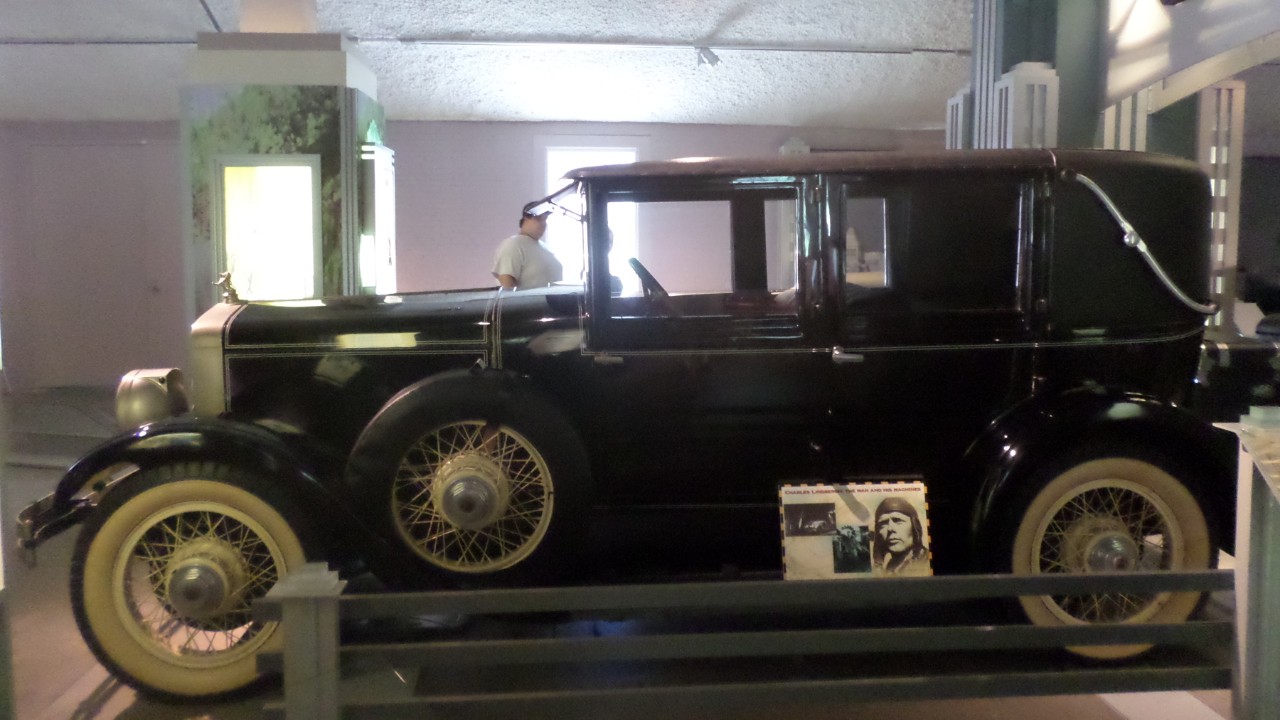
Charles Lindbergh owned a 1928 Franklin Airman sedan, but he did not shop for it. Franklin gave it to him. The Syracuse, New York, company built only air-cooled cars, and Lindbergh had just crossed the Atlantic behind an air-cooled engine. The Franklin Airman was the sedan that tied those two facts together.
Today, however, the car belongs to The Henry Ford in Dearborn, Michigan. Lindbergh gave it to Henry Ford himself in 1940. It is not on public exhibit, but the museum’s collection record tells its story in plain terms.
So here is what the Airman was, why Franklin wanted Lindbergh behind its wheel and what became of the car. Every figure below comes from the museum’s record, a Franklin historian or the aviation record of his flight.
Franklin built only air-cooled cars
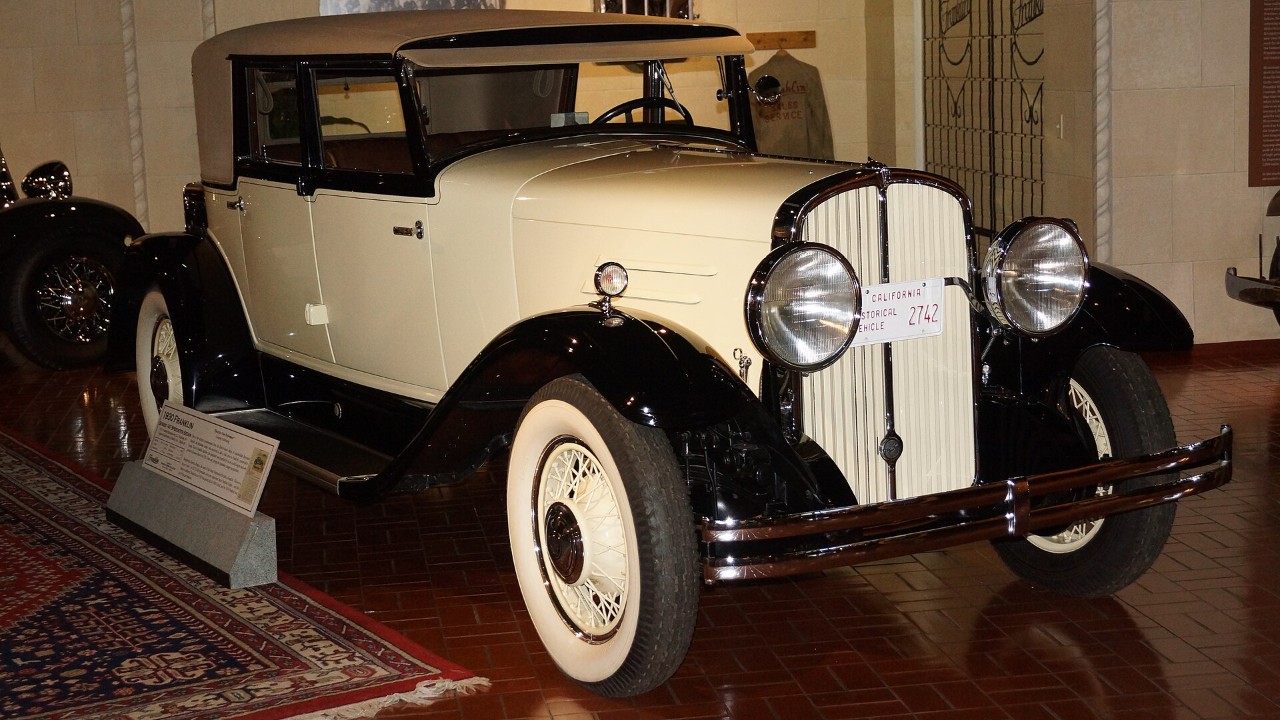
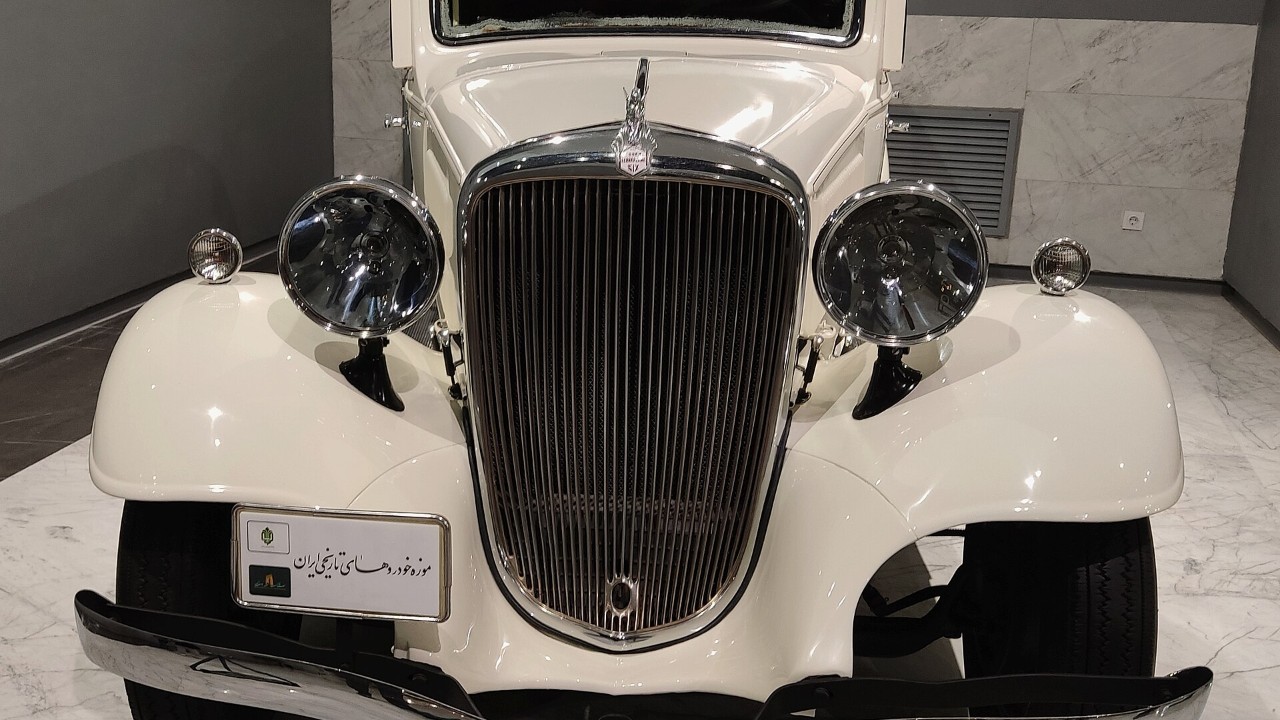
The H.H. Franklin company built air-cooled cars from 1902 to 1934, according to automotive historian Kit Foster’s history of the marque. At first, its cars were light runabouts with four-cylinder engines mounted crosswise. Later, every Franklin engine used overhead valves. Because there was no radiator to feed, Foster notes, the front of the car was purely functional.
Herbert H. Franklin had founded the company in Syracuse with engineer John Wilkinson. Hagerty dates its air-cooled engine to 1902. The firm aimed at well-off buyers, and its slogan was “Aura Vincit,” or “Air Conquers.” Over 32 years, Hagerty says, Franklin built about 150,000 cars and sold them in 525 American cities and 12 countries.
Lindbergh’s flight ran on an air-cooled engine
Lindbergh left New York on May 20, 1927, flying the Spirit of St. Louis alone. He landed in Paris 33 hours and 30 minutes later, according to This Day in Aviation. That nonstop solo crossing also won him the $25,000 Orteig Prize.
The airplane’s engine is the part that mattered to Franklin. After all, it was a Wright J-5C Whirlwind, a nine-cylinder radial cooled by air instead of water. The Whirlwind displaced 787 cubic inches and was rated at 220 horsepower at 2,000 rpm, according to the same site’s record of the airplane. In 1928 Lindbergh’s plane went to the Smithsonian, and it is on display at the National Air and Space Museum.
Why Franklin launched the Franklin Airman
Franklin moved fast after the flight. The company introduced an “Airman” sedan and gave one to Lindbergh, according to The Henry Ford’s collection record. The museum ties the two events together: Lindbergh had flown the Atlantic with an air-cooled engine, and Franklin built air-cooled cars.
Hagerty puts it the same way. In its account, the 1928 Airman honored aviation feats, with Lindbergh’s solo crossing among them. Hagerty also calls Lindbergh an enthusiastic Franklin owner, drawn by the car’s aviation-style engineering.
Foster adds the mechanical news. The Airman arrived for 1928 as the first Franklin with four-wheel hydraulic brakes. Meanwhile, some cars of what he calls the “Lindberg era” wore a Spirit of St. Louis ornament. The Franklin club’s spotter guide notes that the 1928 cars also got larger engines.
Did Lindbergh pay anything? Driven to Write’s history of the company counts him among the first Airman owners. However, it argues he almost certainly never paid for the car, since his name was worth so much to Franklin.
The Franklin Airman Lindbergh drove
The Henry Ford lists the car as a 1928 Franklin Airman Sport Sedan in black and cream. In addition, it measures 184.5 inches long, 67 inches wide and 71 inches high. The museum lists steel, wood, glass, leather, rubber, nickel and mohair among its materials.
Also, a plate on the firewall carries the maker’s name and its Syracuse address. It also shows a patent notice and chassis number X-176972L12.
Lindbergh kept the car until 1940. That year he gave it to Henry Ford for the Henry Ford Museum’s collection. As a result, the museum’s credit line still reads “Gift of Charles A. Lindbergh,” under object ID 40.222.1.
Aviators kept buying Franklins
Lindbergh was not the only flier in a Franklin. Driven to Write names Amelia Earhart among the aviation figures who drove them, and it says she bought a Series 17 Twelve. That car used a 6.5-litre air-cooled V12 rated at 150 horsepower. Foster describes the V12 model as riding on a 144-inch wheelbase.
Sales peaked soon after the Airman launch, too. Driven to Write puts 1929, Franklin’s best year, at 14,452 cars. Then the Depression arrived. Sales fell below 6,000 in 1930 and to a little over 2,800 in 1931.
What happened to Franklin
Franklin was never very profitable, according to Driven to Write. In fact, it paid a proper dividend only once, in 1925. The automotive arm went bankrupt in April 1934.
Finally, Foster’s account of the end is blunt. After 360 cars in 1934, he writes, Mr. Franklin simply gave up. Even so, the gift car outlived the company. Lindbergh’s Franklin Airman remains in The Henry Ford’s collection, chassis X-176972L12, listed as not on public exhibit.
More from Fast Lane Only
- Unboxing the WWII Jeep in a Crate
- 15 rare Chevys collectors are quietly buying
- 10 underrated V8s still worth hunting down
- Police notice this before you even roll window down
This article was created with the help of AI and was reviewed and edited by Fast Lane Only editors before publication.