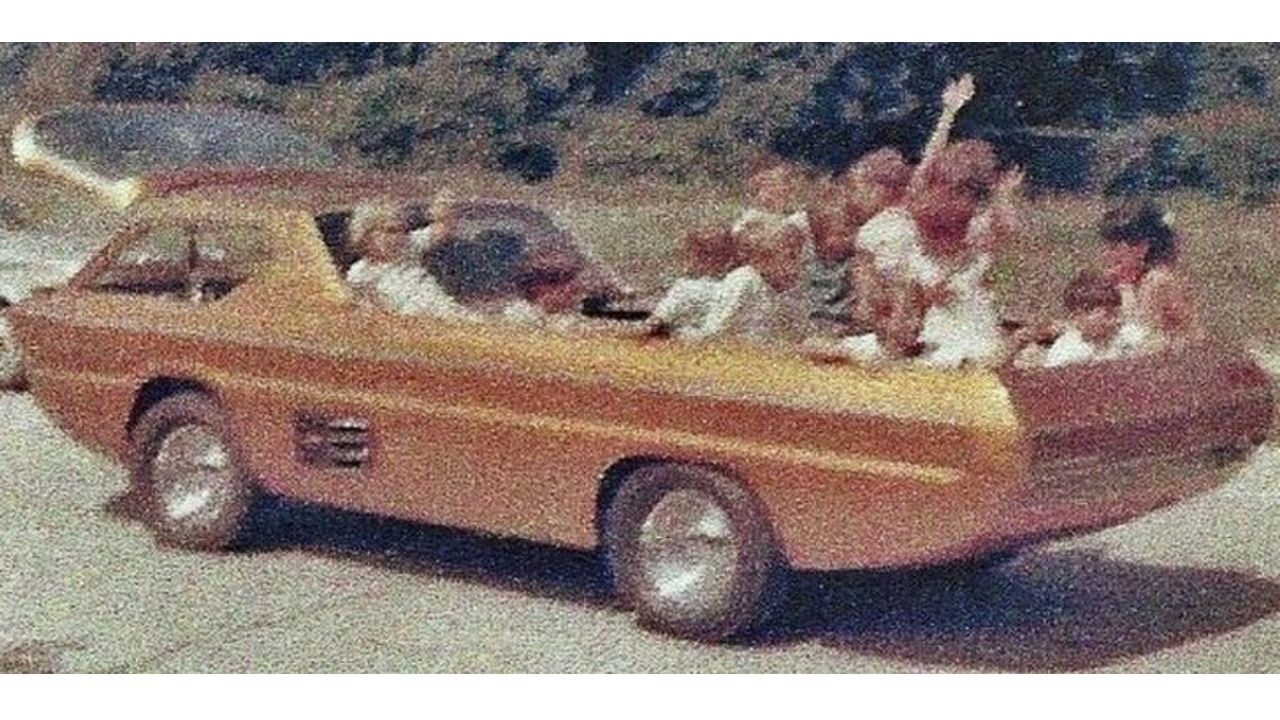
The Dodge Deora has no doors. To get in, you swing open the front of the cab and climb in from the nose. Detroit customizers Mike and Larry Alexander built it from a Dodge A100 cab-over pickup, and in 1967 it won the Detroit Autorama’s top award.
A year later it showed up in toy form. The Deora was one of the original 16 Hot Wheels cars that Mattel released in 1968. Still, the full-size truck came first, and it was hand-built in Detroit.
Here is how the brothers built it, why the hatch took two tries and what the truck brought when it finally crossed an auction block.
The Alexander Brothers and Harry Bradley
Mike and Larry Alexander began customizing cars in their father’s garage in the mid-1950s, according to SEMA News. Their shop, meanwhile, was in Detroit. The Deora, however, began as a drawing by designer Harry Bradley. SEMA News says he sketched the concept in his off hours.
Chrysler executives loved the rendering, SEMA reports, and they gave the brothers an A100 to customize. Street Muscle adds that Dodge sent a stripped-down truck after seeing the sketch. A Ford cab-over was the backup plan if Dodge had passed.
What the Dodge A100 was
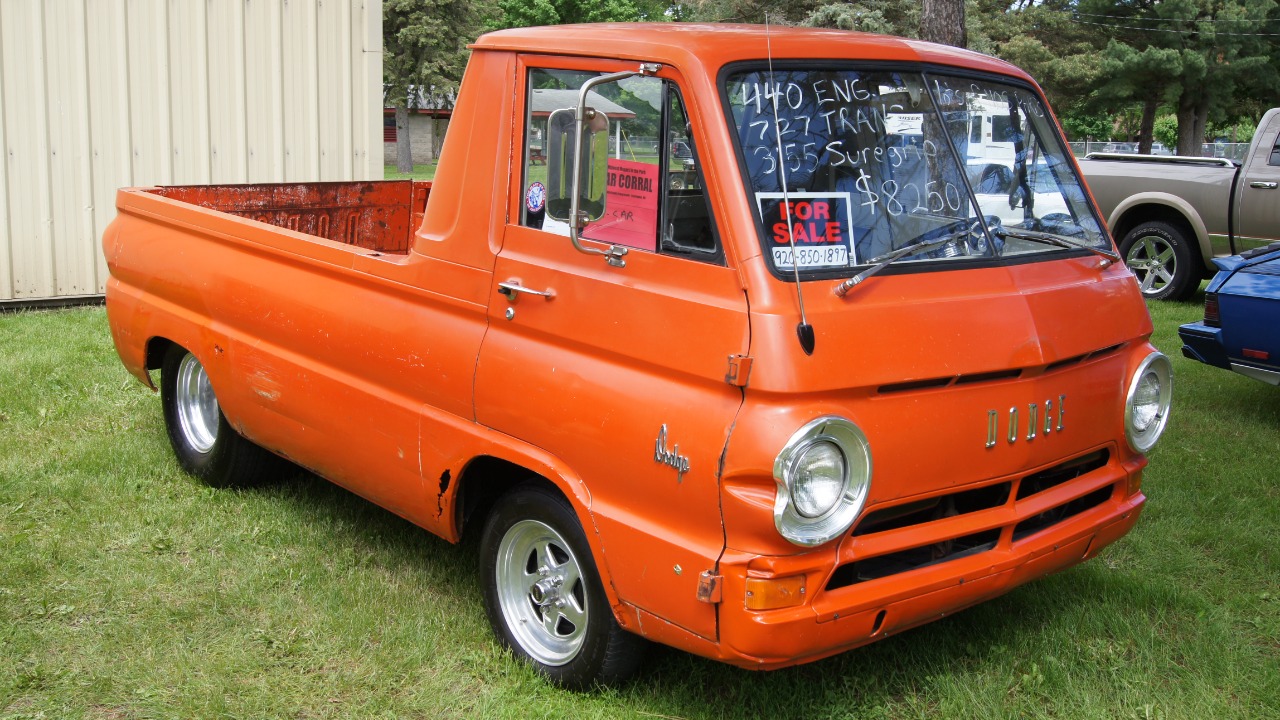
The A100 was Dodge’s compact cab-over line, built from 1964 to 1970, according to Mac’s Motor City Garage. Its van closely followed Ford’s Econoline. The pickup rode a 90-inch wheelbase.
For 1964, the standard engine was a 170-cubic-inch Slant Six rated at 101 horsepower, with a 225 six optional. A 273 V8 arrived for 1965, Mac’s says, and a 318 V8 followed for 1967. In a cab-over, the engine sits largely inside the cab. Street Muscle notes that this left room for big changes to the front end.
The Deora was not the only famous A100 special. In late 1964, Chrysler employees Jim Schaeffer and John Collier put a 426 Hemi V8 into a 2,600-pound A100, Mac’s reports. That truck became the Little Red Wagon, which Bill “Maverick” Golden later campaigned for decades doing wheelies.
Why the Dodge Deora has no doors
Bradley’s goal, per Street Muscle, was a one-piece body with no cut lines. So the doors went away, and the roof was drastically chopped. As a result, shaping the sheet metal took about two years.
Without side doors, the driver needed another way in. Bradley proposed a front-opening hatch. For its base, the builders used the lift-up rear window from a 1960 Ford station wagon. Then they built a pivoting panel around it.
The first version had a problem. SEMA News says the original one-piece hatch was too heavy for the cab’s A-pillars. Instead, the Alexanders made a two-piece door, with a flip-up window above a center-hinged lower panel. Years later, Top Gear described the front of the cab as opening “like a venus flytrap.”
Inside, the truck was far from stock. Street Muscle’s only summary is that the Alexanders “had their way with it.”
The 1967 Ridler Award and the show circuit
The Deora won the Ridler Award at the 1967 Detroit Autorama, according to both SEMA News and Street Muscle. After that, Chrysler leased the truck for a year of show appearances. Then it renewed the lease for a second year.
For that second season, SEMA says, the truck wore a new coat of lime green pearl. The magazine Zwischengas says the Deora name comes from the Spanish word for gold. It also describes the truck as gold-colored.
Chrysler, in effect, adopted the truck. RM’s later catalog line called the Deora one of the company’s “most popular show cars.”
How the Dodge Deora became a Hot Wheels car
Bradley left for Mattel in 1966, according to SEMA News. Two years later, the Deora joined the original 16 Hot Wheels cars. Mac’s Motor City Garage also counts it among the first 16 Hot Wheels toys.
Mike Alexander recalled receiving a letter from Mattel about the new toy line, Street Muscle reports. Later, an AMT model followed.
What the Dodge Deora sold for
The truck crossed the block in 2009. RM Auctions offered it at its Icons of Speed & Style sale on September 26, 2009, at the Petersen Automotive Museum in Los Angeles. The collection it belonged to sold without reserve.
Before the sale, Top Gear reported an estimate of up to $550,000. Still, bidding stopped well short of that. RM listed the truck as a “1965 Dodge Deora Concept Car,” designed by Harry Bradley and built by the Alexander Brothers.
It sold for $324,500, according to the results published by Sports Car Digest and Supercars.net. That price bought a doorless Dodge A100 with a 1967 Ridler Award behind it.
More from Fast Lane Only
- Unboxing the WWII Jeep in a Crate
- 15 rare Chevys collectors are quietly buying
- 10 underrated V8s still worth hunting down
- Police notice this before you even roll window down
This article was created with the help of AI and was reviewed and edited by Fast Lane Only editors before publication.