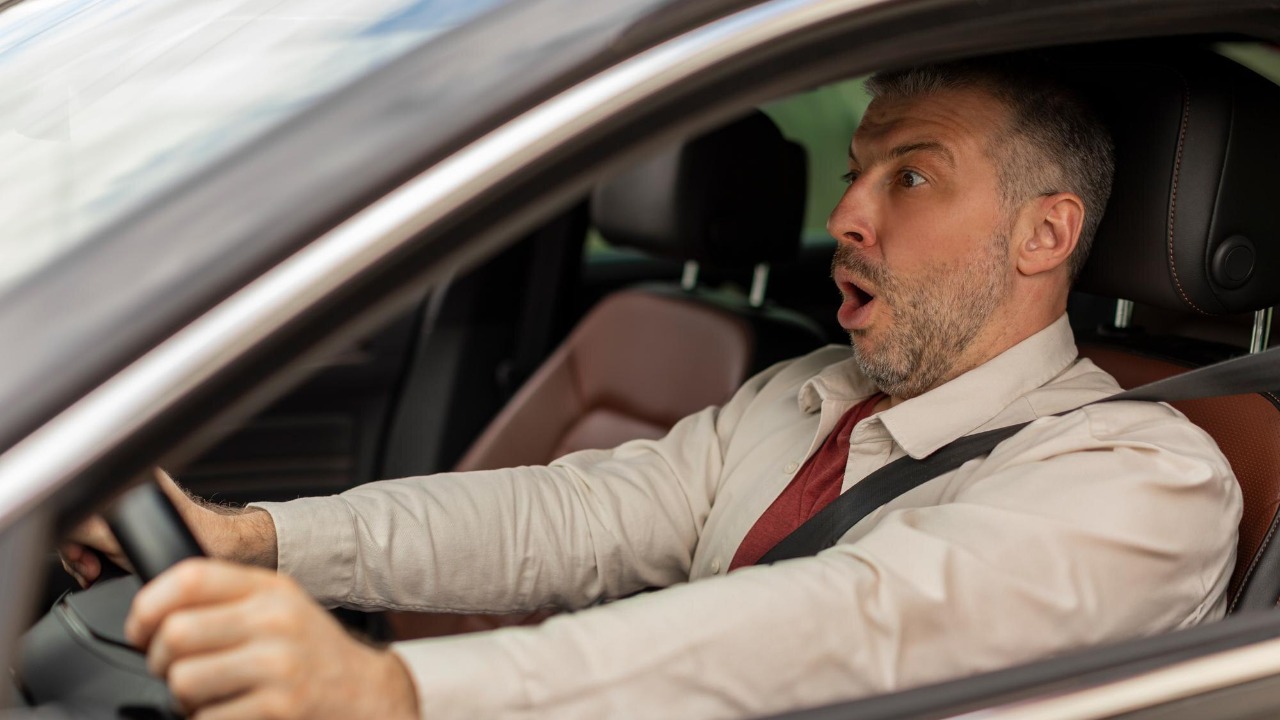
It started like any other highway drive: open road, steady traffic, and that small sense of relief when cruise control takes over the boring part. Then, according to one driver’s account, the car didn’t just hold speed—it insisted on it. What was supposed to be a convenience feature suddenly felt like a stubborn roommate refusing to listen.
The driver says the system wouldn’t disengage when he tried to slow down, and for a few tense moments, the vehicle kept pushing forward at highway speed. He described the feeling as less “helpful technology” and more “why is my car arguing with me?” That’s when the situation shifted from annoying to genuinely risky.
What He Says Happened on the Road
According to his description, he was cruising along in moderate traffic when he tapped the brake to reduce speed for a cluster of vehicles ahead. He expected the usual: cruise control clicks off, car begins to decelerate, everyone continues on their way. Instead, he says the car maintained speed as if nothing happened.
He tried toggling the cruise control off at the steering wheel, then tried braking again—harder. He says the car still didn’t respond the way it should have, and the distance between him and the vehicles ahead started shrinking fast. In that moment, he wasn’t thinking about diagnostics or manuals; he was thinking about not rear-ending anyone.
The Split-Second Decisions That Kept It From Getting Worse
He says he moved his focus from “turn it off” to “get space,” checking mirrors and looking for an exit in case he needed a shoulder or an off-ramp. With traffic around him, changing lanes wasn’t just a simple swerve; it was a careful negotiation with everyone else’s blind spots. He described his heart rate as “instantly loud,” which is a pretty relatable way to put it.
He also says he tried shifting strategies—keeping steady on the wheel, applying the brake more deliberately, and preparing to use hazards if he needed to alert drivers behind him. The goal, he explained, was to avoid sudden moves that could cause a chain reaction. The scary part wasn’t only the speed—it was the uncertainty about what the car would do next.
Why Cruise Control Problems Can Get Serious Quickly
Cruise control works best when it’s boring: flat roads, consistent traffic, no surprises. When it stops behaving predictably, the margin for error shrinks in a hurry, especially at 60–75 mph. Even a few seconds of unwanted acceleration or failure to disengage can eat up a safe following distance.
Modern systems are also more complex than the old-school “set it and forget it” setups. Many cars now use adaptive cruise control, which relies on sensors, cameras, radar, software, and braking systems all talking to each other. If any part of that chain glitches—whether from a sensor misread, a software hiccup, or a mechanical issue—the driver can end up feeling like they’re negotiating with a very confident computer.
What Could Cause a “Stuck” Cruise Control Feeling
It’s hard to pinpoint a single cause based on one story, and the driver’s report alone doesn’t confirm a specific defect. Still, mechanics and safety experts often point to a few usual suspects when cruise control seems to misbehave: brake light switch issues, sticky pedals, failing steering wheel buttons, or software faults. In some cases, the system may not recognize a brake input the way it’s supposed to.
There’s also the possibility of driver-interface confusion—especially with adaptive cruise and lane-assist features that can feel like they’re “fighting” you when they’re actually following programmed rules. But the driver here insists this wasn’t that. He says he knows what normal adaptive cruise feels like, and this was different: the car didn’t respond like it had before.
What He Did After Getting to Safety
Once he says he had enough space, he worked to get off the highway and into a safer area where he could stop without pressure from fast traffic. He described pulling into a lot and taking a minute just to breathe and process what happened. He also said he checked for warning lights and tried cycling the vehicle’s ignition to see if the behavior reset.
After the immediate adrenaline wore off, he says he documented what he could: time, location, road conditions, and what buttons or pedals he pressed. That kind of detail can matter later, whether he’s speaking with a dealership, a mechanic, an insurer, or a safety hotline. In his words, “I didn’t want it to turn into a ‘maybe you imagined it’ situation.”
What Drivers Can Do If Cruise Control Acts Up
Safety specialists generally recommend treating any unexpected acceleration or failure to slow down as an emergency—because it is one. If a vehicle doesn’t respond the way you expect, the priorities are consistent: keep control of the steering, increase distance from other cars if possible, and make yourself visible with hazard lights if traffic is tight. The goal is to buy time and space.
If braking doesn’t disengage cruise control, many vehicles allow you to cancel the system via a dedicated “cancel” button or by switching the cruise control off. If the car still continues to drive unexpectedly, shifting to neutral can reduce engine power to the wheels while you steer to a safer area—though drivers should be aware the engine may rev and they’ll need to brake firmly. The exact steps vary by vehicle, so checking the owner’s manual before anything ever happens is the least exciting but most helpful homework you can do.
When to Report It—and Why It Matters
He says he plans to have the vehicle inspected and to report the incident through the channels available to him, including the manufacturer and relevant safety authorities. Reporting matters because patterns are what trigger investigations. One story can be a fluke; multiple similar stories can point to a systemic issue.
Even if it turns out to be a repairable one-off—like a faulty switch or sensor—getting it on record can help other drivers who experience something similar. And if it’s tied to a recall or a known defect, early reporting can speed up fixes. Nobody wants to be the “data point,” but the reality is that data points are how safety improvements happen.
A Feature That’s Great—Until It Isn’t
Cruise control is one of those modern conveniences that feels like a small luxury, especially on long stretches of highway. Most of the time, it’s harmless and helpful, and drivers barely think about it. That’s why incidents like this are so jarring: they take something familiar and flip it into something unpredictable.
The driver’s biggest takeaway was simple: if the car feels like it’s not listening, trust that instinct and prioritize getting to safety over trying to “figure it out” in the moment. He described it as a lesson he didn’t want to learn firsthand, but one he hopes other drivers never have to learn at all.
More from Fast Lane Only