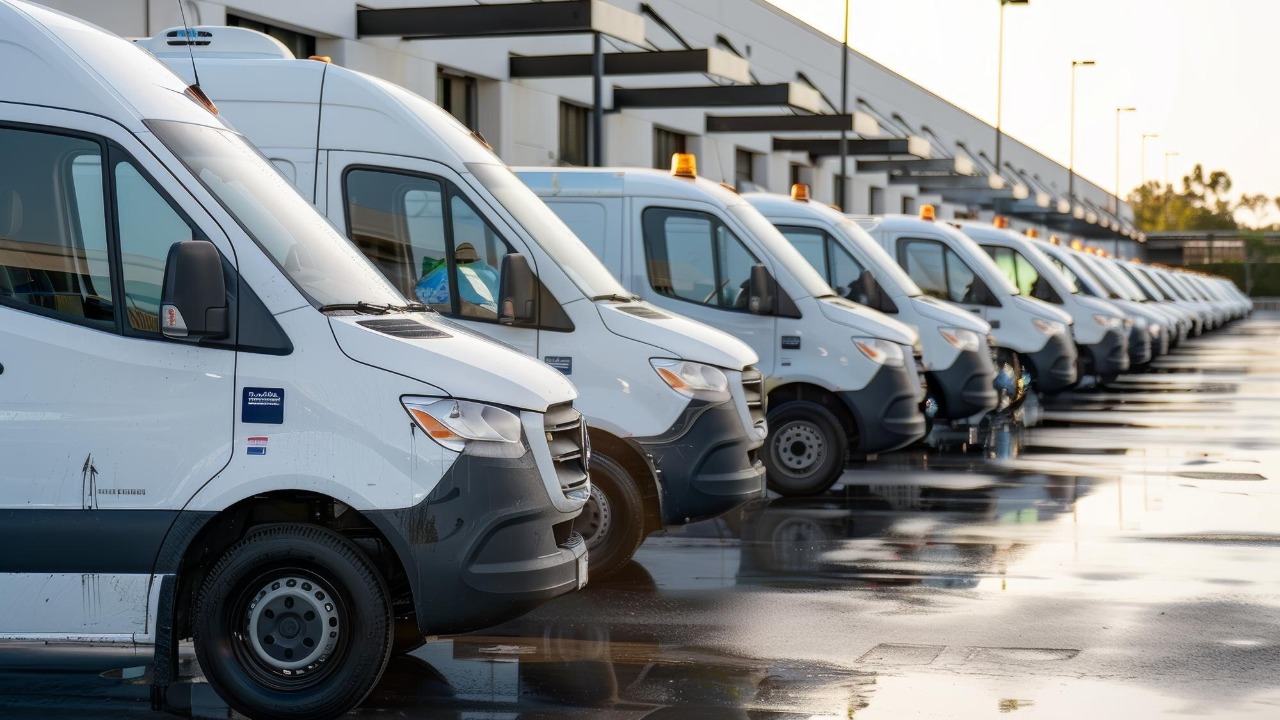
Fleet vehicles are built and run for people who drive all day, every day, so they quietly receive hardware, software, and training that most private owners never see. From predictive maintenance tools to driver coaching and safety tech that is actually configured correctly, the fleet world shows what regular motorists are leaving on the table.
Look closely at how commercial operators, utilities, and the military spec and manage their vehicles and a pattern appears: they treat driving as a system. The vehicle, the driver, and the data are all tuned to work together, exactly what the average commuter car and its owner are missing.
What happened
Over the last decade, commercial fleets have turned vehicles into rolling data centers. Long before connected services became a selling point in showrooms, fleet operators were fitting trucks and vans with telematics boxes that track location, fuel use, engine hours, and driver behavior in real time. Those systems feed into dashboards that dispatchers and maintenance managers rely on to schedule work, route drivers, and catch mechanical problems early.
Large delivery and logistics fleets use this data to design highly efficient routes, limit idling, and keep vehicles in a narrow maintenance window. A typical light-duty fleet van might have automatic engine fault reporting, tire pressure alerts that go straight to a maintenance portal, and fuel card integration that flags suspicious fill-ups. For many private owners, the equivalent information is scattered across a check-engine light, a paper receipt, and a vague sense that the tank is empty more often than it used to be.
Safety technology has followed a similar pattern. When advanced driver assistance systems such as automatic emergency braking and lane-keeping first reached the market, fleet buyers were among the earliest to standardize them across entire purchase orders. Many fleets now combine OEM safety features with aftermarket cameras and sensors that capture harsh braking, tailgating, and near misses. That footage is used for coaching sessions and, when needed, to defend drivers after a crash.
Training is another area where fleet operations diverge sharply from everyday driving. Commercial carriers, utilities, and public agencies often run structured programs that cover not only vehicle control but also fatigue management, situational awareness, and how to handle high-risk environments. Military driver training goes even further, treating the vehicle as one part of a larger mission and building habits around checklists, communication, and accountability. One analysis of how the armed forces prepare operators argues that the military “builds citizens” through its driver programs, not just licensed motorists, and suggests that civilian systems are missing that depth of preparation, a point that has been raised in discussions of military driver training.
Fleet vehicles themselves are often specified with durability and serviceability in mind. A rental company might order a compact SUV with a heavy-duty cooling system, vinyl flooring, and simplified option packages that make repairs cheaper and faster. Utility fleets choose trucks with upfitted bodies, standardized wiring harnesses, and mounting points for equipment, all designed so that technicians can fix issues in hours instead of days. Even when the body style looks identical to a retail model, the underlying configuration can be very different.
Fleets are also increasingly integrating vehicles into broader operational software. Dispatch platforms, customer relationship tools, and warehouse management systems pull in vehicle data to coordinate deliveries and field work. When a service van leaves a depot, its schedule, inventory, and route are already synchronized with the rest of the business. For the typical private driver, the closest equivalent might be a navigation app and a calendar reminder, with no deeper connection between the car and daily life.
Why it matters
The gap between fleet operations and private driving affects safety, cost, and even how people think about the act of driving. Many of the crashes, breakdowns, and frustrations that feel inevitable on public roads are managed as controllable variables in the fleet world.
Consider safety. Commercial operators have strong financial and legal incentives to reduce collisions, so they invest in both technology and culture. A modern tractor-trailer or last-mile delivery van is likely to have forward collision warning, automatic emergency braking, and lane-departure alerts turned on and calibrated. Driver-facing cameras and telematics flag risky behavior such as speeding, phone use, or aggressive lane changes. When an event occurs, supervisors review the data with the driver, sometimes tying performance to bonuses or remedial training.
Private owners, by contrast, often disable alerts they find annoying, skip software updates, or never learn how to adjust sensitivity settings. The same automatic braking system that helps a fleet driver avoid a rear-end crash might be sitting underused in a family crossover. The technology gap is not only about availability; it is about configuration, feedback, and habits.
Maintenance tells a similar story. Fleet managers treat downtime as a measurable cost, so they rely on predictive maintenance schedules that factor in mileage, engine hours, and duty cycles. Oil changes, brake inspections, and tire rotations are triggered by data rather than guesswork. When a diagnostic trouble code appears, it often generates a work order automatically, and the vehicle is pulled in before a minor issue becomes a roadside breakdown.
Private drivers, on the other hand, tend to respond to maintenance only when a warning light appears or a problem becomes obvious. Service intervals are stretched, tire pressures are neglected, and small leaks are ignored. The result is higher lifetime costs and a greater chance of being stranded. The tools that fleets use to avoid these outcomes, such as telematics-based alerts and centralized maintenance histories, are slowly trickling into consumer apps, but they are rarely used with the same discipline.
Fuel and energy management is another area where fleets extract value that regular drivers leave untouched. Long-haul carriers and regional delivery companies track fuel economy by route, driver, and vehicle, then adjust driving styles, speeds, and loading patterns to save a fraction of a liter per 100 kilometers. Over thousands of kilometers, those small gains add up to significant savings. Idle reduction policies, governed by telematics, limit how long engines can run while parked.
For private owners, fuel economy is often a static number on a window sticker. Driving styles, tire choices, and route selection change that number dramatically, but few people measure the impact. Even when vehicles display real-time consumption data, drivers rarely have a structured way to respond to it. Fleets show that with the right feedback loops and incentives, fuel use can be managed much more actively.
The rise of electric vehicles highlights this difference even more clearly. Fleet operators that adopt battery-electric vans and trucks tend to invest in route planning tools that account for range, payload, and charging infrastructure. Charging schedules are coordinated so that vehicles are ready for their next shift without unnecessary peak-demand costs. Data from early deployments is used to refine which routes are suitable for electrification and which still require combustion engines.
Private EV owners often learn these lessons through trial and error. They might not know how cold weather affects range until a long winter trip goes wrong, or how fast-charging habits influence battery health. The kind of structured experimentation that fleets conduct, supported by telematics and centralized analytics, is rarely available to individual drivers in a usable form.
Training and culture may be the biggest invisible difference. Fleet drivers are usually part of an ongoing program that treats driving as a professional skill. New hires receive instruction on vehicle systems, defensive driving, and company policies. Many fleets require periodic refresher courses and monitor performance over time. In military contexts, drivers are taught to operate in high-stress environments, follow strict checklists, and maintain situational awareness as part of a team, which shapes how they behave even in ordinary traffic.
Most private drivers receive a short burst of instruction to pass a licensing exam, then decades of practice with little feedback. Bad habits become ingrained, and new technologies are adopted without guidance. The idea that driving is a craft that can be continuously improved, central to fleet operations and military programs, rarely reaches the general public.
All of this has policy implications. If fleets can achieve lower crash rates, better fuel efficiency, and more reliable operations through a mix of technology, training, and data, then regulators and automakers have a template for what works. The challenge is translating those practices into something that fits the fragmented world of private ownership, where there is no dispatcher, no maintenance department, and no manager reviewing telematics dashboards.
What to watch next
The next few years will likely determine how much of the fleet advantage reaches regular drivers. Several trends point toward a gradual convergence, but there are also reasons to expect the gap to persist.
On the technology side, consumer vehicles are already shipping with hardware that mirrors fleet telematics. Built-in connectivity, over-the-air software updates, and integrated driver-assistance suites are becoming standard in many segments. Automakers are experimenting with subscription-based services that package maintenance alerts, driving reports, and insurance discounts tied to behavior. If those services are designed well and priced fairly, they could give private owners some of the same visibility that fleet managers enjoy.
Insurance is another lever. Usage-based policies that rely on driving data are expanding, and some insurers are partnering with automakers to access vehicle telemetry directly. As these programs mature, they may start to resemble fleet safety initiatives, with feedback on speeding, hard braking, and nighttime driving. The key question is whether drivers will accept that level of monitoring in exchange for lower premiums, and whether the feedback will be clear enough to change behavior rather than simply penalize it.
Electric vehicles and charging networks will continue to highlight the value of structured planning. As more households adopt EVs, tools that help schedule charging, map efficient routes, and manage battery health will become more important. Many of those tools are being developed first for fleets that operate dozens or hundreds of vehicles, then adapted for single-car use. Watching how that software migrates from commercial to consumer markets will reveal how quickly private owners can catch up.
Training may be the hardest area to shift. There are early signs of interest in more rigorous driver education, including advanced courses for new drivers and refresher programs for experienced ones, but participation remains limited. Policymakers could look to fleet and military models, which combine classroom instruction, supervised practice, and ongoing evaluation. Any move in that direction would require investment and a cultural change in how society views driving, not just as a right but as a skill that deserves continuous development.
Automakers and technology companies also face choices about how transparent to be with vehicle data. Fleet operators typically have full access to detailed metrics, because they own both the vehicles and the responsibility for managing them. Private owners often see only a simplified version through dashboard displays or basic apps. Decisions about data access, privacy, and standardization will determine whether drivers can use their own vehicles as learning tools in the same way fleets already do.
More from Fast Lane Only