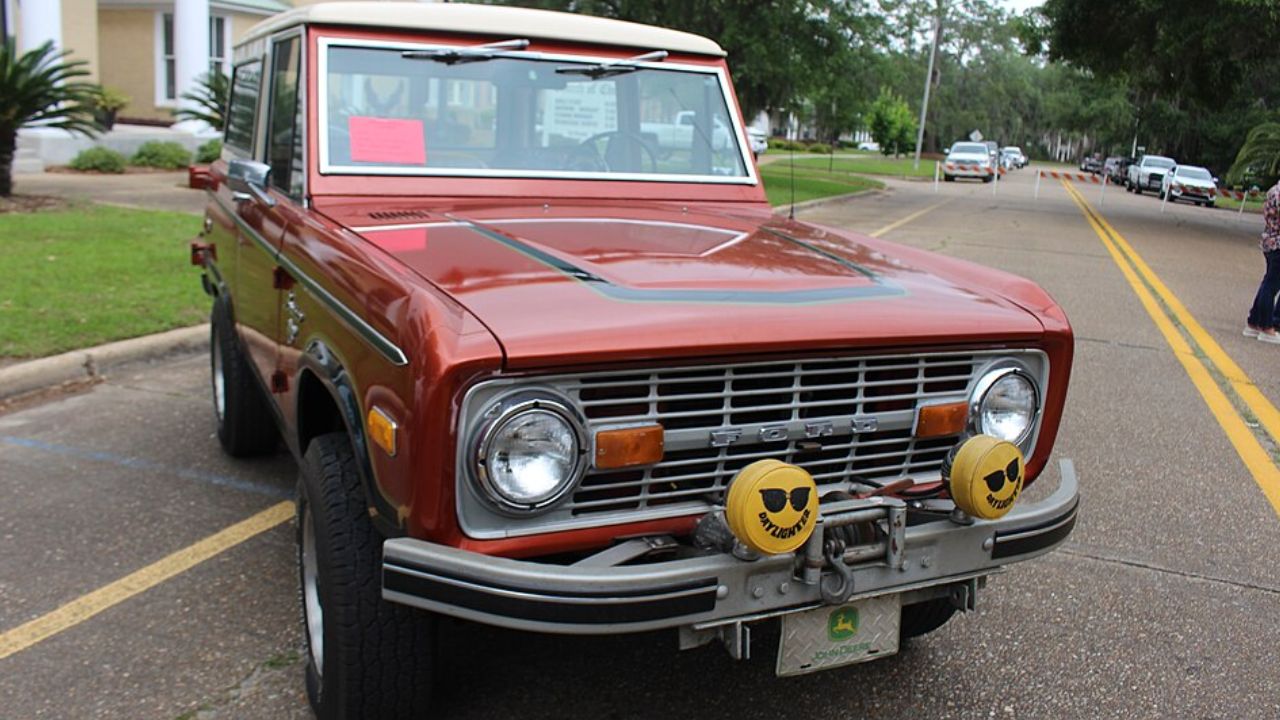
It started the way a lot of classic-car stories do: a grainy listing, a few glossy “after” photos, and that itch that only a vintage 4×4 can scratch. He’d been hunting for an early Ford Bronco for years, and this one was advertised as “restored,” “solid,” and “ready to drive.” It wasn’t cheap, but it looked like the kind of truck you buy once and keep forever.
Friends told him the same thing people always say when you’re about to spend real money on an old vehicle: “Get it inspected.” He did—sort of. A quick look, a short drive, a stack of receipts that seemed legit, and a seller who sounded confident was enough to push him over the edge.
A shiny Bronco and a stack of promises
The Bronco showed up looking like it had just rolled out of a photo shoot. Fresh paint, clean interior, and that classic boxy stance that makes every parking lot feel like a car show. The seller pointed to new trim, updated wiring, and “recent bodywork,” plus a few upgrades that made it easier to live with, like modern seatbelts and a stereo.
On the road, it felt like what you’d expect from a 1970 truck—loud, a little bouncy, and charming in a way newer SUVs can’t fake. The engine started clean and didn’t smoke, the steering was decent for something with a front axle that looks like it belongs under farm equipment, and the brakes didn’t require a prayer. He drove it home grinning, already picturing weekend trails and hardware store runs that would somehow take an hour longer than necessary.
The first clue came from something small
Not long after, tiny annoyances started popping up. A door didn’t shut quite right. A rattle appeared over bumps. And there was a faint smell after driving—something between warm rubber and old garage, the kind you notice once and then can’t un-notice.
He chalked it up to old-car life. Classic vehicles have quirks, and “restored” can mean a lot of things depending on who’s holding the wrench. But the more he looked at it in his own driveway, the more he felt like the truck was asking him to look closer.
One weekend, curiosity won
He decided to do a simple job: replace some worn bushings and tidy up a few things underneath. Nothing dramatic—just the kind of basic maintenance that helps you learn a vehicle. So he got it up on stands, grabbed a light, and slid under the Bronco.
At first it seemed fine. There was undercoating, and it looked “protected,” which is usually the whole point. But as he scraped at a small patch near a seam, the coating didn’t just flake off—it peeled back in a sheet, like a sticker that had been slapped over something someone didn’t want to explain.
What was hidden wasn’t pretty
Underneath, he says, was rust. Not the surface kind you shrug off, but scaly, layered corrosion clustered around seams and body mounts—places that matter if you want the truck to be safe and solid. In a few areas, the metal looked thin enough to flex, which is never a comforting discovery when you’re under two tons of vintage steel.
Then came the part that really set off alarms: evidence of patchwork repairs. He describes seeing welded plates that didn’t match the original contours, seams filled with thick material that looked like it was meant to hide gaps, and sections that appeared to have been shaped quickly rather than properly fitted. It wasn’t just “old truck” stuff—it looked like a cover-up.
The further he looked, the more questions showed up
He kept tracing along the underside and into the usual problem zones: floor pans, rocker panels, and the rear quarters. Some areas seemed newer, but not in a reassuring way. He says he found mismatched fasteners, uneven welds, and suspiciously heavy undercoating concentrated exactly where you’d expect rust to live.
Even the clean parts started to feel less comforting. A restoration, done well, usually comes with photos and clear documentation of what was replaced and what was repaired. Here, the receipts didn’t match what he was seeing—at least not in a way that made the story add up.
“Restored” can mean a lot of things in the classic market
This is the tricky part about buying a vintage Bronco—or any classic with a cult following. The word “restored” isn’t a regulated label. One person uses it to mean frame-off, bare metal, new panels, documented steps, and careful reassembly; another uses it to mean “painted it, reupholstered the seats, and it runs.”
And then there’s the third category, the one every buyer dreads: cosmetically refreshed with shortcuts underneath. A shiny exterior sells quickly, and undercoating can hide problems long enough for a deal to close. If you’re not checking magnet spots, seams, drain holes, and body mounts—or paying someone who knows these trucks to do it—you’re basically trusting vibes.
What happened next: calls, receipts, and a reality check
After the discovery, he says he reached out to the seller with photos and questions. The seller, according to him, insisted the truck was “solid” and suggested the undercoating was standard rust prevention. But the more he compared what he was told with what he found, the less it felt like a misunderstanding and the more it felt like selective honesty.
He also contacted a shop familiar with early Broncos to get an expert opinion. The estimate, he says, wasn’t small—especially if the repairs required cutting out rusted sections and replacing structural metal properly. In classic-car terms, it was the kind of number that makes you stare at a wall for a while and rethink your hobbies.
Why early Broncos are especially vulnerable to this
Early Broncos are iconic, simple, and wildly popular, which is a perfect recipe for both great restorations and questionable flips. Many lived hard lives—off-road, in snow, on salted roads, or parked outside for decades. Rust tends to hit the same areas over and over, and replacement panels are widely available, which is good… unless someone installs them in the fastest way possible.
The other factor is demand. Prices have climbed, and when a model becomes a hot commodity, people get creative. That creativity can look like clever upgrades—or it can look like thick undercoating applied with the confidence of someone hoping you won’t bring a flashlight.
What buyers can learn from one uneasy discovery
If there’s a silver lining, it’s that his story is a reminder to inspect the unglamorous stuff first. A pre-purchase inspection from someone who knows the specific model is worth it, even if it feels like an annoying extra step when you’re excited. And if the seller resists an inspection, that’s not a cute quirk—it’s information.
It also helps to ask for restoration photos, not just receipts. Photos show what was cut out, what was welded in, and whether metalwork was done carefully or hidden quickly. If the story is “frame-off restoration” but there are no in-progress pictures, it’s fair to wonder what kind of “off” they meant.
A classic-truck dream, with an asterisk
He hasn’t said he regrets buying a Bronco—just that he regrets buying this one the way he did. The truck still turns heads, still makes people smile at stoplights, and still delivers that old-school charm that modern vehicles can’t replicate. But now the ownership experience includes a different kind of adventure: figuring out what’s real, what’s patched, and what needs to be made right.
And maybe that’s the most relatable part. A classic vehicle isn’t just a purchase; it’s a relationship. Sometimes it’s love at first sight, and sometimes it’s love that comes with a surprise you find only after you crawl underneath with a flashlight and a growing sense that the truth was always there—just carefully coated.
More from Fast Lane Only