The Nürburgring Nordschleife has long been the place where supercars prove their worth, yet the latest record to fall there belongs to a machine with barely more power than a ride-on lawnmower. A tiny French quadricycle, carrying only eight horsepower, has now logged the slowest officially timed lap of the circuit, turning the usual arms race for speed on its head. By treating slowness as a benchmark worth chasing, the team behind the effort has exposed how obsessed the industry has become with lap times, and how playful it can be when that obsession is flipped.
A record built on eight horsepower
I find it hard to overstate how modest the Ligier JS50 Revo D+ is on paper, especially when set against the fearsome reputation of the Nordschleife. The car is a compact quadricycle, classified in Europe so that it can be driven from 14 years of age in some markets, and its 478 cc diesel engine produces just 8 hp with a top speed capped at 45 km/h. That limited performance is not a side effect of cost cutting, it is the defining feature of the category, and it meant that when the JS50 Revo D+ was pointed at the Nürburgring, the team knew they were chasing a very different kind of record from the usual supercar assault, as confirmed in detailed coverage of the JS50 Revo D+.
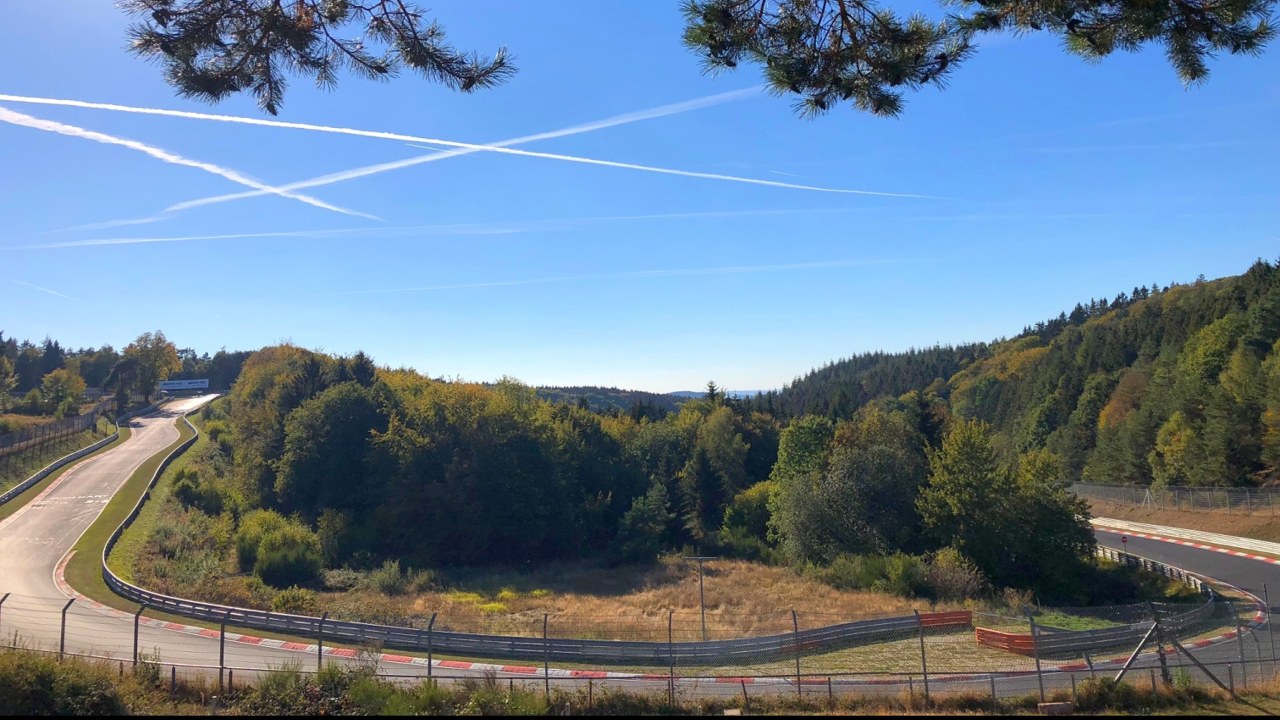
French automotive journalists Nicolas Meunier and Martin Coulomb took on driving duties, threading the stubby two-seat Ligier around the 20.8 km Nordschleife in a time of 28 minutes and 25.81 seconds. That figure is not an accident or a rough estimate, it is a fully measured lap that has been presented as a benchmark, with the car’s limited 45 km/h speed and 8 hp output making any attempt to go significantly quicker almost impossible. Reports on the microcar’s run describe how the Ligier’s tiny diesel engine and quadricycle classification shaped the entire attempt, turning what would normally be a flat-out sprint into a patient, carefully managed tour of every crest and corner.
Toppling a 66‑year‑old anti‑record
What gives this slow lap its weight is the ghost it finally chased down. For decades, a Trabant had been credited with the most lethargic tour of the Nordschleife, a curiosity from another era that survived in enthusiast lore. According to detailed analysis of the new run, it took 66 years for anything to officially undercut that Trabant benchmark, and it was not a hypercar that did it but a French quadricycle with a fraction of the power of a modern city hatchback. Coverage of the Ligier’s effort notes that the JS50, described as a stubby two-door microcar, has now replaced the Trabant in the record books for the slowest complete lap, a shift that underlines how carefully the team framed their attempt to be recognised as a formal record rather than a stunt, as set out in reporting on how it took 66 years to beat the Trabant’s time.
I see a certain symmetry in the way this new mark has been framed. For years, manufacturers have chased ever smaller improvements in lap times, shaving tenths of a second from already blistering records. Here, the gap is measured not in tenths but in minutes, yet the language of records and benchmarks is the same. Reports on the Ligier project stress that the Nordschleife lap was conceived as a deliberate inversion of the usual Nürburgring narrative, with the JS50’s leisurely 28:25.81 lap presented as a counterpoint to the relentless pursuit of speed that has defined the circuit’s modern mythology, a point reinforced in coverage that describes the run as more entertaining than watching paint dry only because of the context around it.
From Formula 1 pedigree to quadricycle theater
Ligier is not an obscure backyard outfit, and that history matters when I weigh the intent behind this record. The company once fielded a Formula 1 team, competing at the highest level of single seater racing, and now builds low power microcars and quadricycles for urban use. That journey from grand prix grids to 8 hp diesel runabouts gives the slowest lap claim a layer of irony, because a brand with genuine high performance heritage is now making headlines for the exact opposite. Detailed reporting on the project notes that the company framed the Nordschleife run as a formal record attempt, with the JS50 Revo D+ completing its lap in 28 minutes and 25.8 seconds, a time that has been presented as the slowest ever recorded around the Nordschleife.
In that light, the record reads less like a joke and more like a piece of brand theater. By leaning into the contrast between its Formula 1 past and its present focus on low power mobility, Ligier has found a way to stand out in a crowded market of compact urban vehicles. The company’s decision to highlight that the JS50 Revo D+ is limited to 45 km/h and can be driven by teenagers in some countries, while still surviving a full lap of one of the world’s most demanding circuits, turns a regulatory constraint into a talking point. Reports on the record run underline that the brand is comfortable poking fun at itself, even as it uses the Nürburgring’s aura to lend its microcar a surprising dose of credibility.
How to make a slow lap last
What fascinates me most is how carefully the slow lap was constructed to endure. Setting a Nürburgring record that lasts is notoriously difficult, because manufacturers are eager for bragging rights and new contenders arrive every season. In this case, the team behind the JS50 Revo D+ identified a category that few, if any, rivals would be motivated to challenge, then documented the attempt with the same seriousness usually reserved for lap time assaults from supercars. Social media posts describing the project talk about how records are made to be broken, yet suggest that by going in the opposite direction, toward slowness, Ligier may have found a niche where its 28 minute lap will stand for a long time, a point made explicitly in commentary on setting the slowest lap around the circuit.
The choice of a quadricycle with a hard speed limiter is central to that strategy. With the JS50 Revo D+ capped at 45 km/h and carrying only 8 hp, there is a natural floor to how slow a clean, uninterrupted lap can be, short of deliberate dawdling or stopping on track. Reports on the attempt describe how the car’s classification and performance envelope were used as research tools, allowing the team to calculate a realistic target time and then drive to that benchmark without compromising safety or track etiquette. By presenting the lap as a serious, measured effort within those constraints, rather than a chaotic crawl, Ligier has made it harder for any future challenger to undercut the record without appearing unserious or unsafe, a nuance highlighted in coverage of the benchmark run on the Nordschleife.
Electric twins and the culture of Nürburgring records
The diesel JS50 was not the only Ligier to taste the Nordschleife, and the follow up attempts say a lot about how the brand views this exercise. Two electric versions of the JS50, described as electric twins, also lapped the circuit and, despite their similarly modest power, managed to go quicker than the diesel. One of those electric cars is reported to have beaten the diesel’s time with a 27:55.580 lap, trimming roughly half a minute from the eight horsepower benchmark. That detail, set out in coverage of how electric twins tried their luck, shows that even within this tongue in cheek category, there is room for incremental improvement and internal competition.
For me, that internal rivalry underlines how deeply the Nürburgring’s logic has seeped into automotive culture. Even when the goal is to be slow, the instinct is to compare, to shave time, to talk about seconds gained or lost. Social media clips describing the new overall record at the “Nerbergring” lean into that language, noting that this is a record that might have stood for decades and that the JS50 is not meant for the highway at all, yet still carries the weight of a circuit benchmark. By turning a humble quadricycle into a record holder, and then sending electric siblings to nibble at its time, Ligier has shown how flexible the idea of a Nürburgring record can be, and how even eight horsepower, carefully deployed, can write a new chapter in the circuit’s long and often very fast history, as reflected in commentary on the world’s slowest cars.
More from Fast Lane Only: