A Chinese vacuum maker has unveiled a rocket-powered concept car with performance figures that sound like science fiction. The company claims its sleek prototype can sprint from 0 to 60 miles per hour in under one second and reach a top speed far beyond anything on public roads today. The reveal has turned a niche household brand into a sudden talking point in high-performance automotive circles.
Behind the spectacle lies a serious question: is this a genuine leap in propulsion technology or a marketing stunt dressed in carbon fiber and LED lighting? The answer could shape how people think about the future of electric performance, safety regulation, and even what counts as a “car” in the first place.
What happened
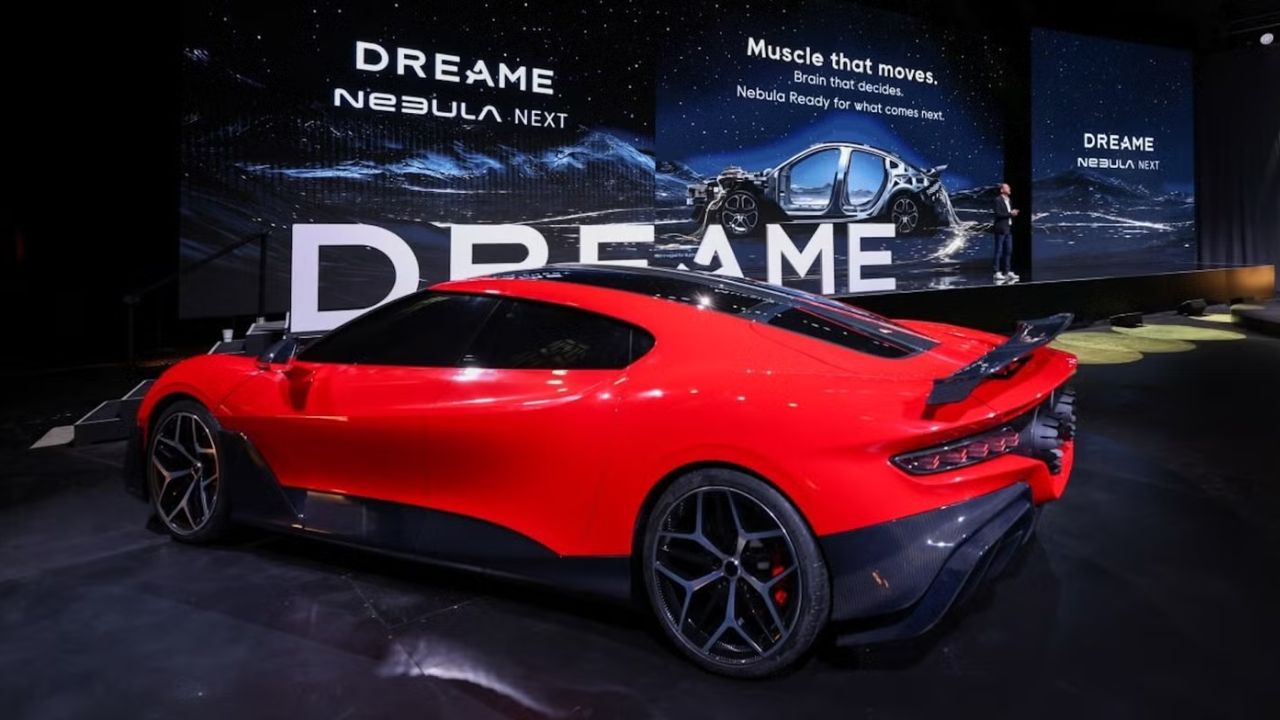
The Chinese appliance company, better known globally for cordless vacuum cleaners than for cars, unveiled its concept at an event in San Francisco. The vehicle, known as Nebula Next, was introduced as a rocket-assisted electric hypercar that combines battery power with a compact rocket propulsion unit. According to the company, the rocket system is designed to deliver a brutal launch boost that conventional traction alone cannot match.
The headline figure is simple and outrageous: 0 to 60 miles per hour in less than one second. That claim would put Nebula Next well ahead of any production car and even beyond most purpose-built drag racers. The firm also touts a theoretical top speed that would rival dedicated land-speed record machines, although it has not demonstrated such a run in public.
The car’s basic layout follows the familiar hypercar formula. Nebula Next has a low, wide stance, a central cockpit, and aggressive aerodynamic surfaces that channel airflow over and under the body. The company describes a carbon-intensive construction that aims to keep weight low enough for the rocket unit to have a dramatic effect. Visually, it has more in common with a Le Mans prototype or a Formula 1 car than with a road-going sedan.
At the launch event, representatives emphasized that this is a concept, not a certified production model. The rocket propulsion is presented as a functional system, but the company has not released independent test data or allowed outside engineers to validate the claimed acceleration times. Early coverage of the San Francisco debut described Nebula Next as the world’s fastest concept based on the stated specifications, not on timed runs.
Alongside the rocket unit, the car uses an electric drivetrain that draws on the company’s existing expertise in high-speed electric motors and battery packs. The firm has spent years refining compact, high-output motors for vacuum cleaners and hair dryers, and executives now argue that the same core technologies can scale up to automotive applications. However, the concept’s battery capacity, motor output, and range figures have not been detailed with the same precision as the acceleration claims, underscoring how much of the pitch revolves around spectacle rather than daily usability.
More technical descriptions suggest that the rocket component is likely a cold-gas or hybrid system rather than a full liquid-fuel rocket of the sort used in aerospace. Such an approach would align with the need for quick, repeatable bursts of thrust without the complexity of cryogenic propellants. Even so, integrating any rocket-based system into a passenger vehicle raises questions about heat management, structural loads, and what happens if something fails at full thrust.
Why it matters
On one level, Nebula Next is a classic halo project. A company that sells vacuum cleaners wants to be seen as an innovation leader, so it builds something outrageous that grabs headlines. The concept also arrives at a moment when the lines between consumer electronics, appliances, and vehicles are already blurring. Smartphone makers now sell cars, and EV startups pitch themselves as software companies that happen to bolt their code to wheels.
The vacuum maker’s pitch is that its experience with compact, efficient motors and high-density batteries can translate into a new kind of performance EV. That argument has some credibility. Electric hypercars from brands like Rimac and the Tesla Model S Plaid have already shown how quickly battery-powered vehicles can accelerate when traction and software are tuned correctly. The Nebula Next concept simply pushes that logic to an extreme by adding rocket thrust on top of electric torque.
From a technical standpoint, the claimed sub-one-second sprint to 60 miles per hour sits at the edge of what the human body can tolerate. Acceleration of that magnitude approaches the levels experienced by fighter pilots during catapult launches or by astronauts during certain phases of flight. In a road-going vehicle, such forces raise concerns about driver control, passenger safety, and the risk of injury even if nothing goes wrong mechanically.
Regulators are also likely to take notice. Any vehicle that uses rocket propulsion, even in short bursts, will face scrutiny over emissions, noise, and safety certification. Current road-vehicle regulations were not written with rocket thrusters in mind. Questions about how to classify such a system, how to inspect it, and how to insure it would need answers long before a car like this could move beyond a closed test track.
The unveiling also highlights how automakers and adjacent companies are using extreme performance claims to differentiate themselves in a crowded EV market. Electric vehicles already deliver instant torque and smooth acceleration, so simple 0 to 60 bragging rights have become a kind of arms race. The Nebula Next announcement arrives alongside other experiments, such as electric supercars with multiple motors and complex torque-vectoring systems, and it extends that competition into the territory of rockets.
Coverage of the reveal has stressed how the company claims the car can reach 60 miles per hour in under one second with the help of its rocket unit, a figure repeated in early rocket car reports. Those stories also note that the company has not yet produced verifiable track data, leaving a gap between the marketing narrative and independently confirmed performance.
For the broader industry, even a concept like this can have ripple effects. Suppliers that specialize in high-temperature materials, composite structures, and advanced control software may see new demand if more companies experiment with auxiliary propulsion systems. At the same time, safety organizations and track operators will need to consider how to manage vehicles that can reach dangerous speeds almost instantly, even if they never appear on public roads.
There is also a branding angle. The vacuum maker has now placed itself in the same conversation as established luxury and performance marques, at least in terms of public attention. Whether Nebula Next ever reaches a customer matters less for that goal than the perception that the company can think beyond household appliances. The car functions as a rolling billboard for its engineering ambitions.
What to watch next
The first and most obvious question is whether the company will allow independent testing of Nebula Next. Until a trusted third party measures its acceleration and top speed, the sub-one-second claim will remain theoretical. Track demonstrations with timing equipment, repeated runs, and instrumented data would go a long way toward clarifying what the rocket system can actually deliver.
Regulatory engagement will be another key signal. If the company begins conversations with safety agencies in China, the United States, or Europe about certifying a rocket-assisted vehicle, that would indicate a serious attempt to move beyond concept status. Any filings related to emissions, structural integrity, and crash performance will provide clues about how the rocket unit is designed and how often it can be used.
Investors and partners will watch for signs of collaboration with established automotive suppliers or racing teams. Building a one-off show car is very different from engineering a platform that can survive repeated high-g launches without structural fatigue. Partnerships with motorsport organizations or aerospace firms could help bridge that gap, while also lending credibility to the technical claims.
More From Fast Lane Only: