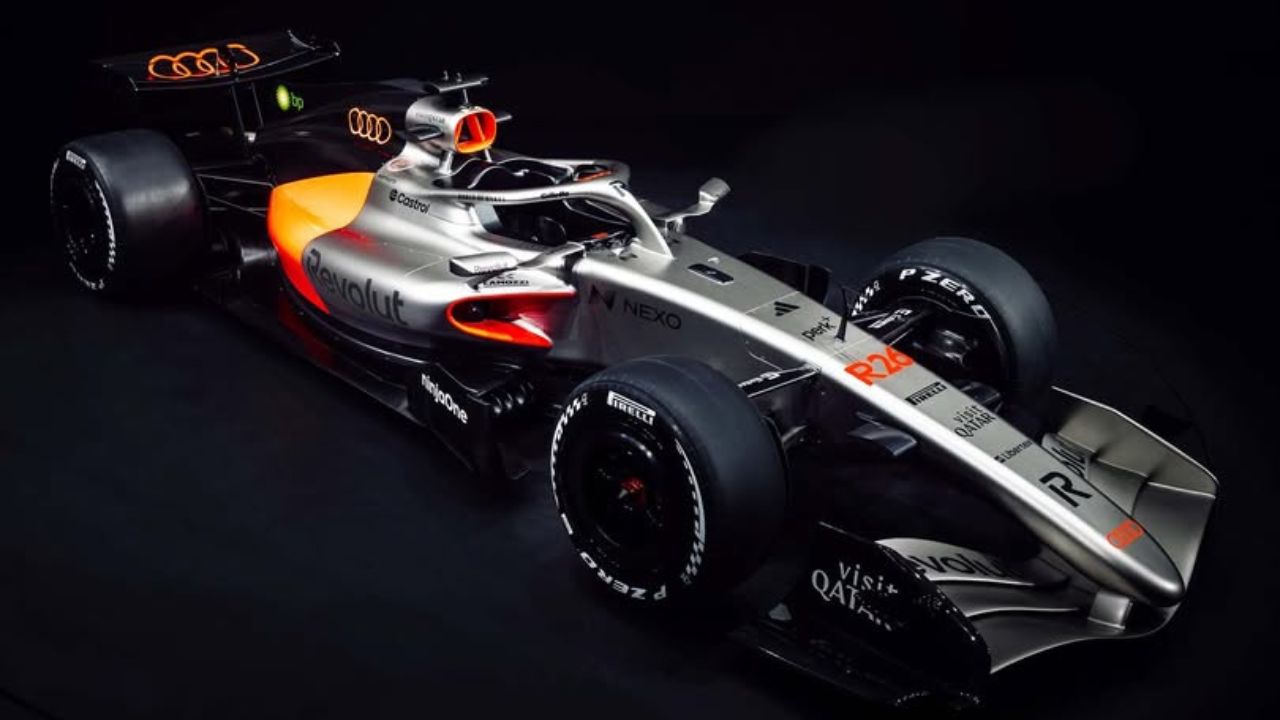
You are about to watch Audi try to shortcut years of Formula 1 learning by borrowing one of the boldest ideas on the 2026 grid and then pushing it harder. As active aerodynamics replace the familiar DRS era, Audi is targeting gains with an Alpine-style rear wing that turns the back of the car into a live energy management tool rather than a simple drag reducer. For you as a fan, engineer, or analyst, the question is how far this concept can carry a newcomer that is betting heavily on both aero and power unit change.
Why active aero in 2026 changes your rear wing playbook
You are moving into a rule set where the rear wing stops being a part-time overtaking aid and becomes a full-time performance switch. From 2026, the regulations shift from classic DRS to an active aerodynamic system that runs in two modes, with the car configured for high downforce in corners and a low drag trim on the straights. Instead of a flap that opens only in a detection zone, you now manage a package that must work in both states without destabilising the car, forcing you to think about the entire aero map rather than a single passing move.
This rear wing decision-making also sits inside a broader technical reset that tightens the margins for error. The 2026 rules bring active aero, no, along with narrower tyres, a narrower front wing and a shorter, slimmer chassis. With drag reduction now baked into the concept of the car, you cannot bolt on top speed with a single flap change at Spa or Monza. You have to design a rear wing that delivers efficient downforce in its loaded state and then sheds drag aggressively when the control systems switch it to the low resistance configuration.
How Alpine’s A526 wing rewrites the reference for 2026
If you are Audi, you start by studying the one team that has already broken ranks on rear wing architecture. Alpine has taken a radically different approach with the A526’s movable rear wing, and you can see that the concept is built around a distinct pivot layout and flap motion that separates it from the rest of the grid. In Alpine’s case, the movable rear wing section behaves unlike the conventional DRS-style opening that teams had refined for a decade, which is why the early shakedown images of the A526 drew so much attention among engineers and fans.
When Alpine’s A526 hit the track in Barcelona for shakedown running, you could immediately pick out the unusual rear structure that had observers talking about both opportunity and risk. The team’s own nervousness about its unique set-up, highlighted when When Alpine, Barcelona exposed how sensitive the car might be, shows you how fine the line is between a breakthrough and a balance nightmare. Alpine is effectively using the entire assembly as a live aero device, which means you have to manage structural loads, pivot stiffness and ride sensitivity with much more care than with a simple trailing edge flap.
Why Audi is copying the concept and trying to go further
You can see why Audi has decided that this is the moment to be aggressive rather than conservative. Audi has revamped its rear wing design for the 2026 regulations, focusing on maximising aerodynamic efficiency with a concept that follows the Alpine-style template instead of the more traditional split mainplane and flap arrangement. By switching to an Audi rear wing that rotates a larger portion of the structure, you give yourself a bigger drag reduction window and potentially a stronger top speed boost whenever the active system moves to its low resistance state.
Your strategic bet, if you are Audi, is that a bold rear wing can offset the learning curve that comes with entering Formula 1 as both a power unit supplier and a full works team. Audi is joining the Formula 1 World Championship from 2026 as a power unit supplier with a package that uses 100 percent sustainable fuel and lifts MGU-K output from 120 kW to 350 kW, and it will run that hybrid system in a fully rebranded Sauber operation that it has taken over. That means you are not only designing a new Audi power unit but also integrating it with a chassis that must exploit active aero, which is why the rear wing becomes a central performance lever rather than a late-stage add-on.
Inside the Alpine-style mechanics that Audi is targeting
To understand what you are really copying, you need to look at how Alpine has physically arranged the moving hardware. Alpine places the pivot in line with the leading edge of the mainplane on the A526, a choice that shapes how the flap rotates relative to the airflow and how loads feed into the endplates and central pylon. That configuration, highlighted in technical breakdowns of Alpine hardware, gives you a distinct pressure distribution when the wing moves between high downforce and low drag modes, and it also dictates where you must reinforce the structure to avoid flutter or illegal deflection.
Audi is now reported to be switching to an Alpine-style rear wing to maximise the 2026 active aero potential, which means you are likely adopting a similar pivot philosophy and flap geometry. The idea is to use a larger moving surface than a classic DRS flap so that the drag cut on the straights is far more aggressive, which suits the new power units that rely on higher electrical deployment and a Manual Override mode instead of a pure DRS boost. With Audi switches to hardware, you are essentially tying your straight-line performance to the reliability and responsiveness of this mechanism, which raises the stakes for materials, actuators and control logic.
What you can learn from Alpine’s nerves and Audi’s ambition
If you are plotting your own 2026 concept, you should read Alpine’s mixed feelings as a cautionary tale rather than a deterrent. The same unique rear wing set-up that gives Alpine a theoretical drag advantage has also made the team nervous about how the car behaves in transient conditions, especially over bumps and in heavy braking zones where sudden shifts in load can trigger oscillations. The early feedback around Alpine, Unlike the conventional grid approach shows you that any gain in straight-line efficiency must be balanced against driver confidence in the high downforce state.
Audi’s ambition sits at the other end of that spectrum, where you accept more complexity to chase a higher ceiling. Technical breakdowns have already described how Audi and Alpine have both brought forward new rear wing designs that treat the movable elements as a central concept rather than a tweak, and that is the mindset you need if you want to lead rather than follow in an active aero era. By aligning your rear wing philosophy with the active system rules and by learning from Alpine’s early shakedown jitters, you give yourself a chance to arrive in 2026 with a package that not only passes the regulations for Audi and Alpine style movable flaps but also turns the back of the car into a controllable, repeatable performance switch that your drivers can trust from the first lap of a race stint.
More from Fast Lane Only