Automakers spent years racing to electrify their lineups, but that sprint has slowed to a careful jog. Honda and Ford are no longer charging straight ahead with every battery project, and instead are trimming, delaying, or reshaping plans as electric vehicle demand cools and costs bite. For you as a buyer, investor, or supplier, the shift signals a market that is still moving toward EVs, but on a more cautious and financially disciplined path.
This pullback is less a retreat from electrification than a reset of expectations. After committing tens of billions of dollars to new factories, platforms, and models, automakers are confronting slower uptake, higher interest rates, and tougher competition, especially from China. You are entering a phase where strategy matters more than hype, and where hybrid powertrains, cheaper EVs, and selective model cuts will shape what actually reaches your driveway.
Why demand cooled after the EV hype cycle
You have seen the headlines about record EV launches, but the reality in showrooms looks more complicated. Early adopters largely bought in; mainstream shoppers then ran into higher sticker prices, expensive financing, and charging anxiety. Research that includes a Geographic Analysis of the market describes the United States and China as the China Lead EV Market Slowdown, with growth in both regions losing momentum as interest rates stay elevated and infrastructure gaps persist. When monthly payments climb and public chargers feel unreliable, you become more selective about going electric.
Automakers also misread how fast you would move. Car companies collectively booked about $50 billion in EV related write downs and charges as they unwound overly aggressive plans that no longer matched demand. That figure is echoed in industry data showing Key Takeaways for GM, Ford, Stellantis and Honda, where a large share of the financial hit came from electric programs that proved too expensive or too early for the market. You are now seeing the consequences in the form of canceled models, delayed factories, and a pivot back toward hybrids and efficient combustion engines.
Honda trims investment but keeps an eye on 0 Series growth
If you follow Honda closely, you have watched the company shift from bold EV promises to a more measured approach. Honda is cutting its planned investment in battery electric vehicles by 30 percent, with the Honda CEO explicitly citing the current market slowdown as the reason. That reduction does not abandon electrification, but it does signal that you should expect fewer near term EV launches and more attention to profitability and regional demand. Honda Motor Co has also warned that slowing demand for electric vehicles and US tariffs will weigh on results, with Takeaways from Bloomberg AI highlighting how intensifying global competition forces Honda Motor Co to prioritize margins over volume.
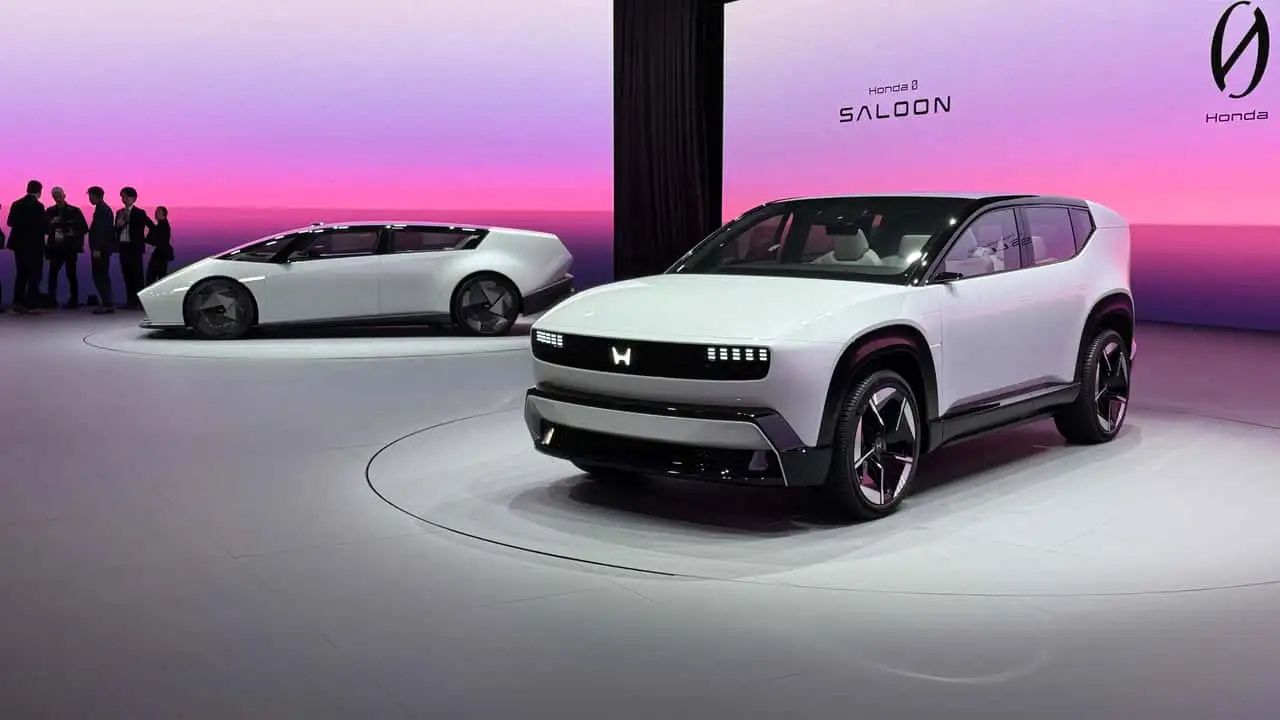
Yet you still see Honda using EVs to define its future identity. The company is promoting the Honda 0 Series as a Series that represents a New Vision for Mobility Blending intelligent technology with futuristic design, with production models coming in 2026. That project, along with the N One e minicar in Japan and a reassessment of its North America EV rollout, shows Honda trying to match product to where you actually live and drive. Executives have been blunt that the electrification they imagined has not materialized in North America, and that the North America EV rollout will be reassessed as part of a broader strategy to defend market share and navigate tariffs. For you, that means Honda EVs will arrive more selectively, focused on segments and regions where the company sees durable demand rather than blanket coverage.
Ford’s U turn from Lightning to cheaper platforms
Ford offers you a vivid example of how quickly plans can flip when the numbers stop working. A widely shared post on social media flagged a Big Shift in Ford Strategy, describing how the company reportedly ended production of the all electric F 150 Light pickup after struggling with costs and demand. That move fits with Ford’s Updated EV Strategy Ford, where the company has already delayed its next generation all electric pickup, known internally as Project, and leaned harder into hybrids for its truck lineup. For you, the message is that even headline grabbing halo EVs are not safe if they cannot carry their weight financially.
The financial pressure is real. Ford expects another $4B to $4.5 billion loss for its EV division in 2026, with CFO Sherry House targeting breakeven in 2029 as Ford shifts its portfolio. At the same time, the company is writing down part of its earlier EV bet as Automakers regroup after a $20.9 billion pivot away from larger, slower moving programs. That pivot is not simply about cuts. Ford is also unveiling a new, cheaper EV platform, with executives arguing that you are still on a really steep decline of EV costs and that only system level innovation will get you to a truck that is cheaper to manufacture. Early details on this cheaper EV architecture suggest the first product will be a midsize pickup, a segment where a lower price and better efficiency could finally align with what you want to pay.
Models on the chopping block and a shift back to hybrids
One of the clearest signals you see of this reset is the quiet disappearance of planned EVs from product plans. Industry tracking shows at least ten electric vehicles that automakers are dropping for 2026, including several crossovers and sedans that were once pitched as volume leaders. A review of 10 EVs automakers are dropping for 2026 illustrates how companies are culling slower moving nameplates to free up capital for more promising segments. For you, that means some of the concept cars you saw a year or two ago will never make it to showrooms, and dealers may steer you toward hybrids or efficient gasoline models instead.
At the retail level, More gas engines and How automakers are adjusting their powertrain mix for 2026 show that Dealers in 2026 will see an evolving balance between internal combustion, hybrids, and EVs as buyer demand shifts. Hybrids, in particular, are gaining traction because they let you cut fuel use without relying on public charging or paying the premium that often comes with full battery vehicles. Much of the global market is still moving toward electric vehicles and hybrids, even as General Motors, Ford and Stellantis retrench in North America, which opens the door for Toyota, Honda and Chinese brands to win share in places like Canada where policy and consumer interest remain supportive. For you, the practical effect is more choice across powertrains, but fewer pure EV options than the hype of a few years ago might have led you to expect.
What this reset means for your next purchase or investment
As you look ahead to your own decisions, the key lesson is that the EV transition is still happening, but on a more uneven and region specific path. Honda Motor Co has acknowledged that the electrification it imagined has not materialized in North America, and that the North America EV rollout will be reassessed, even as it keeps investing in projects like the Honda 0 Series and the N One e in Japan. Nicholas Takahashi of Bloomberg has described how Honda Motor Co joined a broader group of automakers warning of costly slowdown in EV growth, with hybrid models increasingly popular with consumers and a figure of 33 percent or more of some lineups shifting toward electrified but not fully electric powertrains. That context should encourage you to weigh not just technology, but also resale value, charging access, and policy support in your region.
More from Fast Lane Only