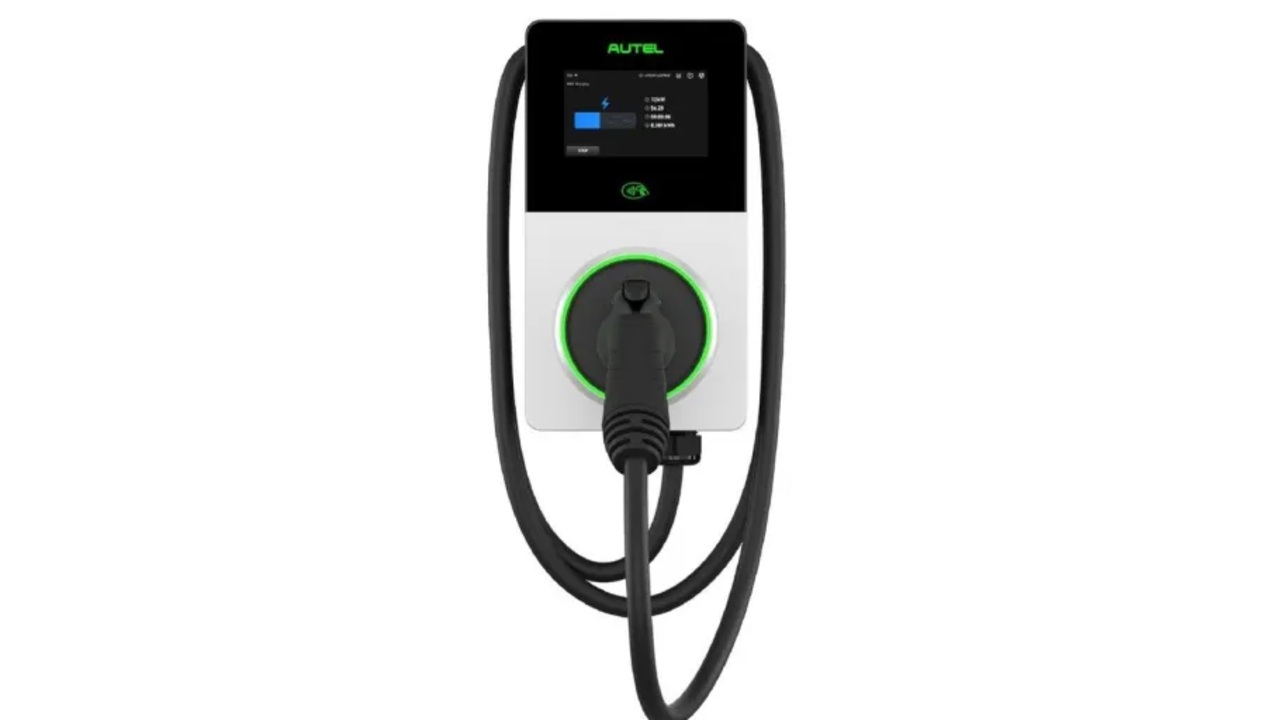
Autel is pushing to remove one of the biggest frictions in public charging: the moment when a driver has to fumble with a new app just to plug in. By expanding app-free card readers to an estimated 100,000 electric vehicle chargers across North America, the company is betting that familiar payment habits will do more to accelerate adoption than any loyalty program or proprietary wallet. I see this as a pivotal test of whether EV infrastructure can finally feel as simple as paying at a gas pump.
From app lock-in to tap-and-go charging
For years, public charging has been defined by app silos, QR codes and RFID cards that confuse new drivers and slow down everyone else. Autel’s decision to embed open payment hardware directly into its chargers is a direct response to that frustration, replacing account sign-ups with the same tap, swipe or insert motions people already use at retail terminals. The company is rolling out card readers across 100,000 chargers, a scale that turns a design choice into a statement about how EV charging should work for mainstream drivers, not just early adopters who are comfortable juggling multiple apps.
The backbone of this shift is Autel’s partnership with Nayax payment solutions, which are being embedded directly into Autel’s hardware rather than bolted on as an afterthought. Earlier partnership announcements made clear that Autel would integrate Nayax technology into an estimated 100,000 chargers across Nort America, and recent coverage confirms that app-free card readers are now being deployed at that scale. By treating payments as a core feature of the charger, not a separate software layer, Autel is aligning with broader industry guidance that public EV networks should let anyone “rock up to a charger and pay easily” without downloading an app or storing numerous RFID cards.
Inside the MaxiCharger AC Single and Nayax Uno Mini
The most visible expression of this strategy is the MaxiCharger AC Single, a Level 2 unit designed for public and semi-public locations that arrives with payments built in from day one. Autel Energy describes the MaxiCharger AC Single as interoperable and payment-ready, with a focus on commercial and community charging where drivers may be visiting for the first time and are unlikely to have a site-specific app. By integrating payments at the product level, Autel is signaling that every new charger it ships into these environments should be ready for walk-up use.
Technically, the key component is the Nayax Uno Mini, a compact payment module that supports contactless EMV, traditional card insert and NFC wallets in a single device. Through the integration of the Nayax Uno Mini, the MaxiCharger AC Single can accept tap-to-pay from physical cards, mobile wallets like Apple Pay or Google Wallet, and chip-and-PIN transactions, all without requiring any prior registration. Nayax’s own description of the partnership emphasizes that its payment solutions are being embedded directly into Autel’s chargers, which is a subtle but important distinction from external kiosks or separate pay stations that can confuse drivers and add maintenance overhead.
Why embedded payments matter for drivers and site hosts
From a driver’s perspective, embedded card readers turn EV charging into a familiar retail experience rather than a software project. Instead of scanning QR codes or hunting for the right app, a motorist can pull up in a Hyundai Ioniq 5 or a Chevrolet Bolt, plug in, tap a card or phone and start the session. Reporting on Autel’s rollout notes that app-only access and QR codes have been a persistent source of friction, and that app-free Level 2 charging is particularly important for locations like workplaces, hotels and shopping centers where drivers may not be repeat customers. When the payment terminal is right on the charger, the mental model shifts from “join our network” to “pay as you go.”
For site hosts, the economics and operations also look different when payments are integrated. Commercial property owners, fleet depots and municipalities can install MaxiCharger AC Single units knowing that every port is revenue-ready without separate card kiosks or proprietary RFID systems. Autel Energy has framed the launch of the MaxiCharger AC Single with integrated Nayax payments as a milestone in its strategy to deliver interoperable, payment-ready and connected charging for the U.S. market, which suggests that hosts can mix these chargers into broader networks without locking themselves into a single software vendor. That aligns with earlier partnership details that position Nayax as a platform for embedded EV charging payments, giving operators a way to manage pricing and transactions while still offering open, card-based access to drivers.
How Autel’s move fits into the wider EV charging landscape
Autel is not the only company trying to simplify public charging, but the scale and embedded nature of its rollout stand out. Other hardware makers, such as Circontrol with its eVolve Smart semi-fast charger, have introduced features that let users pay for a charging session without registration, highlighting how frictionless payments can play a key role in promoting electromobility. The difference in Autel’s case is that the company is tying its approach to a specific target of 100,000 chargers and integrating payments at the board level through Nayax, rather than treating card readers as optional accessories.
This strategy also dovetails with Autel’s broader push into intelligent, interoperable infrastructure. The company has outlined plans to showcase grid-ready solutions, fleet automation and interoperable charging at major industry events, positioning its hardware as part of a larger ecosystem that spans residential, commercial and industrial applications. By ensuring that the same chargers are both smart and easy to pay for, Autel is trying to avoid the split that has plagued some networks where advanced software features coexist with clunky user experiences at the point of sale. In that sense, embedded payments are not just a convenience feature, they are a prerequisite for the kind of high-utilization, data-rich charging networks that policymakers and utilities want to see.
What this means for EV adoption and policy goals
As governments push for faster EV adoption, the usability of public charging is becoming as important as raw charger counts. Policy discussions often focus on how many ports are installed, but drivers experience the system one session at a time, and a single failed app download can sour someone on electric driving. By rolling out app-free card readers across 100,000 chargers, Autel is effectively stress-testing the idea that open, card-based payments can reduce range anxiety and make EVs feel viable for people who are not tech enthusiasts. If drivers can rely on simple tap-and-go charging at workplaces, apartment complexes and retail sites, it becomes easier for households without home charging to consider models like the Tesla Model 3 or Ford Mustang Mach-E.
There is also a regulatory undercurrent to this shift. In several markets, guidance for EV charging networks already emphasizes that public chargers should allow ad hoc use without mandatory registration, mirroring the way fuel stations operate. The RAC’s explanation of EV charging norms, for example, notes that in theory anyone should be able to arrive at a charger and pay easily without downloading an app or storing numerous RFID cards. Autel’s integration of Nayax Uno Mini into the MaxiCharger AC Single, and its broader plan to embed Nayax payment solutions into an estimated 100,000 chargers across Nort America, moves that principle from policy documents into physical hardware. If the rollout proves successful, I expect it to strengthen the case for regulators to treat open, card-based payments as a baseline requirement for public charging infrastructure rather than a premium feature.
More from Fast Lane Only: