Automakers spent the past decade racing into electric vehicles, only to find the ground shifting under their feet. Rapid swings in federal rules, tax credits, and fuel economy standards have turned what was supposed to be a clear transition into a costly strategic mess, with factories, product plans, and balance sheets all caught in the crossfire. Instead of a straight line to an all-electric future, the industry is now improvising in real time.
From EV moonshot to hybrid retreat
The clearest sign of the turmoil is how quickly the Big Three have backed away from their pure EV ambitions. Ford, which once pitched the F-150 Lightning as the centerpiece of its electric strategy, is now pivoting hard toward hybrids and extended-range models after announcing a sweeping reset of its EV business in December. That shift includes a series of moves to slow or cancel all-electric programs and absorb roughly $19.5 billion in related charges, a stark admission that the original EV business case no longer works under current conditions. The retreat became even more visible when Ford pulled the plug on the all-electric F-150 Lightning pickup truck, a decision that followed the Trump administration’s rollback of fuel economy standards and the stripping away of a $7,500 tax credit that had helped make the truck viable for mainstream buyers.
GM has taken a different tack, but it is hardly immune to the same pressures. On the one hand, GM is still plowing forward with new electric models and battery plants, having bet heavily that scale and technology will eventually pay off even as demand cools. On the other hand, reporting on “EV realism” notes that GM, which was by far leading in such investments in the U.S., is now keeping its current EV lineup but has little appetite to expand it aggressively while profitability and capital concerns remain. Across the industry, hybrids are filling the gap: with the realization pure EVs will not take over the market anytime soon, automakers are leaning into gasoline-electric combinations that can be sold profitably without relying on fragile federal incentives.
Whiplash in Washington
Behind these corporate pivots is a policy environment that keeps changing direction. On January 20, 2025, President Donald Trump announced plans to reverse key EV policies introduced during the Biden administration, including support mechanisms that had underpinned automakers’ long-term planning. Those reversals have been paired with new tariffs and changes to tax rules that affect the cost of raw materials and imported components, reshaping the economics of battery production and EV assembly in the U.S. At the same time, the Trump administration has moved to ease fuel economy rules, with The Trump administration proposing a significant rollback of carmakers’ fuel economy standards on a Wednesday in Dec, signaling that regulators would no longer push as aggressively for rapid electrification.
These shifts have collided with existing Environmental Protection Agency greenhouse gas rules that were written with a much faster EV adoption curve in mind. Automakers have warned that current EPA GHG standards for the 2027 to 2032 period are unachievable given slowing EV demand, charging infrastructure gaps, and the repeal of federal EV incentives that once helped close the price gap with gasoline models. Industry groups have urged the EPA to revise those standards amid market shifts, arguing that the rules assumed a policy and subsidy environment that no longer exists. The result is a regulatory patchwork in which fuel economy targets are being relaxed while emissions rules still lean on aggressive EV penetration, leaving companies unsure which set of signals to trust when they commit billions of dollars to new platforms.
The tax-credit rug pull
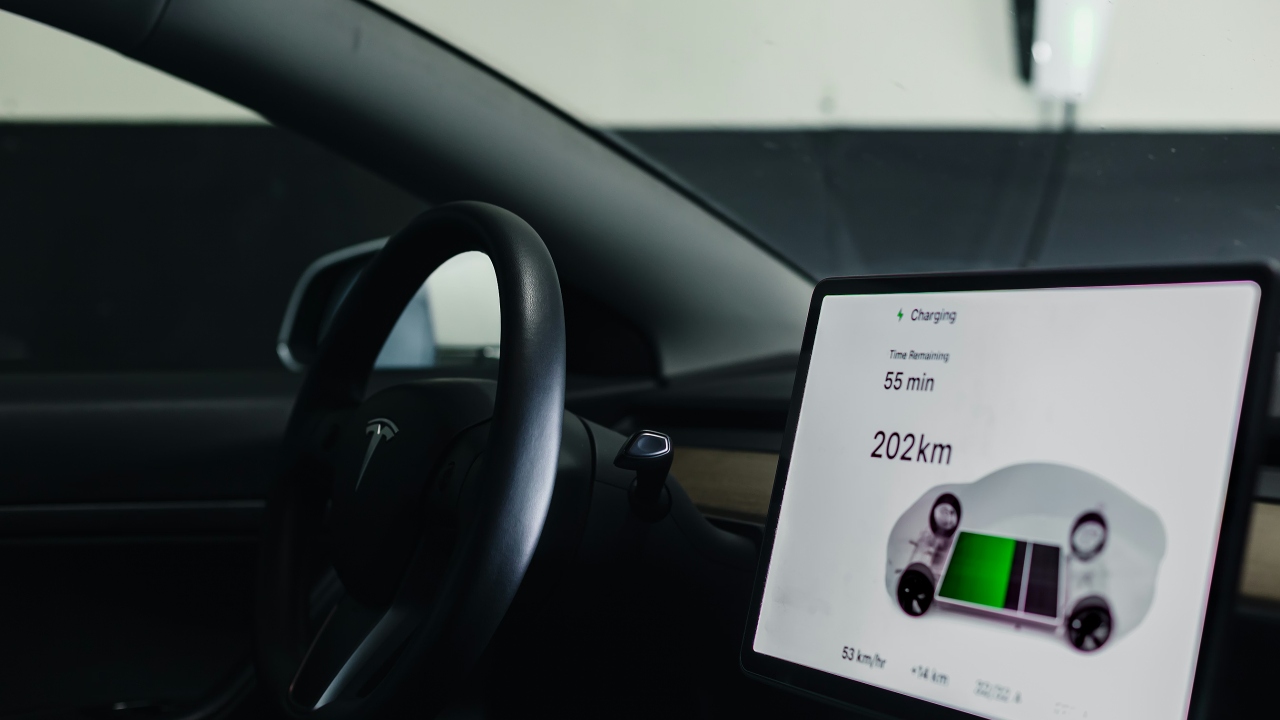
Nothing illustrates the cost of policy volatility more clearly than the sudden changes to EV tax credits. Federal incentives that once made electric models competitive have been rolled back or rescinded, including the $7,500 credit that supported vehicles like the F-150 Lightning. Analysts writing about the 2025 EV tax shift have noted that the industry had been ramping up production capacity on the assumption that such credits would remain in place long enough for battery costs to fall and consumer acceptance to grow. Instead, manufacturers now face a landscape where those supports are disappearing just as they bring high-cost EVs to market, forcing them to discount heavily or delay launches.
The impact shows up directly in sales data and corporate strategy. Reporting on national EV trends describes how federal incentives are no more, automakers are canceling all-electric models, and hybrids are becoming an electrification lifeline for companies trying to stay on track with emissions goals without losing money. One analysis of EV sales notes that demand is way down and that, in addition to rescinding consumer tax breaks, policymakers have created enough uncertainty that automakers started second-guessing themselves. The same piece highlights that 49 states are now navigating a patchwork of incentives and rules, complicating nationwide marketing and pricing strategies. For consumers, the disappearance of predictable federal support has made EV pricing feel like a moving target; for manufacturers, it has turned long-term investment decisions into high-stakes gambles.
Market realism and the hybrid lifeboat
As the policy tide has gone out, the market’s own limits have come into sharper focus. Electric vehicles had a bumpy road in 2025, with slower-than-expected adoption even in strongholds like the Bay Area, where charging infrastructure is relatively dense and early adopters are plentiful. Reports from that region describe drivers gravitating toward plug-in hybrids that offer electric commuting with a backup gas tank, a compromise that reduces range anxiety and dependence on public chargers. Nationally, analysts now talk openly about a global EV pullback, with political shifts aligning with uncertain market conditions to turn cautious strategic changes into a full-blown retreat from the most aggressive all-electric timelines.
In this environment, hybrids have become the default answer for automakers trying to reconcile regulatory expectations with consumer behavior. The US electric vehicle market is facing a tough 2026, with Federal incentives gone and several companies canceling all-electric models outright, yet hybrid sales are rising as buyers look for better value and flexibility. Commentators argue that hybrids of all varieties are filling the electrification gap, from traditional gasoline-electric sedans to plug-in SUVs that can cover daily driving on battery power. Rather than going all-in on all-electric cars, automakers are focusing on hybrid vehicles that have both electric motors and internal combustion engines, a strategy that keeps them in the game on emissions while reducing their exposure to volatile battery costs and uncertain charging build-out.
Capital spending, write-offs, and the next reset
The financial consequences of this policy and market whiplash are only beginning to show up on balance sheets. Analysts tracking industry investment note that political shifts and a changing regulatory environment have turned what started as cautious adjustments into a broader pullback from ambitious EV capacity plans. Ford’s decision to take $19.5 billion in charges tied to its EV reset is one of the most visible examples, but it is not alone. A widely cited “Car Wars” forecast finds that the drop in new vehicle launches over the next four years is heavily attributed to automakers pumping the brakes on EV programs, with several write-offs in the sector as companies retreat into their core products. Between the lines, the message is clear: the industry is reallocating capital away from speculative electric projects and back toward profitable trucks, SUVs, and hybrids that can be sold under a range of policy scenarios.
At the same time, some manufacturers are trying to thread the needle rather than slam on the brakes. GM is continuing to offer its current EV models and maintain its battery investments, even as it slows the pace of new launches and keeps a close eye on profitability. Commentators on global EV pullback trends argue that 2025 marked a turning point, not an end, for electrification, with companies moving from a growth-at-all-costs mindset to one of “EV realism” that weighs each project against uncertain rules and incentives. I see that as the core of the current mess: rapid swings between pro-EV and anti-EV policies have left automakers paying for plants, platforms, and marketing campaigns built for a regulatory world that no longer exists. Until Washington offers a clearer, more stable roadmap, the industry is likely to keep hedging with hybrids, trimming EV ambitions, and absorbing expensive write-downs on bets that were made under a very different set of rules.
More from Fast Lane Only: