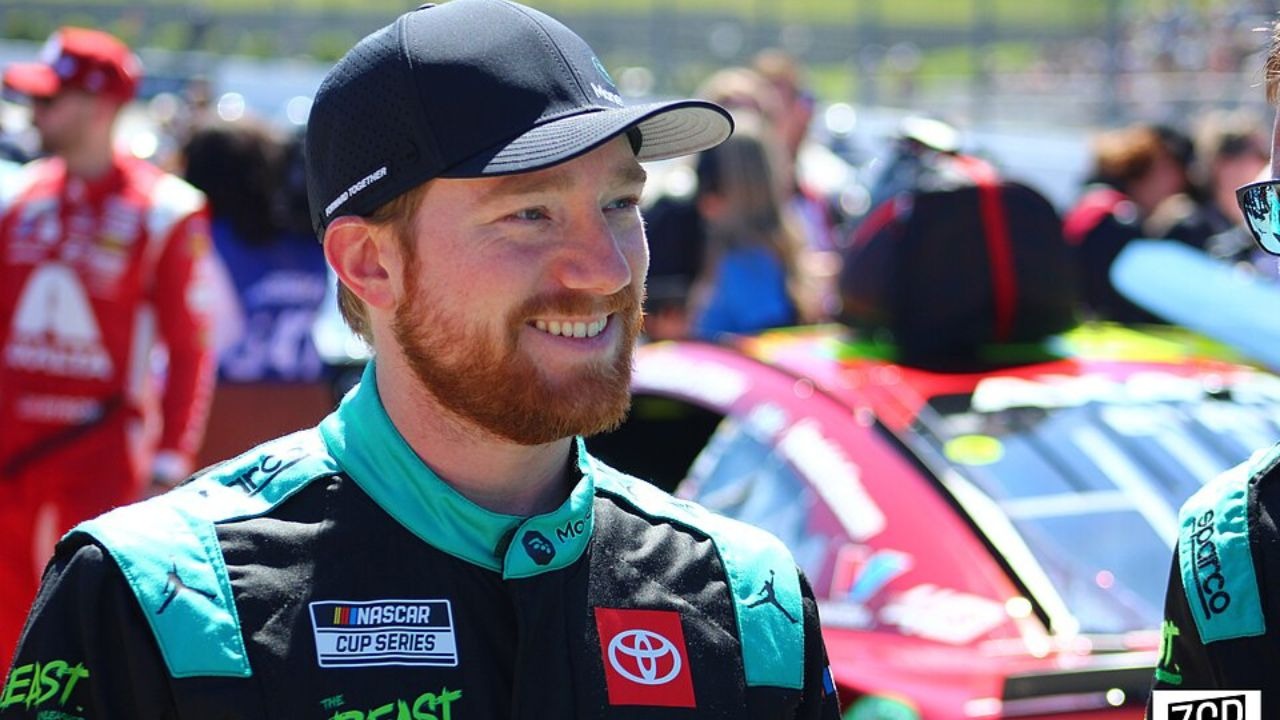
Tyler Reddick has a new look for 2026. Rockstar Energy announced a multi-year partnership with 23XI Racing in April 2026 that makes the driver the centerpiece of the brand’s return to NASCAR, placing its black-and-yellow livery on the No. 45 Toyota Camry for select Cup Series races this season.
The deal, confirmed through an official announcement from Rockstar Energy, goes beyond a standard paint scheme. It includes a personal endorsement for Reddick, content and activation rights across 23XI’s digital platforms, and access to the team’s facilities for branded campaigns targeting motorsports and lifestyle audiences.
For Reddick, a back-to-back NASCAR Xfinity Series champion (2018-2019) who has recorded four Cup Series wins through the early portion of the 2026 season, the partnership elevates his commercial profile at a moment when he has established himself as one of the sport’s most versatile competitors. For Rockstar, a PepsiCo-owned brand that has historically invested in action sports and music, it represents a calculated push back into stock car racing’s biggest stage.
A team with rival energy drinks under one roof
The most striking detail about this deal is what it means for 23XI’s sponsorship portfolio. Bubba Wallace’s No. 23 car already carries Monster Energy branding. Now Reddick’s No. 45 will feature Rockstar. That puts two competing energy drink giants, both fighting for shelf space in convenience stores nationwide, inside the same race shop.
A Sportskeeda headline referenced three rival energy drink brands across the 23XI roster, though the identity of the third brand beyond Monster and Rockstar has not been confirmed in primary reporting. Until that detail is substantiated, the verified picture is two direct competitors sharing the same garage.
23XI, co-owned by Michael Jordan and Denny Hamlin, has built its commercial model around attracting blue-chip brands willing to pay for access to NASCAR’s audience. Landing a second confirmed major energy drink sponsor validates that approach, but it also creates a balancing act. Paint schemes, media appearances, social content, and trackside activations all need to be managed so neither brand feels shortchanged by the other’s presence.
Why Rockstar chose Reddick
Rockstar’s press release framed the partnership as the start of “a bold new era in motorsports.” The logic behind choosing Reddick is straightforward. He wins races, he is comfortable on every track type from superspeedways to road courses, and he fits the younger demographic Rockstar targets through its marketing.
Reddick has compiled one of the stronger resumes among active Cup Series drivers. His Xfinity titles came driving for Richard Childress Racing, and since joining 23XI, he has been a consistent playoff contender. That kind of sustained competitiveness gives Rockstar what every sponsor wants: regular television exposure tied to a driver who is in the mix when it counts.
The personal endorsement component adds another layer. Reddick will not just carry the Rockstar logo on his car. He will appear in the brand’s campaigns, represent it at events, and serve as its public face in motorsports. In a sport where driver marketability increasingly matters as much as lap times, that kind of arrangement can cement a driver’s long-term financial security.
What this signals for NASCAR sponsorship
Energy drinks have become one of NASCAR’s most reliable sponsorship categories. As tobacco money disappeared and some traditional automotive partners scaled back, brands like Monster Energy and now Rockstar have filled the gap. These companies see NASCAR’s combination of live television ratings, trackside fan access, and social media content as a strong fit for reaching young male consumers.
Rockstar’s recommitment through a multi-year deal suggests the economics still work. PepsiCo acquired Rockstar in 2020 for $3.85 billion, giving the brand corporate resources that dwarf most NASCAR sponsors. A sustained NASCAR presence, backed by PepsiCo’s marketing infrastructure, could make Rockstar a more visible competitor to Monster in the racing space.
For NASCAR itself, the deal is a positive signal. The series has worked to modernize its appeal and attract brands that skew younger. Having a PepsiCo property invest meaningfully in a team co-owned by Michael Jordan reinforces the narrative that the sport’s commercial value is growing, not shrinking.
How 23XI manages the balancing act
The practical challenge starts now. 23XI will need clear internal boundaries to keep Rockstar and Monster satisfied. That means separate content pipelines, distinct activation zones at tracks, and careful scheduling of driver appearances so neither brand’s investment feels diluted.
On the track, the dynamic could actually benefit the team. More sponsorship revenue means more resources for engineering, simulation, and personnel. In modern NASCAR, where the Next Gen car has tightened the competitive field, marginal gains funded by strong partnerships can show up in qualifying speed and pit stop execution. Whether Rockstar’s backing translates into a noticeable performance bump for Reddick’s program will be one of the quieter storylines to track through the remainder of the 2026 season.
Off the track, Rockstar plans to activate around race weekends with branded displays and fan experiences, leveraging its existing presence in action sports and music festivals. The company gains access to 23XI’s facilities and digital channels as part of the agreement, according to Heavy’s reporting on the partnership details.
The specific races where Rockstar will appear as primary sponsor on the No. 45 have not been disclosed publicly. The official announcement confirmed only that the branding will appear at “select races” during the 2026 Cup Series season, leaving room for the schedule to expand if early results meet expectations.
What the first Rockstar-branded races will reveal
The first Rockstar-branded appearance on the No. 45 will be the most visible test. Strong finishes early in the partnership will reinforce the narrative that Rockstar picked the right driver. A deep playoff run would be even better, giving the brand prime-time exposure during NASCAR’s most-watched stretch of the season.
If the initial slate of primary-sponsored races delivers strong returns, there is room for expansion. Rockstar could increase its race count on Reddick’s car, take associate positions on other 23XI entries, or extend into additional motorsports properties. The multi-year structure of the deal gives both sides time to evaluate and scale.
The broader sponsorship market will be watching as well. If Rockstar’s investment drives measurable fan engagement and brand lift, other beverage and lifestyle companies may pursue similar high-visibility deals, either with 23XI or rival teams. In that sense, this partnership is more than a new paint scheme on a fast Toyota. It is a real-time experiment in whether a NASCAR team can serve as a platform where competing global brands share the same garage and still feel like they are winning.
More from Fast Lane Only
- Unboxing the WWII Jeep in a Crate
- 15 rare Chevys collectors are quietly buying
- 10 underrated V8s still worth hunting down
- Police notice this before you even roll window down
*Research for this article included AI assistance, with all final content reviewed by human editors.