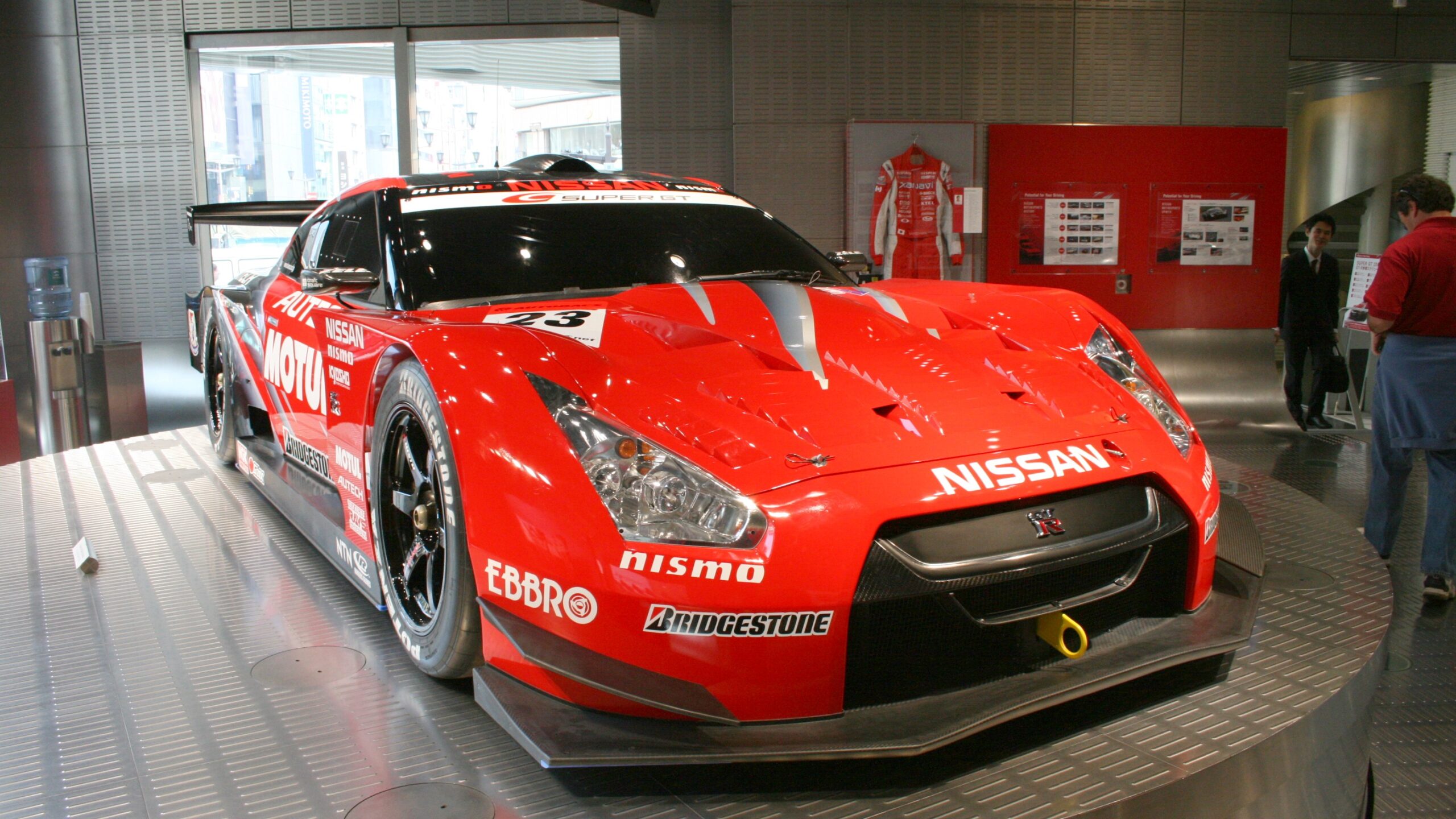
The 2008 Nissan GT-R arrived as a production car that could outrun exotics costing several times more, while carrying four seats and a trunk. In one stroke, it reset expectations for how much speed, technology and everyday usability could coexist in a single performance machine. Nearly two decades later, the way manufacturers talk about lap times, launch control and all-weather power still traces back to that first R35.
Viewed from 2026, the original GT-R is more than a fast Japanese coupe from the late 2000s. It reads like the template for modern supercar performance, from its twin-turbo V6 and dual-clutch gearbox to its data-driven chassis electronics and relentless focus on real-world pace rather than poster-friendly top speed.
A radical concept made real
When Nissan pulled the cover off the production R35 GT-R for the 2008 model year, the concept was already familiar from auto show stands, yet the final specification still shocked enthusiasts. The car combined a hand-assembled 3.8‑liter twin-turbocharged V6, officially rated at more than 470 horsepower in its early form, with a rear-mounted dual-clutch transaxle and all-wheel drive. Rather than chasing a naturally aspirated V12 or rear-drive purity, Nissan built a high-tech, turbocharged weapon designed to generate repeatable, brutal acceleration in any weather.
The engineering layout was unconventional. The engine sat in the nose, but the six-speed dual-clutch gearbox and rear differential were packaged together at the back, linked by a rigid driveshaft. This transaxle design helped balance weight distribution and allowed the all-wheel-drive system to shuffle torque quickly between axles. The result was a car that could launch with ferocity yet remain stable and approachable for drivers who were not professional racers.
Inside, the GT-R fused Japanese video game culture with motorsport telemetry. The multi-function display in the center stack, developed with input from game designers, let drivers scroll through pages of live data: turbo boost, oil temperatures, cornering g forces and lap timers. It treated performance as something to be measured, logged and improved, not just felt from the driver’s seat.
Numbers that embarrassed supercars
From the first tests, the GT-R’s performance figures read like typographical errors. Independent instrumented runs recorded 0 to 60 mph times in the low three-second range for early cars, with quarter-mile passes in the 11‑second bracket. A later evaluation of the 2012 model confirmed that the updated GT-R could reach 60 mph in about 2.9 seconds and cover the quarter mile in roughly 11.2 seconds, performance that put it shoulder to shoulder with far more expensive exotics, according to independent testing.
Top speed figures around 190 mph placed the GT-R among contemporary supercars, but the real shock came from how easily it reproduced its numbers. The car’s launch control and all-wheel-drive traction made full-throttle starts feel almost clinical. Drivers could access near-perfect acceleration on demand, without the wheelspin and drama that often accompanied similar attempts in rear-drive rivals.
On track, the GT-R’s lap times at circuits such as the Nürburgring Nordschleife became a central part of its identity. Nissan used those laps as a benchmark to prove that a relatively heavy, four-seat coupe could outpace lighter, mid-engined cars. That strategy pushed other manufacturers to treat lap records as headline figures in their own marketing, a shift that still shapes how performance cars are compared.
Everyday usability with race-car pace
The R35’s most disruptive trait was not just speed. It was the way that speed coexisted with daily-driver practicality. The GT-R had four usable seats, a decent trunk and a ride that, while firm, could cope with commuting and long highway trips. Reviewers who lived with the car for extended periods noted that it behaved like a refined grand tourer at modest speeds while retaining the ability to deliver supercar-grade acceleration whenever the driver requested it.
As the years went on, updates to suspension tuning and cabin materials reinforced that dual character. A detailed review of a mid-cycle car highlighted how the GT-R’s adaptive dampers and refined electronics allowed it to switch from relatively comfortable road manners to sharp track responses at the touch of a button, with the 2015 version described as combining relentless pace with improved everyday civility in long-term impressions.
This mix of usability and extreme performance anticipated a new segment of high-output all-wheel-drive coupes and sedans. Later cars from other manufacturers adopted similar formulas: turbocharged engines, dual-clutch gearboxes and electronically managed all-wheel drive that could deliver both traction and comfort. The GT-R showed that customers would embrace a car that looked like a video game hero yet functioned as a year-round tool.
Electronics as a performance weapon
The 2008 GT-R arrived at a moment when automotive electronics were rapidly advancing, and Nissan leaned into that shift. The car’s stability control, torque vectoring and adaptive all-wheel-drive logic worked together to mask its size and weight. Under heavy acceleration out of a corner, the system could push more torque to the rear for a traditional sports-car feel, then redirect power to the front axle if it sensed slip.
That integration of electronics and mechanical hardware changed how engineers approached performance. Instead of starting with a purely mechanical layout and adding electronic aids as safety nets, the GT-R treated software as a core part of its dynamic character. The car’s control units constantly monitored steering angle, yaw rate, wheel speeds and throttle position to determine how much power each tire could handle at any moment.
This philosophy influenced how later high-performance models, from European super sedans to American muscle cars, approached traction and stability systems. Manufacturers began to advertise not just horsepower but also the sophistication of their drive-mode logic, launch programs and adaptive damping, all areas where the GT-R had set an early standard.
Value that rattled the establishment
Price was another area where the 2008 GT-R reshaped expectations. It entered the market at a fraction of the cost of the European exotics it could match or beat in acceleration and lap times. That gap forced uncomfortable comparisons for brands that had long relied on heritage and craftsmanship to justify their pricing.
Enthusiast outlets that tracked the GT-R across multiple model years often highlighted how little buyers had to spend to access that level of performance. A retrospective covering the car’s production run pointed out that early GT-Rs delivered supercar numbers for sports-car money, a pattern that continued as power and grip increased over the years according to model-year breakdowns.
The pricing strategy also influenced the used market. As early cars depreciated, they brought near-supercar performance into reach for buyers shopping in the same bracket as well-equipped hot hatchbacks and midsize sedans. That secondary impact helped normalize the idea that extreme acceleration and advanced electronics were no longer the exclusive domain of six-figure exotics.
How the GT-R evolved from its 2008 roots
Although the focus here is the 2008 breakthrough, the way the GT-R evolved reinforces how far ahead of the curve that original car was. Power climbed, suspension tuning grew more sophisticated and interior materials improved, yet the core architecture stayed intact. A detailed overview of the GT-R’s development arc notes that engineers continued to refine the same basic 3.8‑liter twin-turbo V6, dual-clutch transaxle and all-wheel-drive package for years, a sign that the original layout had long legs according to historical road tests.
Special editions such as the Black Edition and later Nismo variants pushed the formula further with stiffer suspensions, lighter wheels and aerodynamic tweaks. Reviews of performance-focused trims described sharper turn-in, stronger braking and even more relentless acceleration, yet the everyday usability remained. A test of a high-spec version from the early 2010s emphasized how the GT-R could still carry passengers and luggage while delivering track-ready pace, a duality that had been baked in since 2008 and echoed in special-edition coverage.
Across these updates, the car’s fundamental identity did not change. The GT-R remained a high-tech hammer that relied on electronics and traction to deliver speed, rather than on light weight or rear-drive theatrics. That consistency helped build a loyal following and reinforced the idea that the 2008 blueprint had been the right one.
How rivals responded
The GT-R’s arrival put pressure on established performance brands. European manufacturers in particular had to respond to a car that could match or beat their lap times for less money and with more all-weather usability. Over the following years, a wave of dual-clutch transmissions, turbocharged engines and advanced all-wheel-drive systems appeared across the segment.
Sports cars that had previously relied on naturally aspirated engines began to adopt turbocharging, in part to deliver the kind of torque-rich, low-end punch that made the GT-R feel so explosive on the road. High-performance sedans and coupes integrated launch control systems and multi-mode stability programs that echoed the GT-R’s approach to repeatable acceleration.
At the same time, the GT-R’s focus on data and lap times encouraged a more numbers-driven culture among enthusiasts. Manufacturers started to quote Nürburgring lap records, 0 to 60 mph times and braking distances with greater precision, knowing that customers would cross-shop those figures directly against the GT-R’s benchmarks.
Longevity and the end of an era
The R35 generation stayed in production far longer than a typical performance platform, which further highlights how disruptive the 2008 car had been. Instead of replacing it after a single decade, Nissan kept refining the same basic chassis and drivetrain, updating styling and technology but preserving the core character. That long run finally reached its conclusion when the last R35 GT-R left the production line, a milestone that marked the end of a car that had defined an era according to factory reports.
The farewell underscored how a model that began as a controversial, computer-heavy upstart had become a modern classic. Owners and fans now look back at the early 2008 cars as the purest expression of the idea, with later updates seen as refinements rather than reinventions. The long production life also means that the GT-R’s influence spans multiple generations of rival cars, some of which were born, replaced and retired while the R35 continued to evolve.
Why the 2008 GT-R still matters in 2026
From today’s vantage point, the 2008 GT-R’s impact can be seen in several clear trends. High-output turbocharged engines are now standard in performance flagships. Dual-clutch transmissions, once rare, are common in everything from hot hatchbacks to supercars. Sophisticated all-wheel-drive systems that can shift torque proactively are no longer exotic hardware. The GT-R was not the only car to push these technologies, but it was one of the first to package them so aggressively in pursuit of accessible, repeatable speed.
The car also helped shift the cultural conversation around performance. Instead of treating lap times and acceleration figures as the exclusive domain of race teams, it brought that data into the hands of everyday drivers. The multi-function display and its pages of telemetry anticipated the current era of performance apps, track-mode data loggers and smartphone-connected driving metrics.
Finally, the GT-R showed that a manufacturer without a recent supercar pedigree could re-enter the top tier of performance through engineering and technology. That message resonated with brands across the industry that have since launched their own high-tech halo cars, using advanced electronics and powertrains to leapfrog more established rivals.
More from Fast Lane Only
- Unboxing the WWII Jeep in a Crate
- 15 rare Chevys collectors are quietly buying
- 10 underrated V8s still worth hunting down
- Police notice this before you even roll window down
*Research for this article included AI assistance, with all final content reviewed by human editors.