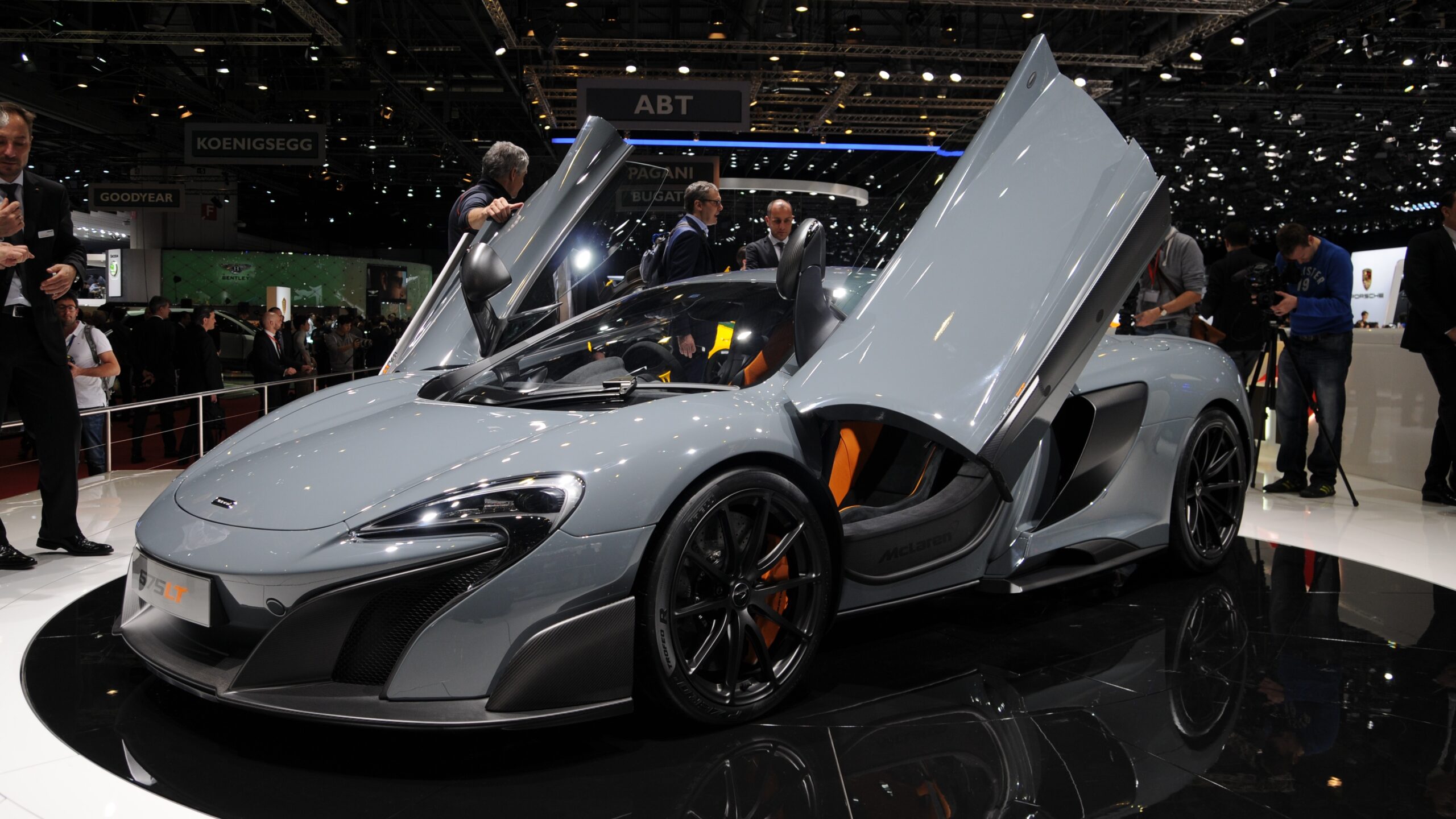
The McLaren 675LT arrived in 2015 as a harder, sharper evolution of the 650S, but the real surprise sat beneath the headline power figure. Engineers managed to carve roughly 100 kilograms from an already lean supercar, using a series of targeted, sometimes obsessive, weight-saving measures that reshaped how McLaren approached its Longtail models. That unexpected drop in mass changed not only the way the 675LT drove, but also how later LT cars would be engineered.
By treating every component as an opportunity to shed grams, McLaren turned a mid-cycle variant into a case study in lightweight thinking. The 675LT proved that meaningful performance gains could come from aggressive dieting rather than a simple chase for horsepower.
From 650S to Longtail: setting the stage
When McLaren developed the 675LT, the starting point was the 650S, itself a carbon tub supercar with a twin-turbocharged V8 and active aerodynamics. On paper, the 650S already ticked the boxes: high power, low mass for its class, and track-ready hardware. The Longtail brief demanded more, though: faster lap times, sharper responses, and a stronger connection between driver and chassis.
Instead of simply increasing boost pressure and fitting stiffer springs, McLaren revisited the entire vehicle package. The target was not just extra power, but a significant reduction in mass that would amplify every change in the engine, suspension, and aero. The 675LT name signaled a power increase to 675 PS, while engineers quietly set a parallel goal to remove around 100 kilograms compared with a comparable 650S specification.
This required a different mindset. The carbon MonoCell chassis already delivered structural lightness, so the team had to dig into secondary systems and trim, searching for savings in places that previous programs had left largely untouched.
Where the 100 kilograms went
The final 675LT package combined dozens of small reductions with several large ones to reach that 100-kilogram cut. The most visible change came from the bodywork. Extensive use of carbon fiber for the front splitter, side skirts, rear bumper, diffuser, and the elongated Longtail active rear wing removed kilograms from high positions on the car, which also lowered the center of gravity.
Inside the cabin, the weight-loss program was even more ruthless. Fixed-back carbon fiber bucket seats replaced the electrically adjustable chairs, saving several kilograms per side. The standard sound system and much of the insulation were deleted or reduced, while thinner glass and a simplified center console trimmed additional mass. Buyers could even specify the removal of air conditioning to save a few more kilograms, underscoring how far McLaren was willing to go in pursuit of the target.
Under the skin, lightweight forged alloy wheels, titanium wheel bolts, and a pared-back exhaust system reduced unsprung and rear mass. The exhaust, crafted from thinner-gauge materials and a more direct routing, contributed meaningfully to the total saving while also sharpening the car’s acoustic character. Braking hardware, including carbon ceramic discs and lighter calipers, further cut unsprung weight and improved heat management during repeated hard use.
Each change might have seemed minor, but together they produced a car that felt substantially different from its sibling. The 675LT did not simply weigh less on a scale; it carried its mass more efficiently, concentrated closer to the center and lower in the chassis.
Lightweight engineering as a performance multiplier
The 675LT’s power increase over the 650S was relatively modest in raw numbers, yet the combination of extra output and reduced weight delivered a step-change in real-world performance. With roughly 100 kilograms removed, the car’s power-to-weight ratio improved markedly, which translated into stronger acceleration, shorter braking distances, and higher cornering speeds.
Less mass meant the suspension could be tuned for both control and compliance, since the dampers and springs had less inertia to manage. Steering feel improved as lighter front-end components reduced the effort required to change direction. On track, the 675LT’s lighter bodywork and aero package worked together, generating more downforce without the penalty of heavier structures.
From an engineering perspective, the project demonstrated how weight reduction can act as a multiplier for every other system. The same brakes worked harder with less effort, the same tires generated more grip for longer, and the same cooling hardware managed heat more effectively because the car spent less time under peak load. Rather than chasing ever-larger power figures, McLaren used mass reduction to unlock performance that would have been difficult to achieve through engine tuning alone.
Driver experience and character
The impact of the 100-kilogram cut was felt most clearly from behind the wheel. The 675LT responded more quickly to steering inputs, rotated more eagerly into corners, and allowed finer control of weight transfer under braking and throttle. The lighter rear section and revised aero meant the car felt stable yet agile, with a sense of connection that distinguished it from the more road-biased 650S.
Inside, the stripped-back cabin reinforced that character. Reduced insulation and the lighter exhaust system let more mechanical and induction noise into the cockpit, creating a more intense, track-focused atmosphere. The fixed-back seats and exposed carbon surfaces signaled that comfort had taken a back seat to engagement. For some drivers, the missing luxuries and extra noise were compromises; for others, they were proof that the Longtail badge meant serious intent.
Crucially, the weight reduction did not turn the 675LT into a fragile, single-purpose track tool. The underlying carbon chassis maintained rigidity and crash performance, while the powertrain remained closely related to the 650S, with targeted upgrades rather than a complete redesign. The result was a car that could still be driven on the road yet delivered a much more focused experience when pushed.
Lessons carried into later Longtail models
The philosophy that shaped the 675LT did not stop with that car. McLaren carried its lightweight approach into subsequent LT models, refining the recipe with each iteration. Later cars such as the 765LT and its open-top counterpart, the 765LT Spider, applied similar principles to an even more extreme brief.
In those later models, McLaren again chased significant weight reductions relative to the base Super Series car, using extensive carbon fiber bodywork, pared-back interiors, and lighter mechanical components. The company treated the earlier 675LT as proof that customers would embrace a more hardcore, less compromised package if the performance gains were clear. The 765LT Spider in particular showed how the Longtail approach could be adapted to a convertible while still prioritizing mass reduction and track capability.
Across these models, the lesson remained consistent: meaningful weight savings required a holistic strategy rather than a few headline parts. Each LT car was built on the same logic that had driven the 675LT program, treating every gram as a design decision rather than an afterthought.
Why the 675LT’s diet mattered to the industry
The 675LT arrived at a time when many high-performance cars were gaining weight due to tighter emissions rules, safety requirements, and the spread of comfort technology. In that context, a 100-kilogram reduction from an already light supercar sent a strong signal about what was still possible through focused engineering.
Other manufacturers were already experimenting with similar ideas, such as Porsche’s GT models and Ferrari’s track specials, but McLaren’s approach stood out for how deeply it was integrated into a mid-cycle variant rather than a limited-run halo project. The 675LT showed that a manufacturer could create a distinct, more extreme derivative without a completely new platform, provided it was willing to revisit every subsystem with weight in mind.
For engineers and product planners across the industry, the car became a reference point. It demonstrated that customers would accept, and even celebrate, sacrifices in convenience when those changes were clearly tied to performance. The success of the 675LT and its successors helped justify lightweight special series in other lineups, from track-focused Lamborghinis to stripped-out BMW M models.
Trade-offs and the limits of lightness
The 675LT’s aggressive diet did come with trade-offs. Reduced sound insulation increased cabin noise on long journeys, while the firmer suspension and fixed-back seats made daily driving less forgiving than in the 650S. Optional deletion of air conditioning and audio pushed the car even further from grand tourer territory.
These compromises highlighted the practical limits of weight saving in road cars. Beyond a certain point, each kilogram removed tends to affect comfort, usability, or cost disproportionately. Exotic materials such as titanium and advanced composites can deliver impressive reductions, but they also raise manufacturing complexity and price.
McLaren’s approach with the 675LT balanced on that edge. The company positioned the car as a track-biased model for committed drivers, not as a mainstream replacement for the 650S. That clear positioning allowed the engineering team to prioritize lightness and response over refinement, while still maintaining enough usability for occasional road use.
What enthusiasts and engineers watch for next
The legacy of the 2015 675LT continues to shape expectations for modern supercars. Enthusiasts now look closely at how much weight a new performance variant sheds relative to its base model, and whether the claimed reductions come from meaningful hardware changes or marketing-friendly detail tweaks. The 675LT set a benchmark by delivering a substantial, clearly explained 100-kilogram cut, supported by visible changes throughout the car.
Engineers and analysts also pay attention to how manufacturers apply lightweight strategies across future platforms. As hybrid systems and advanced driver assistance hardware add mass, the pressure to save weight elsewhere only increases. The techniques proven on the 675LT and later Longtail models, from widespread carbon fiber use to simplified interiors, provide a toolkit that can be adapted to electrified architectures.
There is also growing interest in how far customers are willing to follow. The appetite for track-focused variants remains strong, but expectations around connectivity, comfort, and usability continue to rise. Future Longtail-style cars will need to reconcile these competing demands, deciding where to draw the line between purity and practicality.
The enduring appeal of purposeful lightness
Looking back, the 2015 McLaren 675LT stands out less for its power figure and more for the discipline of its engineering. The unexpected 100-kilogram reduction turned a derivative model into a landmark in modern supercar design, showing how a systematic focus on mass could transform performance and character.
That lesson remains highly relevant. As regulations tighten and technology layers grow, the temptation to accept weight gain as inevitable will only increase. The 675LT provides a counterexample, a reminder that meaningful lightness is still achievable when a manufacturer commits to it from front splitter to rear wing, and from wheel bolts to seat shells. For drivers who care about feel and response as much as raw numbers, that commitment continues to define the Longtail badge.
More from Fast Lane Only
- Unboxing the WWII Jeep in a Crate
- 15 rare Chevys collectors are quietly buying
- 10 underrated V8s still worth hunting down
- Police notice this before you even roll window down
*Research for this article included AI assistance, with all final content reviewed by human editors.