The 2013 SRT Viper arrived as a rare kind of modern supercar, one that chased lap times without sanding off the rough edges that made the original Dodge Viper a legend. It mixed a massive naturally aspirated V10, rear-drive and a manual gearbox with just enough technology to keep the car on the road, but not so much that it stopped feeling wild.
That balance turned the reborn Viper into a statement about what American performance could be in an era already shifting toward turbocharging, dual-clutch automatics and digital driver aids. A decade later, the 2013 model still stands out as a high-water mark for analog speed.
Rebooting the snake
When SRT revived the Viper for 2013, the mission was clear: keep the basic recipe of a big engine up front and driven wheels in back, but refine everything around it. The car returned with a hand-built 8.4‑liter V10 that delivered towering torque and a brutal top-end rush. Power climbed well past the previous generation, and the engine remained naturally aspirated, preserving the instant throttle response that had always defined the car.
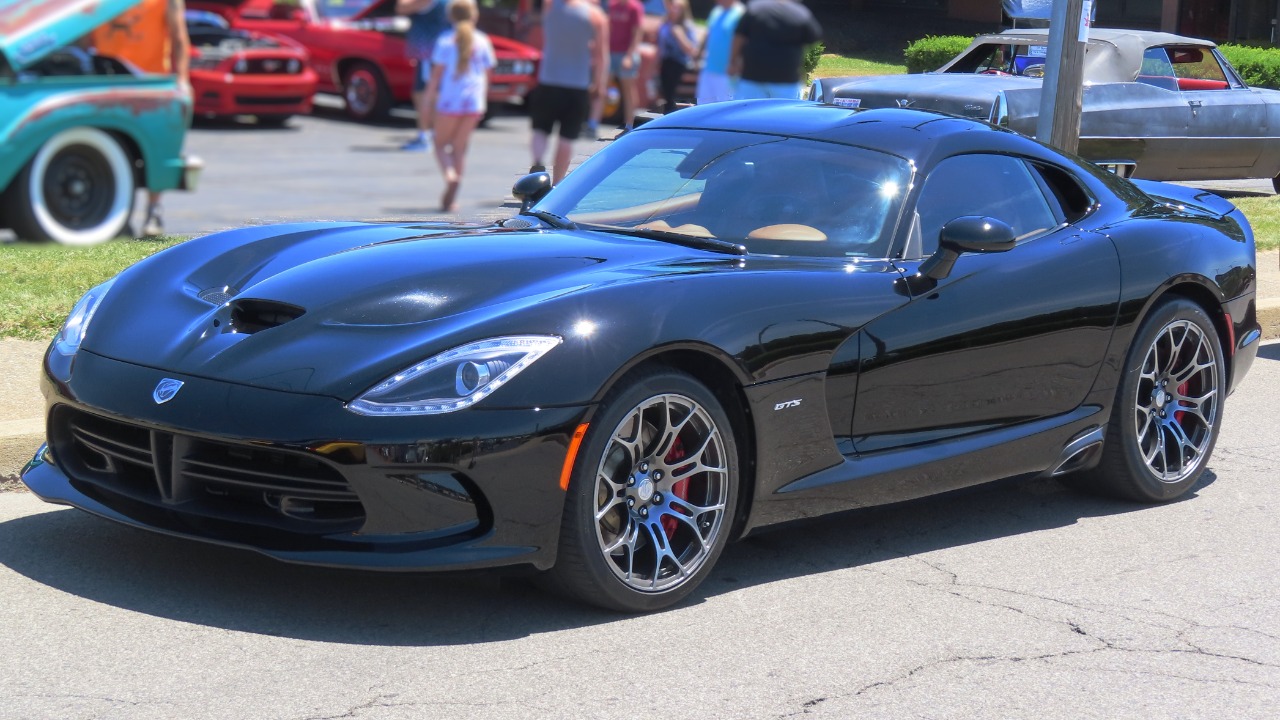
The chassis was extensively reworked with more high-strength steel and aluminum, along with lightweight body panels that helped trim mass while increasing rigidity. The proportions stayed classic Viper, with a long hood, short rear deck and a cabin pushed back toward the rear axle. Iconic side-exit exhausts and wide rear haunches signaled continuity with earlier generations, even as the surfacing and detailing moved the car into modern supercar territory.
Inside, SRT finally addressed one of the original Vipers’ biggest weaknesses. The 2013 model received a far more upscale cabin with supportive seats, higher-grade materials and a real infotainment interface. The driving position remained focused and tight, with the shifter close at hand and clear analog gauges front and center. The result felt more livable without losing the sense that this was a purpose-built performance machine.
The performance numbers that mattered
The 2013 Viper’s spec sheet backed up its aggressive styling. The V10 produced towering output, channeled through a six-speed manual transmission to the rear wheels. There was no automatic option, no dual-clutch and no all-wheel drive. That decision instantly narrowed the audience but deepened the car’s appeal among drivers who wanted involvement above all else.
Acceleration figures put the Viper squarely in supercar territory, with blistering sprints and a top speed that pushed well into triple digits on any long straight. Massive brakes and sticky tires delivered serious stopping power and cornering grip, especially in the higher-performance trims that added track-focused suspension tuning and aero aids.
Yet the raw numbers only told part of the story. What defined the 2013 car was how it delivered that performance. The engine’s linear powerband and heavy clutch demanded deliberate inputs. Steering was quick and heavy, the chassis communicated every surface change, and the car punished sloppy technique. Drivers who respected its limits found a deeply rewarding machine that felt alive at speed.
Staying analog in a digital era
By the early 2010s, most high-end sports cars had embraced turbocharging, dual-clutch gearboxes and multilayer stability systems that filtered much of the experience. The 2013 Viper resisted that drift toward isolation. It did adopt electronic stability control and traction management, a necessary addition for such a powerful rear-drive car, but the systems were tuned to intervene late and could be dialed back for track use.
That philosophy kept the car closer in spirit to earlier Vipers that had built their reputation on being demanding and occasionally intimidating. Rather than chase the effortless speed of some European rivals, SRT leaned into a more visceral identity. The Viper required commitment from its driver and rewarded skill with a sense of connection that many more polished competitors lacked.
In that sense, the 2013 model acted as a bridge between eras. It acknowledged modern expectations for safety and comfort while refusing to surrender the core traits that had made the nameplate famous. The result was a car that felt old-school in its attitude but not outdated in its capabilities.
Design that honored the original
The styling of the 2013 Viper walked a careful line between evolution and revolution. Signature cues like the clamshell hood, side exhausts and broad rear shoulders remained, but the surfaces grew tighter and more sculpted. The front fascia gained sharper headlights and larger intakes that improved cooling for both the engine and brakes.
Functional details played a major role. The hood featured prominent vents to extract hot air, the roofline and rear deck were shaped to manage airflow at high speeds, and the wide stance helped plant the car visually and dynamically. Special editions and track-focused variants layered on splitters, diffusers and wings that were not just cosmetic but tuned to add meaningful downforce.
Color choices also connected the 2013 car to its heritage. Bright reds, bold stripes and high-contrast combinations recalled early Vipers, while more subdued metallics and matte finishes brought the car in line with contemporary supercar trends. Inside, contrasting stitching, carbon fiber trim and available racing harnesses reinforced the sense that this was a serious driver’s car, not just a flashy grand tourer.
On-road character and daily reality
Living with a 2013 Viper required compromises, which was part of its appeal for purists. The cabin was snug, the ride firm, and the noise level high. Long highway stretches meant a constant background of engine and exhaust, along with tire roar from the wide rubber. Visibility, especially to the rear, demanded attention and planning.
Those traits also contributed to the car’s character. Every drive felt like an event, even at moderate speeds. The heavy controls and immediate responses kept the driver engaged, whether threading through city traffic or carving a back road. The car never faded into the background as mere transportation.
Compared with earlier generations, the 2013 model did soften some of the roughest edges. The seats were more supportive on long trips, the climate control worked more effectively, and the infotainment system made navigation and audio less of a chore. Owners could realistically use the car for occasional commuting or weekend trips, though it remained far from a relaxed daily driver.
Track focus and racing ambitions
The Viper’s return was not just about road cars. SRT also used the platform to chase success in sports car racing, where the car’s long hood and front-engine layout made it an outlier among mid-engine rivals. The racing program treated the street car as a starting point and pushed the concept further with stripped interiors, aggressive aero, and specialized suspension setups.
On track, the 2013-based Viper variants showed how much performance could be extracted from the basic architecture. The car’s long wheelbase provided stability at speed, while its wide track and mechanical grip let skilled drivers carry impressive corner speed. Braking zones became opportunities to gain time, thanks to strong hardware and the car’s willingness to rotate under trail braking.
That competition focus fed back into the road-going versions. Lessons from endurance events informed cooling improvements, brake choices and tire specifications. Special track packages offered to customers reflected this experience, giving owners hardware that had been tested under extreme conditions.
Heritage and the return narrative
The 2013 Viper did not appear in a vacuum. It arrived after a hiatus that had raised questions about whether the nameplate would survive at all. When the car returned, enthusiasts saw it as a symbolic comeback for an American supercar that had always punched above its weight.
That sense of revival echoed broader stories in performance culture, where underdog efforts sometimes produce surprising results. In motorsport, for example, a determined team can stage an underdog comeback on challenging street circuits, using grit and strategy to challenge better-funded rivals. The Viper’s reappearance in showrooms carried a similar emotional charge, even if the contexts were different.
For long-time fans, the 2013 car validated the idea that there was still room in the market for a loud, unapologetically American machine that did not try to mimic European benchmarks. It treated heritage not as a styling package but as a commitment to a certain driving experience.
How the market received it
Reactions to the 2013 Viper were passionate and sometimes polarized. Enthusiasts praised the car’s raw feel, its massive engine and the decision to stick with a manual gearbox. Reviewers highlighted how the updated chassis and interior made the car more approachable without neutering its personality.
At the same time, some potential buyers gravitated toward competitors that offered more comfort, easier performance and advanced driver assistance features. The Viper’s uncompromising nature limited its mainstream appeal, especially as high-end buyers increasingly expected their supercars to be as usable as luxury sedans.
Still, the car carved out a loyal following among drivers who valued engagement over convenience. For that group, the Viper’s quirks were features, not flaws. The car’s relative rarity on the road only added to its appeal, reinforcing its status as a connoisseur’s choice rather than a mass-market status symbol.
Why enthusiasts still care
Looking back, the 2013 SRT Viper occupies a special place in performance history. It arrived late in the analog era, just before turbocharged downsizing and hybrid assistance became common in high-end sports cars. Its naturally aspirated V10, manual transmission, and limited electronic intervention now feel like artifacts from a different time.
Collectors and track-day drivers continue to seek out well-kept examples because the car offers an experience that newer machines rarely match. The sense of mechanical connection, the challenge of mastering its power, and the drama of its styling combine into something that feels more like a race car with plates than a conventional road car.
That enduring appeal explains why detailed road tests, such as one that described the 2013 model as a return of the, still circulate among enthusiasts who are considering a used example or simply want to understand what made the car special. The Viper’s story continues to resonate because it represents a path that the industry has largely left behind.
What its legacy means for future performance cars
The 2013 Viper’s legacy raises a question for manufacturers: how much rawness will buyers tolerate in exchange for authenticity? The market has largely moved toward faster, more refined, and more automated performance cars. Lap times have improved, but some drivers feel that the experience has become more remote.
The Viper demonstrated that there is a segment of enthusiasts willing to trade comfort and convenience for feel. While not every brand can, or should, build something as extreme, elements of that philosophy can still inform future designs. Lighter cars, more communicative steering and simpler interfaces can bring some of that analog flavor into modern packages that still meet safety and emissions requirements.
As electrification spreads, the Viper’s naturally aspirated V10 and manual gearbox may never return in the same form. Yet the core idea, that a performance car should challenge and involve its driver, remains relevant. Future sports cars that prioritize engagement, even with electric powertrains and advanced software, will owe something to the template that the 2013 Viper helped refine.
More from Fast Lane Only
- Unboxing the WWII Jeep in a Crate
- 15 rare Chevys collectors are quietly buying
- 10 underrated V8s still worth hunting down
- Police notice this before you even roll window down
*Research for this article included AI assistance, with all final content reviewed by human editors.