Connor Jackson Zilisch has built a reputation as the teenager who refuses to get comfortable, and the results are already distorting the usual learning curve for a NASCAR prodigy. His willingness to live on the edge of his limits, physically and mentally, has turned discomfort into a competitive weapon that rivals cannot easily copy.
From a historic rookie season in the Xfinity Series to a rapid promotion into the NASCAR Cup Series with Trackhouse Racing, every step of his rise has been defined by choosing the harder path. The pattern is clear: when the situation becomes most demanding, Zilisch tends to look faster, not smaller.
The rookie season that rewrote expectations
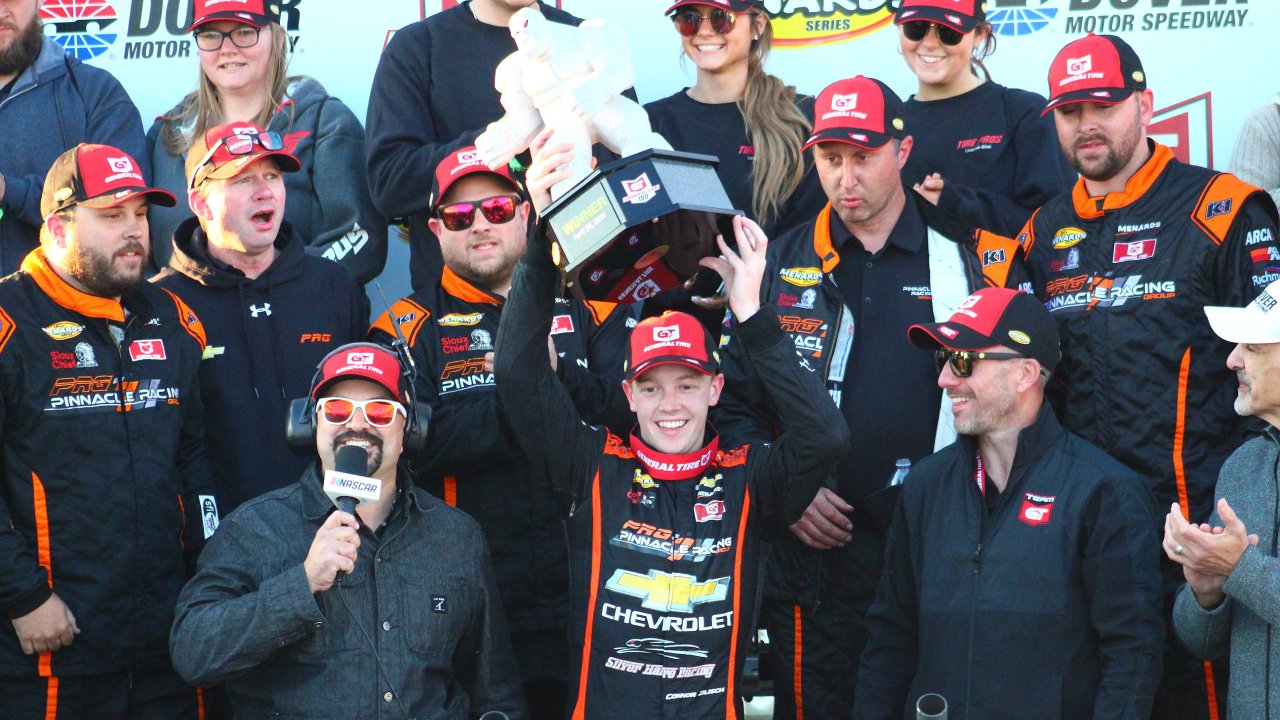
The clearest evidence of Zilisch’s unusual mindset is the way he treated his first full Xfinity campaign as a test bed rather than a safety net. Instead of easing into the series, he attacked it, turning his rookie year into a season of relentless experimentation with lines, race craft, and risk. That approach produced a staggering 10 victories and a run of 18 consecutive top‑five finishes, numbers that would be impressive for a seasoned champion, let alone a teenager stepping into national NASCAR competition for the first time. His performance earned him Rookie of the Year honors and positioned him as the benchmark for what an aggressive, learning‑driven rookie season can look like.
What makes those statistics more revealing is how close he came to an even more dominant record. Detailed breakdowns of his 2025 campaign have noted how many additional races were within his grasp, framing the year as one that could have been even more overwhelming if a few late‑race breaks had gone his way. That kind of analysis underscores how often Zilisch was in position to win, not just how often he actually did, and it reinforces the idea that he was constantly putting himself in high‑pressure situations rather than settling for safe points. In that light, his season reads less like a hot streak and more like the product of a driver who is comfortable living at the edge of control.
Learning to lose, then weaponizing the pain
For Zilisch, discomfort is not just physical strain or on‑track chaos, it is also the sting of defeat. He has been candid that the step from Xfinity to the Cup Series will require him to absorb losses and mistakes before he can contend at the same level. In a handful of Cup starts during 2025, he confronted that reality directly, discovering how different the cars, competition, and race length feel at the top level. Those outings highlighted the learning curve he still faces and the time it will take to adjust, yet they also showed a driver who treated each setback as data rather than a verdict on his potential.
That attitude carried into his preparation for a full‑time Cup role. Ahead of his promotion, Zilisch acknowledged hard truths about his own skill set, speaking openly about areas where he needed to improve and the gaps that separated him from established Cup contenders. Instead of hiding from those weaknesses, he leaned into them, framing the move to Trackhouse Racing as an opportunity to be exposed and to grow. The willingness to admit what he does not yet do well, and to invite the discomfort of being measured against the best, is central to how he converts adversity into an advantage.
Trackhouse’s big bet and Harvick’s ringing endorsement
Trackhouse Racing’s decision to replace Daniel Suarez with Zilisch for its 2026 NASCAR Cup Series program is perhaps the strongest institutional vote of confidence in his upside. Handing a teenager the keys to a full‑time Cup ride, and aligning him with the no. 88 team, signals that the organization believes his aggressive learning style will translate quickly at the highest level. It is a move that trades short‑term certainty for long‑term ceiling, and it hinges on the belief that Zilisch’s appetite for challenge will accelerate his development rather than overwhelm him.
That belief is not limited to his own team. Kevin Harvick, one of the most respected voices in the garage, has described Zilisch as the most well‑rounded young driver to come along since the last generation of elite prospects. Harvick’s assessment is rooted in the teenager’s versatility and composure, traits that have been visible across his Xfinity dominance and his early Cup outings. When a veteran of Harvick’s stature frames a prospect in those terms, it reinforces the idea that Zilisch’s edge is not just raw speed but the way he embraces the full spectrum of demands that come with modern NASCAR, from road courses to intermediates to the mental grind of a long season.
Racing through pain and redefining “toughness”
The most literal expression of Zilisch’s comfort with discomfort came when he raced his way back from a broken collarbone. After a frightening incident left the 19‑year‑old with that injury, he returned to competition with remarkable speed, immediately resuming the aggressive, front‑running style that had defined his season. The episode could have been a natural point to dial back the risk and protect his body, yet his response suggested the opposite: he treated the setback as another variable to manage rather than a reason to retreat. That resilience did not just impress fans, it sent a message to competitors that physical adversity would not easily blunt his edge.
Even before that injury, Zilisch had shown a nuanced understanding of toughness that went beyond simply muscling the car around. During Xfinity playoff media sessions, he spoke about the importance of racing with respect, noting that being the first to knock someone out of the way is a quick route to long‑term problems. That perspective reveals a driver who is willing to endure the discomfort of patience, even when aggression might offer a short‑term gain. In a series where reputations are built quickly, his insistence on balancing hard racing with strategic restraint suggests that his version of toughness includes the discipline to think beyond the next corner.
Chasing titles, embracing formats, and the road ahead
If Zilisch needed another reminder that success can be uncomfortable, the 2025 Xfinity championship fight provided it. He finished as the runner‑up in the series despite his 10 wins, a result shaped in part by the playoff structure in place at the time. Reflecting on the 2026 NASCAR playoff format, he has noted that if the Chase system had been applied to the previous season, he would have claimed the Xfinity Series title. Instead of dwelling on the frustration, he has treated the experience as a lesson in how formats shape opportunity, and he has expressed curiosity about how the new rules will play out rather than bitterness about what might have been.
That mindset will matter as he steps into a full Cup schedule with Trackhouse Racing. The Cup Series is a different universe of pressure, with longer races, deeper fields, and a playoff system that can magnify every mistake. Yet Zilisch’s track record suggests he will not seek comfort in lowered expectations. From his early Cup starts, which highlighted how much he still has to learn, to the statistical dominance of his Xfinity run, to the rapid recovery from a broken collarbone, the throughline is consistent. He repeatedly chooses the path that exposes his weaknesses, trusting that the process of confronting them will eventually become his greatest strength. If that pattern holds, the teenager who thrives on being unsettled may soon force the rest of the Cup field to adjust to him instead.
More from Fast Lane Only