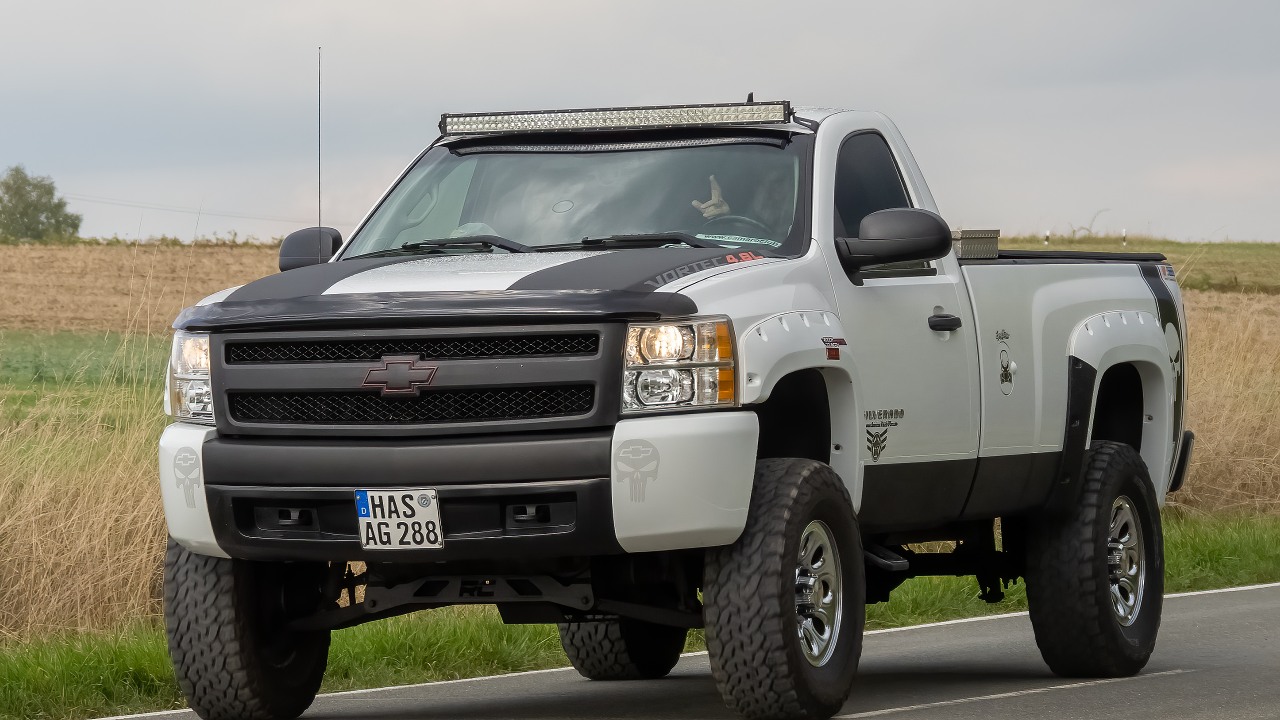
The federal government is scrutinizing General Motors again, this time over reports of catastrophic engine failures in roughly 600,000 of its full-size trucks and SUVs. The new safety probe raises pointed questions about whether earlier recall repairs truly fixed a potentially dangerous defect or simply delayed it.
For owners who believed their vehicles were already made safe, the investigation signals that the risk of sudden power loss may still be riding with them on every highway merge and rural back road. It also tests how aggressively regulators will push one of the country’s largest automakers to deliver a durable solution.
From recall to renewed alarm
Federal scrutiny of these engines did not begin with the latest probe. GM previously recalled almost 600,000 vehicles after identifying a risk of engine failure in a broad swath of full-size pickups and SUVs equipped with its 6.2 Liter V8. That campaign, described in The Brief, covered models such as Chevrolet Silverado 1500 and GMC Yukon that share the same powertrain architecture and were built across several model years.
Regulators said at the time that the defect could lead to a loss of motive power, a scenario that is far more than an inconvenience when it happens at highway speeds. The National Highway Traffic Safety Administration, referred to in that report as The National Highway Traffic Safety Administration, treated the recall as a necessary step to address the risk of internal engine damage that could seize the powertrain without warning. GM told customers that repairs would correct the problem, and many owners scheduled service visits on that basis.
Why NHTSA is escalating its investigation
The new probe reflects mounting evidence that those earlier fixes may not have been enough. According to federal documents summarized in multiple reports, NHTSA Probes Nearly 600,000 G Vehicles Over Engine Failure Complaints after receiving fresh accounts of engines that still suffered sudden failure even after recall work was completed. The National Highway Traffic Safety Administration is now examining whether the remedy GM deployed actually prevents the underlying defect or simply masks symptoms until the engine fails again.
Regulators have moved beyond a preliminary evaluation and into a deeper engineering analysis that focuses on loss of motive power tied to connecting rod bearing failure in GM engines. That step, described in an Oct notice, signals that NHTSA is now dissecting design choices, manufacturing processes, and field performance data to determine whether additional corrective actions are necessary. The agency’s own guidance explains that it conducts an investigation from reported complaints, reviews owner submissions and other information, and then decides whether to open an investigation and later monitor the effectiveness and completion rate of each recall, a process outlined on its NHTSA recall portal.
The scale of the GM engine problem
The scope of the current inquiry is striking. Reports describe NHTSA Launches Investigation Into Nearly 600,000 G Vehicles Over Engine Trouble, a figure that aligns closely with the earlier recall of almost 600,000 vehicles and suggests that many of the same trucks and SUVs are again under the microscope. Another account notes that NHTSA opens probe into about 600,000 G vehicles over engine failure issue, underscoring that the problem is not confined to a niche performance model but instead touches a core slice of GM’s high-volume lineup.
Those vehicles rely on GM’s 6.2 Liter V8, which is built at assembly sites in Tonawanda, New York, Spring Hill, Tennessee, and St. Catharines in Canada. A separate recall analysis of nearly 600,000 trucks and SUVs over risk of engine failure details how this engine family powers mainstream models like the Chevrolet Silverado 1500, GMC Sierra 1500, Yukon, and Yukon XL, making the defect a nationwide concern rather than a localized anomaly. Legal commentary on the issue notes that GM Engines Are Still Failing, and the U.S. Government Wants to Know Why, framing the Federal Investigation as a response to persistent failures that appear to cut across production locations and model lines.
Why earlier fixes are under fire
Central to the controversy is whether GM’s prior remedy actually addressed the mechanical weak point. Technical discussions of the defect point to connecting rod bearing failure that can starve critical components of lubrication, leading to internal damage and eventual seizure. An analysis of NHTSA’s engineering work explains that the investigation follows a preliminary evaluation and focuses on loss of motive power due to connecting rod bearing failure in GM engines, language that suggests regulators are zeroing in on a specific failure mode rather than a vague reliability complaint.
Owners who already visited dealerships for recall work are now learning that their engines may still be at risk. One detailed review of the recall, identified as Recall 25V-274, notes that it was issued in April of 2025 to formally address issues in more than 721,000 of GM’s full-size SUVs and pickup trucks. Yet that same reporting describes how GM’s recalled 6.2 Liter V8s are still blowing up even after being “fixed,” with some engines failing again despite having undergone the prescribed repair. That pattern is echoed in legal analysis that asks What sparked the Federal Investigation and concludes that recurring failures after recall service helped push regulators to take a harder look at supplier reliability and consumer safety.
What owners can do while the probe unfolds
For drivers, the technical back-and-forth between GM and regulators is less important than knowing whether their vehicles are safe to operate. The National Highway Traffic Safety Administration advises owners to check for open recalls using their vehicle identification number on its recall search tool, which is accessible through the same portal that explains how NHTSA conducts an investigation from reported complaints and monitors the effectiveness of each recall. That site also allows owners to file complaints directly, a step that can help regulators track patterns of failure and decide whether to escalate an inquiry.
GM, for its part, continues to promote its full-size trucks and SUVs on consumer-facing channels such as the main Chevrolet site, where the affected models are still marketed as capable workhorses and family haulers. Consumer advocates, including firms that specialize in automotive defect litigation, are urging owners who experience sudden engine failure or repeated repair attempts to document every incident and service visit. One such firm notes that Engine Issues Force GM to Recall Nearly 600,000 vehicles across the U.S., and uses that history to argue that drivers should not ignore warning signs like unusual knocking, oil pressure alerts, or sudden loss of power. As NHTSA expands its scrutiny, including a separate notice that The National Highway Traffic Safety Administration has opened engine failure probes into additional GM vehicles, the pressure is building on the automaker to deliver a durable fix that matches the scale of the problem.
More from Fast Lane Only