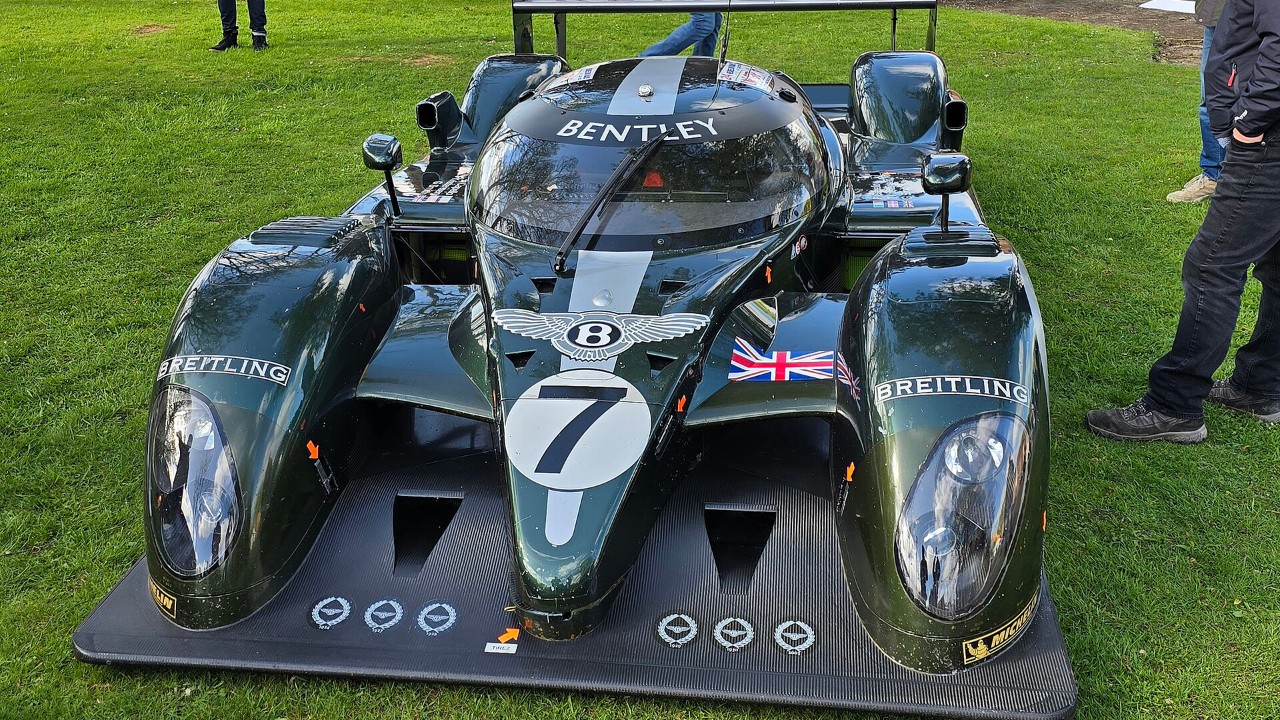
At 4 p.m. on 15 June 2003, the No. 7 Bentley Speed 8 crossed the line to win the 24 Hours of Le Mans. Its sister car, No. 8, finished second, two laps behind. The result gave Bentley its sixth Le Mans victory and its first since 1930.
That gap of 73 years is the heart of the story. Bentley built its racing name at Le Mans in the 1920s. Yet when the company came back with the Speed 8, it took three attempts to win again.
Here is how the Speed 8 program got there, who drove the winning cars and what the numbers from that weekend show.
Bentley’s first Le Mans era
Bentley’s history at the race goes back to 1923. That year, the company’s lone 3-litre car finished fourth in a 20-car field and set the lap record at nearly 70 mph (113 km/h). Then, between 1924 and 1930, Bentley won Le Mans five times.
The last of those wins came in 1930. Woolf Barnato and Glen Kidston won that year in a Bentley Speed Six, as Crank and Piston’s account of the 2003 race recalls. After that, the marque would not win at Le Mans again for 73 years.
The return: third, then fourth
Bentley came back with the EXP Speed 8 in 2001. The car finished on the podium in its debut year, according to a 2022 report on Bentley’s Le Mans centenary celebration. In 2002, the car finished fourth.
The official 24 Hours of Le Mans site names the crew behind both of those results. The trio of Wallace, Leitzinger and van de Poele finished third in 2001 and fourth in 2002. Together with 2003, that put Bentley in the top five overall three years in a row.
Bentley’s own anniversary release, published in 2013, credits three years of work by a British engineering team. Brian Gush led the effort as Bentley’s Director of Motorsport. Then, in 2003, the team entered two cars.
The Bentley Speed 8 drivers in 2003
The No. 7 car carried Rinaldo “Dindo” Capello, Tom Kristensen and Guy Smith. Meanwhile, the No. 8 car carried Mark Blundell, David Brabham and Johnny Herbert. In fact, the race organizer notes that Bentley used 11 drivers between 2001 and 2003. Nine of them were past or future Le Mans winners, with 19 victories among them.
The No. 7 Bentley Speed 8 started from pole position, according to the 2022 centenary report. It then went on to win, and the No. 8 car completed a Bentley one-two.
Two laps clear, and an Audi in third
The winning car finished two laps ahead of the No. 8 car, both Crank and Piston and the centenary report say. Behind them, the Champion Racing Audi R8 of JJ Lehto, Emanuele Pirro and Stefan Johansson finished third.
In the end, the winners covered 3,196 miles (5,146 km) in the 24 hours. That works out to an average of 133 mph (214 km/h), according to Bentley’s 10th-anniversary release, as published by Racecar.com.
The race organizer also counts the result as the marque’s sixth win at the 24 Hours of Le Mans. It calls 2003 “its first since 1930.” Bentley’s release puts the same idea another way: the win came after 73 years.
A fifth win for Tom Kristensen
Above all, the win mattered for one driver in particular. Kristensen took his fifth Le Mans victory and his fourth in a row, the race organizer notes. Crank and Piston adds that the total equaled Derek Bell’s five wins and trailed only Jacky Ickx.
His teammate Guy Smith later switched sides. The organizer notes that Smith finished second at Le Mans in 2004 with Audi. Blundell also had his own Le Mans history. In 1990, he scored the first pole position for a Japanese marque at Le Mans, driving for Nissan.
Sebring, and the Bentley Speed 8 since
Le Mans was not the car’s only race in 2003. Earlier that year, the Speed 8 ran at the 12 Hours of Sebring, where it set the fastest lap and finished third. According to the centenary report, it did not run in the United States again for 19 years.
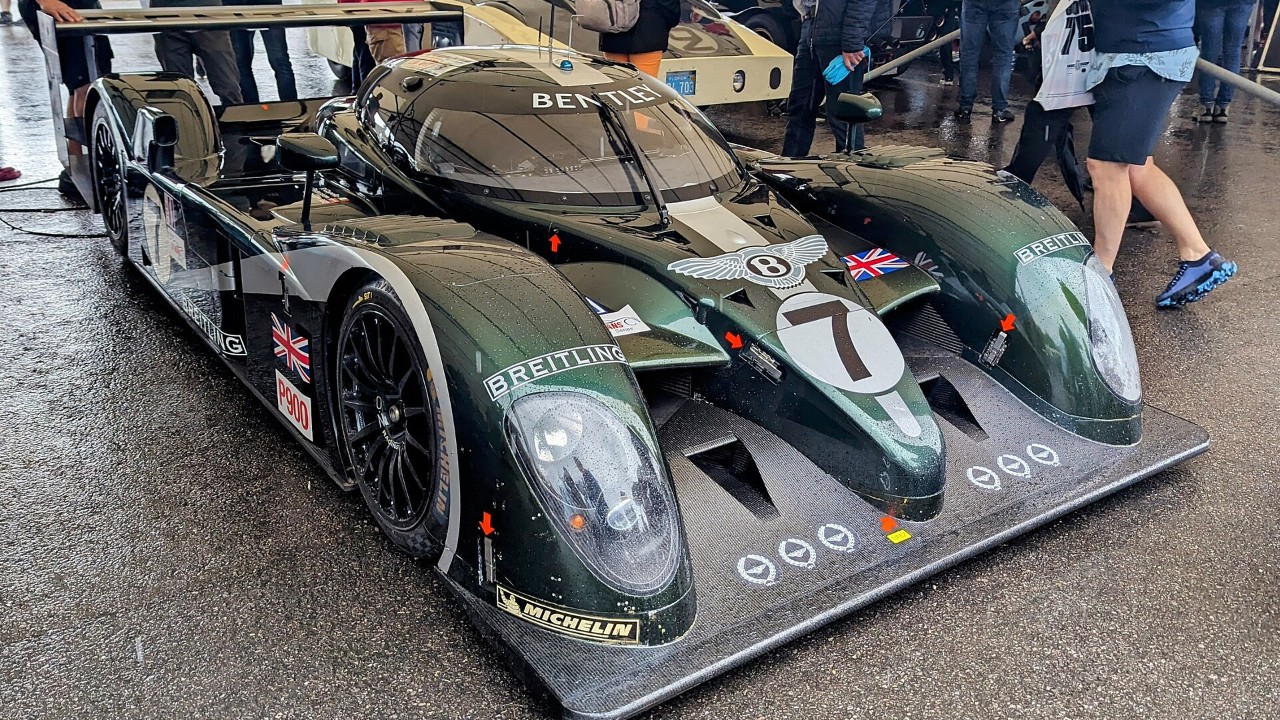
That changed in 2022. Bentley started a year-long celebration of the Le Mans centenary with a demonstration run of the No. 7 Speed 8 at WeatherTech Raceway Laguna Seca in California. More than 30 modern Bentleys also drove in a cavalcade from Los Angeles to the event.
More from Fast Lane Only