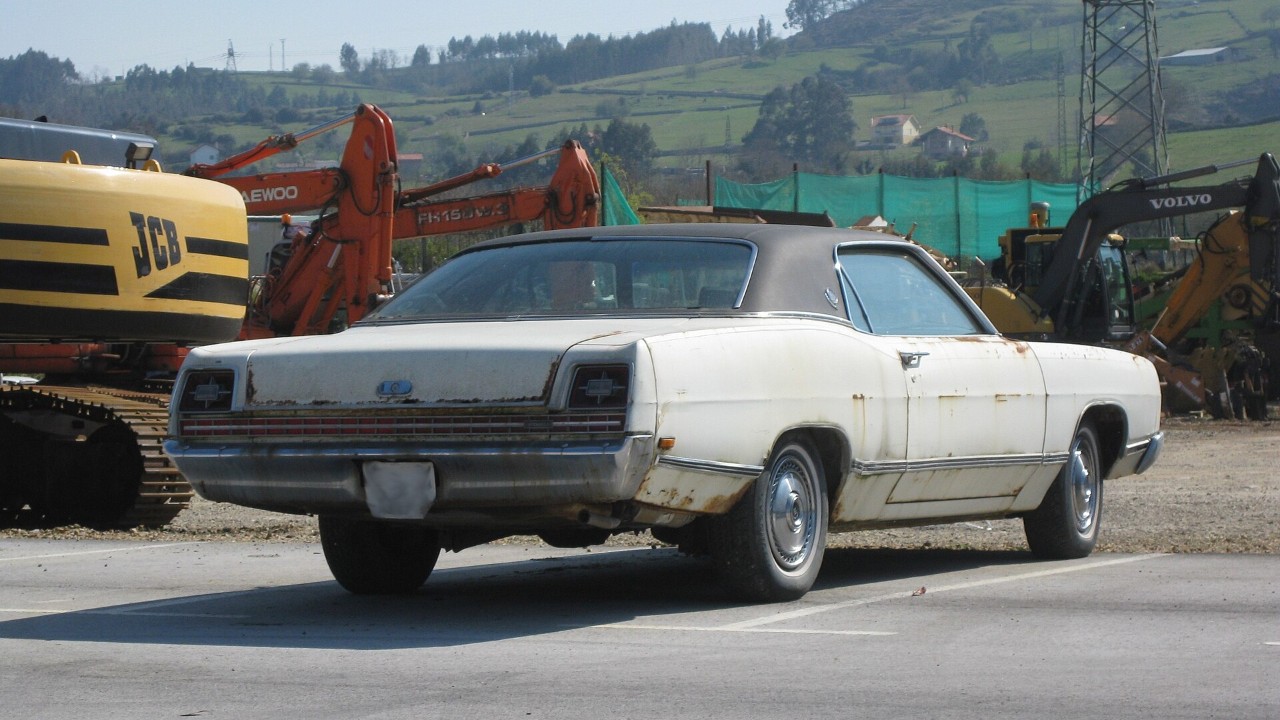
A 1969 Ford LTD could leave the dealer with a 429 under its long hood, and that engine came from a family Ford kept building into the late 1990s. Ford’s big-blocks were never just for drag strips. They hauled families, towed campers, carried cargo and moved buses.
Ford had two big-block families in this era. The FE arrived for 1958 and served cars and trucks for nearly two decades. Then the 385 series followed in 1968 and outlived it by a long way. Between them, they went into everything from personal-luxury coupes to cabover trucks.
These are our 10 picks, the big-block Fords we think keep going however hard you use them. That verdict is our opinion, and we make no mileage claims. However, the engine years, sizes and ratings come from engine histories read for this story. Where the engine in a pictured vehicle isn’t known, we say what Ford offered.
1. 1969 Ford LTD two-door hardtop
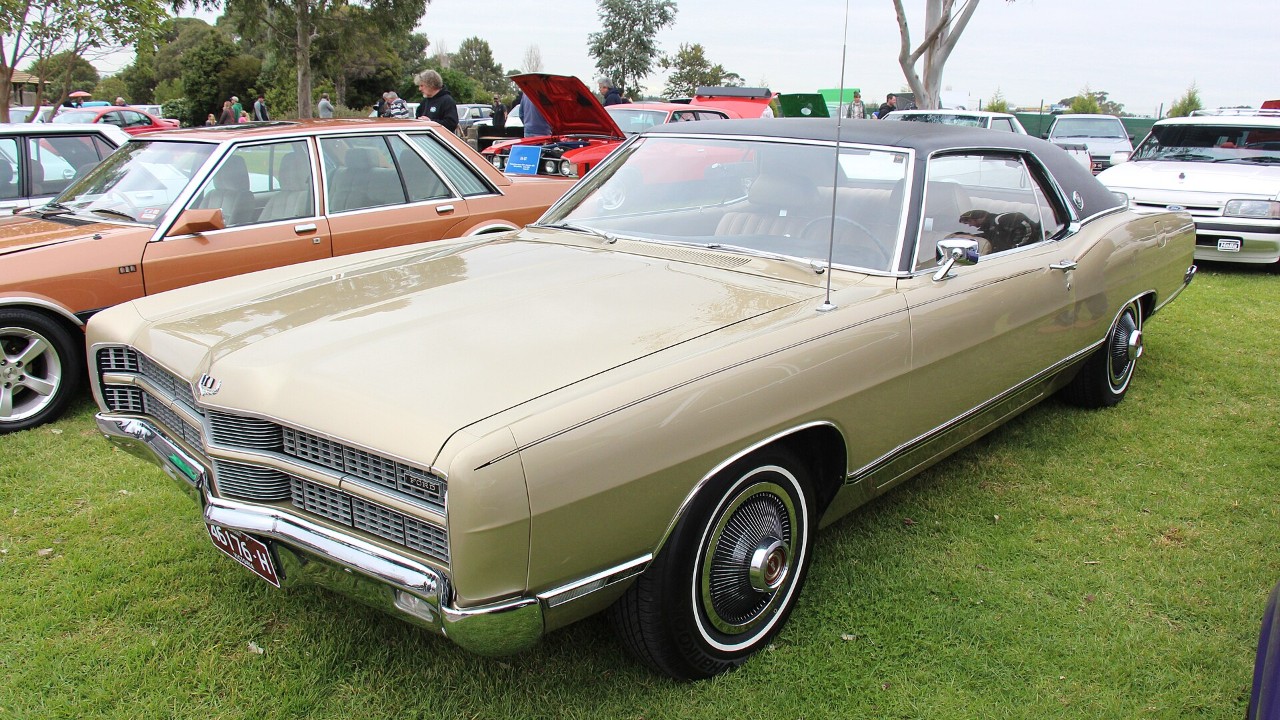
For 1969, Ford’s full-size cars began offering the new 429 in place of the 428. That put the 385-series engine in the 1969 Ford LTD for the first time. The car in our photo is a two-door hardtop from that first 429 year. In fact, the 429 replaced the FE 428, which had served the big Fords since 1966.
The 385 family took its name from the 3.85-inch crankshaft stroke of the 460, according to a Ford-Trucks.com history of the 385 series. Ford also built the engines at its plant in Lima, Ohio. It used a skirtless block and thin-wall casting to save weight. In other words, Ford worked to keep the 429’s weight down.
Our take: the 1969 Ford LTD was built for comfort, and the 429 delivered it without drama. Big displacement meant the engine rarely had to work hard to move a heavy car. After that start, Ford kept the 429 in its full-size cars through 1973. If you buy one, check the cooling system first, since a big engine in a big car makes a lot of heat at idle. A healthy example should feel relaxed at any legal speed.
2. 1969 Ford Galaxie 500 two-door hardtop
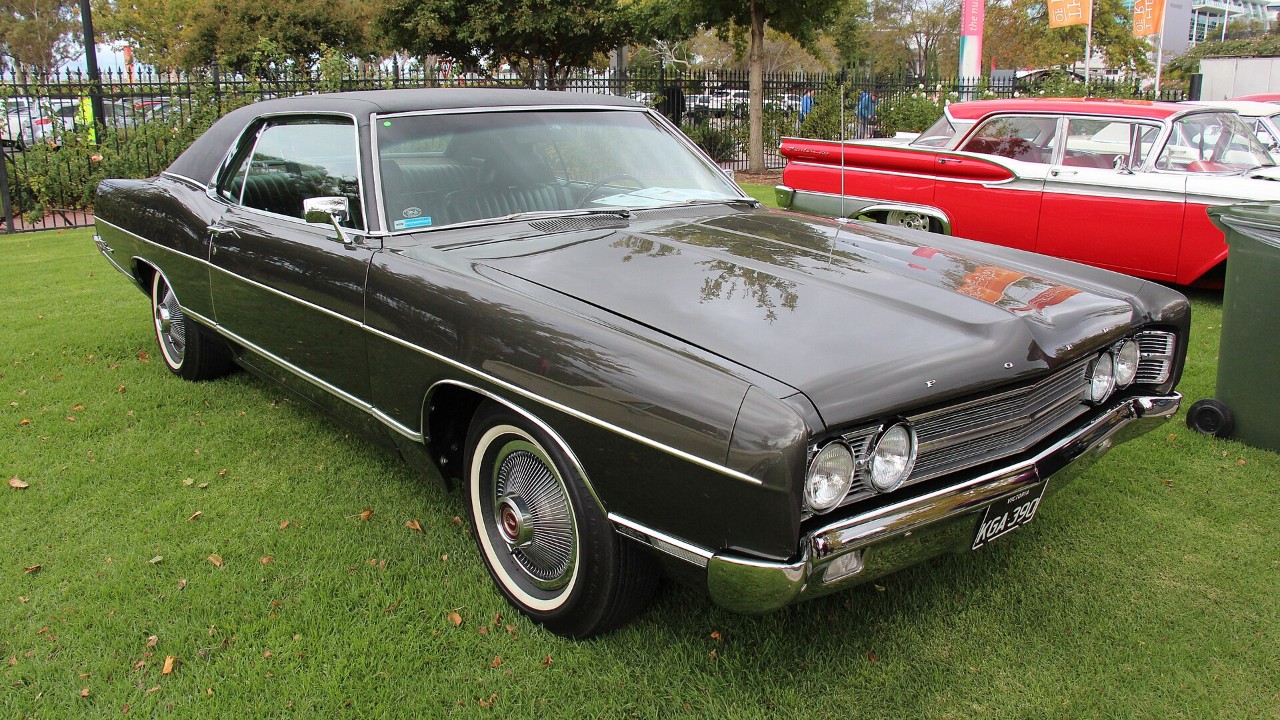
The Galaxie 500 was the volume big Ford, and it could still be ordered with the FE 390 in 1969. Ford had introduced the FE family earlier, for 1958. According to Curbside Classic’s history of the FE V8, versions ran from 332 to 428 cubic inches and from 220 to 425 hp. The name comes from “Ford-Edsel.”
Part of the FE’s toughness came from its block. Like the earlier Y-block, it had deep skirts that extend 3.625 inches below the crankshaft centerline. As a result, that extra metal supports the main bearings. Curbside Classic also says the 390 appears to be the most produced FE of all. It powered a wider range of cars over a longer period than any other version.
In our view, the Galaxie with a 390 is the sweet spot of the big Fords. It is simple, and it has torque everywhere. Curbside Classic notes the 390 stayed in full-size cars until part-way through the 1971 model year. That is a long run for an engine design dating back to 1958. A well-kept Galaxie hardtop shows why buyers kept ordering it.
3. 1989 Ford Centurion Classic 350 Lariat XLT 460
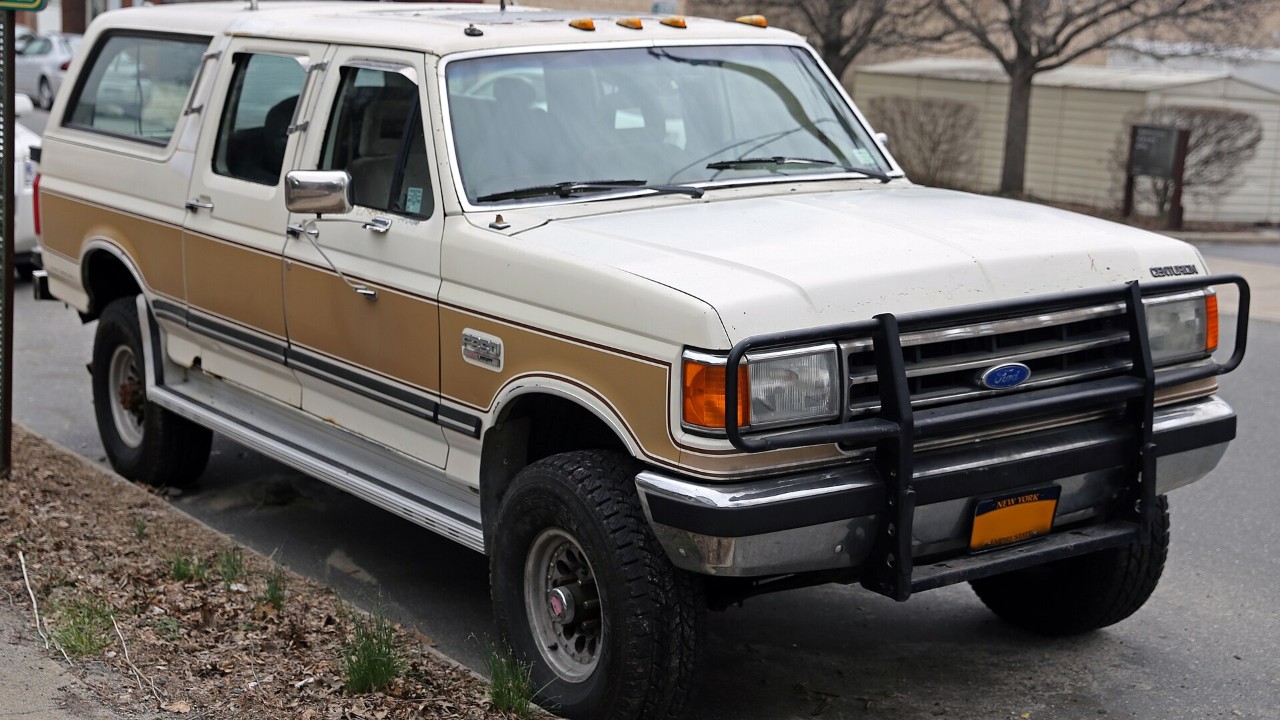
The Centurion Classic looks like a four-door Bronco, and that is close to the truth. Centurion Vehicles of White Pigeon, Michigan, built it from 1980 to 1996, according to TFLtruck’s look back at the conversion. In short, it joined a Bronco rear body to the front of an F-Series truck. The C350 version rode on the F-350 platform with standard four-wheel drive.
Buyers of the C350 could choose a 7.3-liter diesel or a 7.5-liter gas V8, the 460. The truck in our photo carries the 460, and it is a fitting match. Ford used the 460 in F-Series trucks from 1973 to 1979 and again from 1983 to 1997. For the three years in between, the engine was limited to the Econoline 350 van.
Our take: a four-door 4×4 with a 460 was a big family hauler before the Expedition existed. TFLtruck says Centurion production ended when the Expedition arrived. If you want one, inspect the conversion seams and the rear body mounts, because those are unique to Centurion. We covered more from that era in our list of Ford trucks from the 1980s that owners still seek out.
4. 1968 Ford F-100 Custom pickup
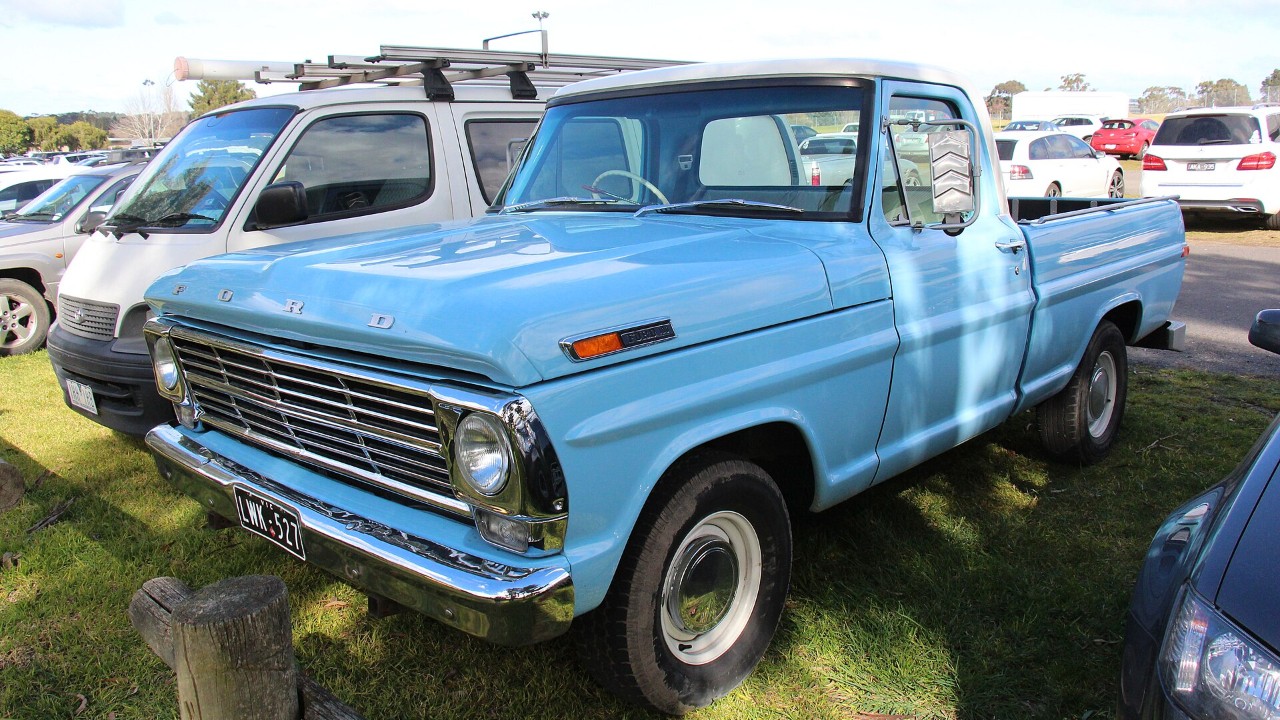
Ford’s FE engines were not just for cars. Curbside Classic says Ford used them extensively in light-duty trucks, including F-Series pickups. For 1968, a new truck version arrived: the 360. Ford then built it from 1968 through 1976. The 390 also stayed available in pickups until the end of FE production.
The 360 is a clever bit of parts sharing. It used the same block, heads and many other parts as the 390, and the only sure way to tell them apart is to measure the stroke. In 1968 to 1971 trucks, Ford rated the 360 at 215 bhp at 4,100 rpm. That is not a big number, though. Still, in our view, the 360 was more about pulling power than peak numbers, and that is what a truck needs.
In our view, an FE-powered F-100 is about as honest as a pickup gets. The Custom in our photo was offered with these FE V8s, although we can’t confirm which engine this one carries. If a seller says it has a 390, ask how they know. The two engines share their castings, so only the stroke tells the truth.
5. 1983 Ford C700 cabover
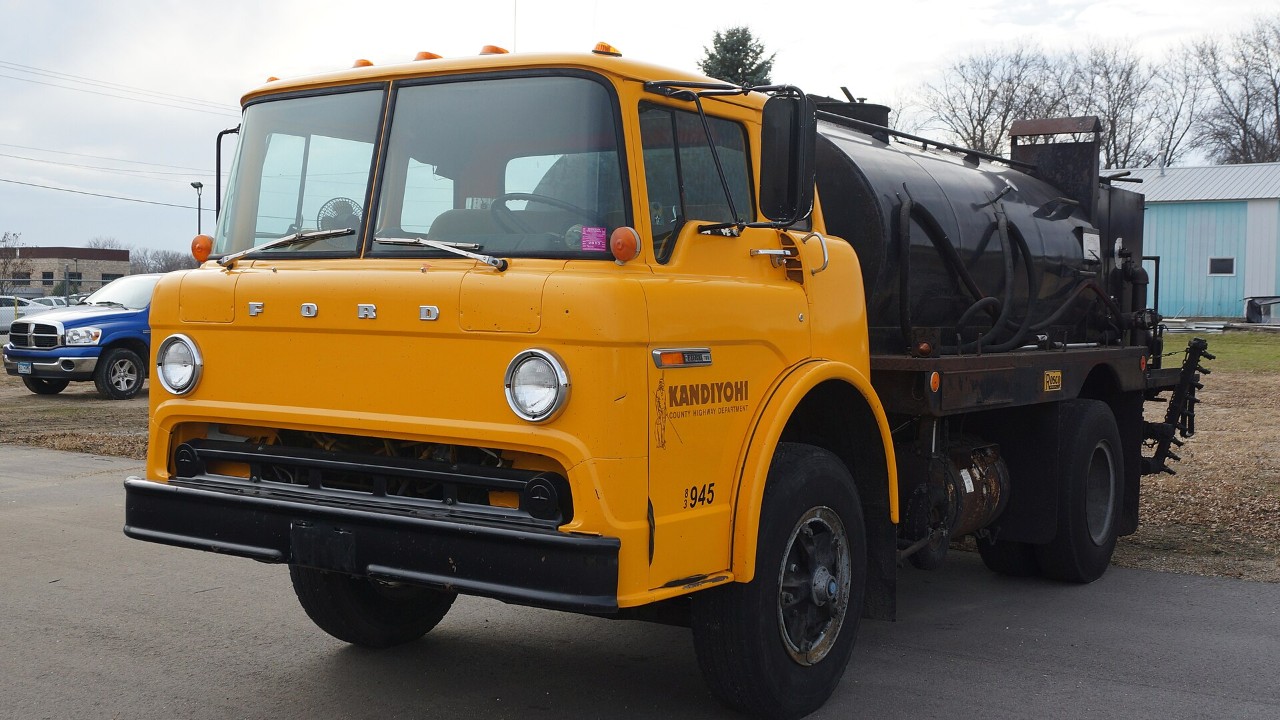
The C-Series was Ford’s cabover medium-duty truck. From 1979 to 1987, Ford offered it with two 385-family engines: the 370 and the 429. The truck in our photo, meanwhile, is a 1983 C700. We can’t confirm its engine, but those were the gas big-blocks Ford listed for the C-Series in those years.
The 370 was a truck-only engine, a working engine through and through. According to Ford-Trucks.com, Ford limited it to medium-sized trucks and used it to replace the 361 FE in 1978. Then, in 1982, the 429 took over from the old 401, 477 and 534 Super Duty V8s. By then, the 385 family had been Ford’s only big-block since 1976, the same source notes.
Our take: a cabover works for a living, and its engine works hard all day. That is exactly the kind of life these big-blocks were built for. Ford-Trucks.com says the 385 series also went into boats, motorhomes and industrial equipment. If you find an old C700 for a shop truck or a car hauler, our advice is to check the engine tag and ask for service records.
6. Ford B700 bus
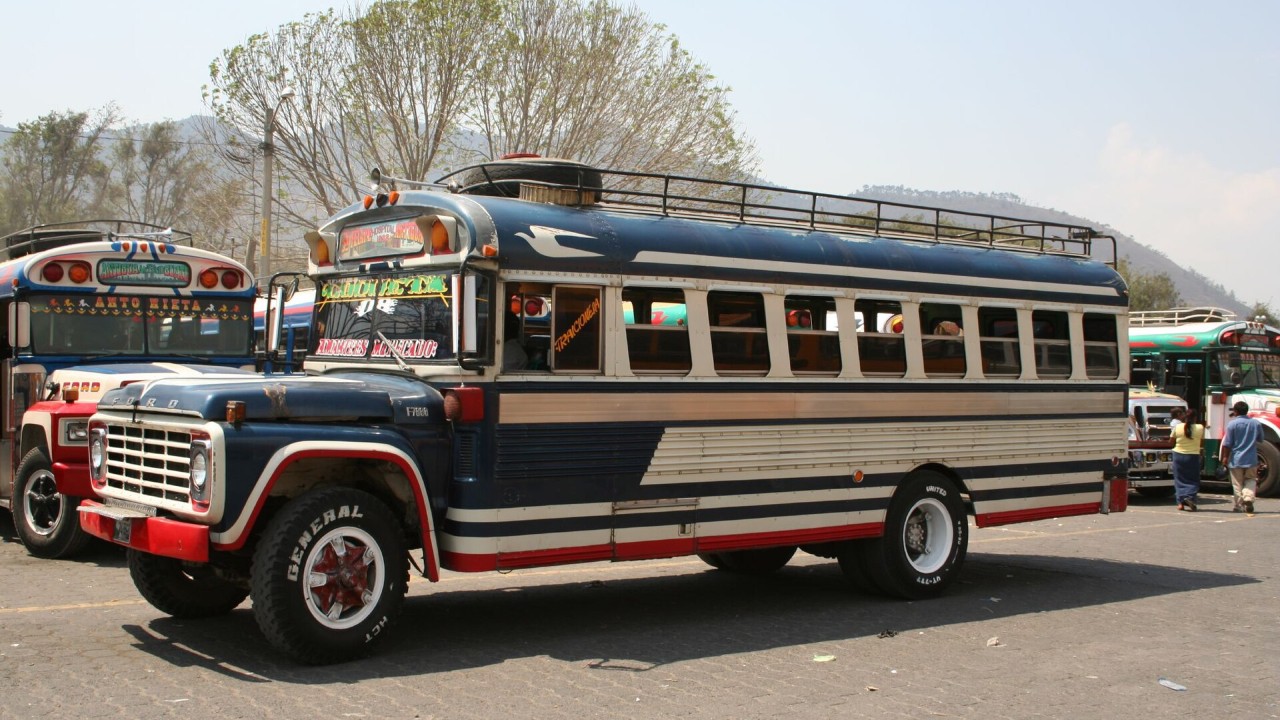
The B-Series was Ford’s bus chassis, and it carried 385-family power. From 1977 to 1989, Ford offered the B-Series with the 370 and the 429. The bus in our photo was working in Antigua Guatemala in 2007. That is a long way from home, and in our view it says a lot about these chassis.
After all, buses lead a hard life. They start and stop all day, carry heavy loads, and often run on rough roads. A big, lightly stressed gas engine suits that work, because it makes its torque low in the rev range. Meanwhile, the 385 series shared its thin-wall casting with the car engines, so it was not as heavy as older big-block designs.
Our take: a B700 still hauling passengers far from home makes a strong case for this list. We can’t confirm which engine this particular bus carries. However, the 370 and 429 were the same truck engines Ford put in its medium-duty F-Series, where the 429 lasted until 1998. If you are looking at one, check the engine tag before trusting the original spec sheet.
7. 1967 Ford Fairlane 500 hardtop 390
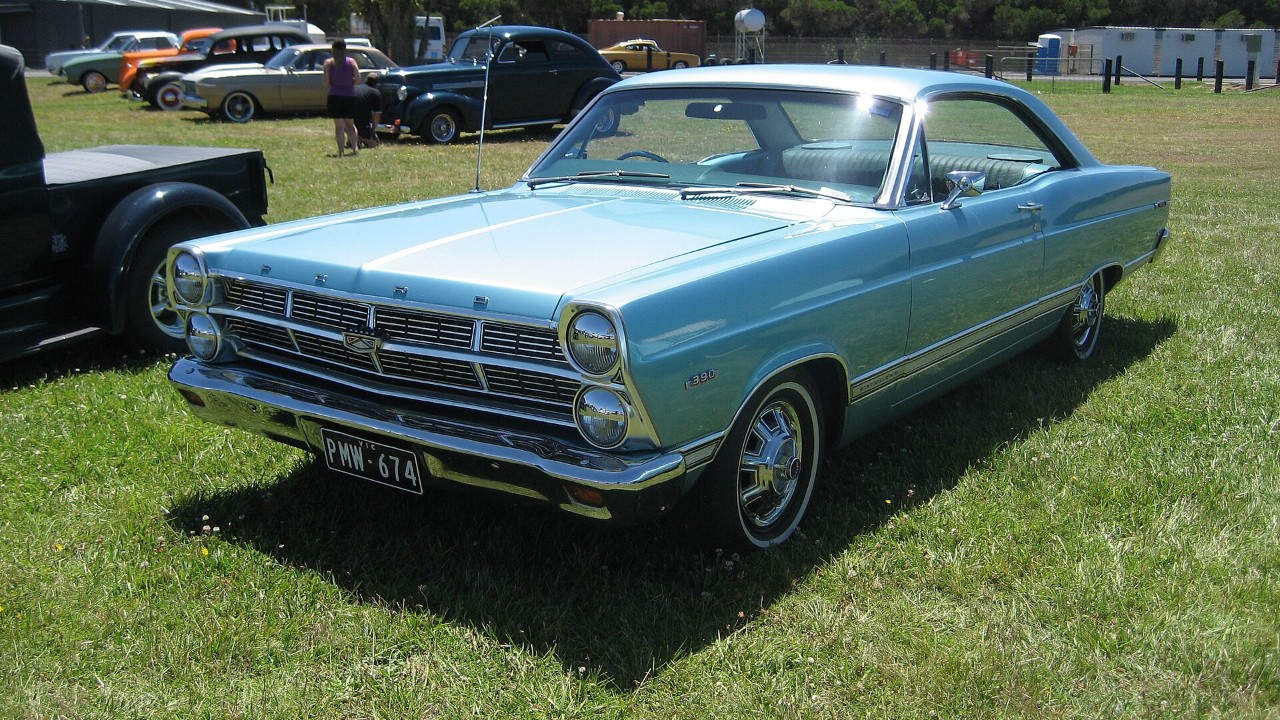
The Fairlane was Ford’s mid-size car, and the 390 turned it into something more. Ford offered the FE 390 in the 1966 and 1967 Fairlane. Curbside Classic calls the 390 the FE that powered the widest range of cars, and the Fairlane was one of them. The car in our photo is a 1967 Fairlane 500 hardtop with the 390.
A big-block in a mid-size car changed its character. The Fairlane was lighter than a Galaxie, so the 390 had less weight to move. It also had the deep-skirt FE block, which gave the bottom end plenty of support. That mix made the 390 Fairlane a strong street car without exotic parts.
Our take: the 390 Fairlane is a big-block Ford you can actually afford to drive. It doesn’t have the fame of the 427 or 428 cars. Even so, it shares the same basic FE design, and that is the point. If you’re buying one, verify the engine code in the VIN before you pay for a 390 car. Then check that the numbers match the engine in the car.
8. 1969 Ford XL GT 429 convertible
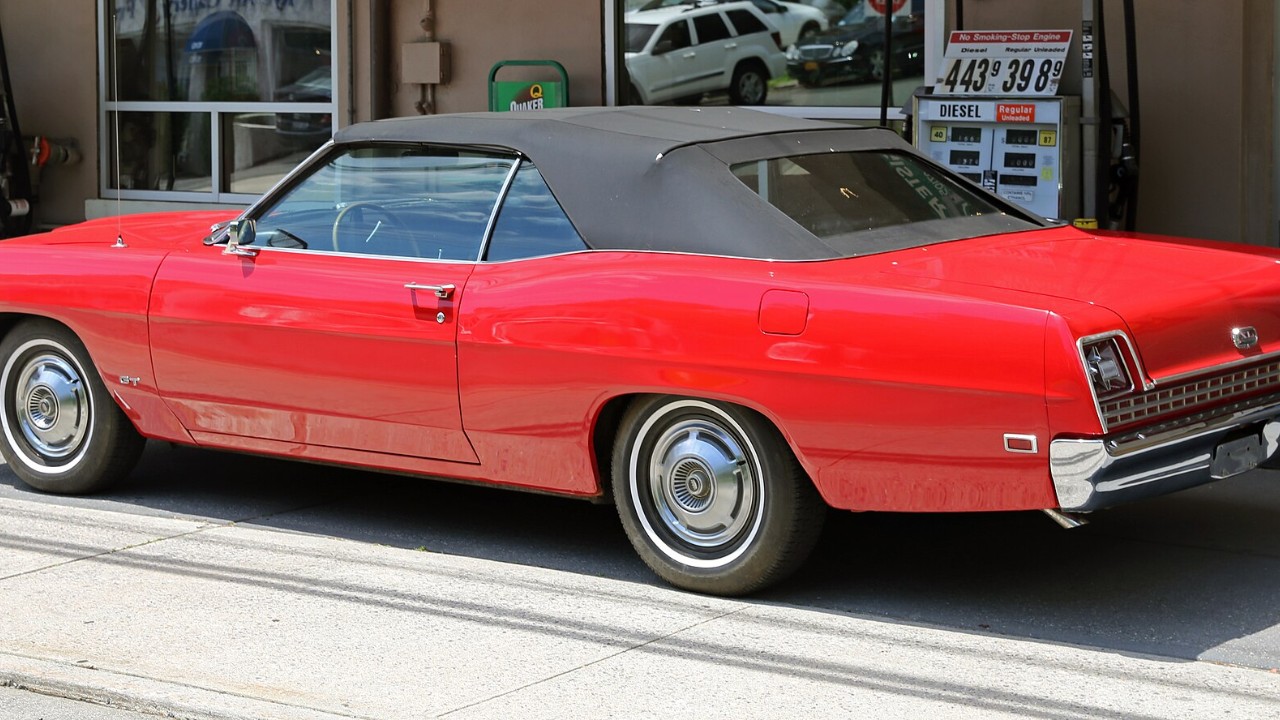
The XL was Ford’s sporty full-size car, and in 1969 it could carry the new 429. For 1969, Ford’s full-size cars started offering the N-code 429 in place of the 428. The car in our photo is a 1969 XL GT convertible with that engine, a mix of big-car comfort and big-block power.
Before the 429, the XL had a strong FE history. For 1967, buyers could order the Q-code 428 on the XL with the “7-Litre Sports Package.” Ford rated that 428 at 345 hp at 4,600 rpm for 1966 and 1967 and at 340 hp for 1968. Curbside Classic says the 428 arrived for 1966, and it was a different engine from the 427.
Our take: an XL convertible with a 429 is about as relaxed as a big Ford gets. The engine barely has to work to move the car, which is a good recipe for a long life. If you want one, check the top mechanism and the floors, since convertibles of this size can flex and rust. For more on the 428, read the classic 428 that made more horsepower than buyers ever realized.
9. 1970 Ford Thunderbird
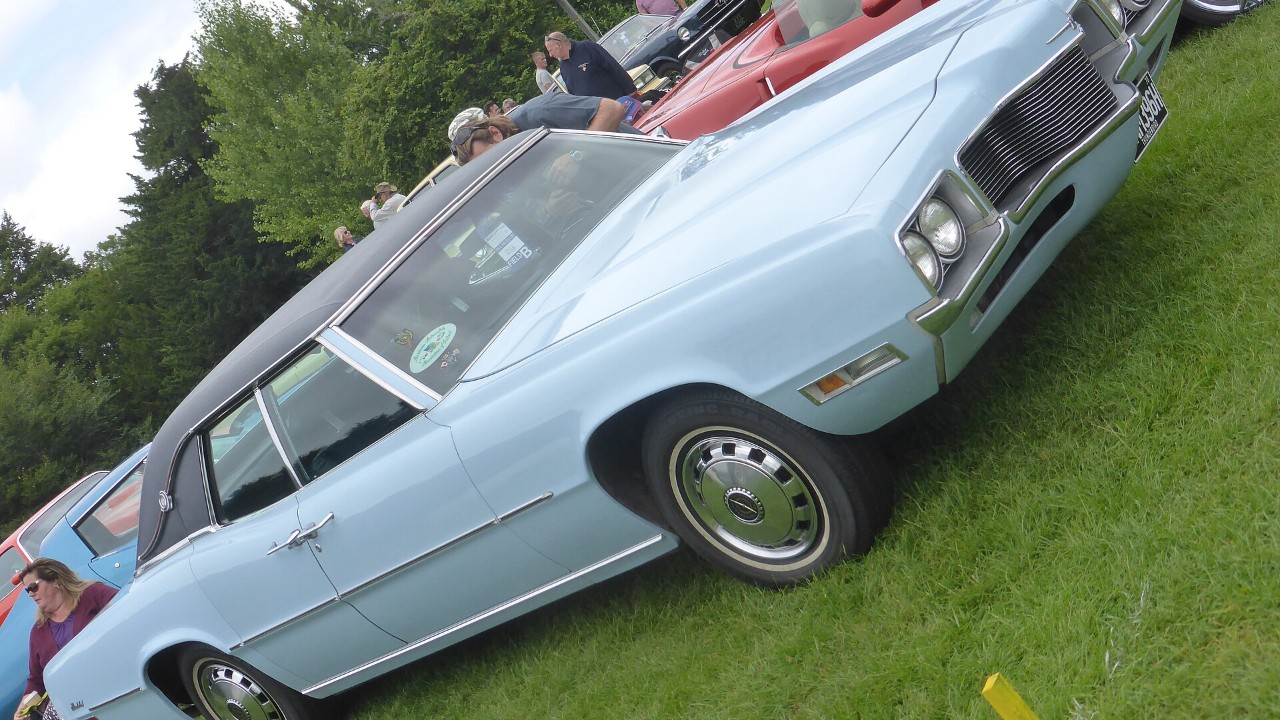
The Thunderbird has a long big-block history. Back in 1958, the 352 FE was the Thunderbird’s standard engine, and it stayed that way through 1960. Ford even called the 1958 four-barrel 352 the “Interceptor V-8 Thunderbird Special,” rated at 300 hp. Ten years later, the 429 made its debut in the same car.
The 1970 Thunderbird carried that 429. Ford used the engine in the Thunderbird from 1968 through 1973. Then the bigger 460, at 7.5 liters the largest of the family, took over from 1972 to 1976. That means the Thunderbird had a 385-family engine under the hood for nine model years in a row. That is a long partnership for any engine and car. Lincoln’s Continental, by comparison, used the 460 from 1968 to 1979.
In our view, the Thunderbird is the big-block Ford for people who prefer to cruise. The 429 gave it effortless power, and the car’s weight never seemed to bother it. If you’re buying a 1970 car, check the vacuum-operated features and power accessories along with the engine. We ranked the generations in our list of Thunderbird generations that still impress today.
10. 1972 Ford LTD Brougham four-door hardtop
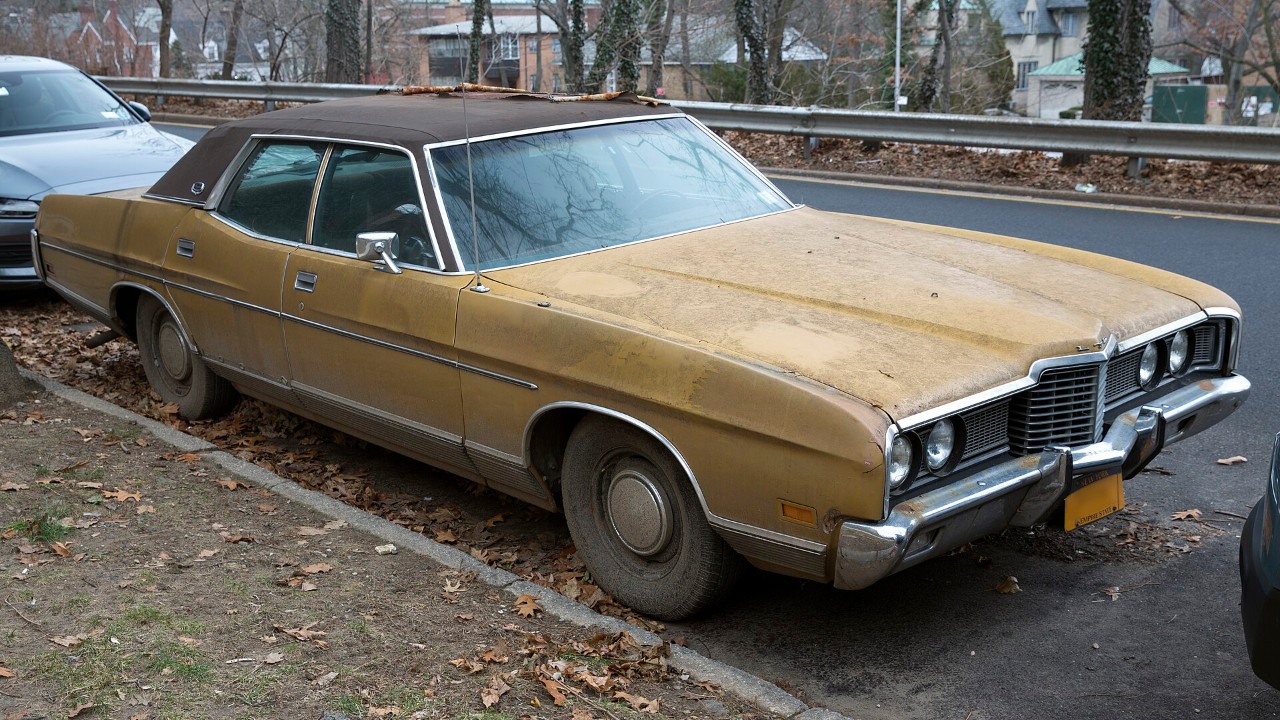
The LTD Brougham was the plush end of Ford’s full-size range, and in 1972 it could still be ordered with the 429. Ford kept the 429 in its full-size cars through 1973. The car in our photo is a 1972 LTD Brougham four-door hardtop, a pillarless sedan that looked like a coupe with the windows down.
That year also brought a change that made big engines look weaker on paper. When Ford moved to SAE net ratings, the 460’s rated output dropped to 212 hp. The new method measured power as installed, with accessories and exhaust in place. Meanwhile, the 385 family kept going in trucks, vans and motorhomes long after the big sedans shrank. The 460 alone stayed in E-Series vans from 1975 to 1996.
Our take: a 1972 LTD Brougham is a rolling living room with a big-block heart. It is not fast, but it is unstressed, and that is why these engines last. If you buy one, check the engine code in the VIN first. Ford-Trucks.com says the 385 series stayed in production from 1968 through 1997, nearly three decades after it first appeared in the Thunderbird.
More from Fast Lane Only