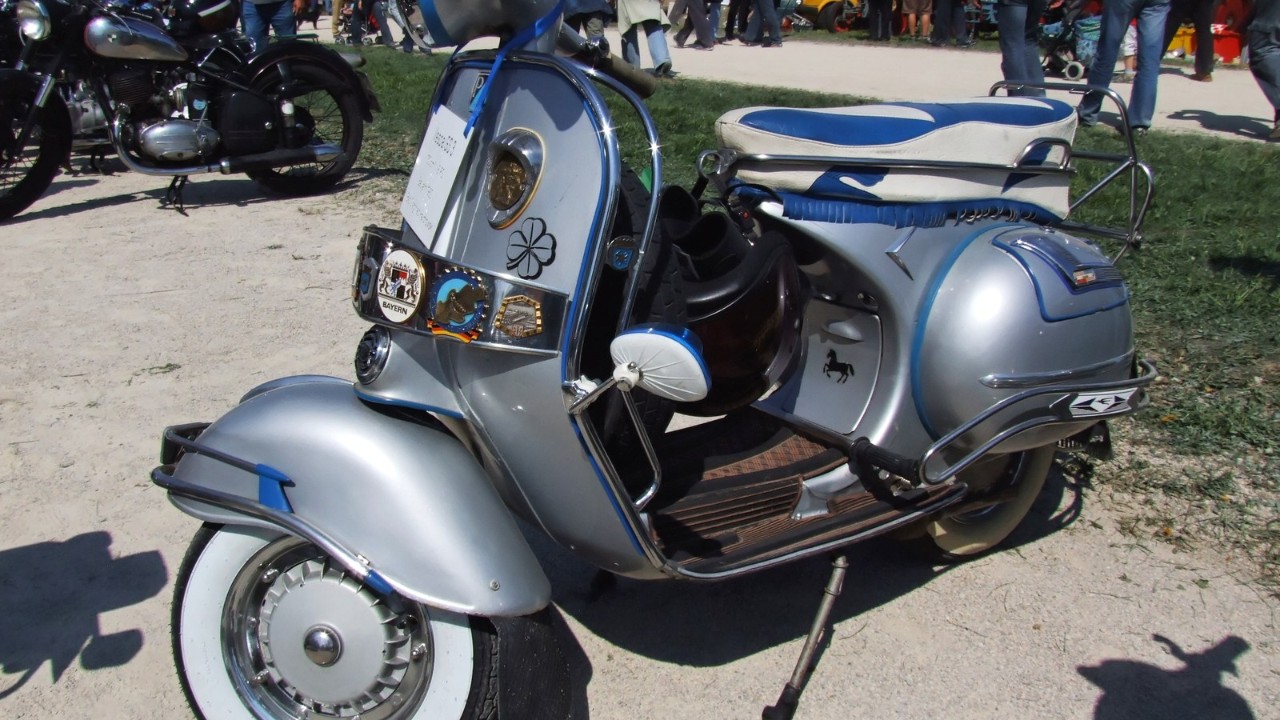
The Vespa 150 GS could top 100 km/h in 1955, a pace that made it the sports car of the scooter world. Piaggio had patented the first Vespa only nine years earlier. By then, scooters had become everyday transport across Europe and Japan.
That boom brought dozens of makers into the game. Italy had Piaggio, Innocenti and Moto Guzzi. Germany had Zündapp and NSU, while Japan had Honda and Fuji. In our view, many of their best machines were ridden hard, parked, then forgotten once small cars became affordable.
These are our picks, seven scooters we think are getting harder to find in original condition. The verdict is our own opinion, not a survivor count. Each pick comes with the facts that make it special, plus our take on what to look for if one turns up for sale.
1. 1960 Vespa 150 GS
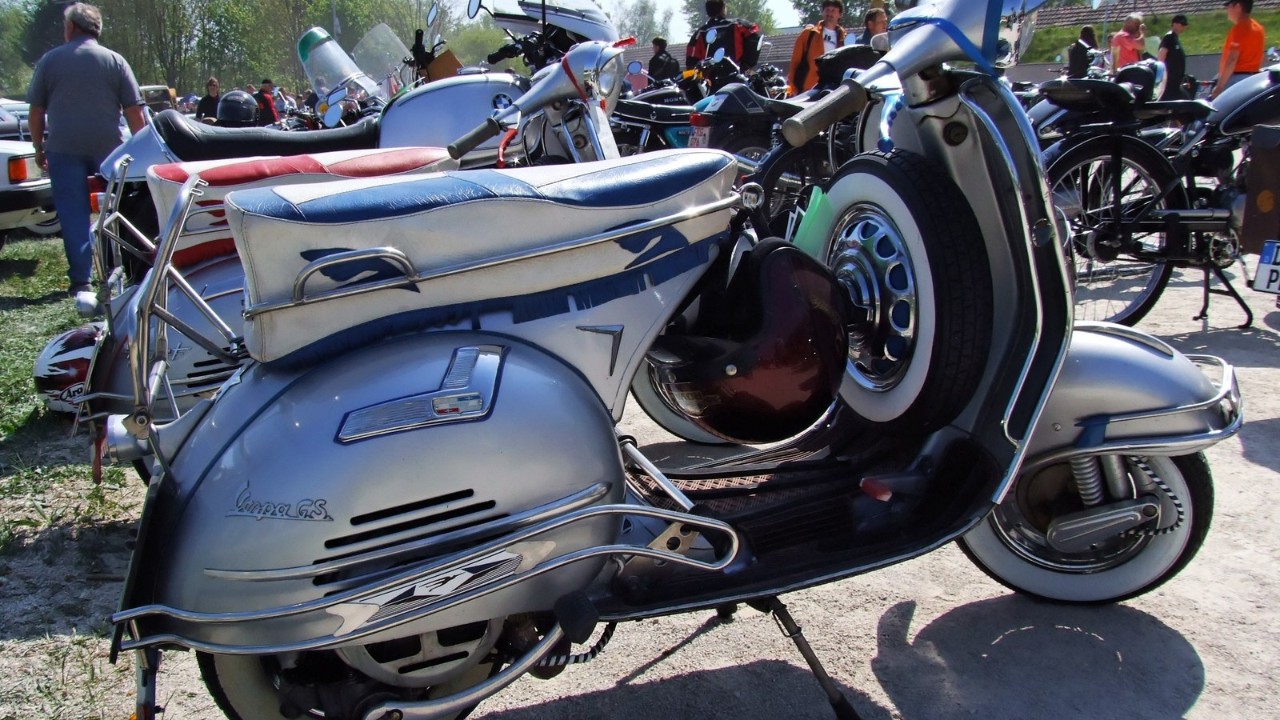
GS stood for Gran Sport, and Piaggio meant it. The company launched the 150 GS in 1955 and built it in five series into the early 1960s. According to Piaggio’s own history of the model, its 145.6 cc two-stroke single made 8 horsepower at 7,500 rpm. Top speed was 101 km/h.
Those were big numbers for a 150 cc scooter. The GS also had a four-speed gearbox. Meanwhile, larger 10-inch wheels and hydraulic dampers at both ends gave it a steadier ride. A long saddle and a faired headlamp on the handlebars completed the sporty look. Both wheels still used drum brakes. Even so, Piaggio kept refining the GS through each series, and a 1960 scooter comes from late in that run.
The Vespa itself began with a patent filed on April 23, 1946. Aeronautical engineer Corradino D’Ascanio shaped the step-through design, and Enrico Piaggio named it after the wasp-like body.
Our take: the Vespa 150 GS is the classic Vespa to chase, because it pairs the familiar shape with real performance. If you are shopping, ask for the frame and engine numbers before you fall in love with the paint.
2. 1960 Lambretta TV175
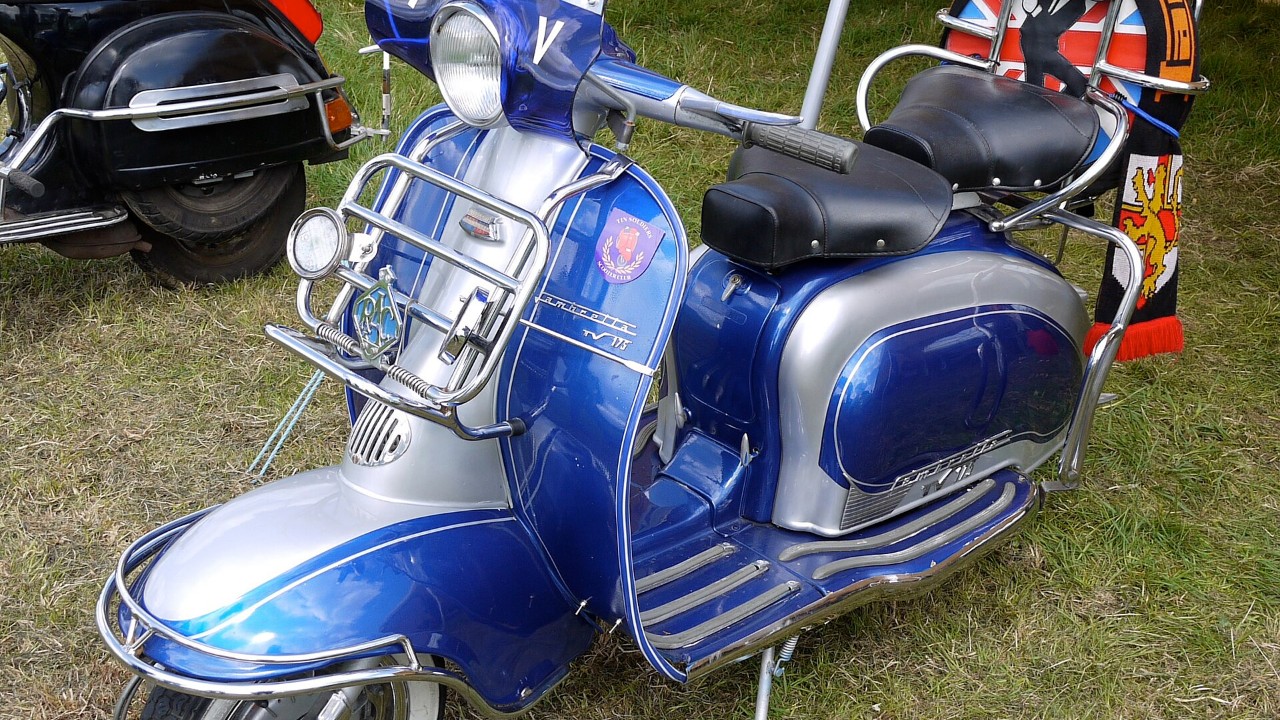
Innocenti built Lambrettas in Milan, and the name comes from Lambrate, the suburb where the factory stood. The TV175 was the top model of its day. By 1960, the one in showrooms was the Series 2, which Innocenti introduced in October 1959 and marketed as “the Sportsman scooter.”
According to the Lambretta Club of Great Britain, the Series 2 claimed 8.6 bhp and a top speed of 65 mph. It also brought a new headset with a headlight that turned with the steering. That was a welcome change for anyone riding at night.
Its launch was not smooth, however. On some very early examples, the frame’s main tube cracked. Innocenti recalled them, stopped production and had the frames cut and reinforced with a welded plate. Later frames used thicker tube. Production ended in November 1961, after Innocenti had built more than 34,000.
In our view, the TV175 Series 2 is the Lambretta to own if you want 1950s style with a sporty edge. Check the frame number before you buy. According to the club, numbers starting with 1 mark the early modified frames, while those starting with 2 are the thicker-tube ones.
3. Zündapp Bella R 154
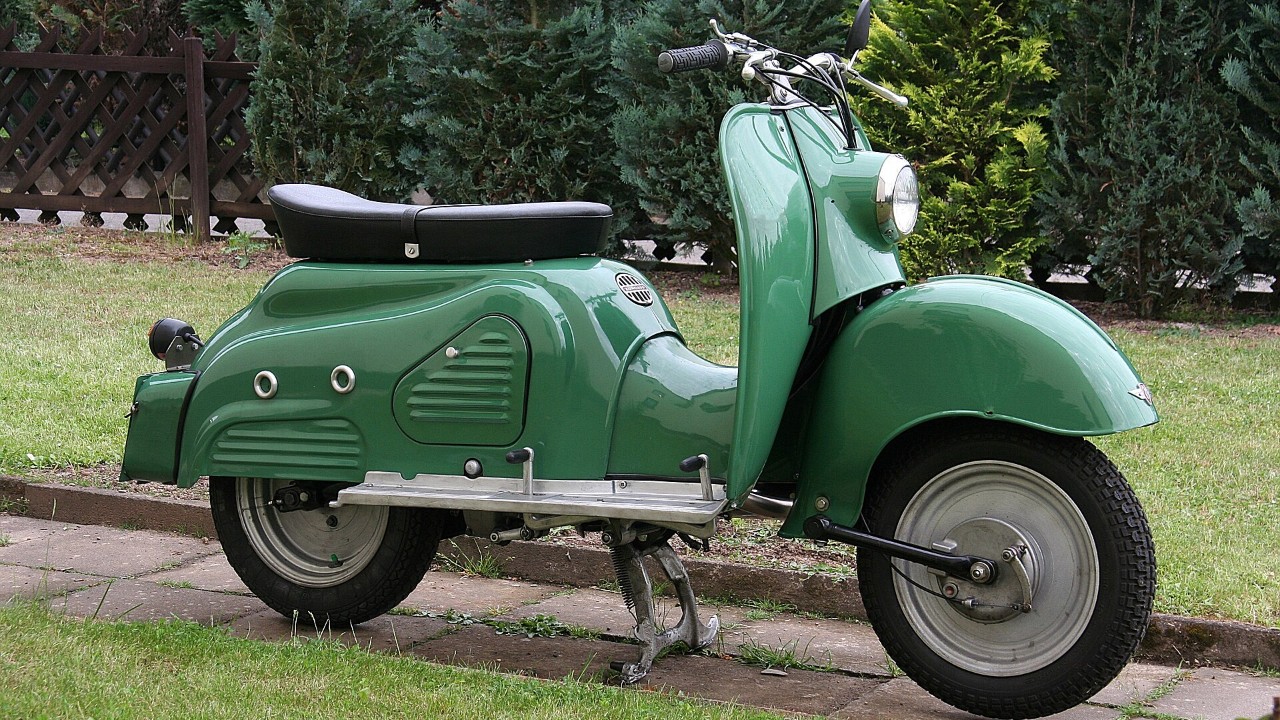
The Bella looked more like a small motorcycle wearing a coat than a typical Italian scooter. It rode on 12-inch wheels, bigger than the Vespa GS’s 10-inch rims, which gave it a planted feel on rough roads. Zündapp built the Bella from 1953 to 1964 and sold about 130,000.
The R 154 was the last of the 150 cc Bellas. In 150 cc form, the Bella’s two-stroke single made 7.3 horsepower, with a top speed of about 50 mph. Later Bellas also offered an electric start. In that design, the generator doubled as the starter motor, which was a luxury on a scooter of the 1950s.
There was even a version built for American buyers. The R 154 K was an export model with a kick starter and buckhorn-style “Western” handlebars, and it reached the US in the later 1950s.
Our take: the Bella is the German answer to the Vespa, built heavier and with touring in mind. That weight is part of why it rides so well. Yet we suspect it also meant many were worked hard as daily transport, then left in sheds. If you find a complete one, the electric-start system is worth checking first, since it adds complexity that a basic kick-start scooter does not have.
4. 1962 Honda Juno M85
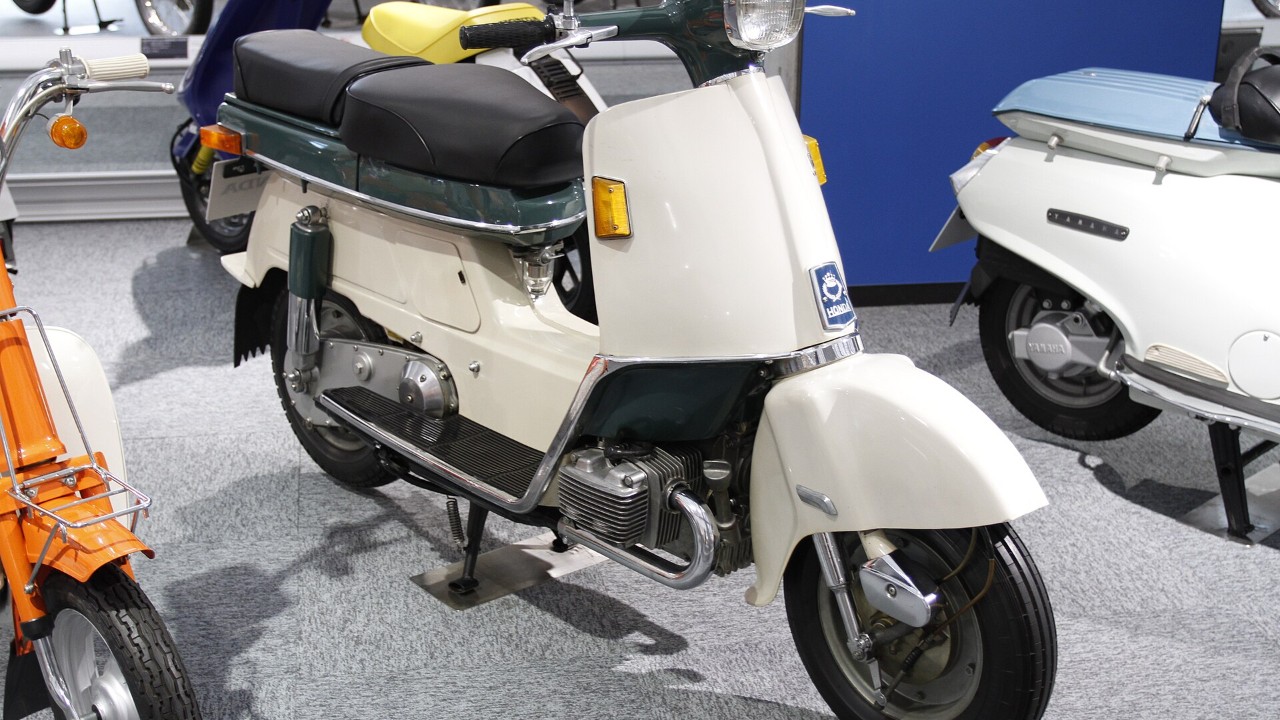
Honda’s Juno M85 is the strangest scooter on this list, and that is a compliment. Instead of a single-cylinder two-stroke, it used a 169 cc air-cooled flat-twin. In other words, it was a boxer engine, the same layout as a BMW motorcycle or a Gold Wing, tucked under a scooter body.
According to RideApart’s history of the model, Honda claimed 12 horsepower at 7,600 rpm and a top speed of 100 km/h. The M85 weighed 157 kg, and it sold in Japan for ¥169,000 in 1962. It also had a clutchless hydraulic transmission of the Badalini type, which later formed the basis for the Hondamatic.
The Juno was not a hit. Honda built 5,880 M-series scooters before dropping them, and it sold them only in Japan. That short life is exactly why they are so hard to find now.
Honda’s own Collection Hall in Japan keeps a 1962 M85 on display. In our view, this is a scooter for the serious collector who loves odd engineering, the same crowd that hunts the machines in our list of classic bikes you’ve probably never seen in person. Spares for the transmission will take patience. Then again, owning a flat-twin Honda scooter is a story few riders can tell.
5. Fuji Rabbit S301
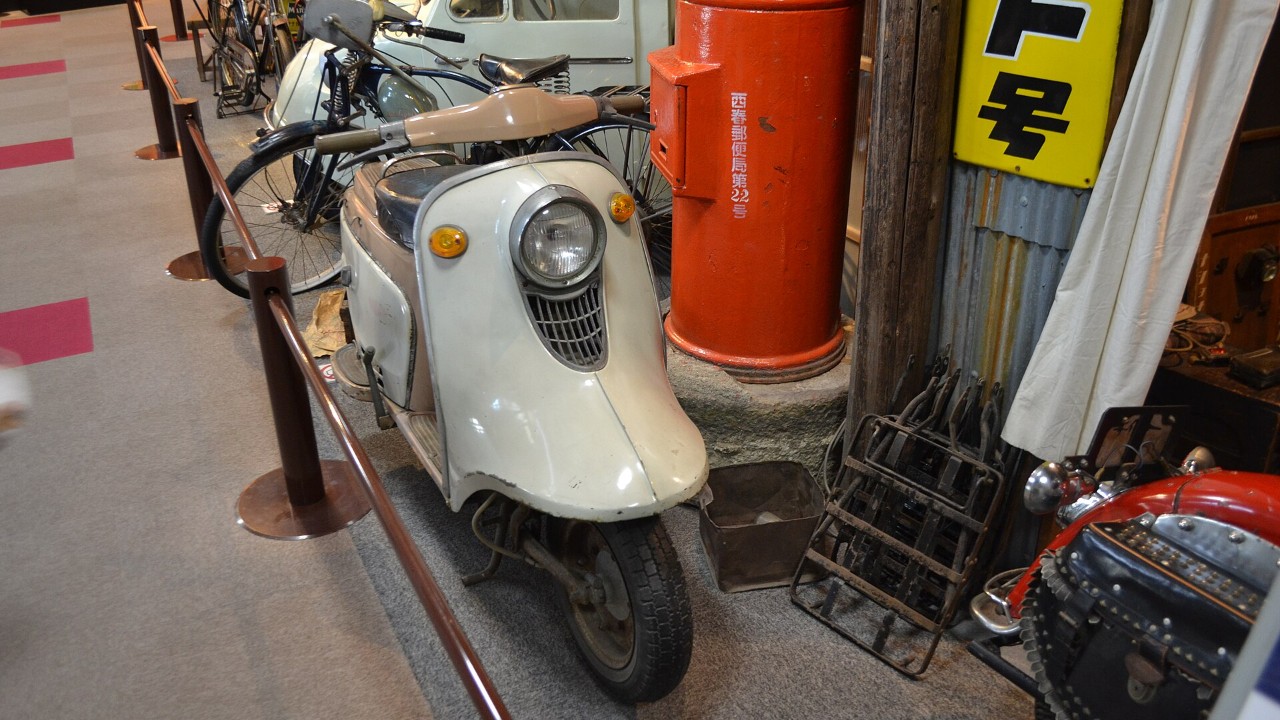
The Rabbit came from an unlikely place. After World War II, Nakajima Aircraft became Fuji Heavy Industries and turned to civilian vehicles. The company’s first Rabbit, the S-1, appeared in June 1946. It took inspiration from the American Powell scooter, and Fuji went on to build 25 Rabbit models before the last one left the line on June 29, 1968.
The S301 was one of the later Rabbits, built from 1961 to 1968 with a 125 cc engine. Some versions even had electric start. One collector’s research puts S301 production at 137,448. However, only 11,700 of those carried the torque converter that Fuji called Superflow.
That makes the S301 a common Rabbit by Japanese standards. Even so, in our view you will rarely see one outside Japan, and many were likely ridden until they wore out, as everyday scooters usually are.
Our take: the Rabbit is a fascinating piece of Subaru history. Fuji Heavy Industries changed its name to Subaru Corporation in 2016. If you find an S301, check which gearbox it has, since the Superflow torque converter version is the rare one.
6. NSU Prima III K
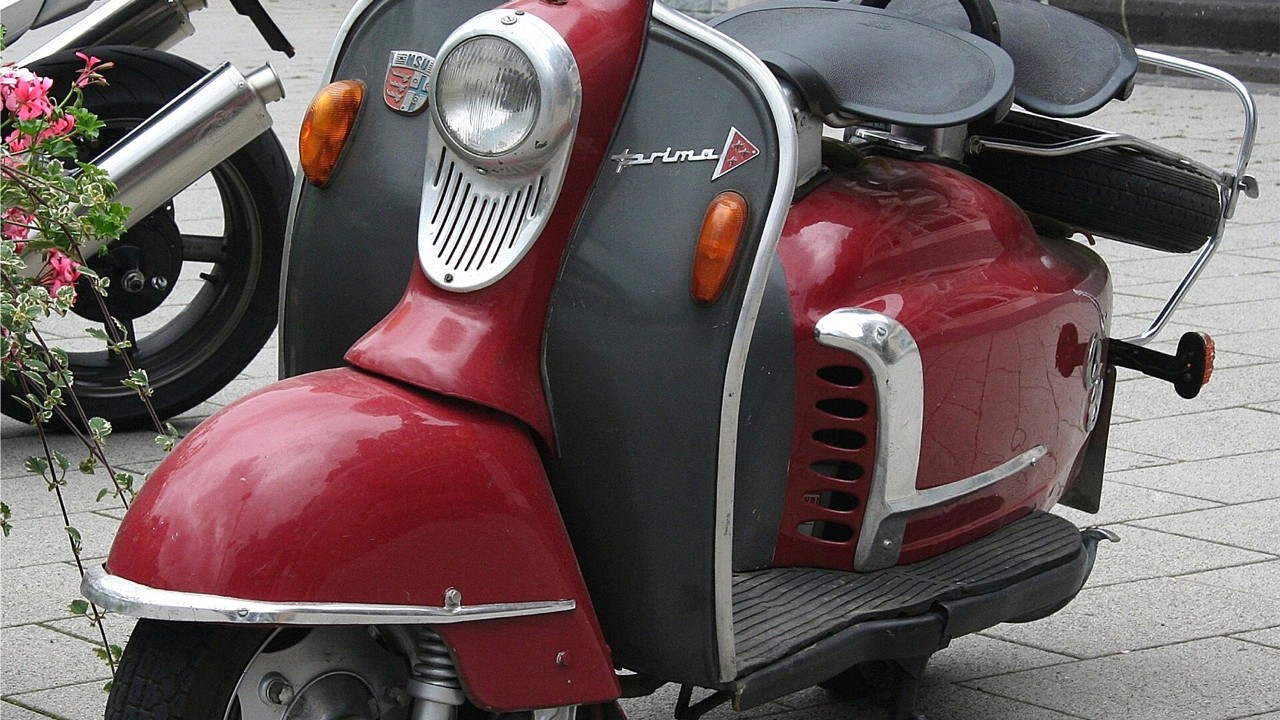
NSU started in scooters by building someone else’s. In 1951, the German company signed a five-year deal with Innocenti to make Lambrettas under license at its Neckarsulm factory. Five years later, in 1956, NSU launched the Prima D.
The Prima D had a 150 cc engine rated at 6.2 horsepower and an electric starter. Later, NSU added the 175 cc Prima V, or Five Star. Then it filled out the range with budget models, the Prima III, III K and III KL, which used a slightly less powerful 146 cc engine.
According to Scooternova’s history of NSU scooters, the III K had a kick start and fewer cosmetic embellishments. In short, it was the plain one. That is why so few survive in tidy shape, in our opinion, since cheap scooters tend to get used up.
In our view, the Prima III K is an honest little machine with a fascinating family tree. It links the Italian Lambretta to German engineering in one neat package. If you are shopping, check that the bodywork is complete, because missing panels are the hardest parts to replace on any vintage scooter.
7. 1951 Moto Guzzi Galletto 160
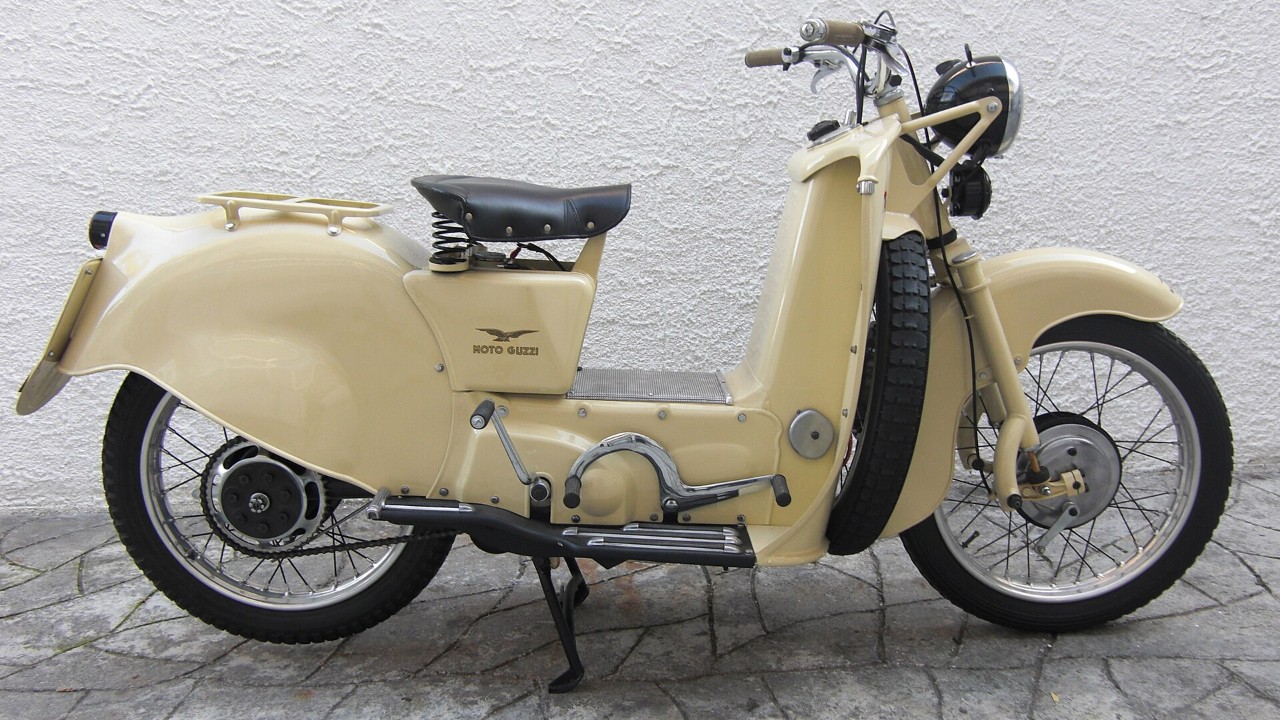
Moto Guzzi’s Galletto is part scooter and part motorcycle. The company created it in 1950 as a comfortable utility machine for both men and women. You sit as you would on a scooter, yet it rides on a motorcycle-style chassis with telescopic leading-link forks and a swinging arm at the rear.
The most famous detail is the spare wheel bolted to the front of the fairing. Under the bodywork sat a simple four-stroke single. According to the Piaggio Museum, the engine started at 150 cc, then grew to 160 cc and 175 cc. Finally, a 192 cc version arrived in 1954.
That makes a 160 cc Galletto from 1951 an early example of a design that lasted for years. The museum describes the engine as simple and highly reliable. Of course, machines built for daily work rarely stay original.
Our take: the Galletto is one of the most charming oddballs of postwar Italy, and it belongs in the same conversation as the machines in our picks of motorcycles worth collecting. If you find one with its original spare wheel and carrier, you have found something special. Before buying, compare the engine number with the frame to confirm you are getting an early 160.
More from Fast Lane Only