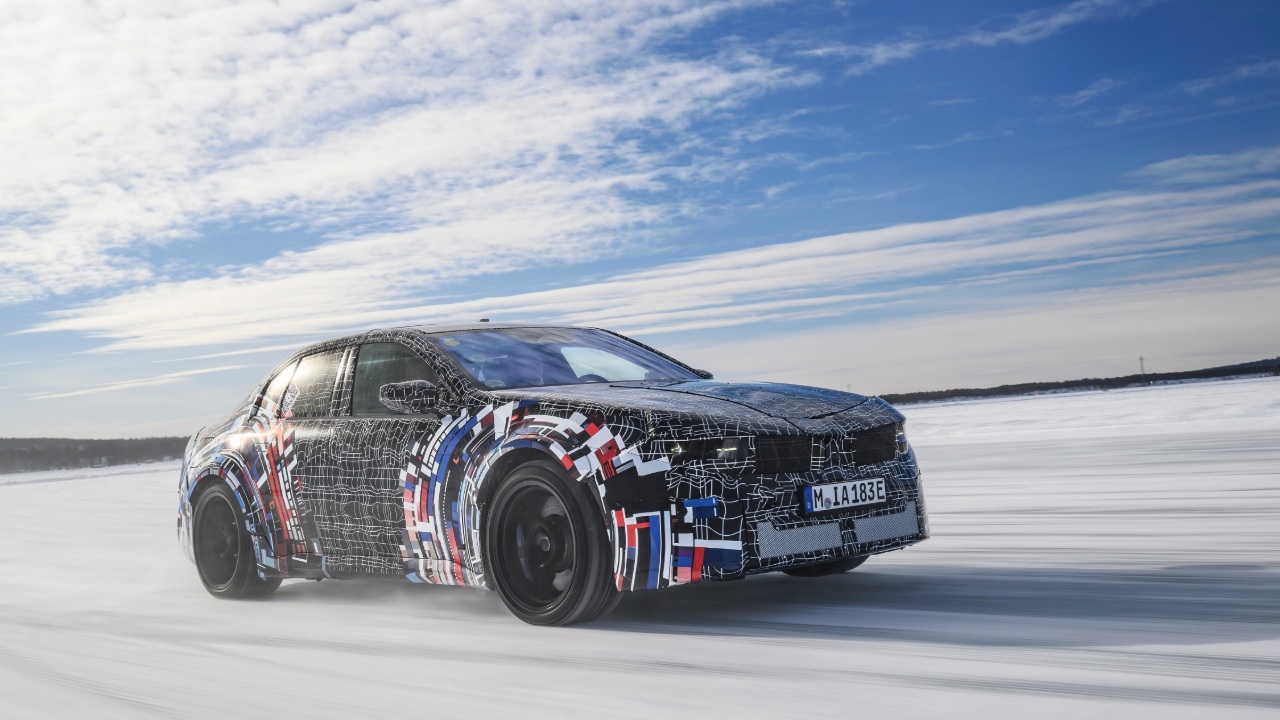
The next BMW M3 will not simply trade pistons for batteries, it will attempt to redefine what a performance sedan can be in the electric era. BMW M has confirmed a quad‑motor layout, simulated gearshifts, artificial engine sound and a focus on lightweight, sustainable materials, all wrapped in a new platform that promises a step change in power and control. The result is a car that aims to keep faith with decades of M3 heritage while embracing a radically different set of tools.
A radical quad‑motor rethink of the M3 formula
I see the decision to give the electric M3 a motor at each wheel as the clearest signal that BMW is not interested in a cautious, incremental transition. Instead of adapting a dual‑motor setup, the company is committing to four independent drive units that can meter torque with a precision no mechanical differential can match. Reporting on the project confirms that BMW has locked in this quad‑motor configuration, with each motor controlled individually and the traditional front and rear differentials removed entirely in favor of software driven torque distribution. Internal targets point to four‑digit horsepower, with some coverage describing the car as a 1000 bhp‑plus sedan, which would place it well beyond the current M3 in outright output and closer to the most extreme electric super sedans on sale.
That architecture sits on a dedicated high performance version of BMW’s Neue Klasse platform, which is being engineered around an 800-volt electrical system for faster charging and more efficient power delivery. The high voltage battery pack is described as a Gen6 unit with M specific tuning, and one detailed technical breakdown cites a capacity of 108.7 kWh for the pack in this application, paired with bespoke cooling and control electronics tailored to repeated hard use. By abandoning mechanical differentials and routing all wheel control through software and four motors, BMW is effectively turning the M3 into a rolling dynamics lab, where the car can shuffle power from corner to corner in milliseconds to sharpen turn in, stabilize the chassis under braking and maximize traction on exit.
Simulated shifting and sound to preserve driver drama
For all the engineering ambition, I find it telling that BMW is just as focused on how the electric M3 will feel and sound from behind the wheel. The company has confirmed that the car will feature fake gear shifts and artificial engine noise, explicitly designed to enhance the driving experience rather than to mimic a specific combustion soundtrack. Instead of a single speed, seamless surge, the powertrain control software will introduce distinct “ratios” and torque interruptions that allow the driver to pull a paddle or move a selector and feel a shift event, even though the underlying motors do not require it. One report notes that this is the first BMW M electric vehicle to adopt such a system, and it is being framed internally as a core part of the car’s character rather than a novelty toggle.
The same philosophy extends to sound. Rather than leaving the cabin to the faint whine of electric motors and tire roar, BMW is developing a synthesized performance soundtrack that rises and falls with load and virtual gear selection, giving the driver acoustic cues about what the car is doing. Coverage of early briefings makes clear that these elements are optional and adjustable, but they are not an afterthought. They are part of a broader attempt to translate the emotional hooks of a high revving inline six into a new medium, acknowledging that many M3 loyalists still associate performance with mechanical noise and rhythmic shifts. The electric M3, in other words, is not just trying to be fast, it is trying to feel fast in a way that resonates with drivers who grew up on manual gearboxes and exhaust crackle.
Neue Klasse tech, 800-volt hardware and rear‑drive tricks
Underneath the theatrics, the electric M3 is also a showcase for BMW’s latest digital and electrical architecture. The Neue Klasse platform that underpins the car is being developed around centralized computing that can process vehicle dynamics data roughly ten times faster than the company’s current systems, according to technical previews. That computing power is essential when four motors are replacing mechanical differentials, because the car must constantly calculate grip at each wheel, driver inputs and road conditions, then adjust torque in real time. The 800-volt system is central here as well, allowing thinner cabling, reduced weight and more efficient power flow under sustained high load, while also enabling significantly quicker DC fast charging compared with the 400‑volt setups that still dominate the market.
What interests me is how BMW plans to use this hardware not only for stability and efficiency but also for playfulness. Engineers have confirmed that drivers will be able to completely decouple the front axle, turning the car into a fully rear‑wheel drive machine at the touch of a button. In that mode, the rear motors alone will power the car, effectively recreating the classic M3 layout but with the instant torque and fine control of electric drive. Reports also highlight highly efficient regenerative braking that can be tuned from strong one‑pedal operation to a more traditional coasting feel, giving drivers another layer of customization. Combined with the ability to vector torque aggressively in all wheel drive mode, the result should be a sedan that can switch from precise, neutral grip to tail‑happy antics without sacrificing the security and range benefits that the Neue Klasse platform is designed to deliver.
Lightweight eco materials and the weight problem
Even with advanced electronics and a dedicated platform, I cannot ignore the fundamental challenge that every high performance EV faces: mass. Large battery packs are heavy, and the M3 has historically been celebrated for agility rather than sheer size. Enthusiast discussion around BMW’s recent electric sedans has already fixated on curb weights that can rival large SUVs, with one widely shared comment likening them to vehicles that “could weigh more than 2 elephants but dance like a mouse” and noting that some earlier performance EVs were “Significantly bigger than the” combustion cars they replaced. Against that backdrop, BMW is emphasizing the use of lightweight and eco‑conscious materials in the electric M3, both to trim kilos and to align the car with broader sustainability goals.
While full details of the material mix are still emerging, early technical notes point to extensive use of high strength steels, aluminum and composites in the body structure, along with recycled and bio based materials in the cabin. The Neue Klasse program more broadly has highlighted reduced resource use and improved lifecycle emissions as key targets, and the M division is expected to adapt those principles without compromising stiffness or safety. The Gen6 battery itself is designed to be more energy dense, which allows a given range with less mass than earlier packs, and BMW engineers have spoken about M specific solutions that increase performance without simply scaling up capacity. The tension between outright performance, range and weight will not disappear, but the company is clearly trying to show that an electric M3 can be both responsibly built and dynamically sharp, rather than a blunt instrument that happens to be very quick in a straight line.
Positioning, timing and the future of the M badge
All of these choices, from quad motors to faux shifting, are arriving on a specific timeline that matters for how I interpret BMW’s strategy. The company has confirmed that the first fully electric M3 will launch in 2027, following the debut of other Neue Klasse models and joining a lineup that will still include combustion and hybrid performance cars in the near term. Reports describe this car as the first quad‑motor BMW M electric vehicle, a halo product that will sit at the top of the 3 Series family and likely carry pricing that reflects both its technology and its positioning as a flagship. Some analysis suggests that a starting figure in the region of current high end M3 variants is plausible, although exact numbers remain unverified based on available sources.
More from Fast Lane Only