At a time when electric cars are reshaping performance benchmarks, a Florida drag strip has decided that the risks are not worth the reward. Orlando Speed World Dragway has barred fully electric vehicles from competition and testing, arguing that its facility and emergency crews are not equipped to manage the unique hazards of high speed battery failures. The move has ignited a debate that reaches far beyond one strip’s staging lanes, touching on how quickly traditional motorsports can adapt to the realities of modern propulsion.
What prompted Orlando Speed World’s EV ban
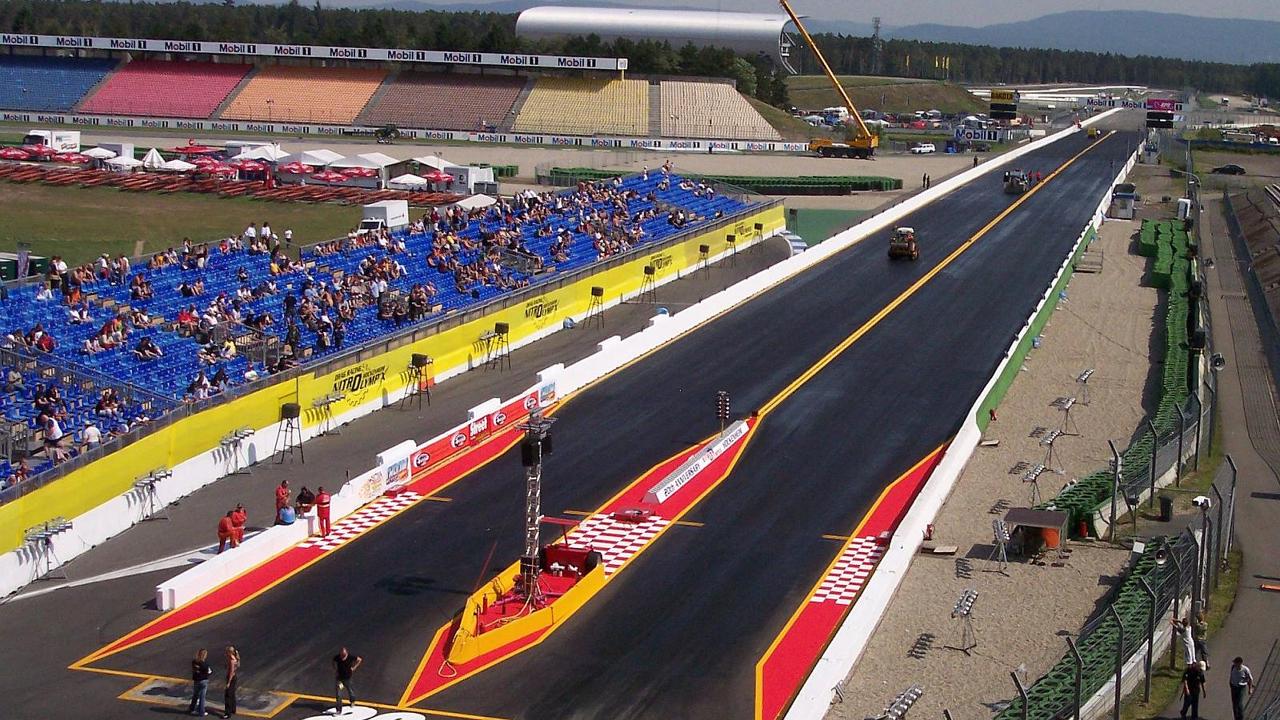
Orlando Speed World Dragway, a long running venue for grassroots racers in central Florida, has now prohibited fully electric cars from taking part in any of its racing or test sessions. Track management framed the decision as a matter of basic risk management, stating that the current infrastructure and safety protocols were designed around gasoline and nitromethane, not high voltage battery packs. As of January 8, 2026, the facility’s new policy applies to all fully electric vehicles, from production models like the Tesla Model S Plaid to purpose built conversions, and covers both organized events and informal test and tune nights, according to the track’s own explanation of the change.
In outlining the ban, Orlando Speed World emphasized that the issue is not performance parity or competitive balance but the potential consequences of a serious crash involving a large traction battery. The track’s statement highlighted concerns that its fire crews, extraction tools, and runoff areas were never designed for the possibility of a damaged pack entering thermal runaway, venting toxic gases, or reigniting after an apparent extinguishment. Reporting on the decision notes that the drag strip explicitly tied the prohibition to what it views as unresolved safety questions around fully electric cars in a drag racing environment, describing the move as a necessary step until the facility is upgraded and its staff are trained for these specific hazards.
The specific risks track officials say they cannot manage
In explaining why fully electric cars are now off the entry list, Orlando Speed World focused on the battery itself as the central hazard. Track officials warned that a compromised high voltage pack can release toxic and flammable gases, create intense and prolonged fires, and potentially expose first responders to electrical shock if they attempt to cut into the vehicle. They also raised the possibility that a pack damaged in a crash could reignite long after an incident appears to be under control, a scenario that would be especially difficult to manage if a car is stranded on the racing surface or near spectator areas. The facility’s leadership argued that their current firefighting equipment, which is tailored to fuel and oil fires, is not sufficient for the volumes of water and specialized tactics often recommended for lithium ion battery incidents.
Beyond the fire itself, the drag strip cited the challenge of safely removing a disabled electric car from the track. Traditional tow hooks and winches can be used on gasoline powered vehicles with relatively little concern about high voltage components, but a damaged EV may have energized parts exposed or structural weaknesses around the pack that make standard recovery methods risky. Orlando Speed World’s explanation referenced the risk to safety crews who might attempt to cut into a vehicle to free an unconscious driver, noting that without detailed training and equipment specific to each model, responders could inadvertently contact high voltage wiring or trigger further damage to the battery. The track’s management concluded that, given these factors, allowing fully electric vehicles to run would expose both drivers and staff to dangers that the facility is not currently prepared to mitigate.
How the ban fits into a broader motorsports reckoning
Orlando Speed World’s decision does not exist in a vacuum, and I see it as part of a broader reckoning within grassroots motorsports about how to handle the rapid rise of electric performance. Reporting on the Florida Drag Strip Joins Others framing makes clear that this is not the first venue to restrict or exclude fully electric cars over similar concerns about battery fires and responder safety. Some tracks have quietly discouraged EV participation, while others, like this Florida facility, have now formalized outright bans that cover both competition and open testing. The language used by Orlando Speed World, which stresses that safety is paramount at any drag strip, mirrors the reasoning cited by other operators who argue that they must prioritize the well being of staff and spectators over the desire to accommodate every type of vehicle.
At the same time, the ban underscores a growing tension between the direction of the automotive industry and the realities of small, independently run tracks. Electric vehicles are increasingly common at local events, from Tesla sedans to high performance crossovers, and their instant torque makes them natural contenders in quarter mile sprints. Yet the infrastructure and training required to handle worst case scenarios with these cars can be expensive and complex, particularly for venues that operate on thin margins. Coverage of the Florida Drag Strip Joins Others narrative notes that the concerns raised by Orlando Speed World, including toxic gas release and responder risk, are shared by other facilities that have either adopted similar policies or are actively reviewing their rules. In that context, this ban reads less like an isolated overreaction and more like an early, visible marker of a transition that many tracks are struggling to navigate.
What the decision means for racers and EV adoption at the strip
For drivers who have invested in electric performance, Orlando Speed World’s new policy is a significant setback. Owners of cars like the Tesla Model 3 Performance or Model S Plaid, who have used local drag strips as a controlled environment to explore their vehicles’ capabilities, now find one of central Florida’s key venues closed to them. The ban covers not only formal bracket racing or heads up events but also casual test and tune sessions, which are often the first point of contact between EV owners and organized motorsports. Reporting on the Florida Has Just Banned Electric Vehicles framing notes that the track’s decision explicitly removes fully electric cars from both competition and testing, which effectively shuts out a growing segment of enthusiasts who had begun to see the drag strip as a natural extension of their interest in high performance electric driving.
From a broader adoption perspective, I view the move as a reminder that the transition to electric propulsion is not only about charging networks and vehicle range but also about how legacy institutions adapt. Grassroots drag racing has long been a proving ground for new technology, from turbocharging to advanced engine management, yet the scale and nature of battery related risks present a different kind of challenge. The Florida Drag Strip Joins Others reporting suggests that some tracks are considering investments in specialized firefighting equipment and training, while others are opting for bans until industry wide standards emerge. For now, Orlando Speed World’s stance signals to EV racers that access to traditional venues may be uneven and contingent on how quickly those facilities can align their safety protocols with the realities of high voltage competition.
What would need to change for EVs to return
Reading through the track’s stated concerns, I come away with the sense that Orlando Speed World has left the door open, at least in principle, to electric participation if certain conditions are met. The core of the issue is not an ideological opposition to battery power but a gap between the risks posed by fully electric cars and the resources currently available at the facility. To bridge that gap, the drag strip would likely need to invest in equipment capable of dealing with high energy battery fires, such as large volume water supplies or specialized containment tools, and to develop detailed response plans tailored to specific EV models. The reporting that details the track’s focus on battery hazards, toxic gas release, and responder exposure suggests that any path back for electric vehicles would have to address each of those points in a concrete way.
More from Fast Lane Only