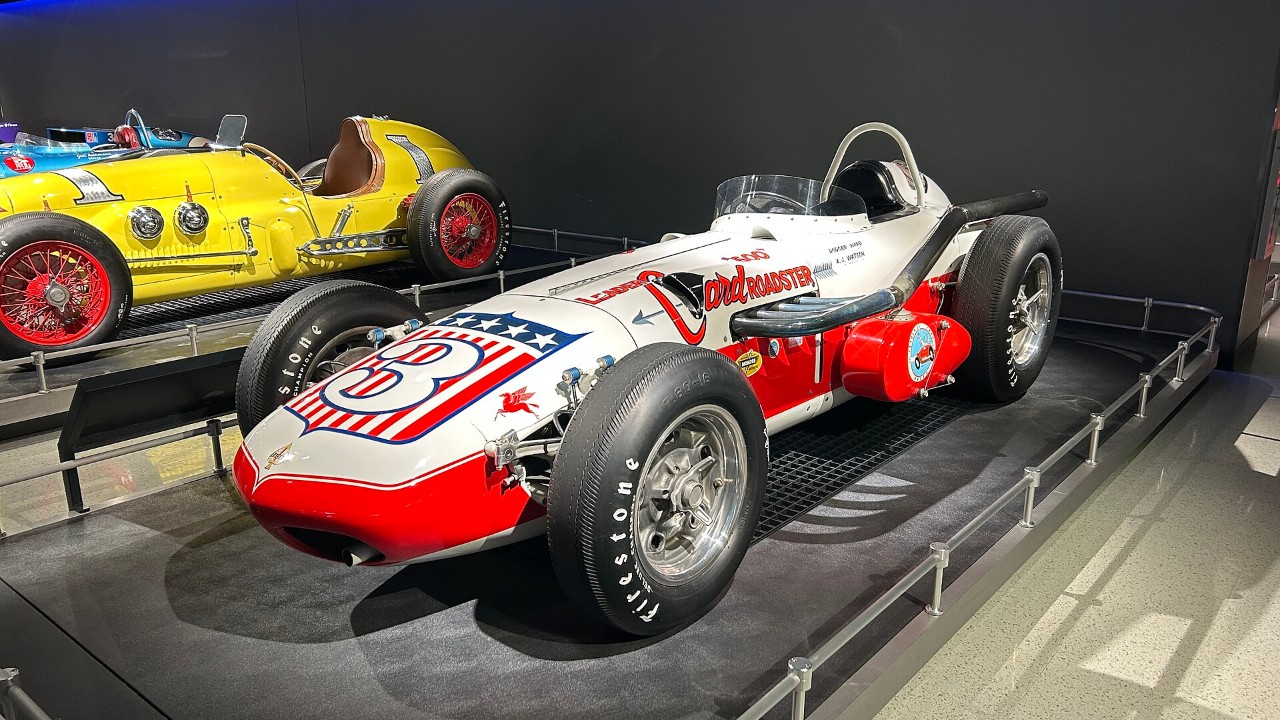
The Offenhauser four-cylinder won the Indianapolis 500 27 times, more than any other engine maker in the race’s records. It did it with four cylinders, two overhead camshafts and a block and head cast as one piece. For four decades, the engine racers called the “Offy” was the safe bet at the Speedway.
That record spans 1935 to 1976, a run that began before World War II and ended in the turbocharged era. Along the way, the Offy also won the race 18 years in a row, by the Speedway’s own count.
Here is where the engine came from and what made it different. Then comes how it kept pace and how its record stacks up today.
From Harry Miller’s shop to the Offenhauser four-cylinder
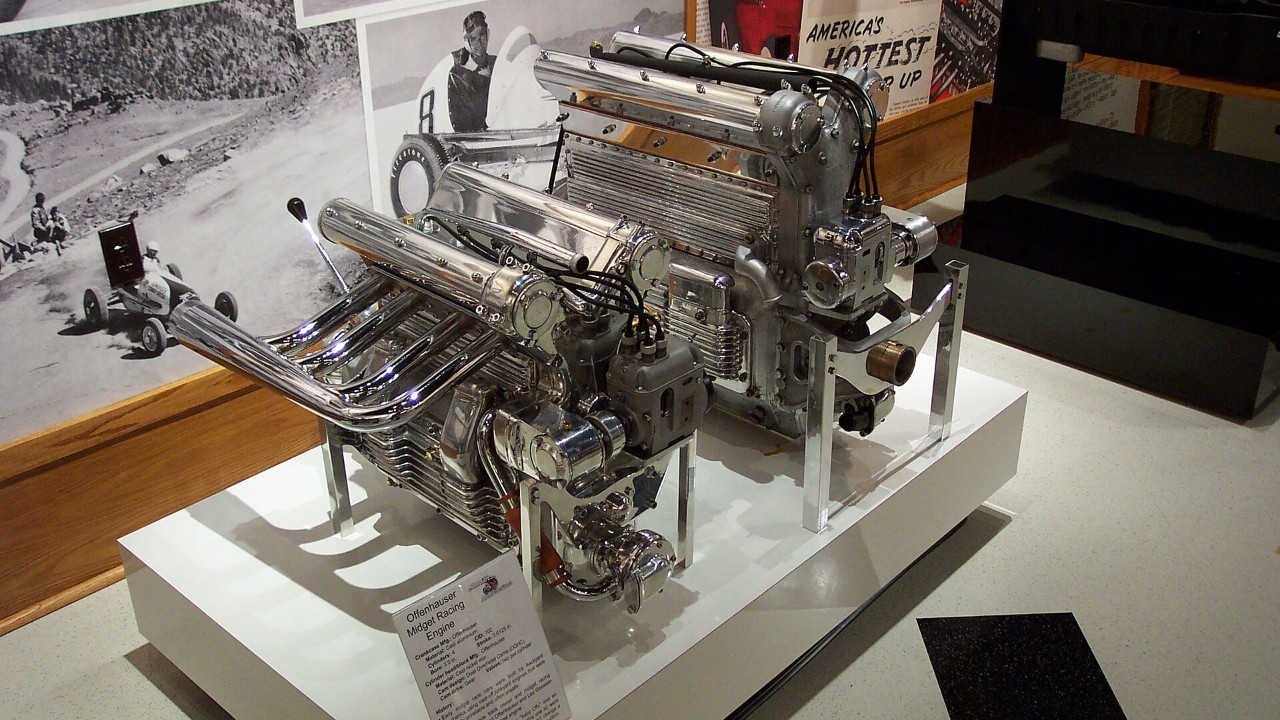
The Offy began in Harry Miller’s racing shop. Fred Offenhauser was Miller’s machine shop supervisor, and Leo Goossen was a young draftsman who joined in 1919, according to Engine Labs. Miller’s own engines won the Indianapolis 500 12 times between 1922 and 1938, the Indianapolis Motor Speedway’s winning-engine table shows.
However, Miller went bankrupt in 1933, and that ended his “speed laboratory,” IMS writes. Offenhauser and Goossen carried the work on at the new Offenhauser Engineering Company. There, IMS says, they turned “the four-cylinder Miller marine engine” into the basis of the Offy.
Engine Labs says Offenhauser produced the first Offenhauser block in 1933. Sources differ on exactly when the rights and the company changed hands. Even so, the Offy clearly grew out of Miller’s designs in the early 1930s.
What made the Offy different
First, it used double overhead camshafts. Jalopnik notes that the setup was relatively rare when the engine debuted. Engine Labs adds that the design used four valves per cylinder.
Second, it had no separate cylinder head. Instead, the head and block came out of the foundry as a single casting, which meant there was no head gasket to blow, according to Jalopnik. Engine Labs calls this “unit construction” and points to the gasket failures it avoided.
Together, those two choices defined the Offy. In fact, both Engine Labs and Jalopnik single out the missing head gasket. After all, a joint that does not exist cannot fail.
How the Offy kept winning for 41 years
The Offy’s first Indianapolis 500 win came in 1935, and its last came in 1976, IMS records show. In between, it won in 1937 and 1941, then every year from 1947 through 1964, followed by 1968 and 1972 through 1976.
That middle stretch is the one people remember. IMS counts it as 18 consecutive wins from 1947 to 1964. By then, Lou Meyer and Dale Drake had bought the company from Offenhauser in 1946, Engine Labs says. Goossen stayed on as chief engineer until his death in 1974.
The engine also kept changing size to fit the rules. Engine Labs lists a 1933 original of 255 cubic inches making 250 horsepower at 5,200 rpm. By comparison, its 1958 “Low Tower” version measured 252 cubic inches and made 325 horsepower at 6,600 rpm.
Turbocharging and the Offy’s last act
Ford ended the Offy’s run in the mid-1960s. Ford-powered cars won in 1965, 1966 and 1967, according to the IMS table. Then the Offy came back with a turbocharger, which Jalopnik says the engine gained in 1966 after a rule change.
The turbo versions were much smaller and far stronger. Jalopnik says Bobby Unser’s 1968 winning car used a 168-cubic-inch turbocharged Offy rated at 625 horsepower. Engine Labs lists a 160-cubic-inch Offy from 1969 at 820 horsepower and a 1974–1975 Drake-Offy of 158 cubic inches at 1,000 horsepower and 10,000 rpm.
Qualifying engines went further still. Jalopnik credits Jerry Grant’s 1972 qualifying engine with 1,100 horsepower, the year he broke the 200-mph barrier. Meanwhile, the Offy kept winning races until 1976.
How the Offenhauser record stands today
Modern engine makers have closed some of the gap, but none has caught it yet. The IMS winning-engine table lists Honda with 17 Indianapolis 500 wins, Chevrolet with 13, Miller with 12 and Ford with eight.
Away from Indianapolis, the record goes deeper. Engine Labs says Offenhausers won 245 Champ Car races between 1946 and 1969. At the Speedway itself, the Offenhauser four-cylinder still sits at the top of the IMS table with 27 Indianapolis 500 wins, the last of them in 1976.
More from Fast Lane Only
- Unboxing the WWII Jeep in a Crate
- 15 rare Chevys collectors are quietly buying
- 10 underrated V8s still worth hunting down
- Police notice this before you even roll window down
This article was created with the help of AI and was reviewed and edited by Fast Lane Only editors before publication.