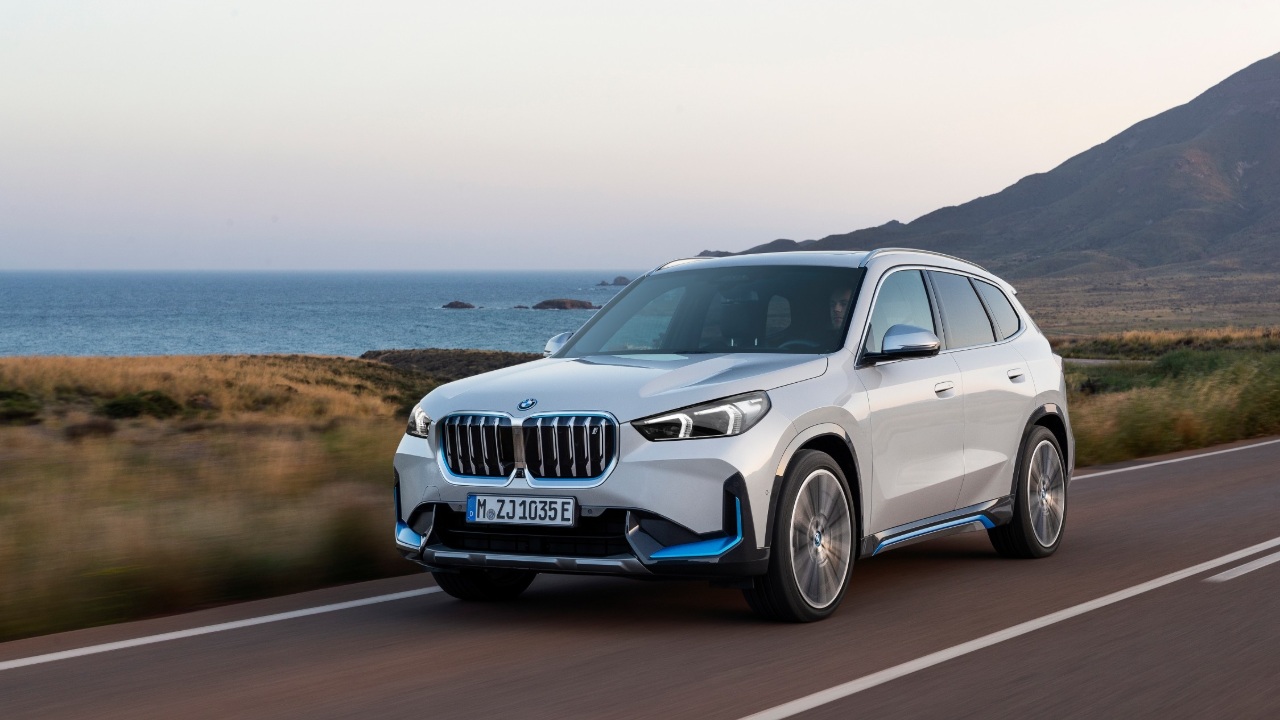
BMW is giving its smallest SUVs a strategic refresh, adding plug-in and mild-hybrid power alongside more sophisticated cabin tech for the 2026 model year. The BMW X1 and X2 do not change their fundamental character, but their drivetrains, equipment lists, and digital interfaces have been sharpened to keep pace with rivals and with the brand’s own rapid electrification push.
The result is a pair of compact crossovers that lean harder into electrified performance, offer richer standard features, and narrow the gap to larger BMW models in terms of technology and perceived quality, while still targeting buyers stepping into the brand for the first time.
Electrified powertrains move to center stage
The headline mechanical change for 2026 is the expansion of electrified options across the BMW X1 and X2 ranges, with a new plug-in hybrid joining an updated mild-hybrid system. For the X1, the plug-in hybrid returns as a core variant rather than a niche experiment, reflecting BMW’s broader strategy of pairing combustion engines with substantial electric assistance in its compact class. Reporting on the updated line-up confirms that the X1 plug-in hybrid is being reintroduced in a reworked range, with the brand positioning it as a key step between conventional petrol or diesel models and the fully electric iX1.
On the X2 side, BMW is leaning on its 48 volt mild-hybrid technology to deliver both efficiency gains and smoother low-speed response. The new sDrive20i specification is described as featuring the 48 volt MHEV system as standard, paired with the M Sport Package to underline its more dynamic brief. Across both models, BMW’s spring 2026 model update program, detailed from Munich, emphasizes advances in electric drive technology and the spread of electrified powertrains into more segments, which places the X1 and X2 refresh squarely within a wider corporate shift rather than as isolated tweaks.
Plug-in hybrid X1: bridging combustion and full EV
The plug-in hybrid BMW X1 is being treated as a strategic bridge for buyers who are not yet ready to commit to a fully electric SUV but want meaningful zero-emission capability. In markets such as Australia, BMW is reshuffling its smallest SUV range specifically to accommodate the returning X1 plug-in hybrid, signalling that there is clear demand for a compact premium PHEV that can handle daily commuting on electric power while retaining long-distance flexibility. The brand’s own model update communications highlight advances in electric drive systems, and the X1 plug-in sits at the intersection of that technology push and the practical needs of family buyers.
Charging performance is central to the plug-in’s appeal, and here BMW has opted for a relatively high on-board AC capacity to keep home and workplace top-ups convenient. The PHEV supports an 11 kW AC system as standard, with reporting specifying that this allows a full battery charge in one hour and 45 m using either single- or three-phase power. That figure places the X1 plug-in among the quicker-charging PHEVs in its class, reducing the penalty of a smaller battery compared with a full EV and encouraging owners to use the electric mode as often as possible rather than relying on the combustion engine as a default.
Mild-hybrid X2 and the push for efficient performance
While the X1’s plug-in hybrid grabs attention, the BMW X2’s 48 volt mild-hybrid system illustrates how the brand is trying to make electrification feel seamless in everyday driving. The sDrive20i variant is reported as adopting the 48 volt MHEV system together with the M Sport Package as standard, a combination that blends efficiency-focused hardware with a sportier chassis and styling set-up. In practice, the mild-hybrid hardware assists the engine during acceleration, smooths stop-start operation, and recovers energy under braking, all without requiring the driver to plug in or manage charging routines.
This approach aligns with BMW’s broader 2026 SUV strategy, where the X1 and X2 receive incremental but targeted updates to keep them competitive. Coverage of the brand’s SUV line-up notes that the third-generation X1, introduced for 2023, continues to receive minor updates rather than a full redesign, and the X2 follows a similar path. By embedding mild-hybrid technology into mainstream variants, BMW is able to trim fuel consumption and emissions while preserving the responsive character that has become a selling point for these compact crossovers, especially when paired with the more assertive M Sport Package tuning.
Interior tech, standard equipment, and perceived value
Beyond the powertrains, BMW is using the 2026 update to strengthen the technology story inside the X1 and X2 and to add more standard equipment that supports a higher price point. Earlier guidance on the 2026 BMW X1 highlighted that it would gain more standard features and new colors while retaining its engaging driving character, and more recent reporting on the latest features of the 2026 BMW X1 SUV reinforces that fresh updates bring bolder styling, smarter tech, and stronger performance. That combination is designed to make the entry-level BMW SUV feel less like a compromise and more like a scaled-down version of the brand’s larger models.
BMW’s spring 2026 model update announcement from Munich underscores that additional standard and optional equipment is a key pillar of the refresh, with advances in electric drive technology accompanied by upgrades to digital interfaces and comfort features. For the X1 and X2, that translates into richer infotainment, expanded driver-assistance availability, and more generous baseline specifications, which in turn support the narrative that these models deliver greater value despite price rises. Commentary on the 2026 X1 and X2 updates notes that the expanded electrification and longer standard equipment lists are intended to create a more sophisticated ownership experience, aligning with the brand’s premium positioning even in its smallest SUVs.
Market positioning and BMW’s compact SUV strategy
The way BMW is reshaping the X1 and X2 ranges for 2026 reveals a clear strategy for its compact SUVs. Rather than pursuing radical redesigns, the company is layering in electrified powertrains, more technology, and curated equipment packages to keep the models feeling current while controlling development costs. Analysis of the 2026 BMW X1’s key updates and expected pricing describes the changes as evolutionary rather than revolutionary, with the focus on refining what already works and adding electrification where it can deliver tangible benefits. The X1 plug-in hybrid’s return to markets such as Australia, combined with the X2’s standard 48 volt mild-hybrid system in sDrive20i form, shows how BMW is using different electrification levels to address varied customer needs within the same size class.
At the same time, BMW is preparing for a more radical shift in its larger electric SUVs, with confirmation that the next-generation iX3, based on the Neue Klasse architecture, is scheduled to reach Australian customers in the coming years. That future model will sit above the X1 and X2 in size and price, but its development context helps explain why the compact pair are receiving targeted updates rather than full overhauls. Overall, BMW’s 2026 updates to the X1 and X2 models highlight a clear shift toward cleaner, more sophisticated, and more technologically advanced compact SUVs, using plug-in hybrid and mild-hybrid systems, richer standard spec lists, and sharpened styling to keep the brand’s entry point aligned with its broader electrification and digitalization agenda.
More from Fast Lane Only