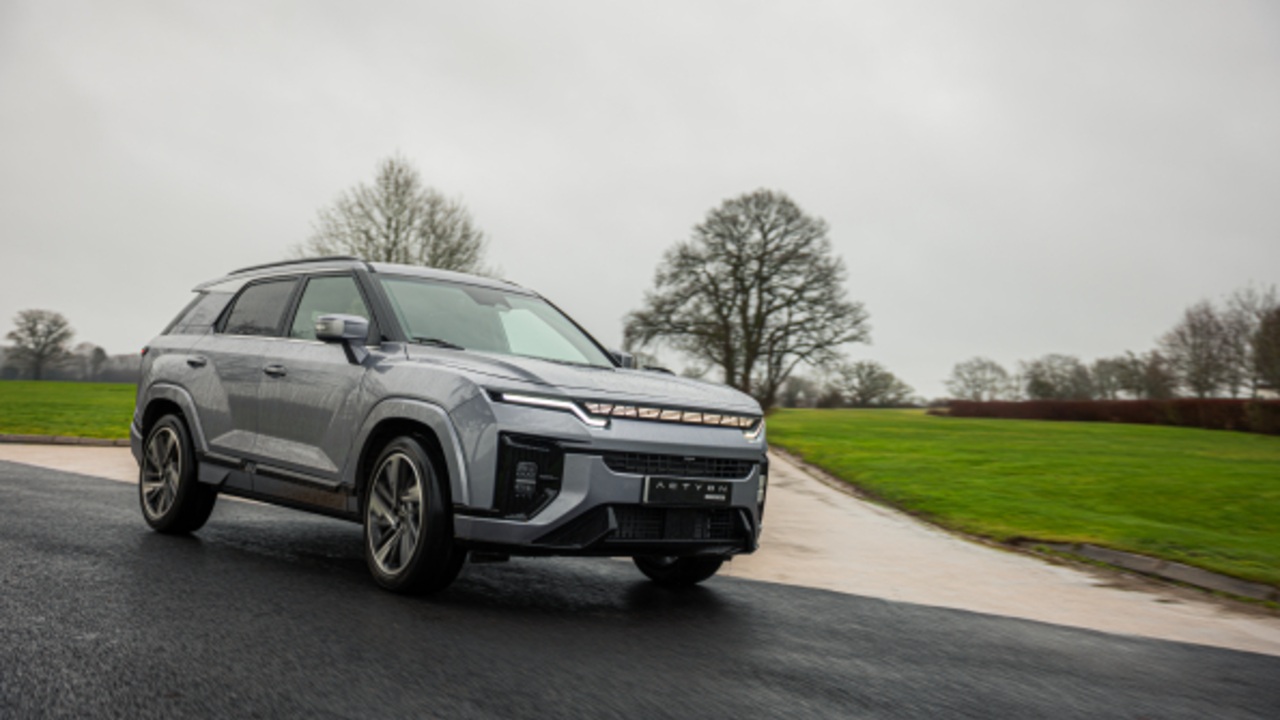
The KGM Actyon Hybrid has arrived in Australian showrooms as the brand’s latest electrified midsize SUV, slotting into one of the country’s most competitive segments with a clear focus on value and efficiency. Positioned as a direct rival to established hybrid favourites, it blends a coupe-style body with a modern petrol-electric drivetrain and a cabin pitched squarely at family buyers. Its launch also signals how seriously KGM now treats electrification in Australia, building on the groundwork laid by its earlier hybrid models.
Rather than chasing headline-grabbing performance figures or luxury pricing, the Actyon Hybrid aims to undercut better known nameplates while offering comparable technology and safety. With BYD hardware under the skin, a footprint at the larger end of the medium class, and a specification sheet that mirrors what Australian SUV buyers now expect as standard, it arrives as a strategically timed entrant in a market that is rapidly shifting toward hybrid power.
Pricing, positioning and the growing KGM electrified range
KGM has framed the Actyon Hybrid as a pragmatic step up from its petrol Actyon range, rather than an expensive halo product. Reporting on the broader line-up notes that the Actyon K50 petrol is listed at $47,000, with a current drive-away offer of $45,000, which gives a clear benchmark for where the hybrid variants must sit to remain attractive. Other coverage of the hybrid’s arrival indicates that KGM has targeted drive-away figures that keep the Actyon Hybrid competitive with mainstream midsize rivals while still reflecting the added cost of its electrified drivetrain.
The Actyon Hybrid also expands what is already described as an Electrified vehicle line-up at KGM, joining other petrol-electric offerings and Succeeding the KGM Torres as the brand’s latest hybrid SUV. Company commentary around the launch stresses that the new model combines Actyon design with advanced electrified powertrain technology, reinforcing that this is not a token efficiency play but a core part of KGM’s Australian strategy. By adding the Actyon Hybrid to its range, KGM signals that hybrids will sit alongside internal combustion and future battery-electric models rather than serving as a short-lived stopgap.
BYD-assisted hybrid powertrain and efficiency
Under the bonnet, the Actyon Hybrid leans heavily on BYD expertise, using a petrol-electric system shared with the Torres Hybrid sibling. Multiple technical breakdowns describe a 1.5-litre turbocharged four-cylinder petrol engine paired with an electric motor and a compact battery, with one specification table listing the Engine as a 1.5-litre four-cylinder turbo-petrol. Together, these components are reported to deliver a combined 201 horsepower in the Australian version, a figure that places the Actyon Hybrid comfortably in the middle of the midsize SUV power spectrum rather than chasing outright performance.
The battery itself is identified in Drivetrains and Efficiency data as a 1.8kWh lithium iron phosphate unit, a chemistry that prioritises durability and thermal stability over outright energy density. That relatively modest capacity underlines that the Actyon Hybrid is a conventional hybrid rather than a plug-in, designed to harvest braking energy and assist the petrol engine rather than provide extended electric-only driving. Official fuel consumption figures cited in launch coverage point to a combined claim of around 5.5L/100km, which, if achieved in real-world conditions, would place the Actyon Hybrid among the more frugal petrol-based SUVs in its class and give it a clear advantage over the non-hybrid Actyon models.
Size, design and cabin practicality
On the road, the Actyon Hybrid presents as one of the larger entrants in the medium SUV segment. Measuring 4740mm long, 1910mm wide and 1680mm tall, with a 2680mm wheelbase, the Actyon Hybrid is described as sitting at the larger end of the medium SUV class, nudging into territory occupied by some seven-seat rivals even though it remains a five-seat proposition. That footprint should translate into generous rear legroom and a sizeable cargo area, attributes that are central to its pitch as a family SUV and as a rival to models from Mitsubishi and Kia that dominate Australian sales charts.
Design-wise, KGM has retained the distinctive coupe-style silhouette that has long set the Actyon apart, while refining the details to align with its newer corporate identity. Commentary from earlier reviews of the petrol Actyon, produced after the transition from SsangYong to KGM, highlighted the model’s bold styling and the way it marked a fresh start for the brand. The hybrid version builds on that foundation, with launch material emphasising that the new variant combines Actyon design and versatility with its electrified powertrain. Inside, specification rundowns point to a cabin that offers leather upholstery in Two model grades, a large central touchscreen and digital instrumentation, all aimed at ensuring the Actyon Hybrid feels contemporary next to Japanese and Korean competitors.
Safety and technology equipment
Safety has become a non-negotiable battleground in the midsize SUV segment, and the Actyon Hybrid arrives with a suite of active systems that aligns with class expectations. Detailed equipment lists for the hybrid specify Safety features such as Adaptive cruise control, Autonomous emergency braking (AEB), Blind-spot monitoring, driver attention warning and a reversing camera. Some reports also reference a 360-degree camera with 3D view on higher grades, a feature that helps the relatively large Actyon Hybrid feel more manageable in tight city parking.
Beyond the core safety technology, the Actyon Hybrid’s equipment strategy is designed to reinforce its value proposition against better known rivals. Australian buyers are offered two main hybrid variants, both of which include the BYD-based hybrid system and a high level of standard specification, with the upper grade adding more comfort and convenience features. That approach mirrors the way KGM has packaged the petrol Actyon, but the hybrid’s additional technology, including its electrified drivetrain and expanded driver assistance suite, is intended to justify the price premium over the $45,000 drive-away petrol offer while still undercutting some Japanese and European alternatives.
Market context and the RAV4 Hybrid rivalry
The Actyon Hybrid does not enter a vacuum. Australian mid-size hybrid SUV buyers already gravitate toward the Toyota RAV4 Hybrid, which has effectively defined the segment, and recent reporting explicitly frames the KGM newcomer as a RAV4 rival. Coverage describes the 2026 KGM Actyon Hybrid as a Korean midsize SUV aimed at everything from the Mitsubishi Outlander to the Kia Sportage, with its hybrid system and pricing structured to tempt buyers who might otherwise sit on long waiting lists for more established models. References to the Actyon Hybrid as Australia’s newest RAV4 Hybrid rival underline the competitive intent behind its specification and pricing.
At the same time, the Actyon Hybrid’s reliance on BYD technology gives it a distinctive angle in a crowded field. Several reports highlight that the Hybrid SUV arrives with BYD technology, and that the Actyon Hybrid launches with a BYD-powered hybrid system, a point that KGM appears keen to emphasise as it builds credibility in electrification. For Australian consumers who may already be familiar with BYD through its battery-electric models, that connection could help overcome lingering doubts about KGM’s relatively low profile compared with Japanese giants. By combining a recognisable hybrid formula, a competitive price relative to the $47,000 petrol benchmark, and the backing of a specialist electrification partner, the Actyon Hybrid positions itself as a serious new option for families looking to cut fuel bills without abandoning the practicality of a conventional SUV.
More from Fast Lane Only