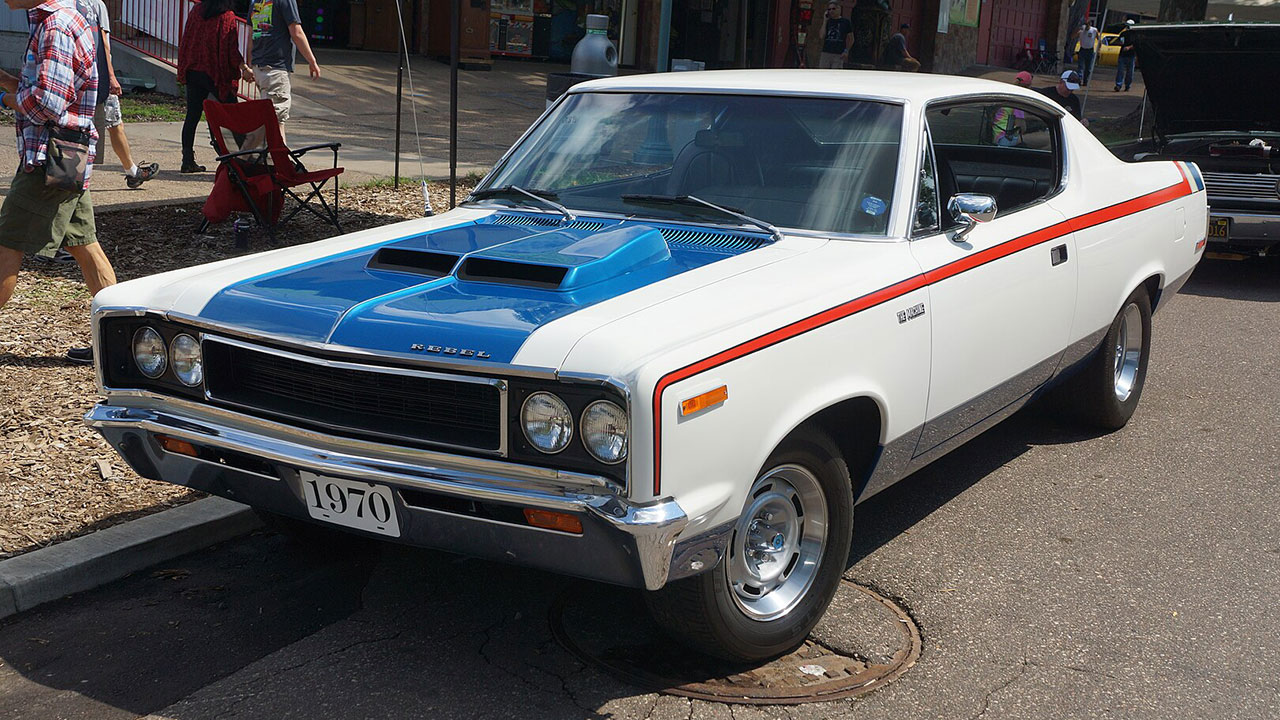
The 1970 AMC Rebel Machine stands as a testament to the bold designs and raw power that defined a unique era in American automotive history. Despite its innovative features and striking aesthetics, it remains overshadowed by its contemporaries, making it a true hidden gem among muscle cars.
The Birth of the AMC Rebel Machine
American Motors Corporation (AMC) carved out a niche in the automotive market during the late 1960s, capitalizing on a growing demand for performance-oriented vehicles. As a smaller player compared to giants like General Motors and Ford, AMC sought to differentiate itself by delivering affordable yet powerful cars that appealed to a diverse audience. The Rebel Machine emerged from this ambition, designed to compete directly in the burgeoning muscle car segment that was captivating enthusiasts across the nation.
The development of the Rebel Machine involved a collaborative effort from key figures within AMC, most notably designer Dick Teague and engineer Ed W. H. O’Keefe. They recognized the need for a car that not only flaunted a muscular appearance but also packed the performance to back it up. With the Rebel nameplate already established, the Machine variant was created to embody the spirit of speed and aggression that the muscle car culture demanded. Launched in 1970, it featured a unique combination of style, power, and practicality, positioning itself as a compelling option for buyers seeking more than just a standard family sedan.
Design and Aesthetics
The AMC Rebel Machine is characterized by its audacious exterior, which includes bold color options like the striking “Machine Yellow” and “Go Green.” The vibrant hues were complemented by distinctive graphics and decals that emphasized its sporty persona. The aggressive styling featured a front grille that was wider and flatter than its contemporaries, contributing to a more menacing look. The overall design was a departure from the more conservative silhouettes of other sedans, making the Rebel Machine instantly recognizable among muscle cars.
Inside, the Rebel Machine continued the theme of sportiness with a driver-focused cockpit. High-back bucket seats, a sporty steering wheel, and a functional dashboard layout conveyed a sense of purpose, inviting drivers to push the limits. The interior was designed with performance in mind, offering only what was necessary to keep the car lightweight and agile. When compared to other muscle cars of the era, such as the Ford Mustang or Chevrolet Camaro, the Rebel Machine’s design philosophy was refreshingly different, focusing on boldness rather than mere aesthetics.
Performance Specifications
At the heart of the AMC Rebel Machine lies the formidable 390 cubic inch V8 engine, a powerhouse that delivered an impressive 340 horsepower and 430 lb-ft of torque. This engine was mated to a heavy-duty three-speed automatic transmission, which allowed for smooth acceleration and a thrilling driving experience. The performance metrics showcased the Rebel Machine’s capability to compete with other high-performance vehicles of the time, achieving 0-60 mph in just over six seconds—a remarkable feat for a four-door sedan.
The driving experience offered by the Rebel Machine was enhanced by its solid rear axle and a well-tuned suspension system that provided improved handling and stability. Whether navigating tight corners or cruising on the highway, the Rebel Machine offered a level of responsiveness that was both engaging and enjoyable. This combination of power and handling established AMC as a serious contender in the muscle car market, despite the company’s smaller stature compared to its rivals.
Market Reception and Sales Figures
Upon its release, the AMC Rebel Machine received a mixed response from both automotive critics and consumers. While some praised its performance and unique styling, others felt it lacked the polish and refinement that competitors offered. The automotive press highlighted its raw power and distinctive design, but the initial excitement did not translate into overwhelming sales. With only about 2,000 units produced during its brief run, the Rebel Machine was somewhat of a niche offering, appealing primarily to dedicated muscle car enthusiasts.
Several factors contributed to the Rebel Machine’s limited production and eventual decline in popularity. As the 1970s progressed, rising insurance costs and fuel prices began to dampen interest in high-performance vehicles. Additionally, the oil crisis of 1973 prompted consumers to shift their focus toward more fuel-efficient cars. Consequently, the Rebel Machine faded from the spotlight, overshadowed by more prominent models from larger manufacturers that could adapt to changing market demands.
The Rebel Machine in Popular Culture
Despite its commercial struggles, the AMC Rebel Machine found a place in popular culture, making appearances in various films and television shows throughout the 1970s. Its bold aesthetics and performance made it a suitable choice for action-packed scenes, where its presence commanded attention. While not as iconic as some of its contemporaries, the Rebel Machine has garnered a cult following over the years, with enthusiasts celebrating its unique characteristics and performance pedigree.
The perception of the Rebel Machine has evolved, thanks in part to dedicated fan communities and car clubs that focus on preserving these rare vehicles. These groups organize events where owners can showcase their vehicles, share restoration tips, and foster a sense of camaraderie among like-minded individuals. As interest in classic muscle cars continues to grow, the Rebel Machine is increasingly recognized for its contributions to automotive history, leading to a resurgence in appreciation among collectors and enthusiasts alike.
Collectibility and Enthusiast Interest Today
In recent years, the market for classic muscle cars has experienced a renaissance, with the AMC Rebel Machine becoming a sought-after model among collectors. While it was once overlooked in favor of more mainstream options, its rarity and distinctive design have elevated its status in the collector car landscape. Current market trends indicate that well-preserved examples of the Rebel Machine can command impressive prices, making it an appealing investment for automotive enthusiasts.
Notable collectors and restorers have emerged, championing the Rebel Machine and ensuring its legacy endures. These individuals often share their restoration journeys and insights on platforms like social media, where they connect with others who share their passion for this unique muscle car. However, owning and restoring a Rebel Machine comes with its own set of challenges, as parts can be difficult to source due to the car’s limited production. Nevertheless, the rewards of bringing this classic back to life are often worth the effort, as owners experience the thrill of driving a piece of automotive history.
Comparisons with Competitors
The AMC Rebel Machine faced stiff competition from established muscle cars like the Ford Mustang, Chevrolet Chevelle, and Dodge Charger. Each of these vehicles boasted impressive performance metrics and extensive fan bases. When compared to the Rebel Machine, the Mustang offered a more refined driving experience, while the Chevelle was known for its powerful big-block engines. The Rebel Machine stood out for its unique design and the boldness of its marketing, but it struggled to gain the same level of recognition as its competitors.
While the Rebel Machine offered a compelling blend of performance and style, it often became overshadowed by more famous models that dominated the sales charts and media narratives. This oversight can be attributed to the marketing power of bigger brands as well as the Rebel Machine’s limited production numbers. However, as automotive enthusiasts continue to delve deeper into the history of muscle cars, the Rebel Machine’s distinct characteristics are beginning to receive the attention they deserve.
The Legacy of the AMC Rebel Machine
Reflecting on the AMC Rebel Machine’s impact reveals its significance within the broader context of American car culture. Though it only enjoyed a brief moment in the spotlight, the Rebel Machine helped pave the way for future AMC models and showcased the potential of smaller manufacturers to compete in the performance vehicle arena. Its legacy is one of bold design, raw power, and an undying spirit of innovation that resonates with automotive enthusiasts to this day.
As we look to the future, it is likely that the AMC Rebel Machine will continue to be celebrated by collectors and automotive historians. Its story serves as a reminder of the daring spirit of the muscle car era and the importance of appreciating the diverse range of vehicles that contributed to the rich tapestry of automotive history. As the Rebel Machine gains recognition, it stands as a testament to the enduring allure of American muscle cars and the passionate community that keeps their legacy alive.
More from Fast Lane Only