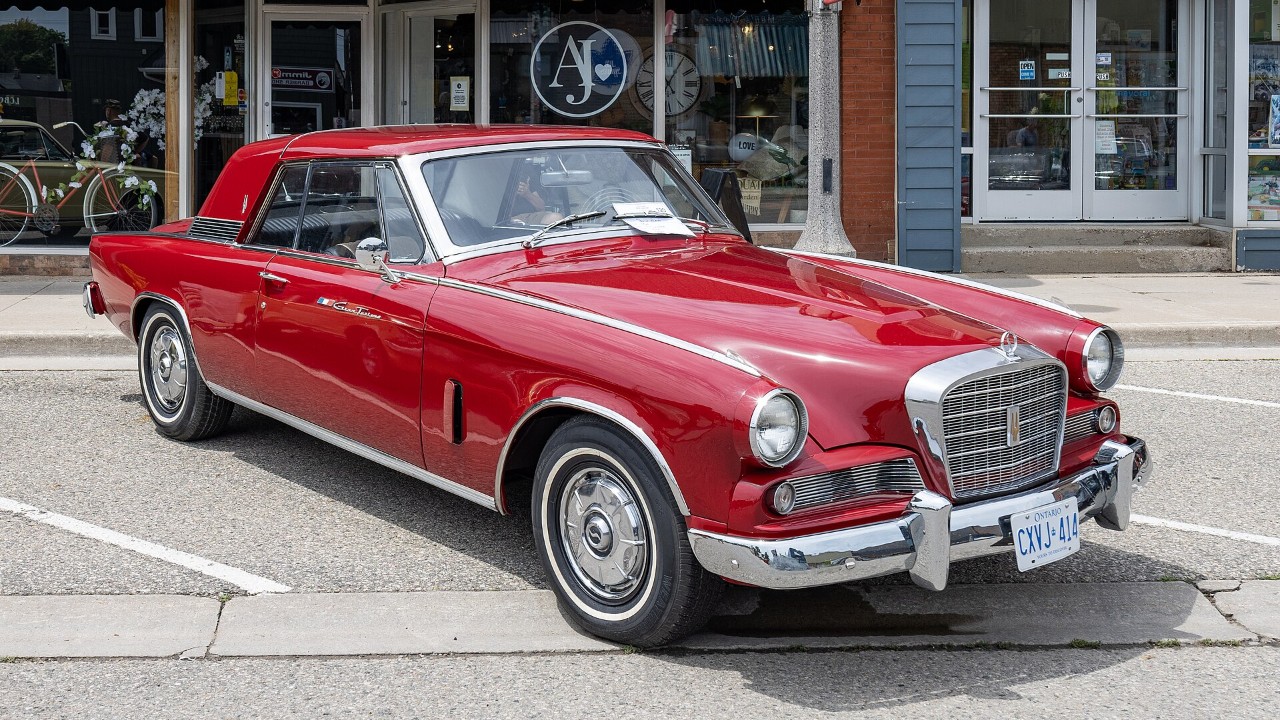
Brooks Stevens ran an industrial design office in Milwaukee, and his pen reached Jeeps, Studebakers and a Mercedes-inspired roadster his own family built. Born in 1911, he survived childhood polio, and his father had him sketch to strengthen his weakened arm. He opened his own firm in 1935.
Stevens also gets credit for popularizing the phrase “planned obsolescence.” Beyond cars, his work ran to the Harley-Davidson Hydra-Glide, the Oscar Mayer Wienermobile and the Miller Brewing logo.
Here are eight vehicles he styled, in the order they reached the road. Each one comes with the production figures and dates the sources agree on.
1. 1946 Willys Jeep Station Wagon
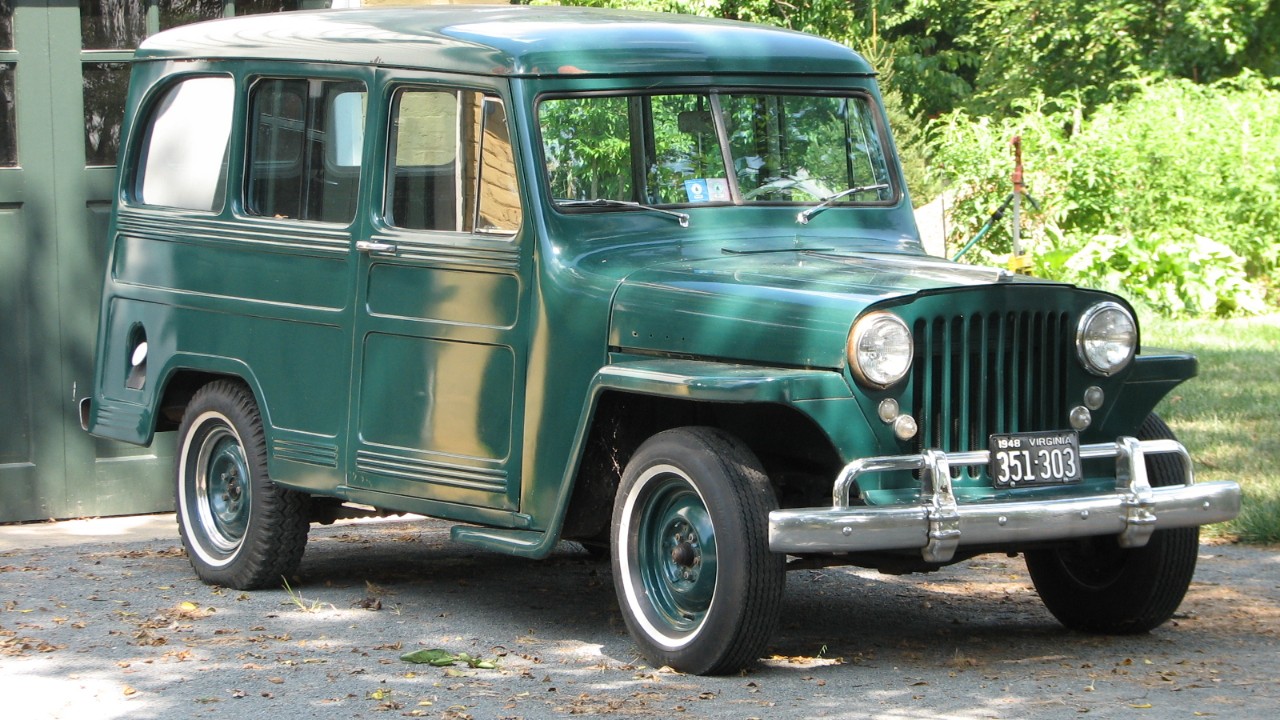
Willys-Overland president Charles E. Sorensen handed Stevens the wagon project with one firm rule: the body had to be entirely steel. Stevens was ready, because he had been sketching civilian Jeeps since 1942, according to Mac’s Motor City Garage. Pressed reliefs and beige-and-brown paint gave a nod to the wood-bodied wagons of the day.
Power came from the 134-cubic-inch Go-Devil four, rated at 63 hp. At first, buyers got two-wheel drive only, and 4WD arrived in 1949. By 1950, Willys had built more than 100,000 of them. In fact, the Willys Jeep Station Wagon’s reference entry calls it the first mass-market all-steel station wagon, citing a published history.
2. 1948 Willys-Overland Jeepster
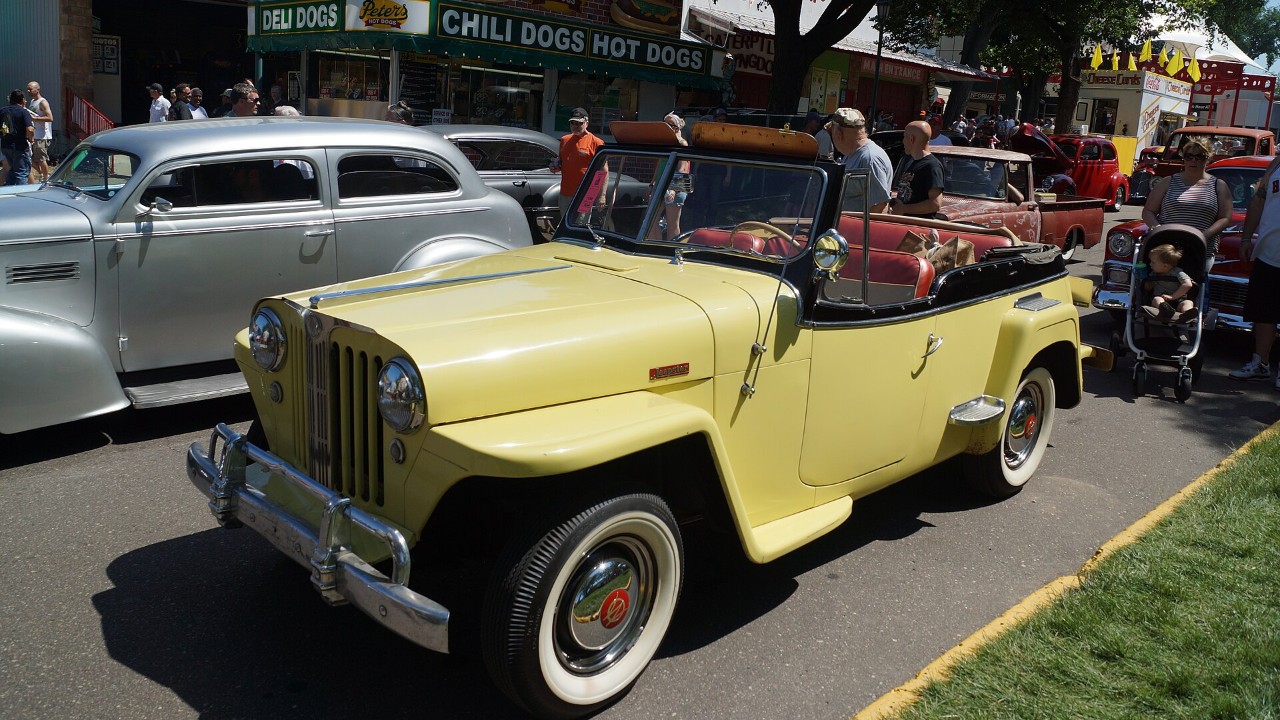
The Jeepster grew out of a Stevens concept called the Willys Sportif, as Hagerty’s profile of the designer explains. Willys-Overland introduced it on May 3, 1948. It was basically a phaeton, with snap-in side curtains instead of roll-up windows.
However, the Jeepster was not a four-wheel-drive Jeep. Every one drove the rear wheels only, and the 1948 cars used an L-head four rated at 63 hp. Willys built 10,326 in 1948, according to Curbside Classic. Totals for the three model years differ slightly by source, but both counts land a little above 19,000.
3. 1957 Jeep Forward Control
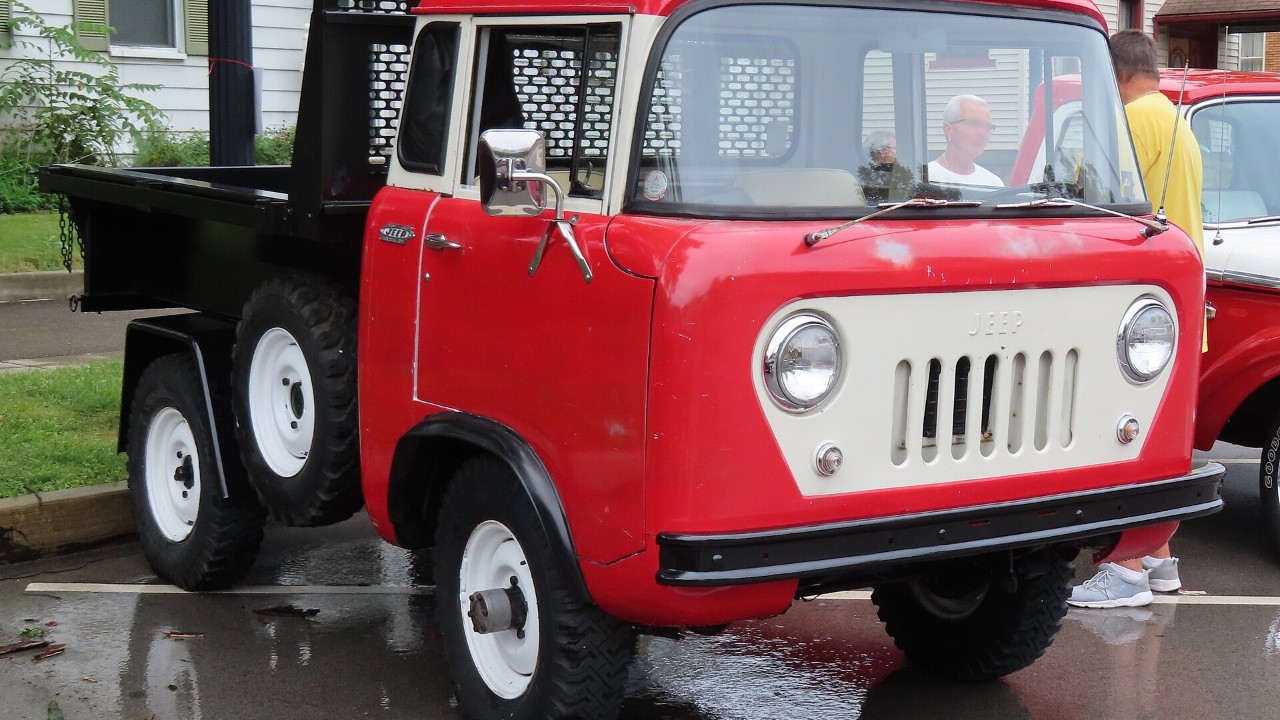
Brooks Stevens pictured a cab-over-engine Jeep for the future, and the Forward Control was the result. Hagerty dates his design to 1956. Then Jeep introduced the truck on November 29 as a 1957 model, according to CJ3B.info’s history of the FC.
The FC-150 rode on a nearly stock CJ-5 chassis with the F-head Hurricane four. Meanwhile, the bigger FC-170 was a one-ton truck on a 103.5-inch wheelbase with the Super Hurricane six. Jeep built the series until 1965. Total production was “not much more than 30,000 units,” per Jim Allen’s buyer’s guide as quoted by the same site.
4. 1962 Studebaker Lark
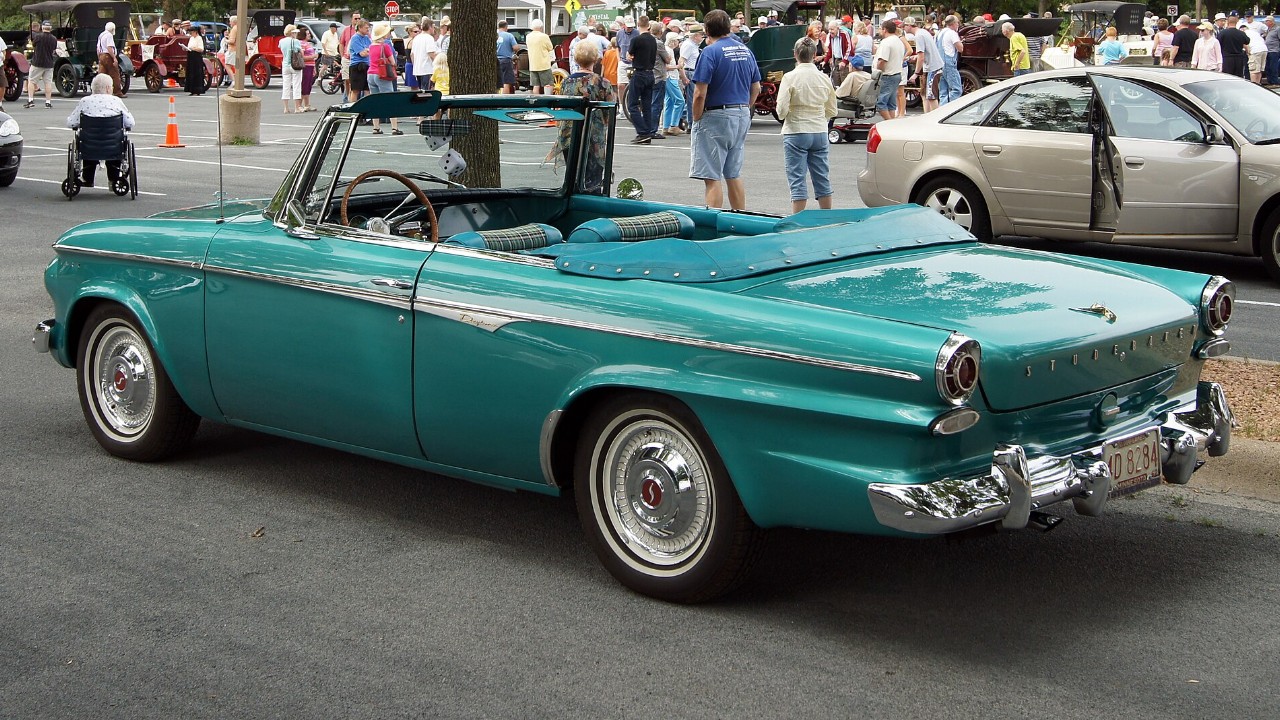
New Studebaker president Sherwood Egbert, a friend of Stevens, brought him in after Lark sales fell. Stevens gave the car a Mercedes-style grille. He also squared up and stretched the rear quarters, so the 1962 cars ran 8 to 13 inches longer than before, depending on body style.
A new top model, the Lark Daytona, added bucket seats, a console and an optional four-speed. Its 289-cubic-inch V8 made 225 hp with a four-barrel. As a result, Lark sales rose from not quite 65,000 in 1961 to more than 93,000 in 1962, even with a strike, according to Mac’s Motor City Garage.
5. 1962 Studebaker Gran Turismo Hawk
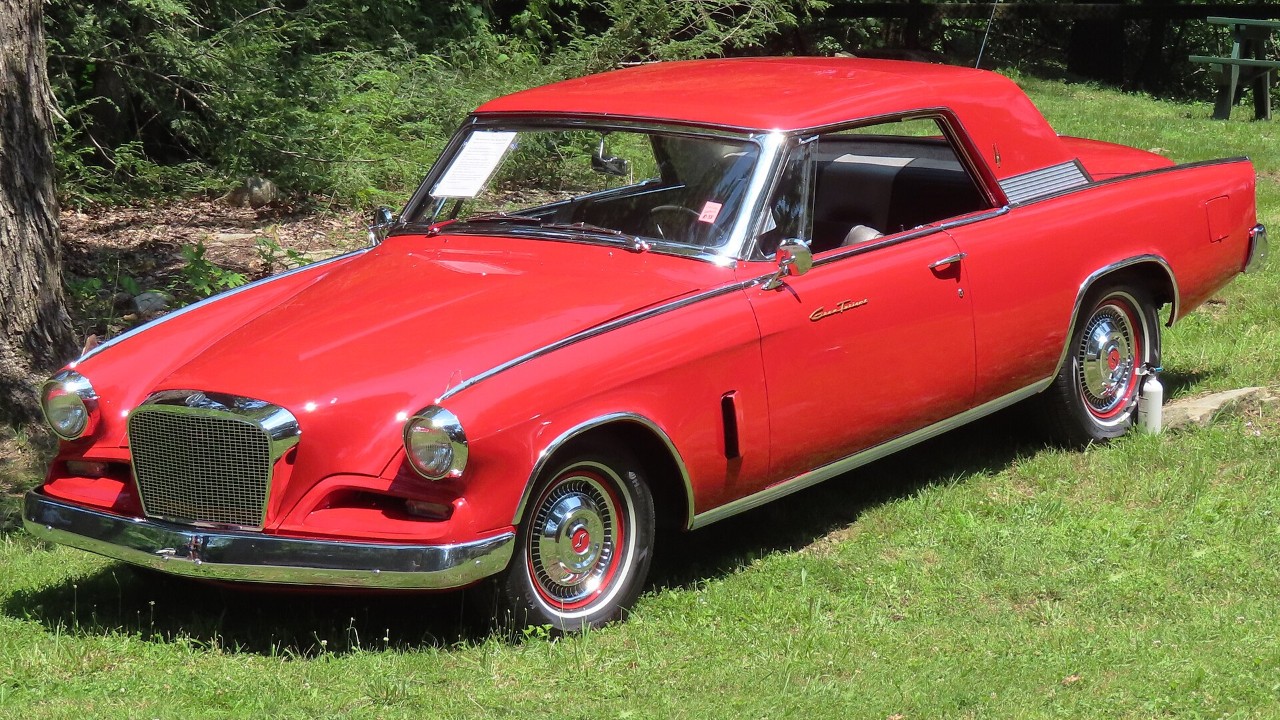
The Hawk was due to end after 1961. Instead, Egbert asked Stevens to freshen the six-year-old design. Stevens added a Thunderbird-inspired roofline and a completely new interior, and he removed the old tailfins on a tight budget.
For 1962, the GT Hawk listed at $3,095 with a 289 V8 rated at 210 hp. A four-barrel and dual exhaust added 15 more. Studebaker built 9,335 that year, according to the Studebaker National Museum. That matches the GT Hawk reference entry’s split of 8,388 U.S. cars and 947 exports. Production in South Bend stopped on December 20, 1963.
6. 1963–1966 Studebaker Wagonaire
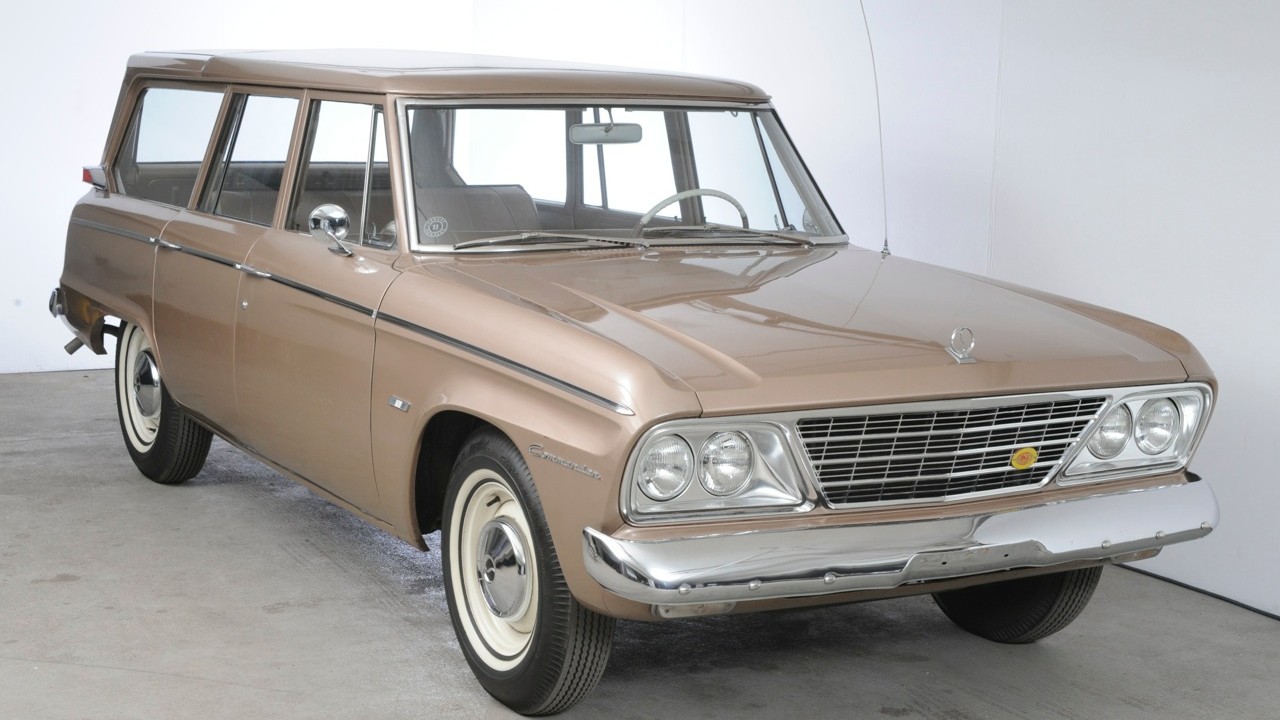
The Wagonaire’s party trick was a sliding rear roof panel for hauling tall loads. Brooks Stevens had tried the idea on his Scimitar show cars, then worked it into the 1963 Lark wagon. Hagerty notes that its pillar-and-glass shape echoed his Jeep Wagoneer.
Sealing that roof against rain and snow proved nearly impossible, so the design relied on drain tubes. Still, more than 11,000 sold in 1963, its best year, according to Mac’s Motor City Garage. By the end, Studebaker built only 940 in 1966, before the Canadian plant closed on March 16 that year.
7. 1963 Jeep Wagoneer
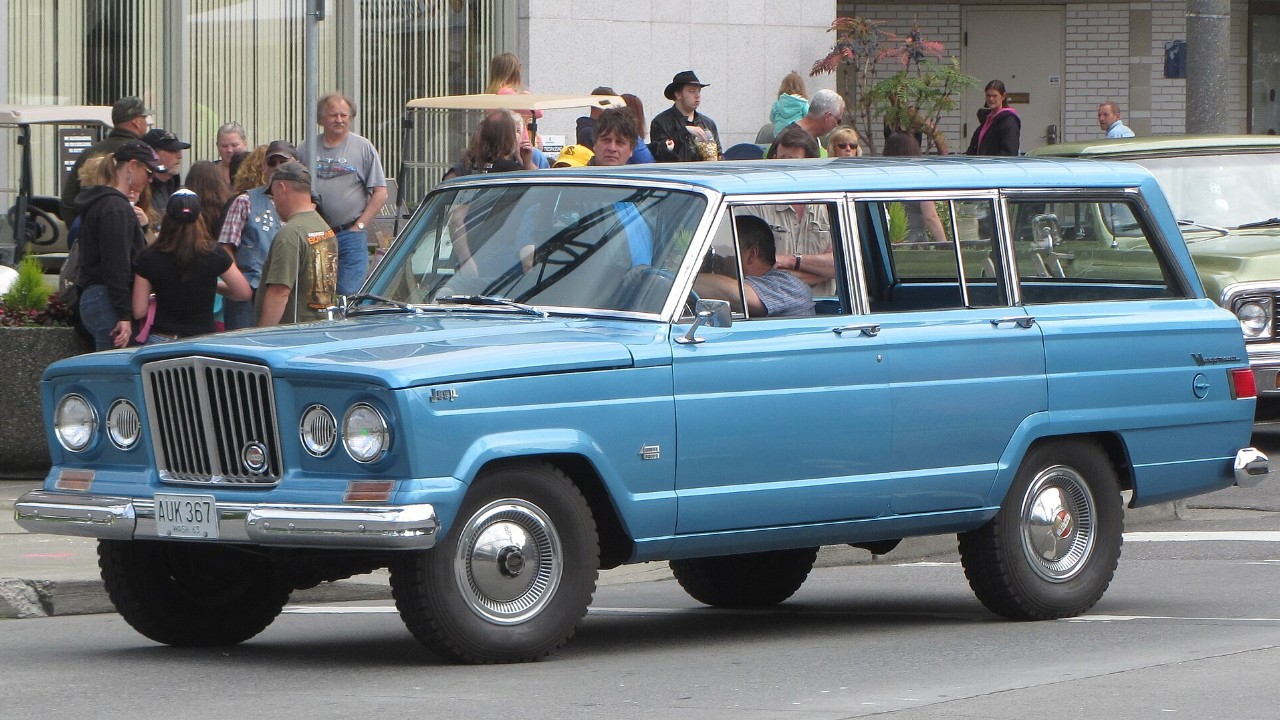
Willys had a larger wagon in development by 1959. Then Brooks Stevens took over the styling, and the ’63 Wagoneer launched in November 1962. Under the hood sat the Tornado, an overhead-cam six with 230 cubic inches and 140 hp. Buyers could choose two-door or four-door bodies and two- or four-wheel drive.
Borg-Warner supplied both the manual and automatic transmissions. An in-house swing-axle design also gave 4WD versions independent front suspension, according to Mac’s Motor City Garage. In its final Grand Wagoneer form, the same basic package stayed in production until 1991.
8. 1965 Excalibur Series I, the Brooks Stevens roadster
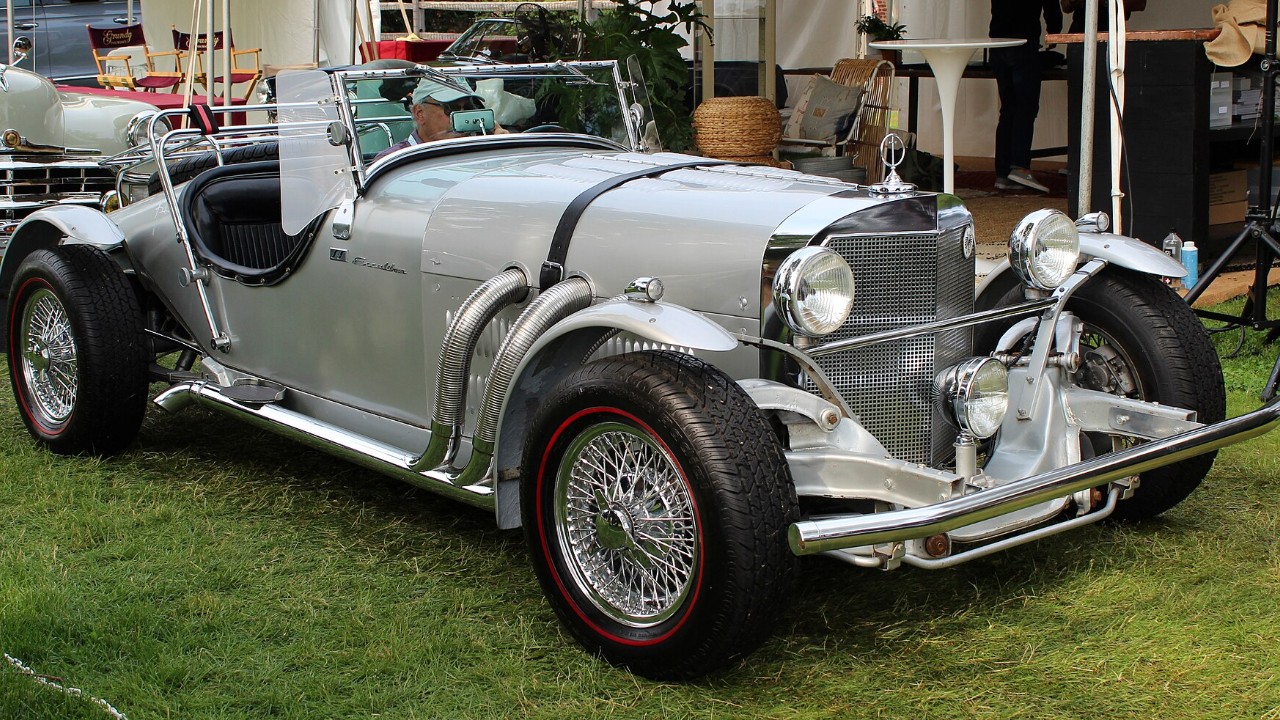
Stevens first built a fiberglass two-seater on a Studebaker Lark Daytona chassis, styled after the Mercedes-Benz SSK of the 1920s. It debuted at the New York Auto Show in April 1964 as the Studebaker SS. However, Studebaker’s car business was failing, so Stevens formed SS Automobiles with his sons William and David.
Production of the Excalibur began in 1965 on a Lark chassis. Power came from a 327-cubic-inch Chevrolet small-block rated at 300 bhp, and the list price was around $7,000, according to Hagerty UK. Later Series II, III and IV cars followed before the company filed for bankruptcy in 1986. Hagerty UK puts the total at about 3,500 Excaliburs.
More from Fast Lane Only
- Unboxing the WWII Jeep in a Crate
- 15 rare Chevys collectors are quietly buying
- 10 underrated V8s still worth hunting down
- Police notice this before you even roll window down
This article was created with the help of AI and was reviewed and edited by Fast Lane Only editors before publication.