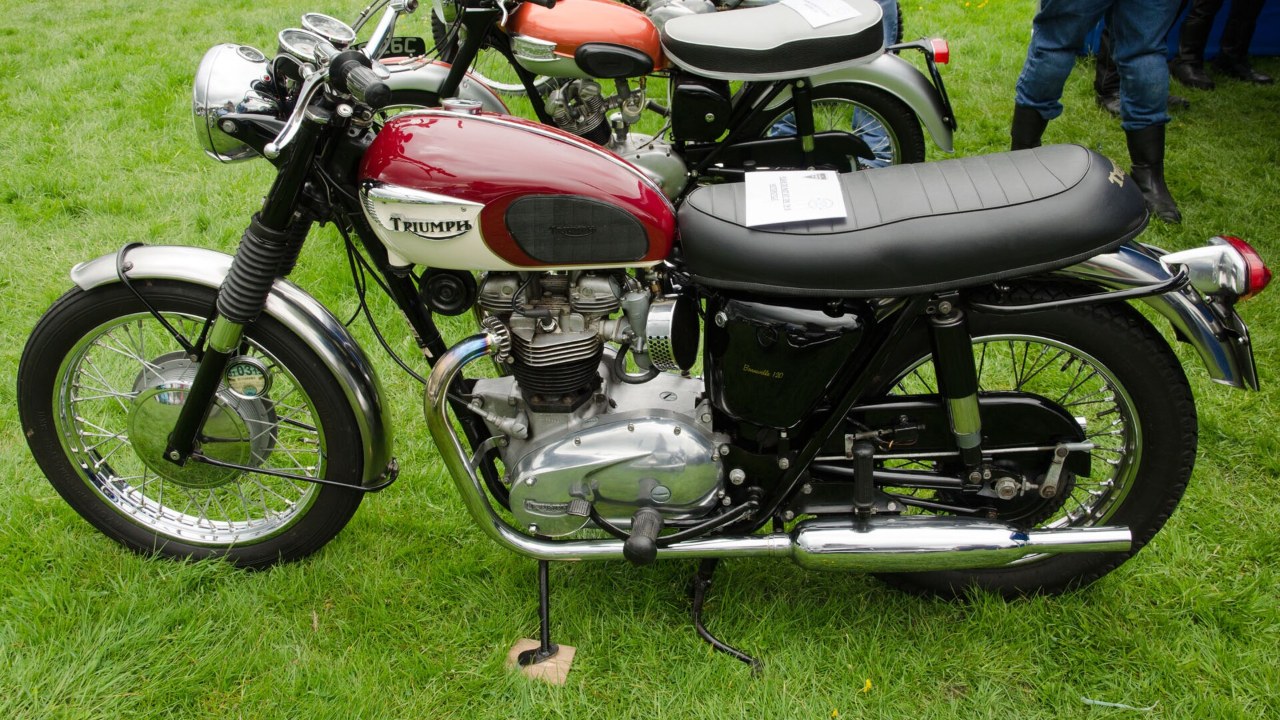
The Triumph Bonneville name goes back to 1959, but the motorcycle wearing it has changed many times since. These 10 versions mark the big turns, from the 650cc T120 to the 1200cc Bobber.
The story runs in two eras. First came the twins built at Meriden from 1959 to 1983. Then, after a long gap, came the bikes from Triumph’s Hinckley factory starting in 2001. Each entry below carries a figure you can check against the source linked in it.
1. 1959 Triumph Bonneville T120
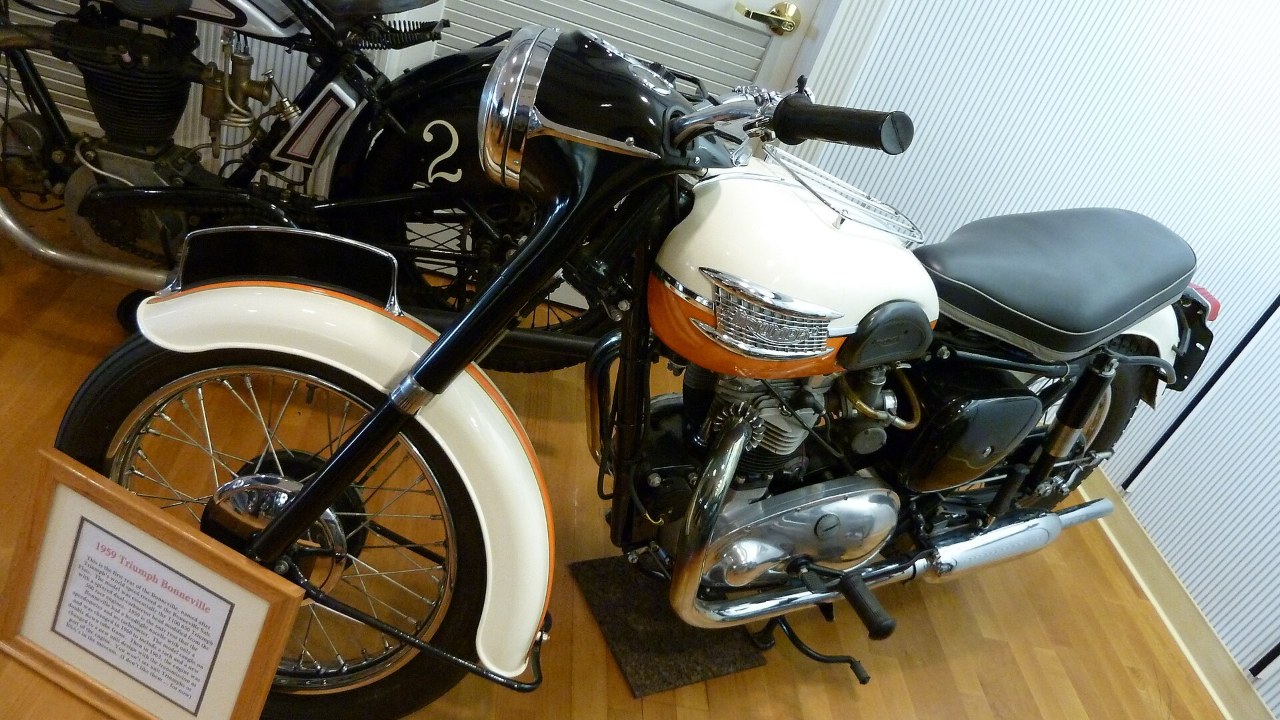
The first Triumph Bonneville took its name from the Utah salt flats. Triumph named it for its land-speed work there, where American rider Johnny Allen reached 193.3 mph.
Under the tank sat a 650cc parallel twin, a development of the pre-unit engine Edward Turner designed. It breathed through twin 1-1/16-inch Monobloc carburetors, and Triumph’s launch copy claimed the “highest known performance of any motorcycle in the world.” Meanwhile, the first bikes wore two-tone tangerine and pearl grey over a black frame, according to BikeSocial’s 60th-anniversary history.
2. 1963 unit-construction Bonneville T120
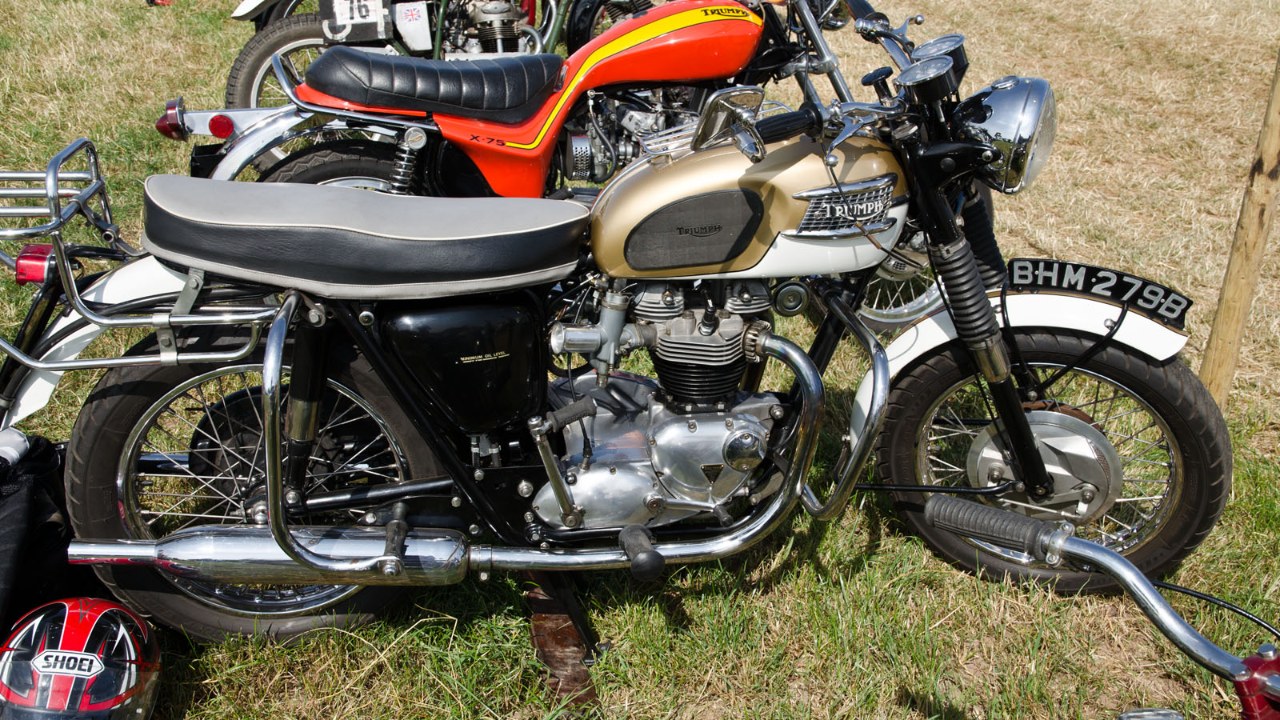
For 1963, the Bonneville switched to Triumph’s unit-construction engine. In other words, the engine and gearbox now shared one case instead of sitting in separate housings. The National Motorcycle Museum notes that 1962 was the last pre-unit year.
According to webBikeWorld, the change started at engine number DU101. That 649cc twin made 46 bhp at 6,500 rpm, and the bike weighed 363 pounds unladen. A new frame also arrived with a single 1-5/8-inch front downtube. As a result, the cracking problems of the earlier design went away, and the frame stayed largely the same until 1970.
3. 1973 Bonneville T140
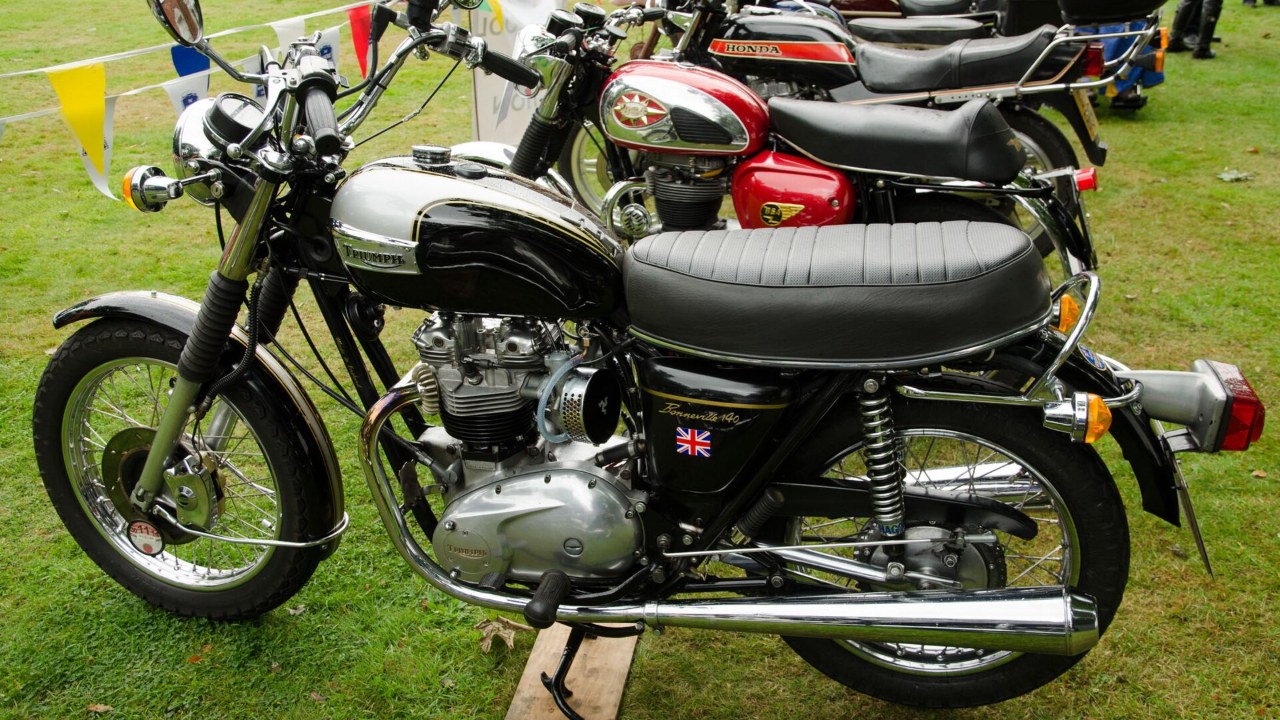
The Bonneville grew into the T140 in 1973. At first it measured 724cc, and later it grew to 744cc. It also gained disc brakes in T140 form. However, the business around it was coming apart.
Workers at Meriden formed a cooperative with government backing to fight a plan to move production. That cooperative kept building bikes as Triumph Motorcycles (Meriden) Ltd. Still, 1983 was the last year of Meriden production, and Triumph went into receivership that summer. After that, Les Harris built licensed Bonnevilles in small numbers until the Hinckley relaunch, BikeSocial reports.
4. 2001 Hinckley Bonneville 790
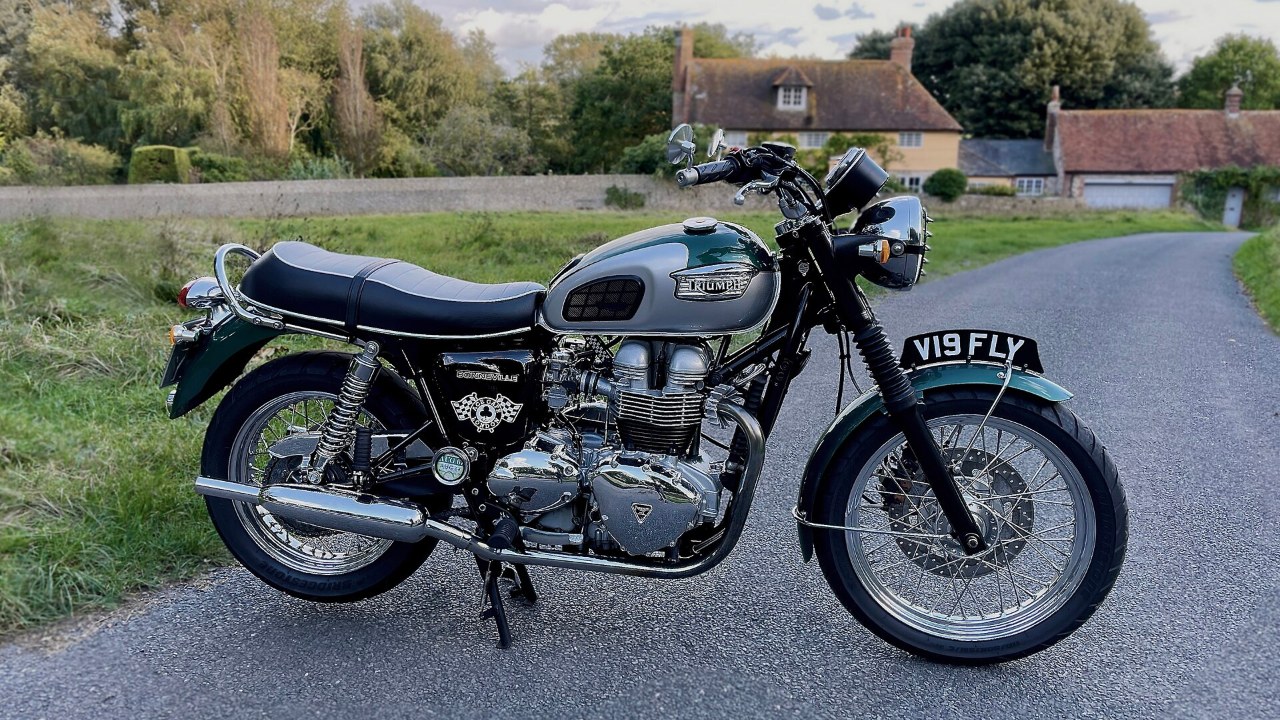
The name returned in 2001 on a bike built at Hinckley. Its new engine was a 790cc parallel twin with a 360-degree crank. It made “more than 60 hp at a usable rpm,” according to Haynes’ history of the 2001–2015 models.
Haynes puts the price at “just about $7,000” and the weight at more than 450 pounds dry. Buyers first chose dark green or red, each with silver two-tone paint. Later, the engine grew to 865cc, and every Bonneville had the bigger motor by 2007. Fuel injection then reached U.S. bikes for 2009, a year after Europe.
5. 2002 Bonneville T100
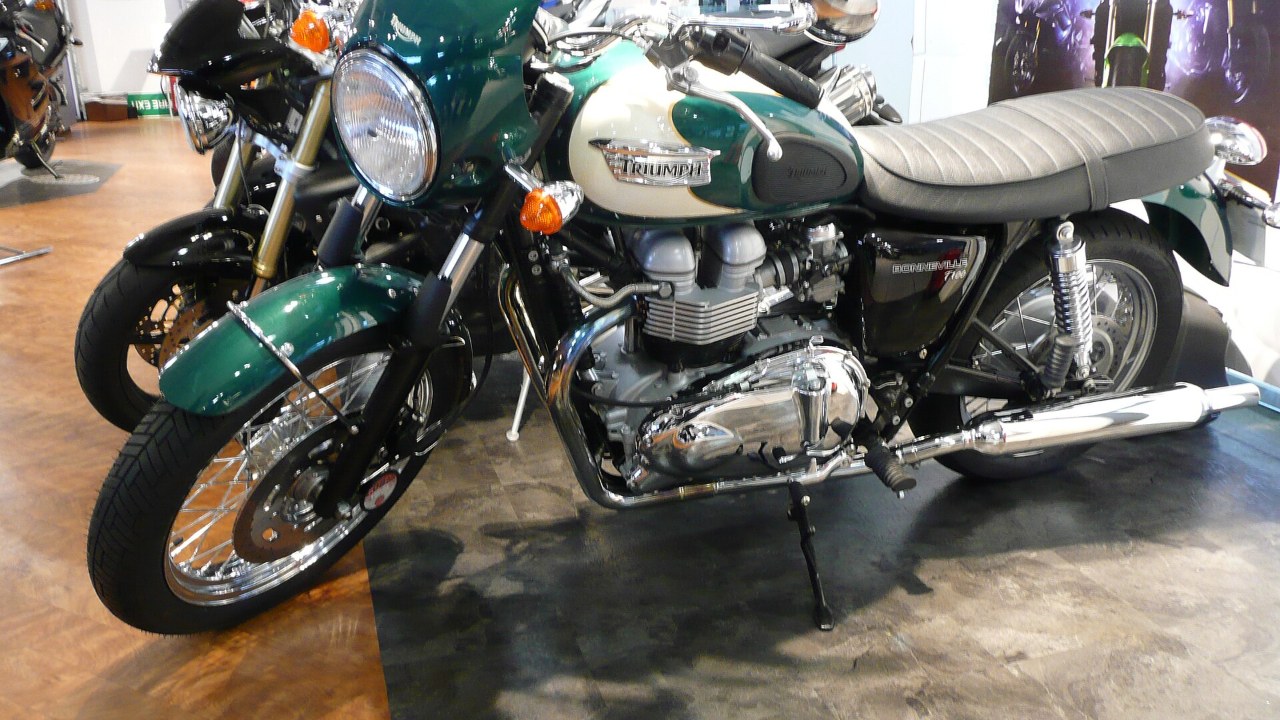
A year after the relaunch, Triumph added the T100. It used the same 790cc engine as the base bike. Instead of more power, it brought more dress-up: a tachometer, rubber knee pads on the tank and special retro paint.
The name marked the 100th anniversary of Triumph building its first motorcycles in 1902, Haynes explains. Later, the T100 moved to the 865cc engine. BikeSocial dates that switch to 2005, two years before the rest of the Bonneville range followed in 2007.
6. 2003 Bonneville Speedmaster
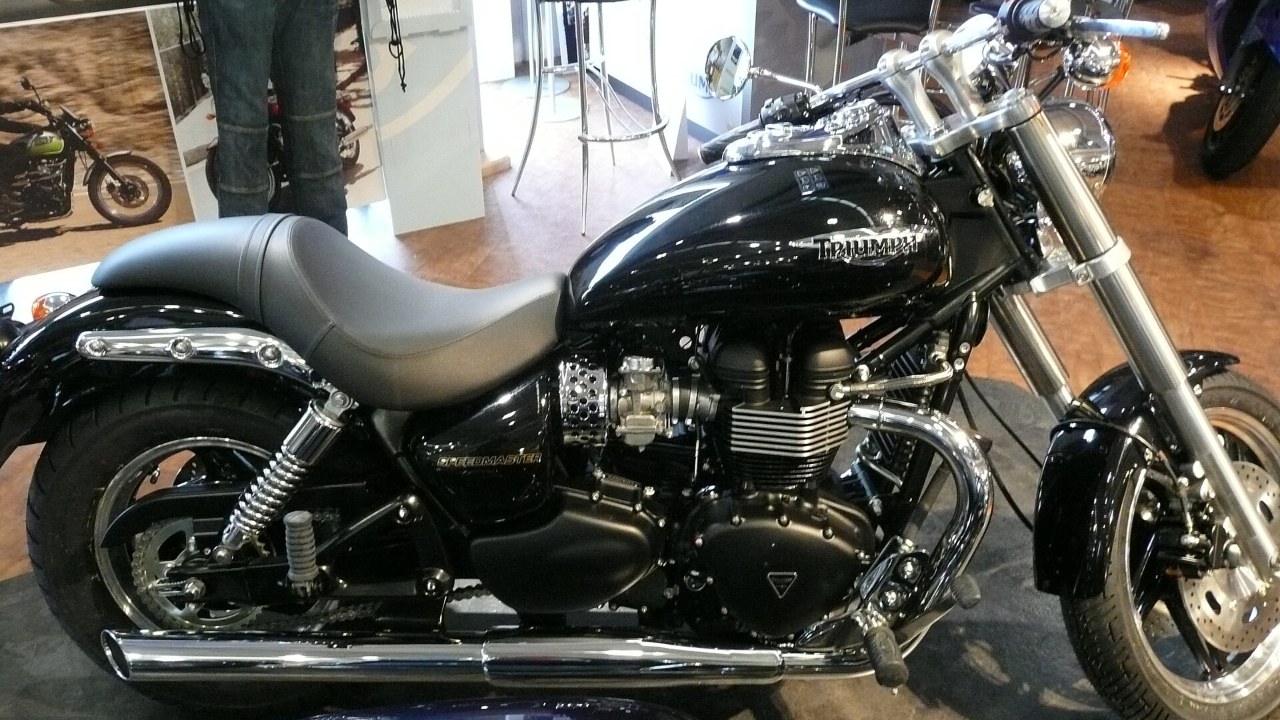
The Speedmaster took the Bonneville in a cruiser direction. Triumph launched it in 2003 with the 790cc twin. Then, for 2005, it got the 865cc engine with less compression and milder cams.
It rolled on cast alloy wheels with tubeless tires and dual front disc brakes. The first paint was Jet Black with a Racing Yellow accent panel. Also, its engine used a 270-degree crankshaft, shared with the Bonneville America cruiser of 2002, Haynes notes.
7. 2004 Thruxton
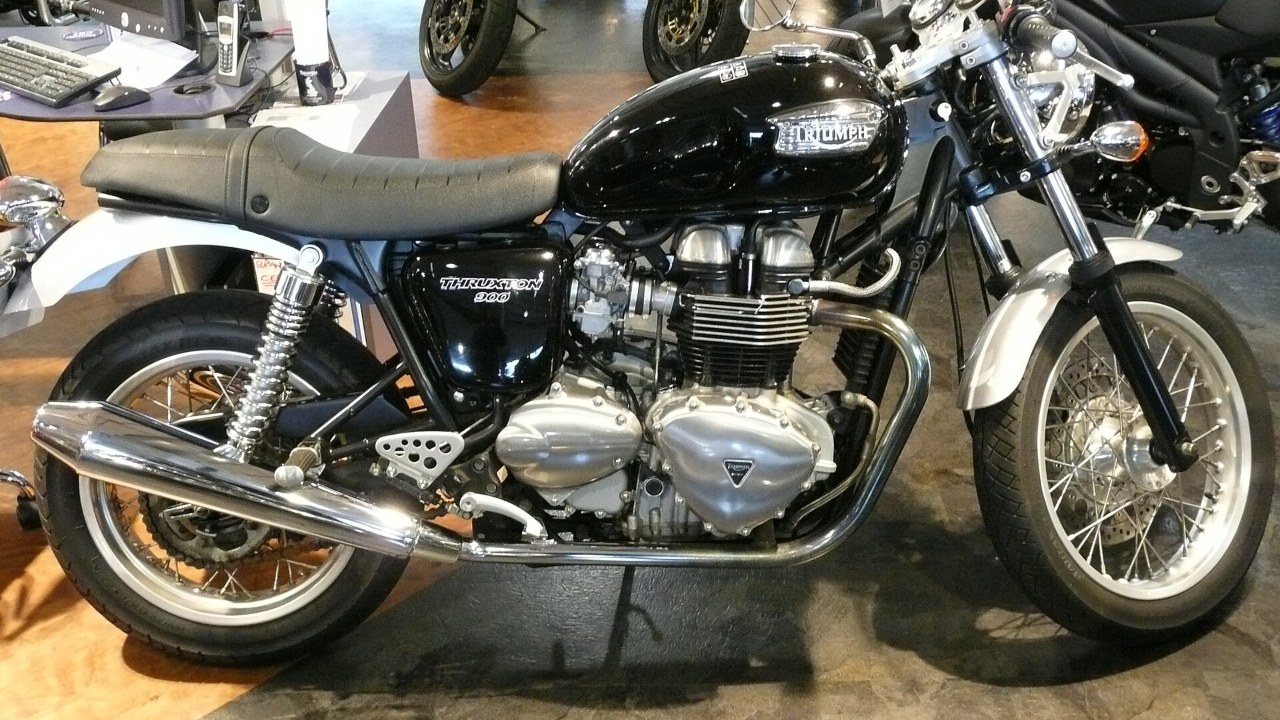
The Thruxton turned the Bonneville platform into a café racer for 2004. It used the 865cc engine with hotter cams and more compression. As a result, it put out “more than 70 hp,” according to Haynes.
The chassis changed too. Triumph fitted longer shocks, reduced the fork rake and added clip-on handlebars. Upswept megaphone pipes finished the look. In that first year, buyers could pick only black or red, Haynes records.
8. 2006 Scrambler
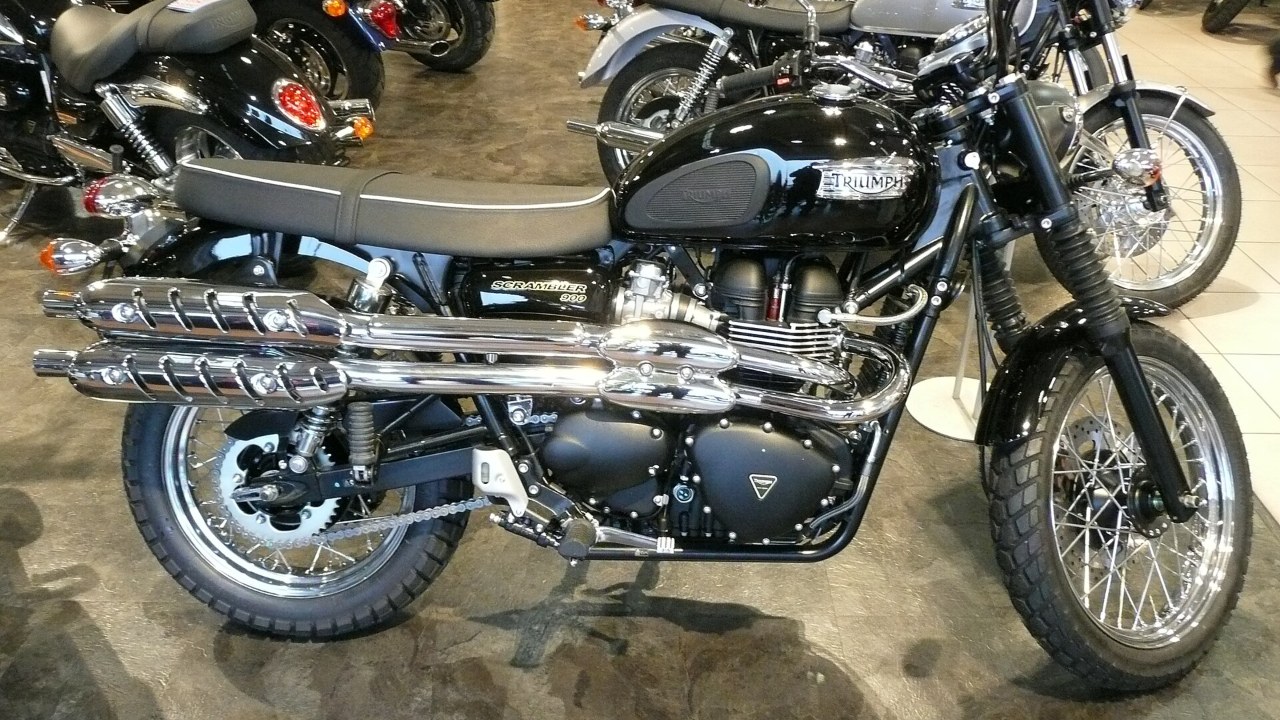
The Scrambler arrived in 2006 as the dirt-road member of the family. It used the 865cc engine, but with the 270-degree crankshaft from the Speedmaster and America cruisers. That crank set it apart from the 360-degree base Bonneville.
Paint came in blue and white or red and white. Because it shared the Bonneville’s engine, it counts as a Bonneville-family model rather than a separate line. Later, the whole family moved to fuel injection, which arrived in the U.S. for 2009, according to Haynes.
9. 2016 liquid-cooled Bonneville T120 1200
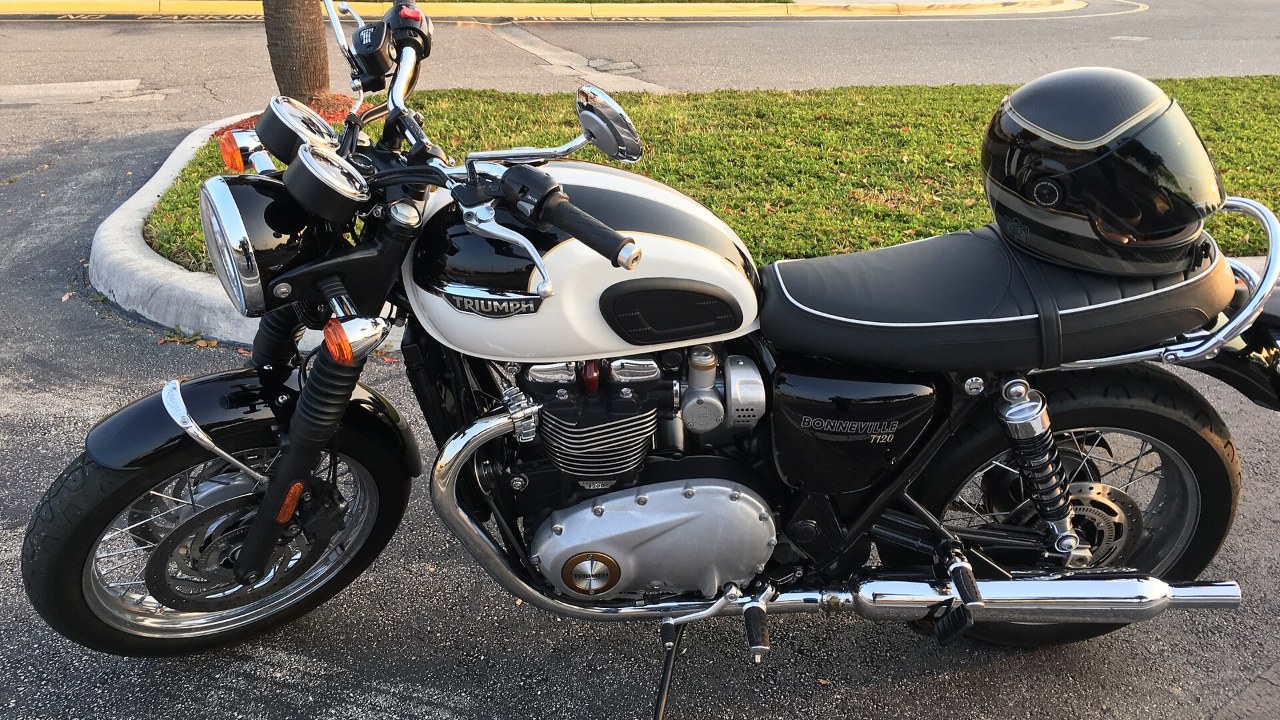
For 2016, Triumph revived the T120 name on a new 1200cc parallel twin. This time the engine was liquid-cooled, with a discreet radiator in front of it. Even so, it kept the look of its air-cooled ancestors.
The published figures differ slightly. Motorcycle News lists 79 bhp at 6,550 rpm and 77 lb-ft of torque at 3,500 rpm. By comparison, Cycle World quoted 80 hp at 6,550 rpm and 77.4 lb-ft at 3,100 rpm for the 2017 bike, with an $11,700 MSRP.
10. 2017 Bonneville Bobber
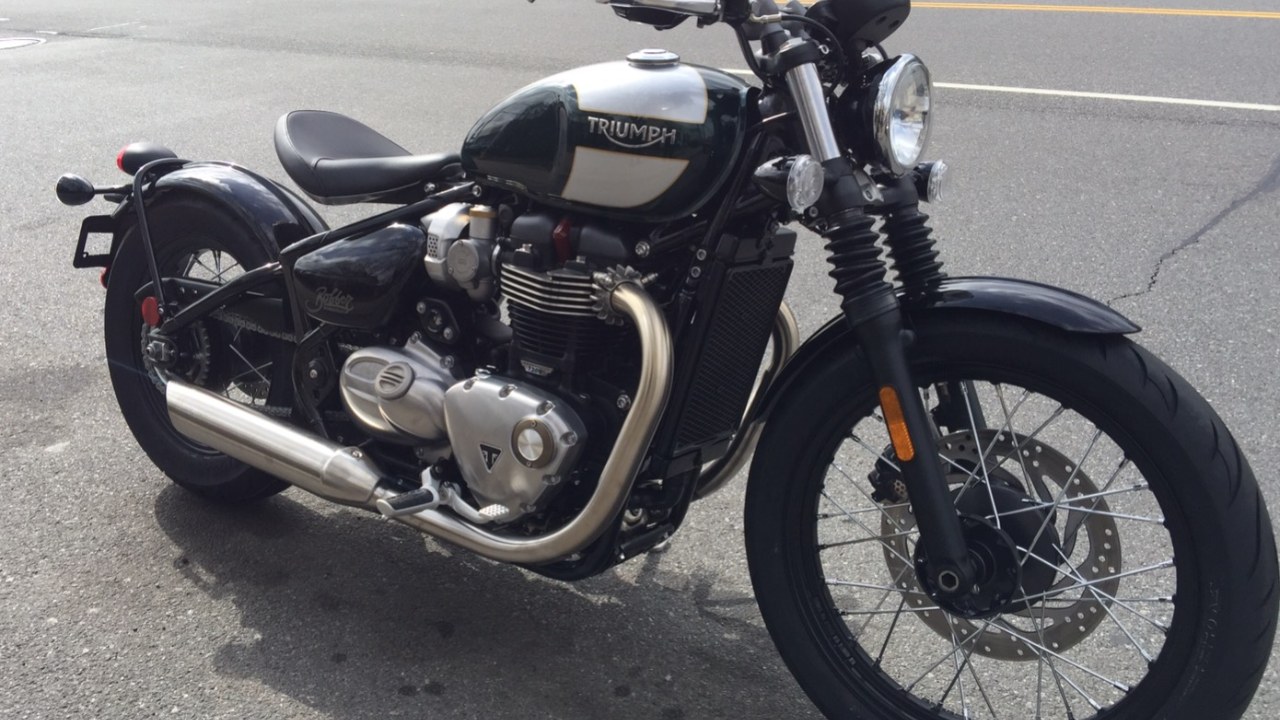
The Bobber stripped the 1200cc Bonneville down to one seat. Its “small solo tractor seat” sits on a cantilevered arm, 27.2 inches off the ground. Meanwhile, a single rear shock hides under the seat, so the frame looks like a hardtail.
Triumph tuned the twin for torque. Rider Magazine reported 77 hp at 6,100 rpm and 78.2 lb-ft at 4,000 rpm, a claimed 10 percent gain over the standard T120 engine. Finally, Rider listed the 2017 Bobber at $11,900 in Jet Black, with a six-speed gearbox and a 503-pound dry weight.
More from Fast Lane Only
- Unboxing the WWII Jeep in a Crate
- 15 rare Chevys collectors are quietly buying
- 10 underrated V8s still worth hunting down
- Police notice this before you even roll window down
This article was created with the help of AI and was reviewed and edited by Fast Lane Only editors before publication.