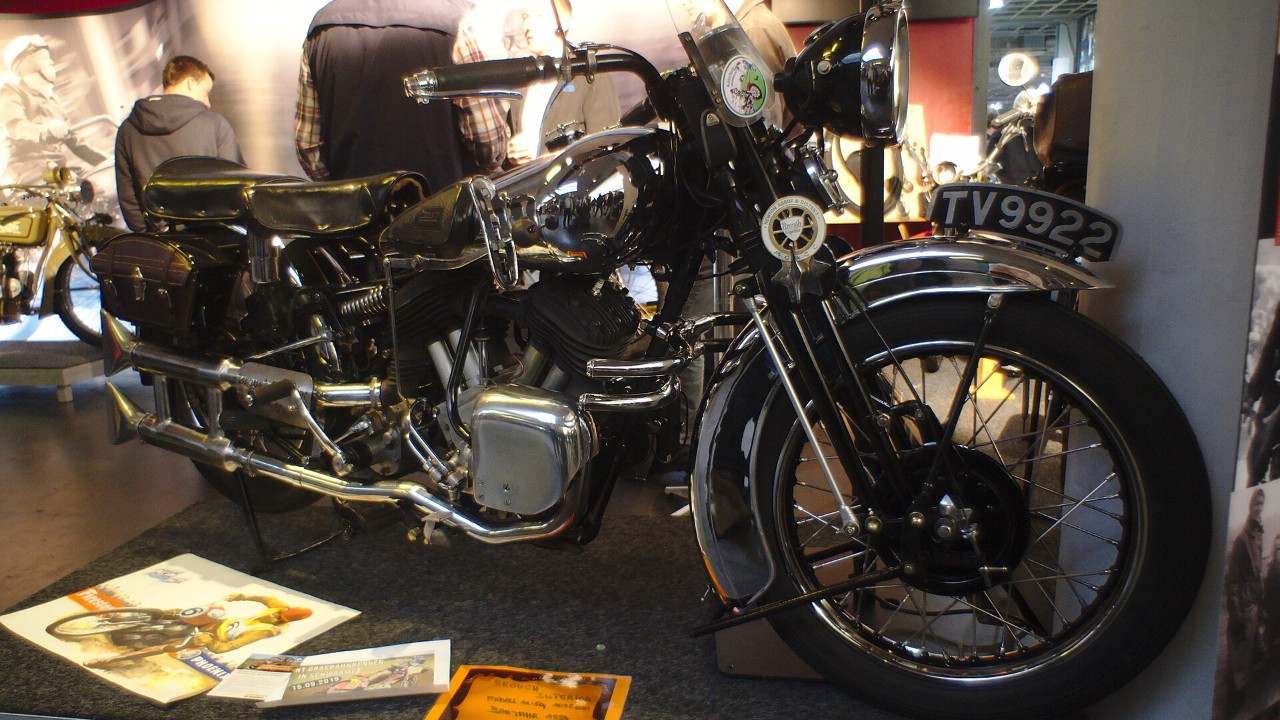
The Brough Superior SS100 came with a promise printed into its name. George Brough introduced the motorcycle in 1924, and the “100” stood for a promised top speed of 100 mph. Before a bike reached its owner, a staff rider tested it to prove the point.
The SS100 sat at the top of the Brough Superior range. Brough built each one to its owner’s specification, right down to the shape of the handlebars.
Production ran from 1924 to 1940 and ended with World War II. Over those years the SS100 used engines from two outside suppliers, and it picked up a nickname that stuck: “the Rolls-Royce of Motorcycles.”
What the Brough Superior SS100 guarantee promised
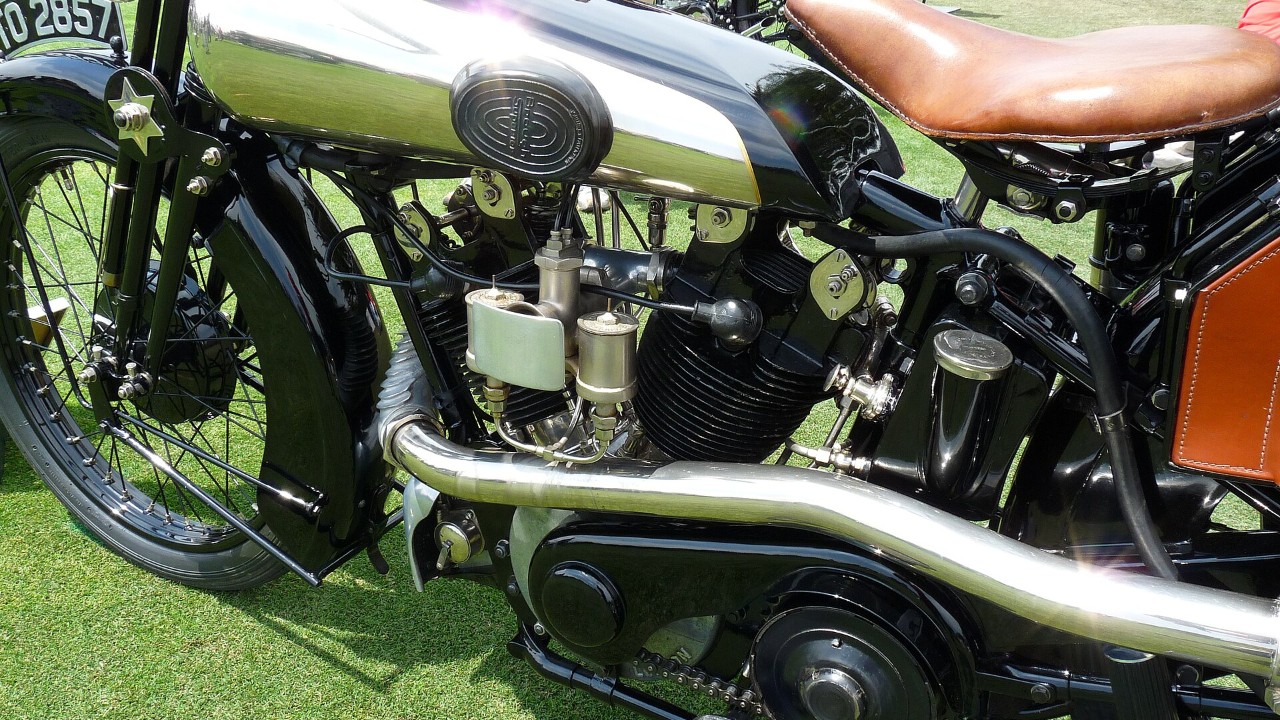
The “SS” stands for “Super Sport,” according to Silodrome’s history of the model. The “100,” it says, refers to a 100 mph guarantee. In a second profile, Silodrome adds that staff riders test-rode each SS100 to more than 100 mph. Then every bike shipped with a guarantee that it was capable of 100 mph.
Auction catalogs describe the promise in more detail. Bonhams says each SS100 came with “a written guarantee that it had been timed at over 100mph for a quarter of a mile.”
By contrast, RM Sotheby’s frames it as a lap figure. Its catalog says George Brough promised that every machine could lap Brooklands at 100 mph. The wording differs from source to source, but each one records the same 100 mph promise.
Bought-in engines, built to order
Brough’s factory did not build its own engines or gearboxes, Silodrome says. Instead, George Brough chose them from outside suppliers. From 1924 to 1936, the SS100 used a V-twin from J. A. Prestwich, known as JAP. From 1936 to 1940, it used a Matchless V-twin.
The sources differ on the JAP engine’s exact size. Silodrome lists it as a 998-cc overhead-valve twin with twin cams, making 45 to 50 bhp depending on the year. However, Bonhams’ catalog gives 980 cc for the SS100’s engine.
The later engine is clearer. RM Sotheby’s says Matchless built a 986-cc, 50-degree overhead-valve V-twin, the BS/X2, specifically for Brough Superior. Early bikes used Sturmey-Archer three-speed gearboxes, while post-1936 models used Norton four-speeds, according to Silodrome.
Assembly took extra steps, too. Silodrome says the factory assembled and ran each SS80 and SS100, then took it apart, nickel-plated it and put it back together. It also says Brough shaped each bike’s handlebars to the customer’s arm length and riding posture.
How it became the Rolls-Royce of Motorcycles
The famous nickname came from the press, not the factory. Silodrome says H. D. Teague of The Motor Cycle reportedly coined it. Later, a Rolls-Royce executive visited the factory and approved its use.
The comparison also fit the price. Each SS100 “cost as much as a house in a decent neighbourhood,” according to Silodrome. In addition, Silodrome notes that Brough is pronounced “bruff.”
The SS100 had a sidevalve older sibling. Bonhams says the SS80 arrived in 1922 with JAP power. Ridden by George Brough, the racing SS80 became the first sidevalve-engined machine to lap Brooklands at over 100 mph, according to the same catalog.
The Pendine raised the promise to 110 mph
For riders who wanted more, there was the SS100 Pendine. Bonhams says the Pendine used the JAP KTOR 8/45hp engine, a four-cam racing unit. Moreover, the catalog states that every Pendine came with a promised top speed of 110 mph.
The name points to Pendine Sands in Wales. Silodrome notes that record-breakers set world speed records there in the early 20th century.
Owners, the war and a revived name
The SS100 drew well-known riders. T. E. Lawrence owned several Broughs, Silodrome says, including three SS80s and at least two SS100s.
Then World War II stopped production. Silodrome says the factory turned to work for Rolls-Royce on the Merlin V12. After the war, George Brough could not find a suitable engine, and the company closed.
The name did not stay gone. In 2008, Mark Upham bought the Brough trademark, according to Silodrome, and a new SS100 has since gone into production. As for the originals, RM Sotheby’s says Brough built 102 examples of the final, Matchless-engined series between 1936 and 1940.
More from Fast Lane Only
- Unboxing the WWII Jeep in a Crate
- 15 rare Chevys collectors are quietly buying
- 10 underrated V8s still worth hunting down
- Police notice this before you even roll window down
This article was created with the help of AI and was reviewed and edited by Fast Lane Only editors before publication.