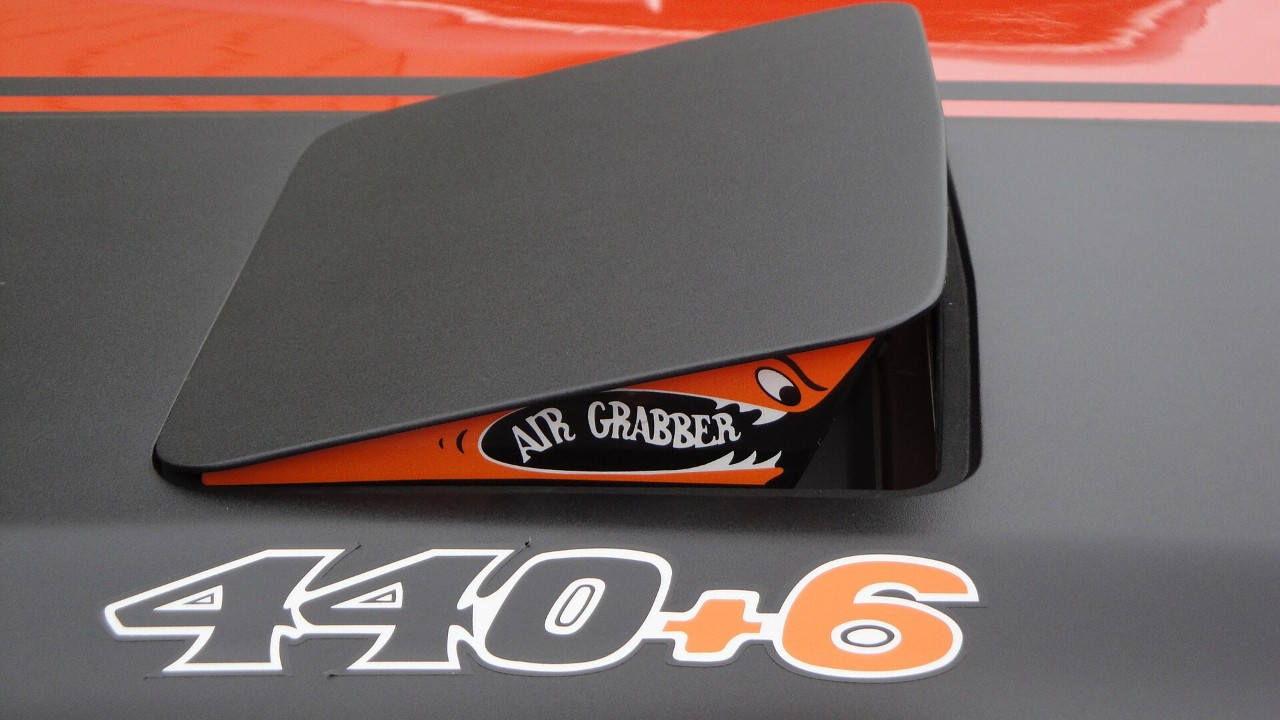
Detroit sold cold-air induction by name in the late 1960s, and every maker gave its system a different badge. Oldsmobile hid its scoops under the front bumper, while Chevrolet pulled air from the base of the windshield. Pontiac, Plymouth, Dodge and Ford all cut holes in the hood instead.
Each entry below names the system, the car it came on and what it actually did. A 1968 test also shows what cold-air induction really added. The honest answer is less than the decals suggested.
1. Oldsmobile Force-Air, the 4-4-2 W-30’s under-bumper scoops
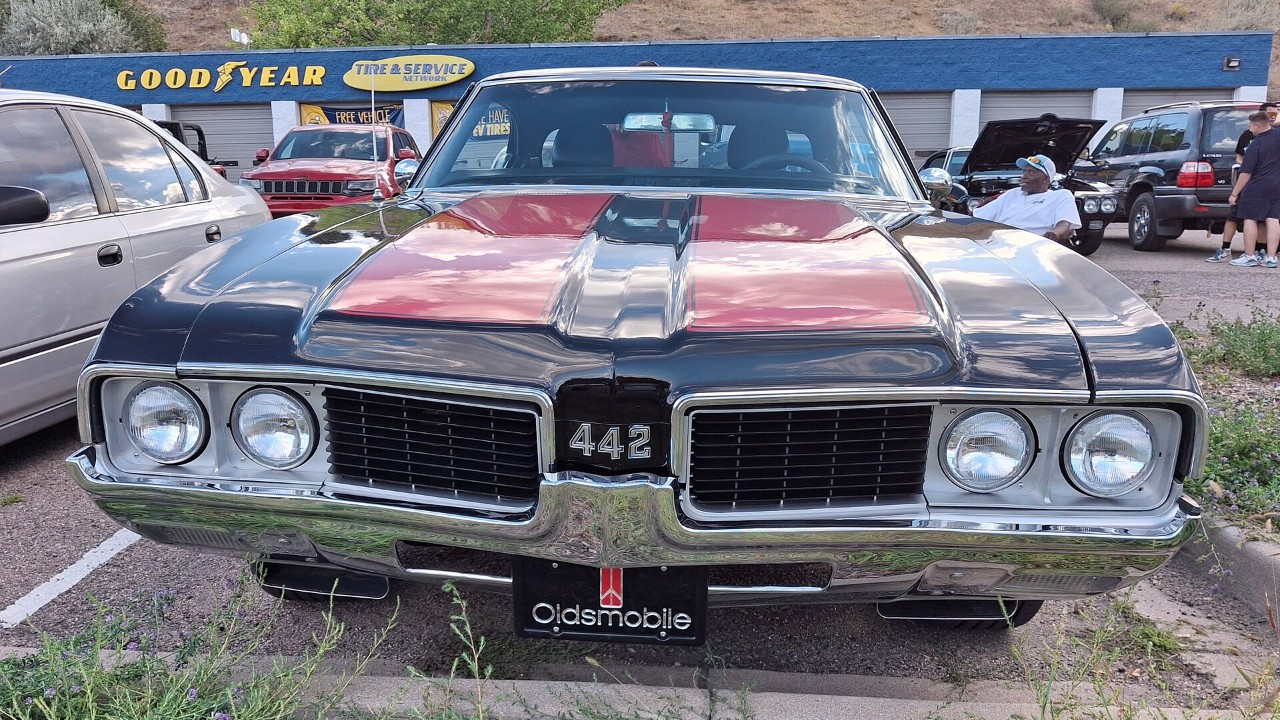
Oldsmobile took a different route from everyone else. Its Force-Air scoops sat below the front bumper and fed the carburetor through long flexible tubes. That kept the hood clean, yet it still put cool outside air into the engine.
According to Motor State Distributing, the under-bumper scoops began in 1968 on the 4-4-2 W-30 and ended after the 1969 model year. In fact, a 1968 road test judged the Olds setup the most efficient of four GM systems by percentage gain, Curbside Classic reports. The W-30 package listed at $263.30, while the smaller W-31 for the Cutlass S listed at $310.69.
2. Chevrolet cowl induction and the 1969 Camaro ZL2 hood
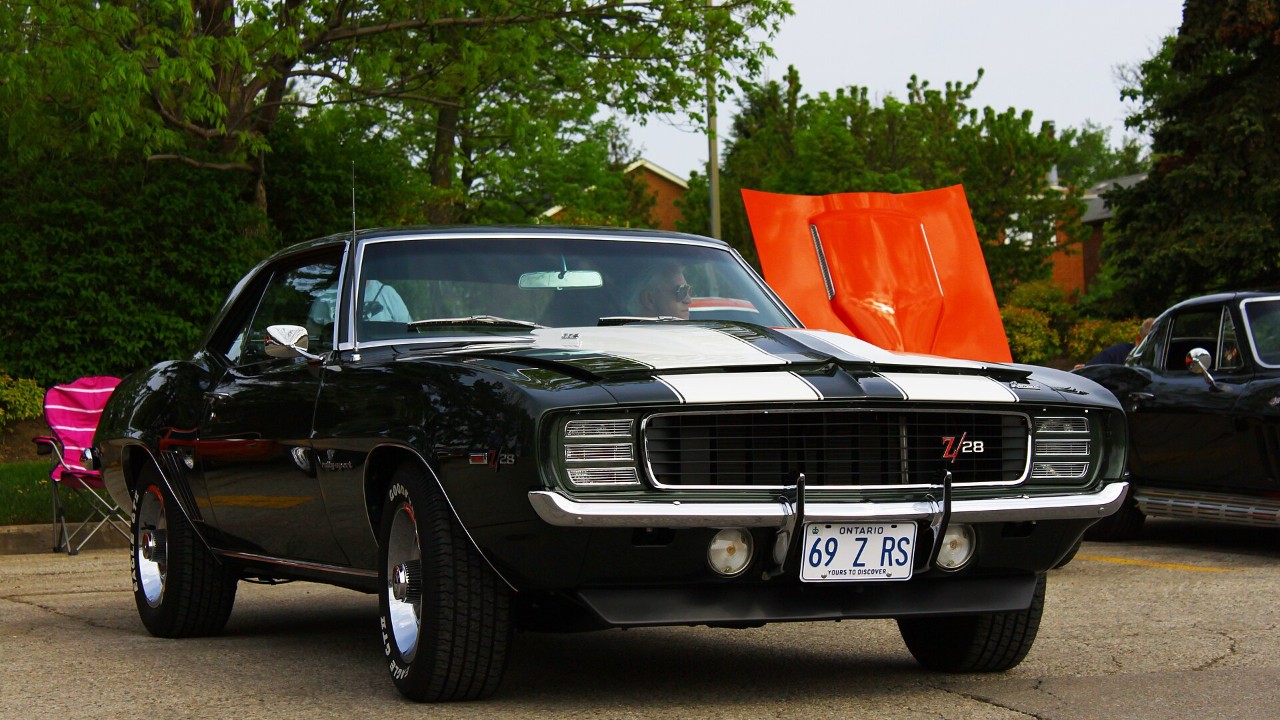
Chevrolet faced its scoop backward. The inlet faced the base of the windshield because that spot is a high-pressure area, Motor State explains. The same source says Chevrolet made it popular on the 1969 Camaro Z28 and the 1970–1972 Chevelle SS.
However, the 1968 test found no ram effect on a Z/28 with the cowl plenum kit, at least up to about 90 mph. The cooler air was still worth roughly 8 to 12 hp over hot underhood air, Curbside Classic notes. The later RPO ZL2 ducted hood listed for just $79. Camaro Research Group counts it on 10,026 Camaros for 1969.
3. Plymouth Air Grabber on the 1969 Road Runner and GTX
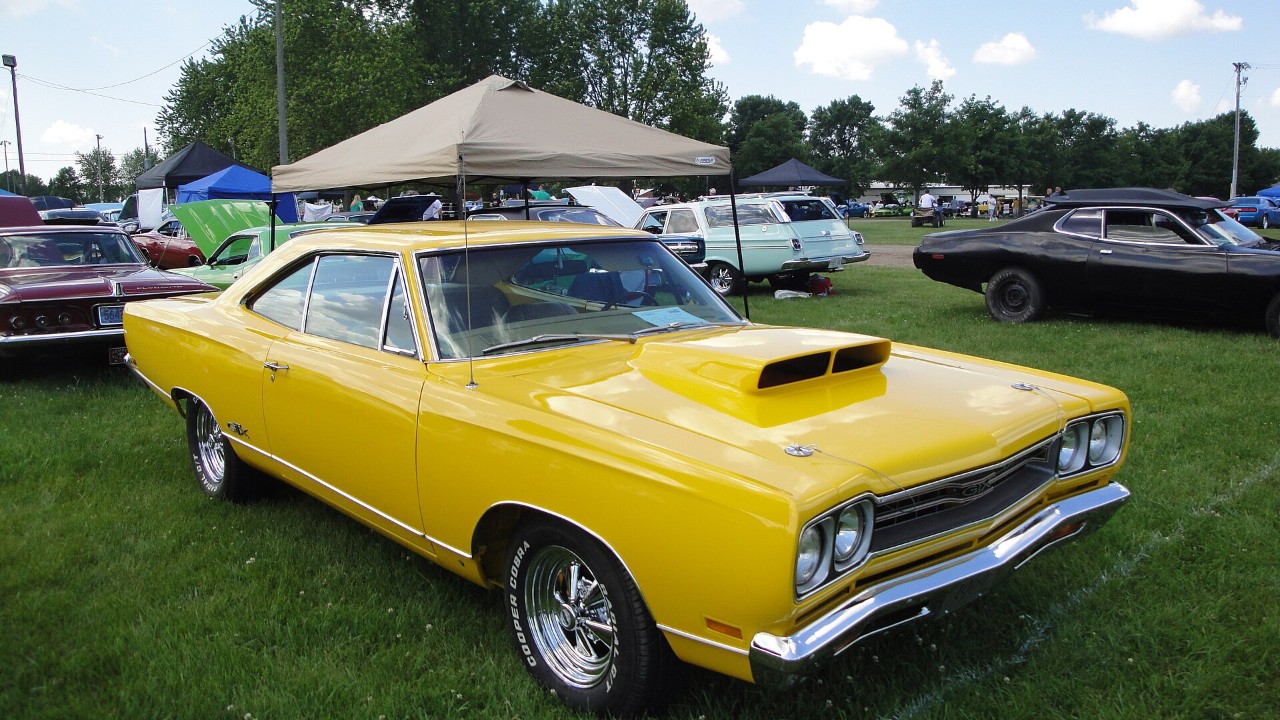
Plymouth introduced the Air Grabber for 1969 on the Road Runner and the redesigned GTX. From 1966 to 1968, the scoops on Plymouth and Dodge B-bodies were for looks only. In other words, the Air Grabber finally gave those cars a working scoop.
The 1969 version used a cable, with the actuator cable attached to a lever, according to Mopar Connection Magazine. Then for 1970 Plymouth switched to vacuum. A dash switch raised a flush-mounted scoop wearing orange and white “shark” graphics. When the key went off, a solenoid dropped it flat again.
4. Dodge Ramcharger on the 1969 Super Bee and R/T
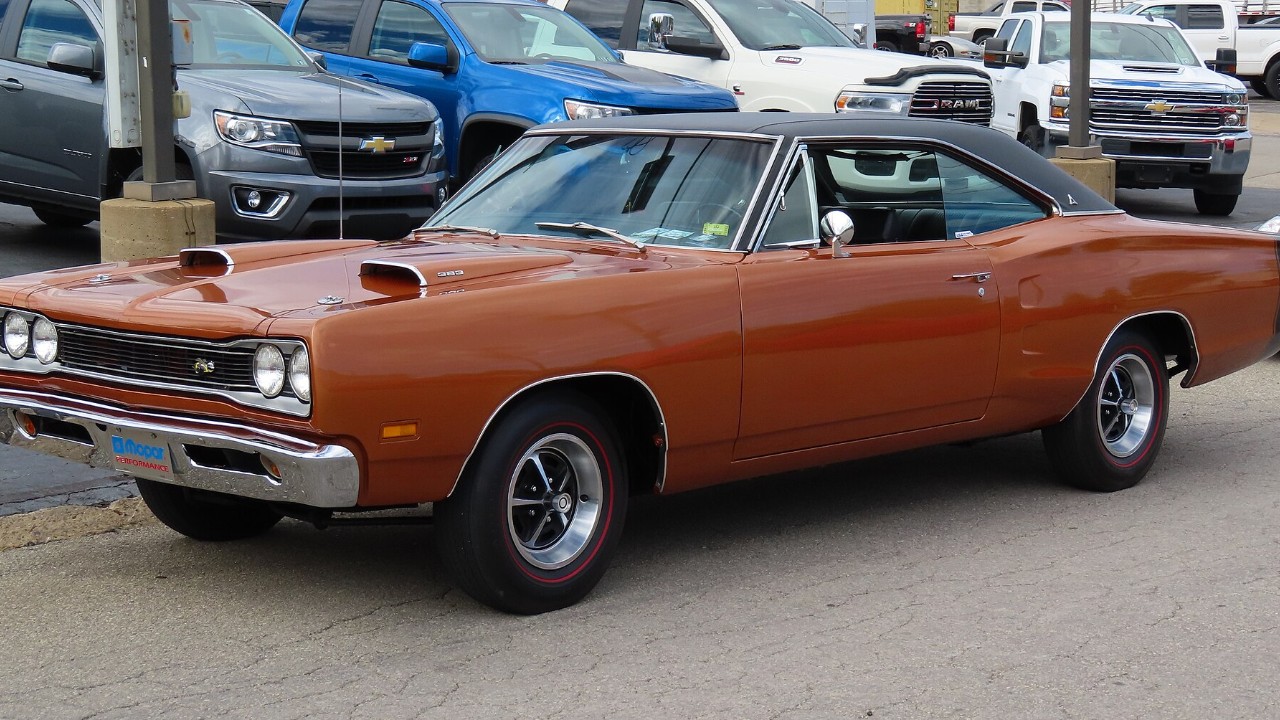
Dodge used the same 1969 system on its own B-bodies but gave it a different name. On the Super Bee and R/T, it became the Ramcharger. Its scoops also carried an engine callout badge on the side, and each unit wore a “Ramcharger” decal.
Unlike Plymouth, Dodge kept the cable for 1970, along with the two stationary scoops from 1969, Mopar Connection Magazine reports. Meanwhile, the Charger had to wait until 1971 for fresh-air induction, when Dodge merged the Super Bee into the Charger line. A Curbside Classic photo caption shows a Ramcharger hood over a 426 Hemi in a 1969 Coronet R/T.
5. Ford Shaker, the 1969 Mach 1’s cold-air induction scoop
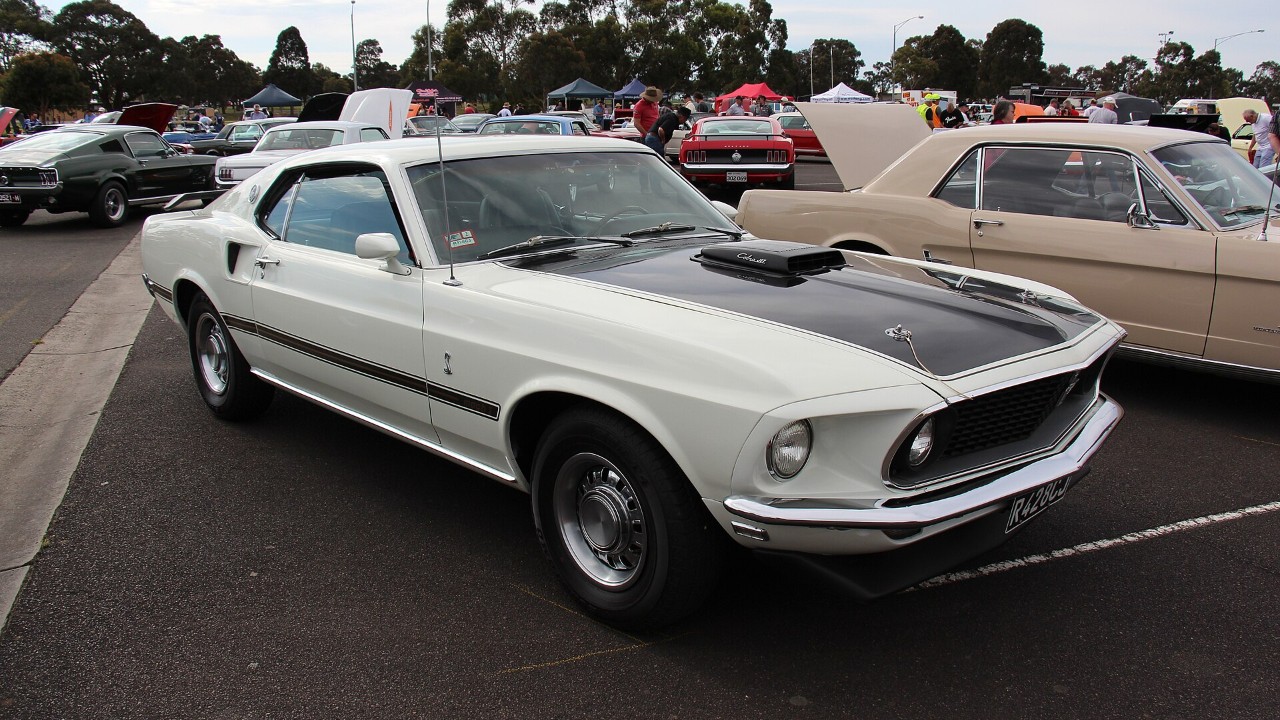
Ford tied its scoop to the engine instead of the hood. The Shaker scoop mounts directly to the air cleaner and pokes through the hood. As a result, it shakes whenever the engine runs. Motor State lists the 1969 Mustang Mach 1 with the 428 Cobra Jet among the factory cars that used it.
The 428 Cobra Jet with Ram Air was the top Mach 1 engine, capped with the Shaker scoop, Silodrome says. It quotes the R-code engine at 335 hp at 5,200 rpm and 440 lb-ft at 3,400 rpm. Later, the Shaker also appeared on the 1970–1971 ‘Cuda and the 1973–1979 Trans Am, Motor State adds.
6. Pontiac Ram Air II on the 1968 GTO
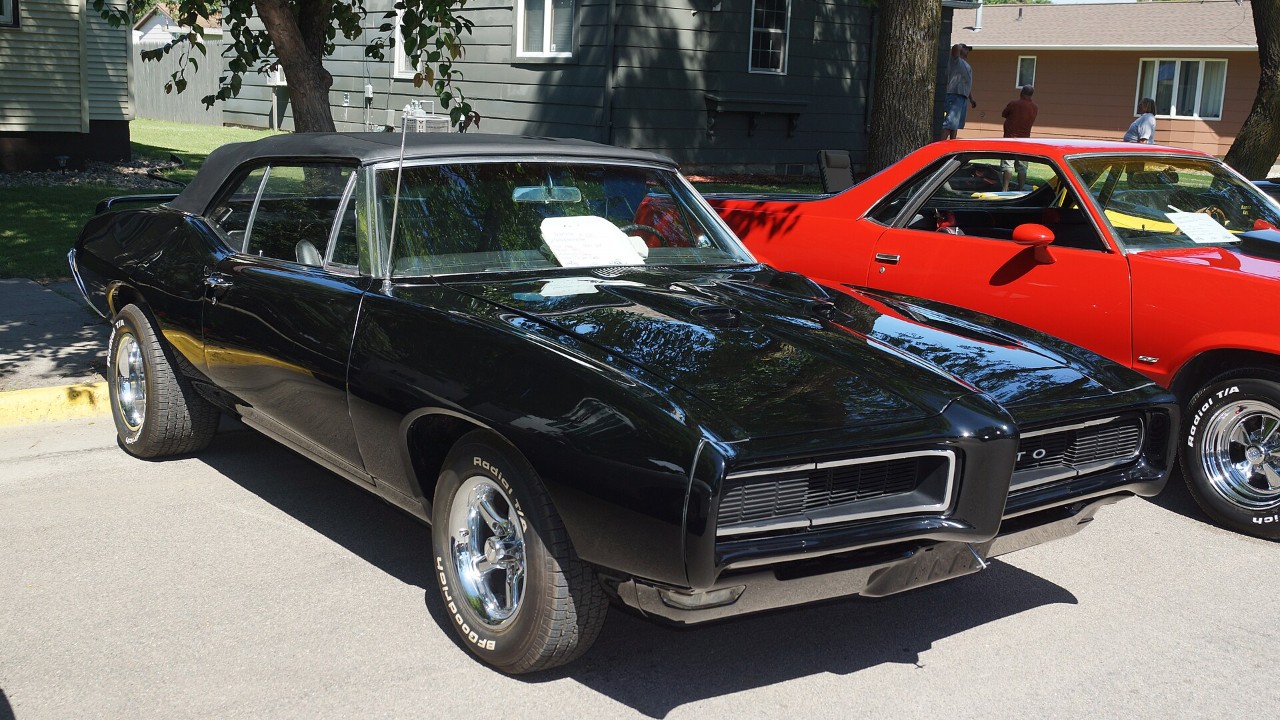
Pontiac rated the 1968 GTO’s 400 with the Ram Air II package at 366 hp gross, per a Curbside Classic photo caption. Its scoops sat low on the hood.
Roger Huntington ran the test for the December 1968 issue of Hi-Performance Cars, Curbside Classic recounts. He calculated power from speed and accelerometer readings. Between 55 and 71 mph, the GTO showed no ram gain. Above 71 mph, though, it picked up about 23 hp by 91 mph. His calculated peak was 315 hp at 5,500 rpm.
7. Pontiac Ram Air IV on the 1969 GTO
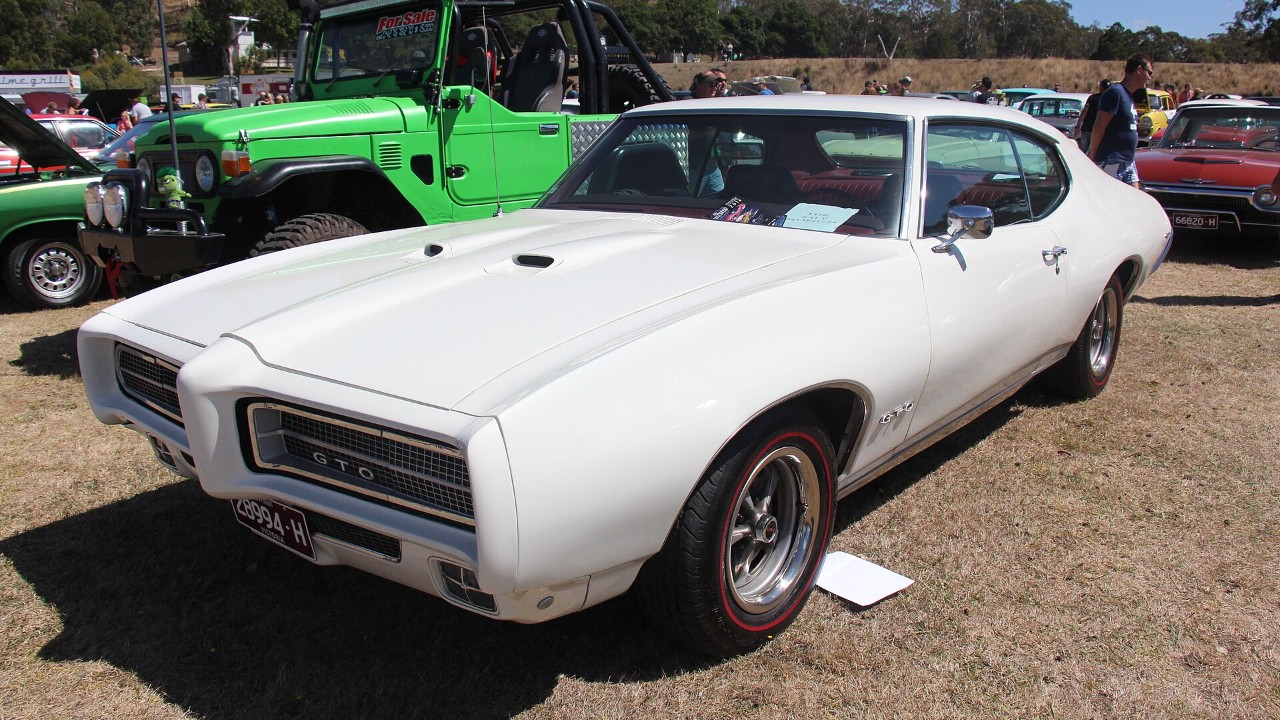
For 1969, Pontiac went further with the Ram Air IV. This 400-cubic-inch V8 got updated cylinder heads, a more aggressive cam and revised rocker arms. It also used an aluminum intake manifold and a Rochester Quadrajet, according to an RM Sotheby’s lot description.
A pair of functional hood scoops fed it cold air. Pontiac rated the engine at 370 horsepower, a figure RM calls underrated. RM offered one at Fort Lauderdale in 2014 with a $65,000 to $75,000 estimate. That GTO was one of 549 four-speed Ram Air IV cars built in 1969.
More from Fast Lane Only
- Unboxing the WWII Jeep in a Crate
- 15 rare Chevys collectors are quietly buying
- 10 underrated V8s still worth hunting down
- Police notice this before you even roll window down
This article was created with the help of AI and was reviewed and edited by Fast Lane Only editors before publication.