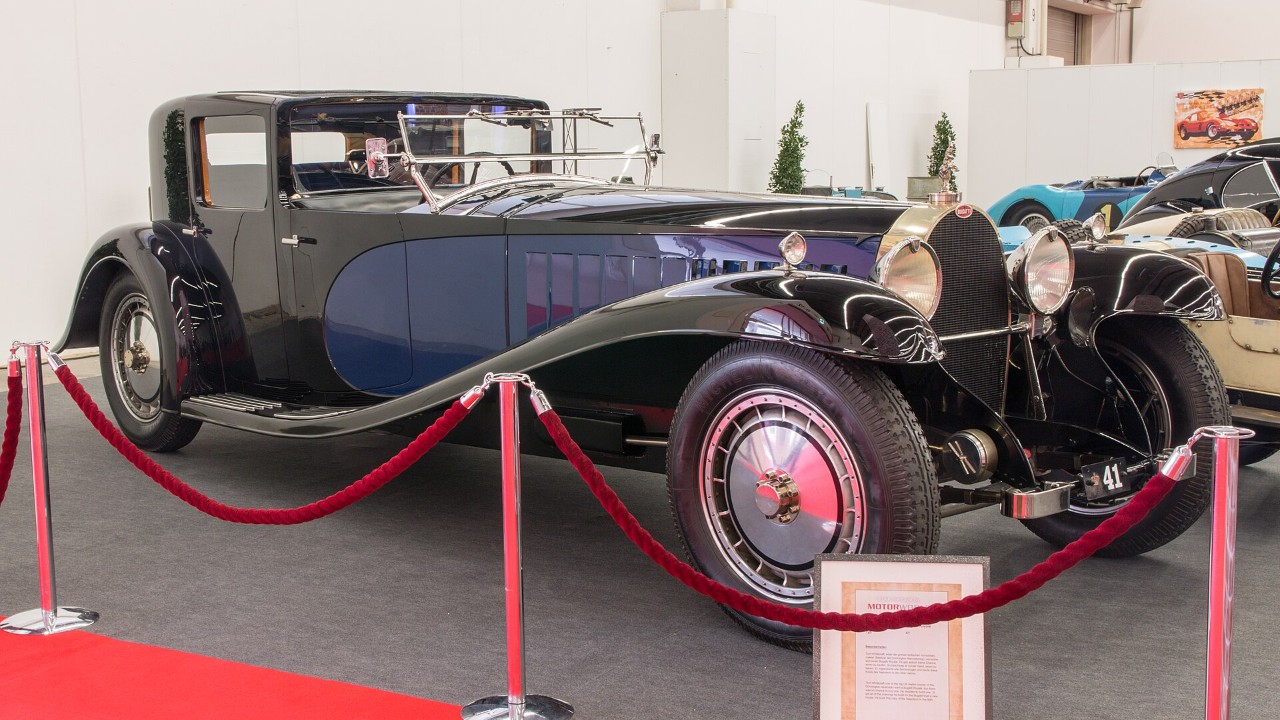
The Bugatti Type 41 Royale went on sale with a basic chassis price of $30,000, just as the Great Depression began. Only three found outside customers. Yet nobody looks at a Royale today and calls it a mistake, because it shows what happens when a maker refuses to cut a single corner.
Most luxury cars are built to a budget, even expensive ones. A few, however, came from people who wanted the best possible car and worried about the cost later. Often they were tiny production runs for kings, film stars and industrialists, and some of their makers never earned the money back.
These seven are our picks for rare luxury cars that were executed without compromise. The engines, build figures and prices come from auction houses, maker archives and specialist histories. The verdicts are our own, and we give a production number only where a source this run supplied one.
1. 1927–1933 Bugatti Type 41 Royale (Coupé Napoléon)
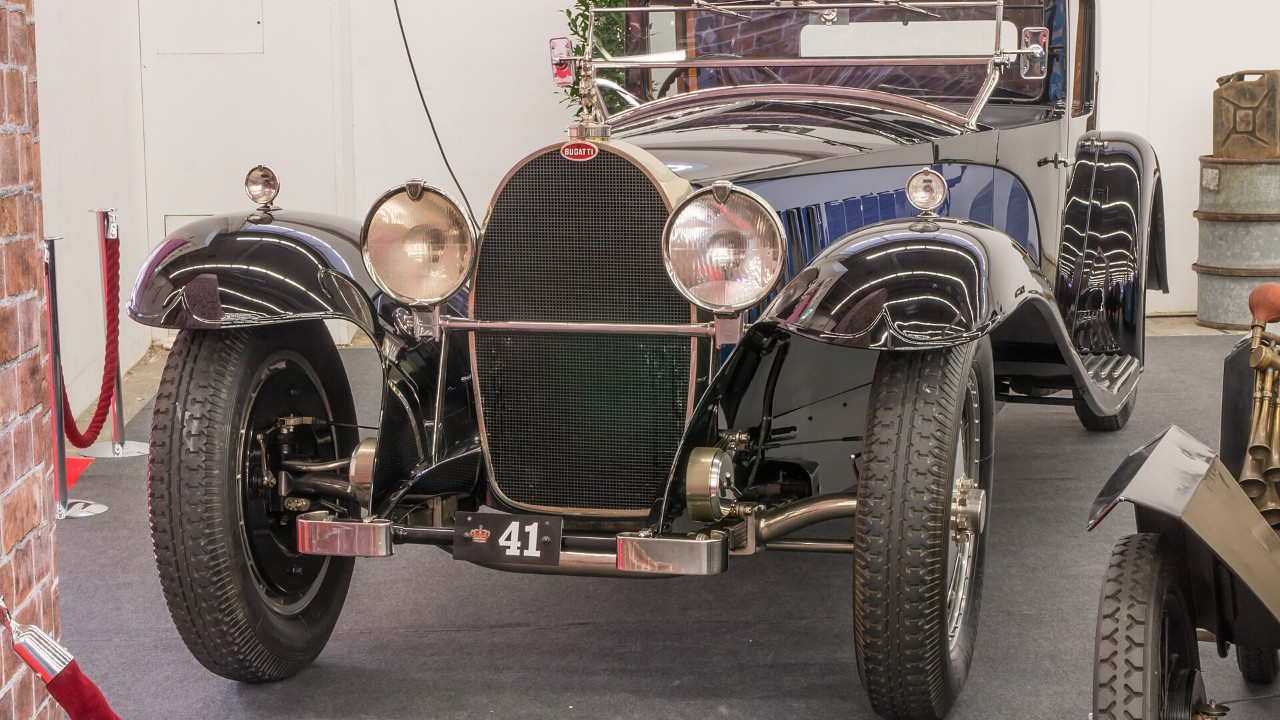
Everything about the Royale was oversized. Its straight-eight displaced 12.763 liters and made 275 to 300 horsepower at just 1,800 rpm. The wheelbase stretched to about 169 inches, and the car weighed around 7,000 pounds. Meanwhile, the Royale arrived just as the Great Depression began, so the timing could hardly have been worse.
The Coupé Napoléon, chassis 41100, was Ettore Bugatti’s own car. It first wore a Packard body, then Weymann rebuilt it as a two-door fixed-head coupé. Ettore crashed it in 1930 or 1931, and it needed a major rebuild afterward. Today, it lives at the Musée National de l’Automobile in Mulhouse, France.
The business side never worked. Bugatti sold just three Royales to outside buyers, and unused engines later went into railcars for the French national railway. Six Royales survive. Our take: few cars in history pushed engineering and scale so far, and that is why the Bugatti Type 41 Royale opens this list. Also, the Coupé Napoléon is the one we would pick, because it belonged to the man who dreamed the whole thing up.
2. 1939 Horch 855 Special Roadster
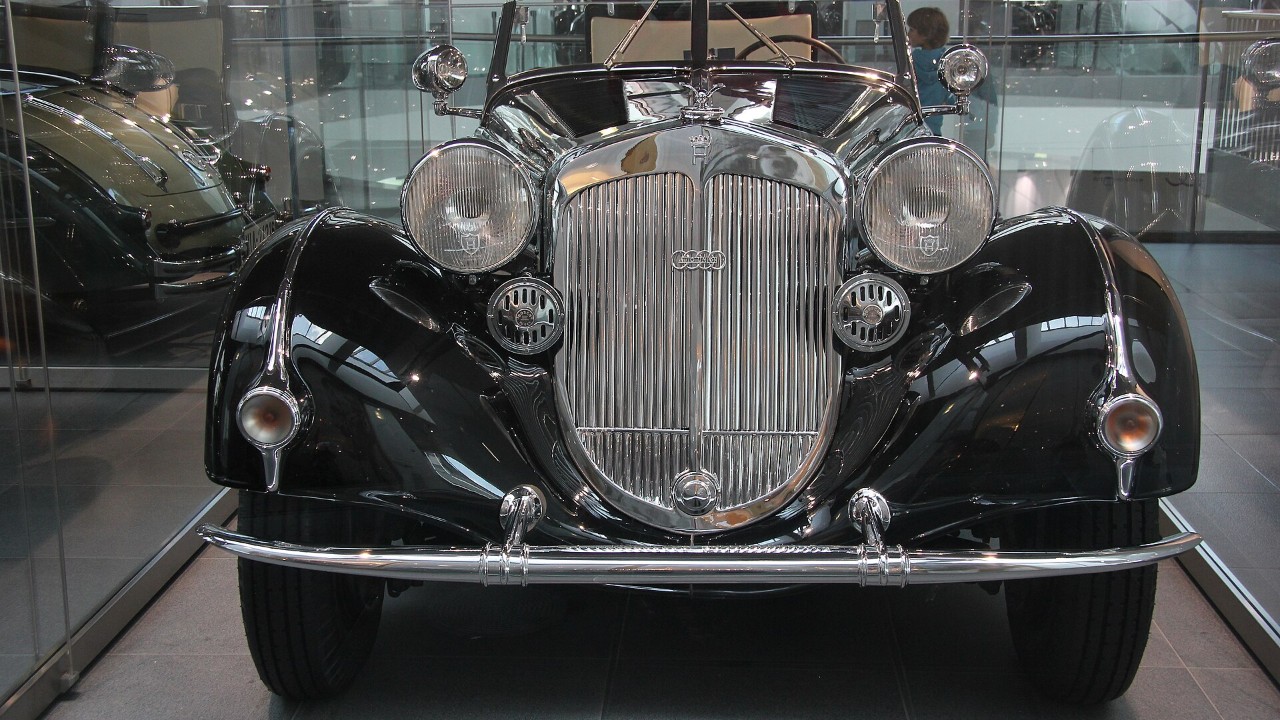
In our view, Horch built some of Germany’s grandest prewar cars, and the 855 Special Roadster sits near the top of that list. According to RM Sotheby’s catalog for one surviving car, between five and seven were made. Each rode on a shortened 853 chassis with a 3,300 mm wheelbase.
Gläser of Dresden built the body on that car, and RM praises its tightly drawn coachwork. Meanwhile, the chassis came from the 853, a model RM describes with a 120-horsepower overhead-cam eight.
The RM car also has a remarkable history. A U.S. Army counterintelligence officer bought it in Germany in the late 1940s. Later, it appeared in Road & Track in September 1954, and Rock Hudson drove it in a 1959 film. Then, after a loan to the Audi Forum in Ingolstadt, it went through a restoration of about two and a half years. Finally, it sold for $3,305,000. In our view, that price reflects how few of these cars exist. So, in our view, few prewar roadsters pair this much craft with such a small run. RM notes that only two original 855s survive, and one of them is a prototype.
3. 1939 Lagonda V12 drophead coupe
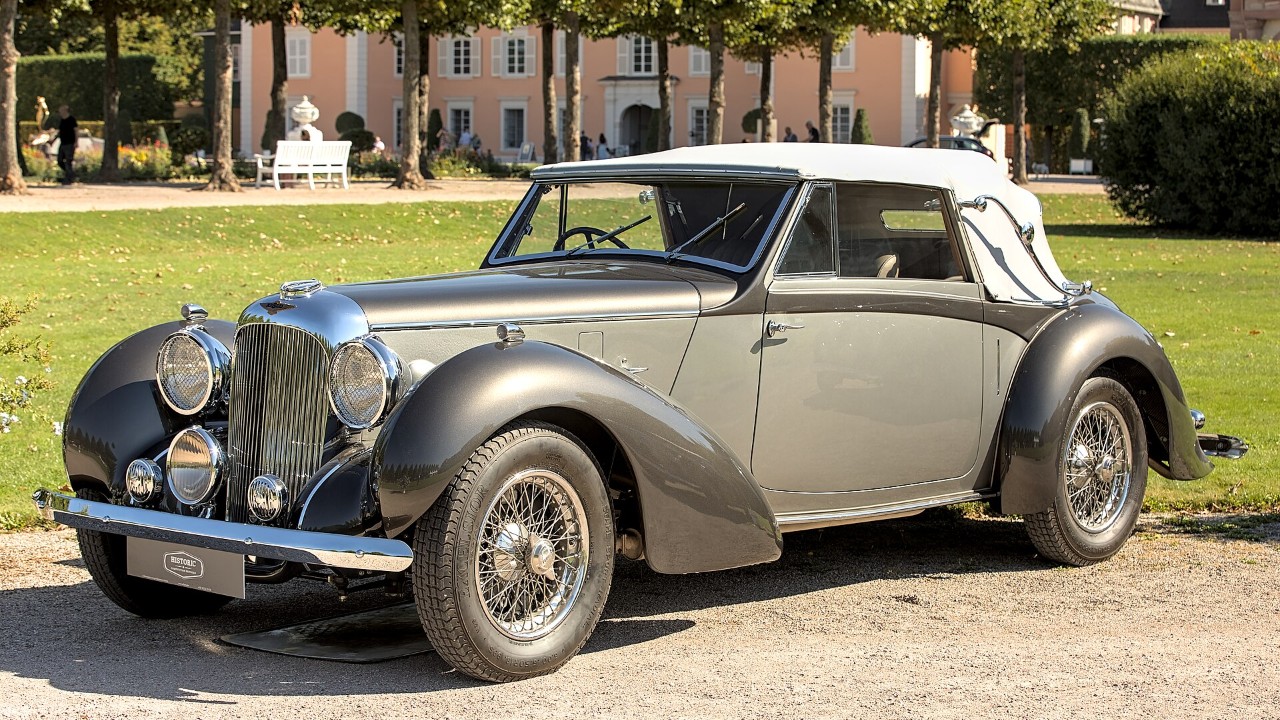
W.O. Bentley arrived at Lagonda in 1933. There he designed a completely new 4.5-liter V12. According to RM Sotheby’s listing for a 1939 drophead coupe, it displaced 4,480 cc and made an estimated 195 horsepower with single overhead camshafts.
The chassis was advanced too. Torsion-bar independent front suspension sat up front, while a live axle on leaf springs carried the rear. It also used four-wheel hydraulic drum brakes and, on the car RM offered, a 124-inch wheelbase. The factory drophead body was handsome, and Bonhams credits its styling to Frank Feeley. He later shaped Aston Martin’s postwar DB cars.
Then the V12 proved itself at Le Mans. In 1939, Lagonda entered two streamlined cars, which finished third and fourth, as Bonhams’ catalog notes. However, the war cut production short after only 189 cars. Because that total covers every body style, a drophead coupe is an especially scarce find, in our view. Our take: Bentley’s V12 Lagonda is the great what-if of British luxury cars, since a war ended its story just as it hit its stride. We would happily take any body style, but the drophead is the one to find.
4. 1957 Cadillac Eldorado Brougham
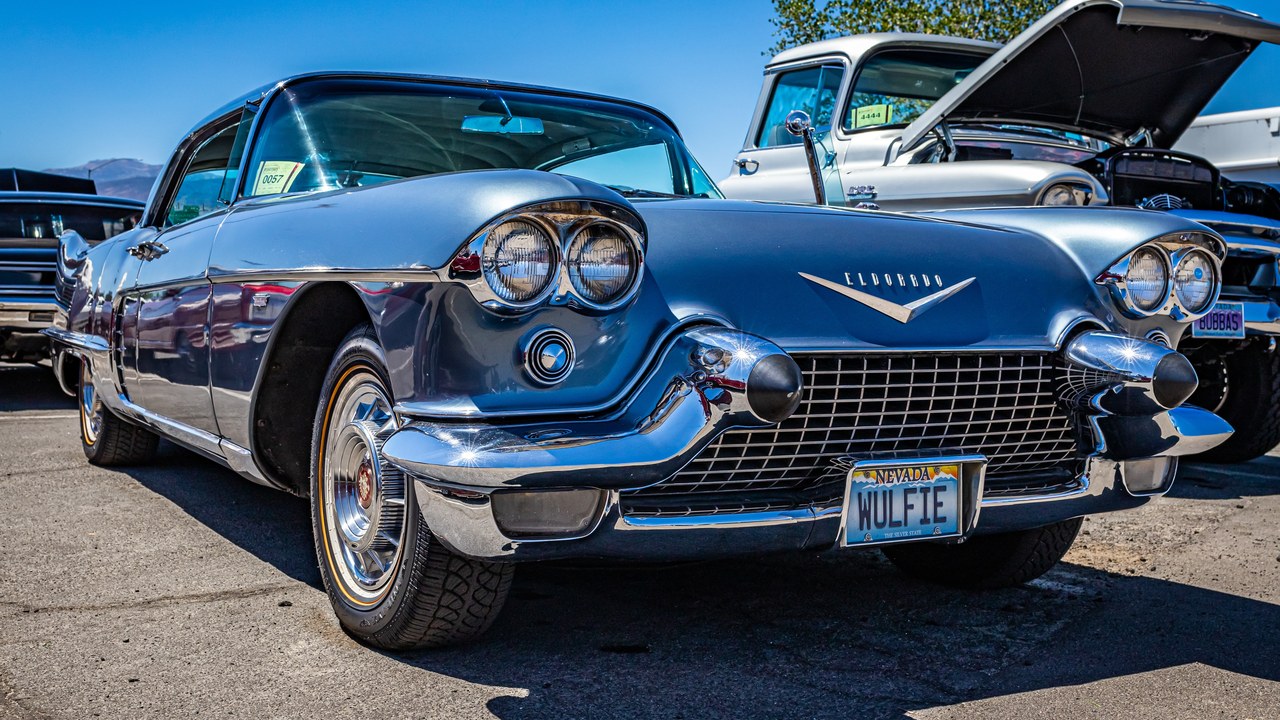
In spirit, the Eldorado Brougham was Cadillac’s attempt to build a car with no budget at all. It rode on self-leveling air suspension and wore a brushed stainless steel roof. Inside, the power seats could remember two positions.
The glovebox showed how far Cadillac went. It held six silver magnetic drink tumblers, and a leather vanity kit included an atomizer of Arpège perfume. As a result, the price came to $13,074, about twice that of a regular 1957 Eldorado.
Even so, we think few American cars of the decade packed in so many new ideas. Not everything worked, though. The air suspension gave owners repeated trouble. Cadillac built 400 Broughams in 1957 and 304 in 1958, the last year of hand-built production in Detroit. After that, Pinin Farina in Turin built the 1959 and 1960 cars. If the whole Eldorado family interests you, our list of Eldorados so loaded they outpriced their era goes deeper. In our view, the 1957 Brougham is the purest Detroit statement of luxury without limits. Our advice: budget for the air suspension, because it is the system that defines the car.
5. 1961 Ghia L6.4
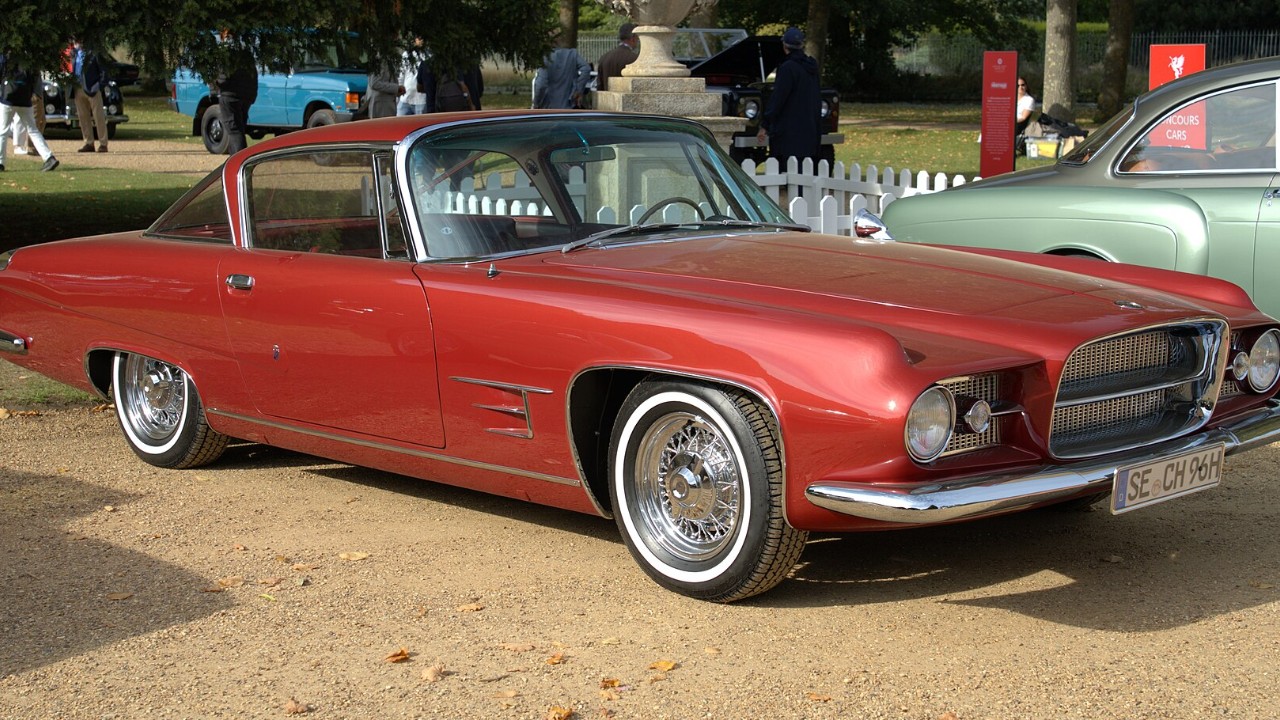
The Ghia L6.4 combined American muscle with Italian hand-building. Chrysler design chief Virgil Exner shaped it, and Ghia built the bodies in Italy. Meanwhile, Dual Motors served as the official producer.
Under the hood sat a 383-cubic-inch Chrysler “Wedge” V8 with 335 horsepower, paired with a TorqueFlite automatic. The price was a startling $13,500 in its day. In fact, that put it in the same territory as the Eldorado Brougham above, which cost $13,074. Even so, it found buyers in Hollywood. Frank Sinatra, Lucille Ball and Dean Martin each owned an L6.4.
The market rewards that combination today. At Monterey in 2023, RM Sotheby’s sold a 1961 Ghia L 6.4 with its numbers-matching V8 for $665,000. Our take: the L6.4 is a rare case of a car that looks just as good as its owners’ list sounds. In our view, it is the most glamorous way to own a Chrysler engine. Our advice: check the provenance closely, since celebrity history adds real value. Also, because the drivetrain is Chrysler, the engine is the easy part, while the hand-built body needs a specialist.
6. 1959 Maserati 5000 GT “Shah of Persia”
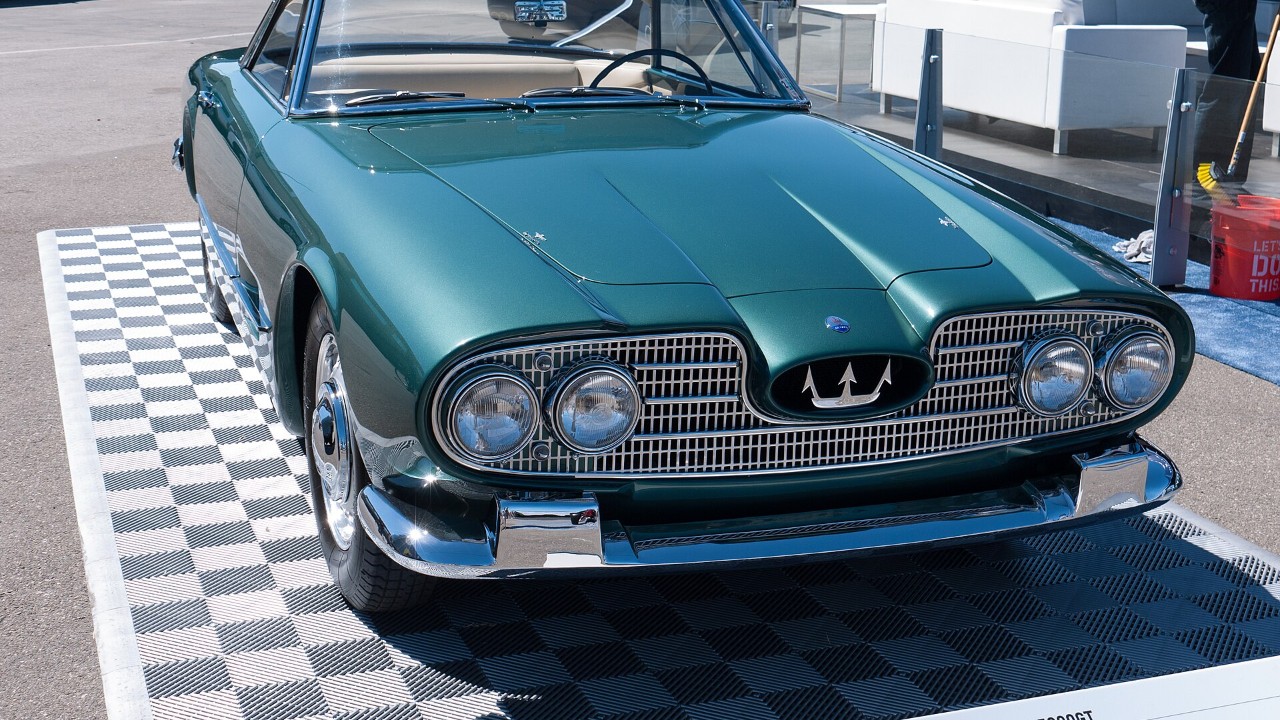
The 5000 GT began with a royal request. In late 1958, the Shah of Persia drove a Maserati 3500 GT and asked for more performance. According to Maserati’s own history of the model, the result was a largely new car that starred at the 1959 Turin Motor Show.
Its V8 came from the 450S racing car, bored out to almost five liters. At first it displaced 4,937.8 cc and made 325 horsepower. Then, from 1960, it grew to 4,941.1 cc and 340 horsepower. Maserati built 34 of them at its Viale Ciro Menotti plant in Modena.
Coachbuilders shaped the bodies, and several firms took part. Allemano, Pininfarina, Monterosa, Ghia, Bertone and Frua all built examples. That made each car feel close to a one-off. The very first body, however, came from Carrozzeria Touring. Maserati says the car earned the nickname “Shah of Persia” in honor of that first customer, and only three of the Touring version were ever produced. Compared with the 3500 GT that changed Maserati’s fate, it was a far more exclusive machine. Our take: a race-bred V8 under hand-built Italian coachwork is about as uncompromising as a road car gets, and the Touring car built for Mohammad Reza Pahlavi is the purest version of the idea.
7. Monteverdi High Speed 375/4
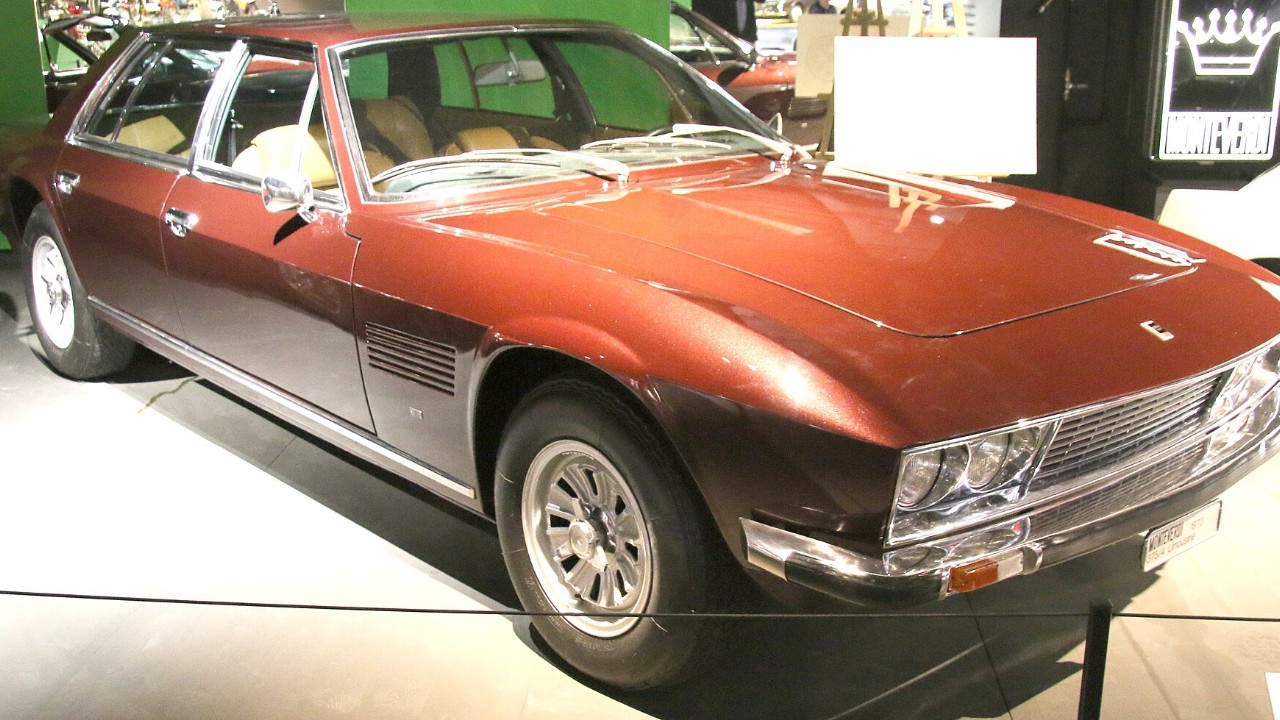
Swiss maker Peter Monteverdi built his High Speed coupes around big Chrysler V8s. Then he stretched the idea into a four-door limousine, the 375/4. According to Secret Classics’ profile of the car, production ran from 1970 to 1974 on a 3.15-meter wheelbase.
Power came from a 7.2-liter Chrysler V8 rated at 340 PS. Air conditioning and electric windows came standard. Customers could also order a small Sony TV screen or a partition between the front and rear seats, much like a coachbuilt limousine.
Monteverdi aimed it at buyers who cared little about fuel costs. In fact, most cars went to countries with low gas prices, such as the Arab states. The ruling family of Qatar owns five of them. As a result, we suspect few people outside those markets ever saw one on the road. Our earlier story on the Monteverdi High Speed’s Swiss style covers the coupe. In our view, the 375/4 is the boldest version, because it took a sporting GT and turned it into a private-jet-style sedan. A dealer offered one example, chassis 3007, at $265,000.
More from Fast Lane Only