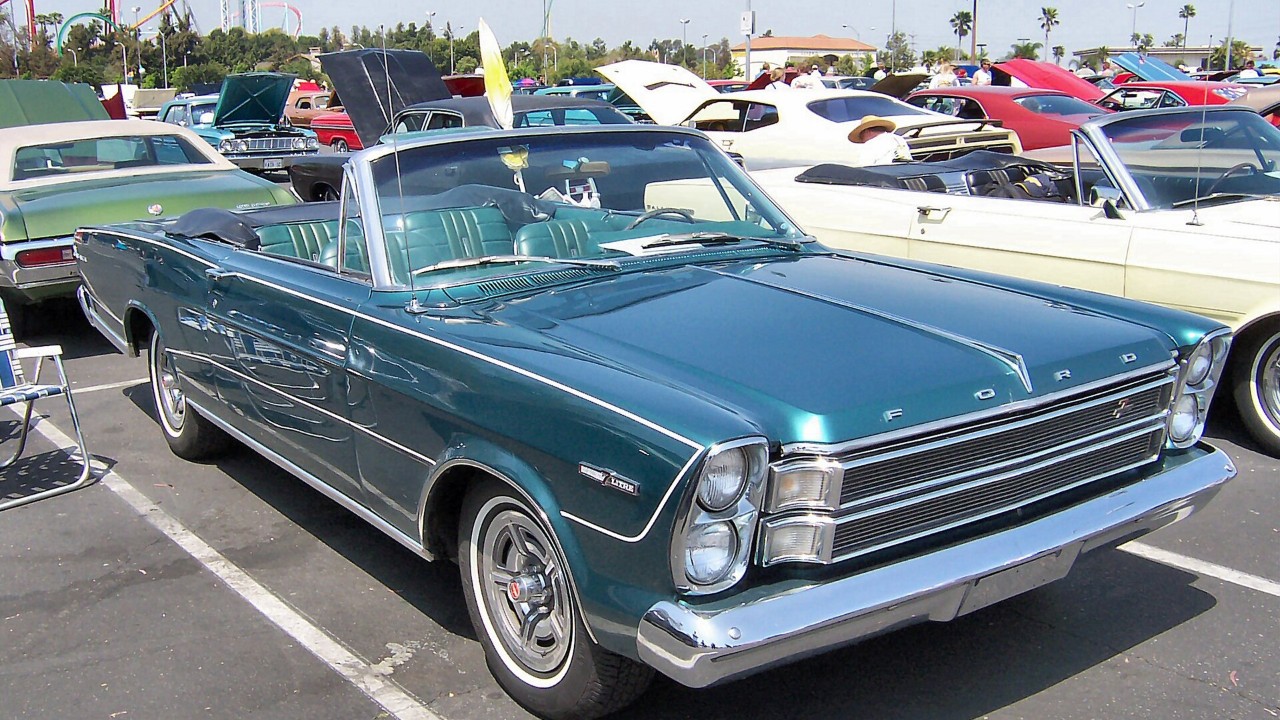
Ford’s Galaxie 7-Litre arrived for 1966 with a 428-cubic-inch V8 and power disc brakes as standard, yet it rarely comes up when people talk about muscle cars. That’s the odd part of the late 1960s and early 1970s. A few names, such as the GTO, the Chevelle SS and the Road Runner, soak up almost all of the attention.
Meanwhile, the same showrooms sold plenty of other cars with big engines, bucket seats, handling packages or simply a great look for less money. Some sold in small numbers. Others hid behind a family-car name, so they slipped out of the conversation once the era ended.
These nine are our picks: the forgotten cars from the muscle-car era that we think a pure driving fan would still go looking for today. The engines, prices and production totals come from period records, auction coverage and marque histories. The opinions, however, are ours.
1. 1966 Ford Galaxie 7-Litre
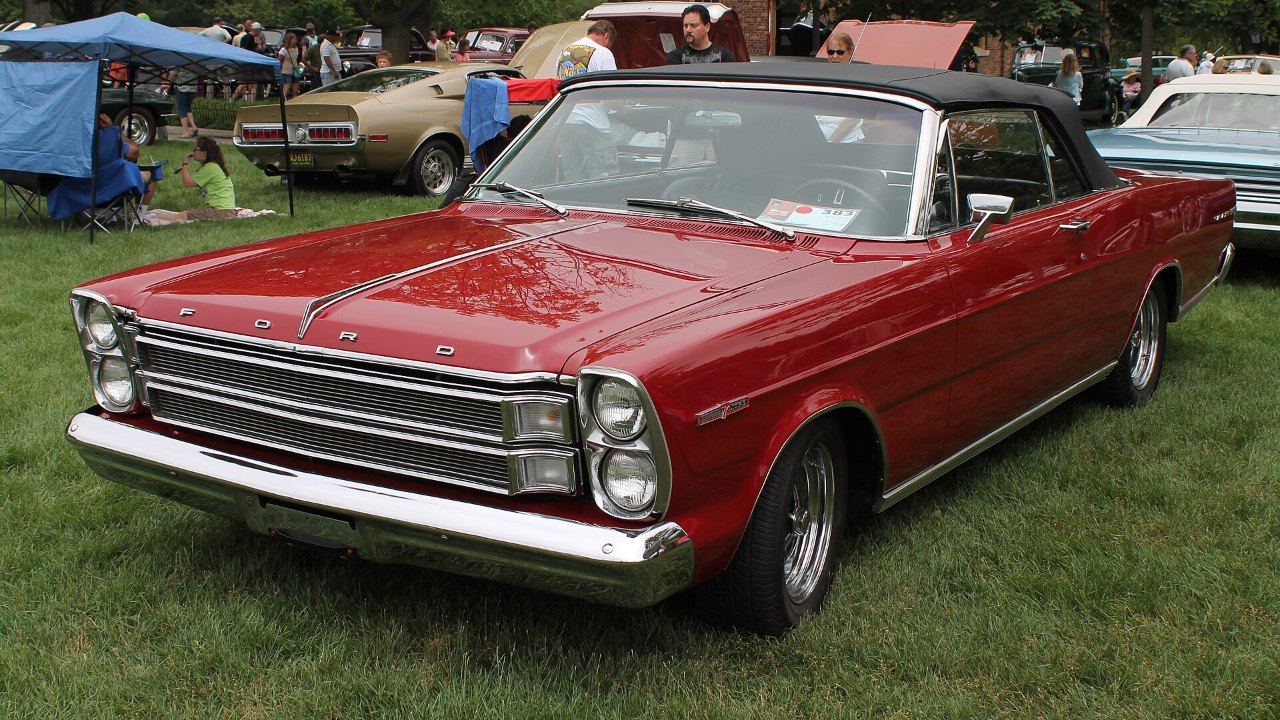
Ford built the 7-Litre as a full-size car with a muscle-car heart. Its standard engine was the new 428 V8, rated at 345 horsepower, and a C6 automatic came with it. Buyers could also order a four-speed manual instead. In addition, the package included power disc brakes, a Lincoln differential with a 9 3/8-inch ring gear and low-restriction exhausts.
According to Old Cars Weekly’s profile of the 7-Litre convertible, Ford built 11,174 of these cars for 1966, and 2,368 of them were convertibles. A tiny few went even further. Only two 7-Litre convertibles left the factory with the 425-horsepower 427 and a four-speed, the magazine reports.
Then the name faded fast. For 1967, the 7-Litre became an option on the Ford XL instead of a model of its own, and that was the last year Ford identified it separately. We’ve looked at why the Ford Galaxie disappeared for decades, but this version deserves a better memory. Our take: if you want a big Ford that drives like a muscle car, the Galaxie 7-Litre is the one to find, especially with the four-speed.
2. 1966 Ford Fairlane GTA
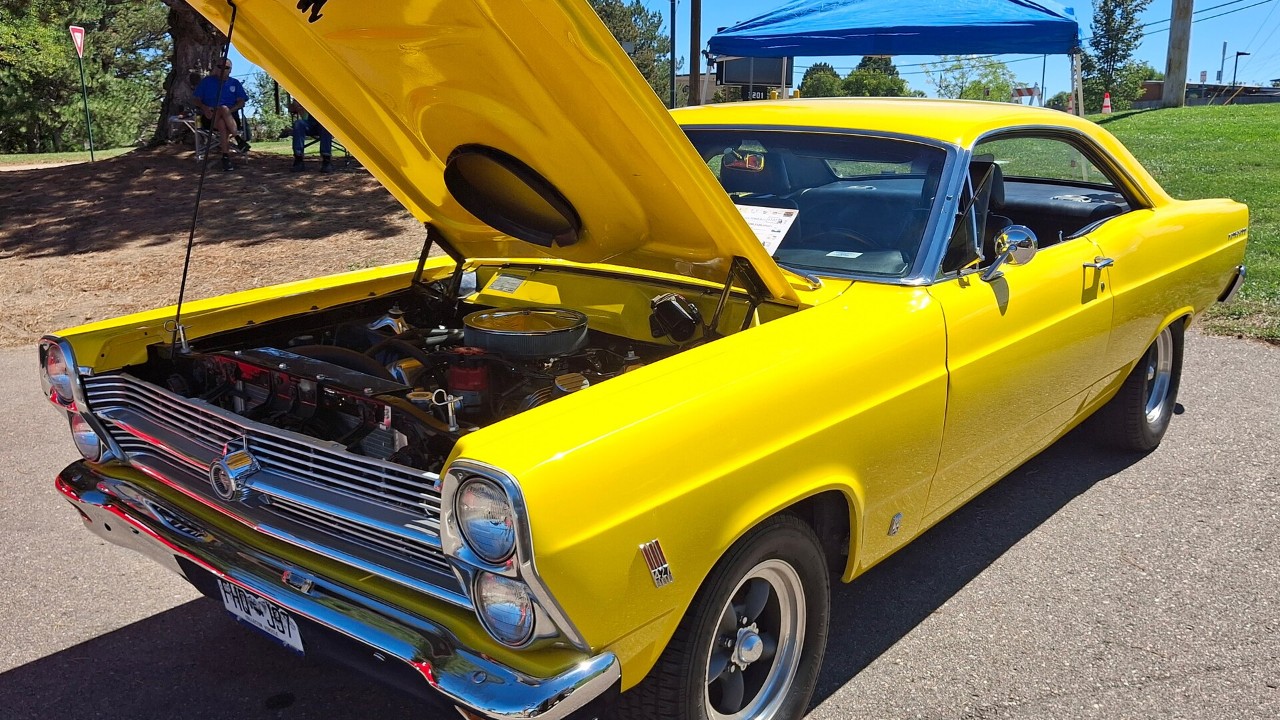
For 1966, Ford gave its mid-size Fairlane a new, longer body that borrowed its look from the full-size Galaxie, complete with stacked dual headlights. The same year brought three new packages: XL, GT and GTA. Of those, the GT and the GTA aimed squarely at young buyers who wanted speed.
Both used a 390-cubic-inch FE V8 with higher compression and a four-barrel carburetor. In that tune, it made 335 horsepower. The difference sat in the transmission. The GTA, however, added Ford’s newly introduced SportShift Cruise-O-Matic automatic. In other words, a GTA is a GT with the automatic and its own badge.
Ford also added a convertible to the Fairlane lineup that year, and it dropped the high-output K-code 289 from the range. As a result, the 390 became the performance engine for Ford’s mid-size car in 1966. In our view, that makes the GT and GTA the first truly quick Fairlanes of the big-engine era.
In our view, the GTA is the smart sleeper of the bunch. Most people walk past a mid-size Ford with an automatic at a show. However, that 335-horsepower 390 makes it far more than a cruiser, and the automatic makes it an easy car to enjoy in traffic. If you find one with its original drivetrain, keep it that way.
3. 1966 Dodge Coronet 500
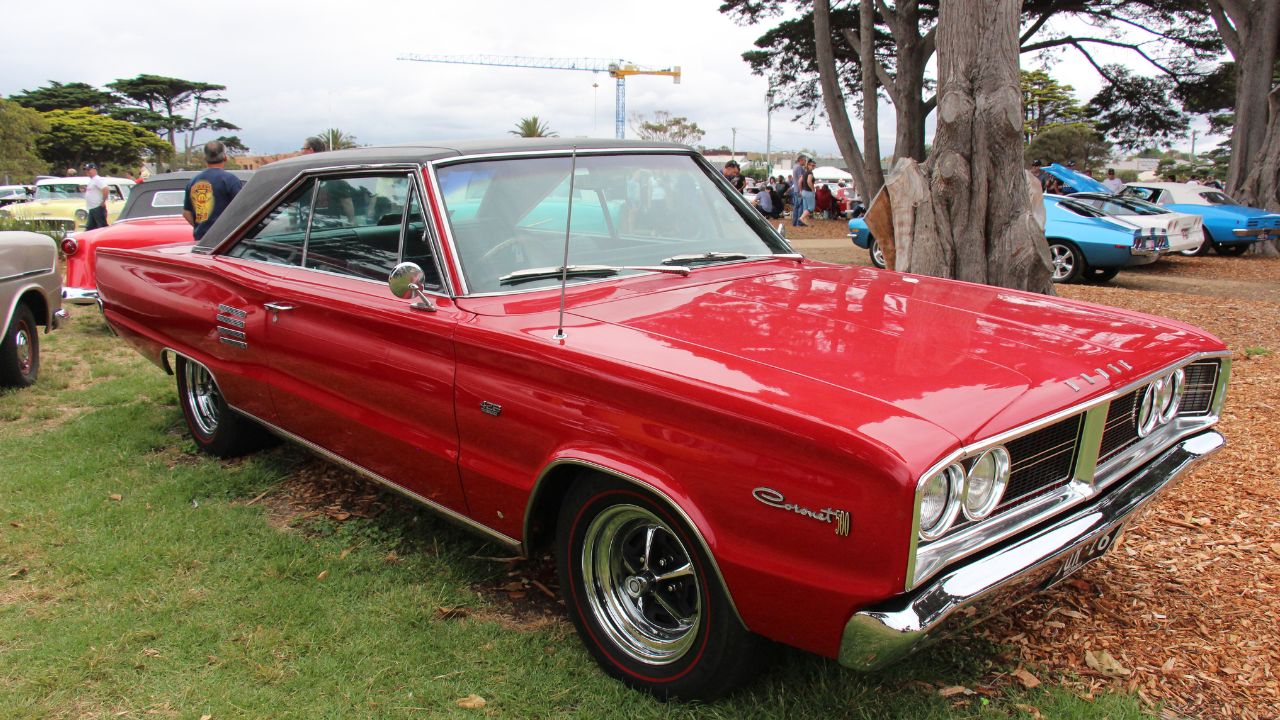
Dodge redesigned the Coronet from the ground up for 1966 on its B-body platform, and the top Coronet 500 got the richest cabin in the range. Bucket seats, a chrome-topped center console and a padded dash all came standard. Outside, a crosshair grille and four chrome inlays on the flanks set it apart from lesser Coronets.
The engine list ran from the 225 slant-six through 273, 318, 361 and 383 V8s. Above them sat the new 426 Street Hemi. According to Street Muscle’s history of the Coronet 500 Hemi convertible, the Hemi option cost $907.60. Dodge put it into 340 Coronet 500 hardtops and only 21 Coronet 500 convertibles.
Sales were strong overall, with 250,842 Coronets built for 1966 across every trim and body. We’ve written about the unusual reason the Dodge Coronet became controversial, yet the 1966 car’s story is mostly a happy one. A period magazine test of a Coronet 500 hardtop even recorded 0-60 mph in 5.4 seconds.
Our take: a 383 Coronet 500 hardtop gives you the bucket-seat muscle-car feel without the Hemi price tag. For scale, a blue Hemi convertible sold for $120,000 at Mecum’s 2021 Indianapolis auction.
4. 1967 Plymouth Belvedere II
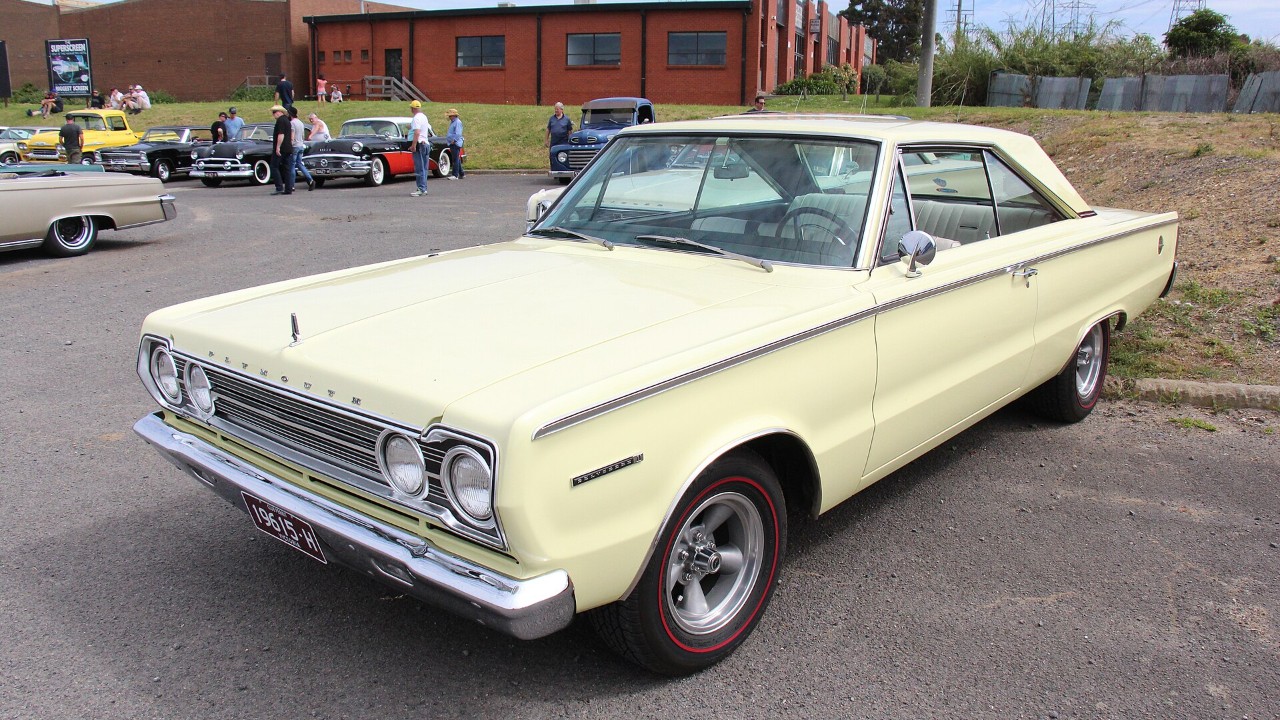
Plymouth split its 1967 intermediate line into Belvedere I, Belvedere II, Satellite and the brand-new GTX. The Belvedere II sat in the middle, and that’s exactly why we like it. A Belvedere II hardtop listed at $2,457, while a GTX hardtop cost $3,178, according to OldRide’s 1967 production and price tables.
Buyers took 34,550 Belvedere II hardtops that year, plus just 1,552 convertibles. Engines ran from the 225 six to two versions of the 273 V8, the stronger one rated at 235 horsepower. That makes a clean V8 hardtop a light, simple and very usable driver.
The Belvedere II also carried a secret. Street Muscle’s story on the R023 package explains that Plymouth built 55 stripped-down Hemi cars on Belvedere II hardtops, all on February 12, 1967. Buyers gave up the heater, radio speakers, carpets and hubcaps to save weight. In return, they got a functional hood scoop and heavy-duty parts, and every one left the factory painted white.
In our view, a plain Belvedere II with a V8 makes a terrific driver’s car today. After all, it shares its body with those drag-strip specials, and nobody at the gas station will know what it is.
5. 1970 Oldsmobile Cutlass Supreme SX
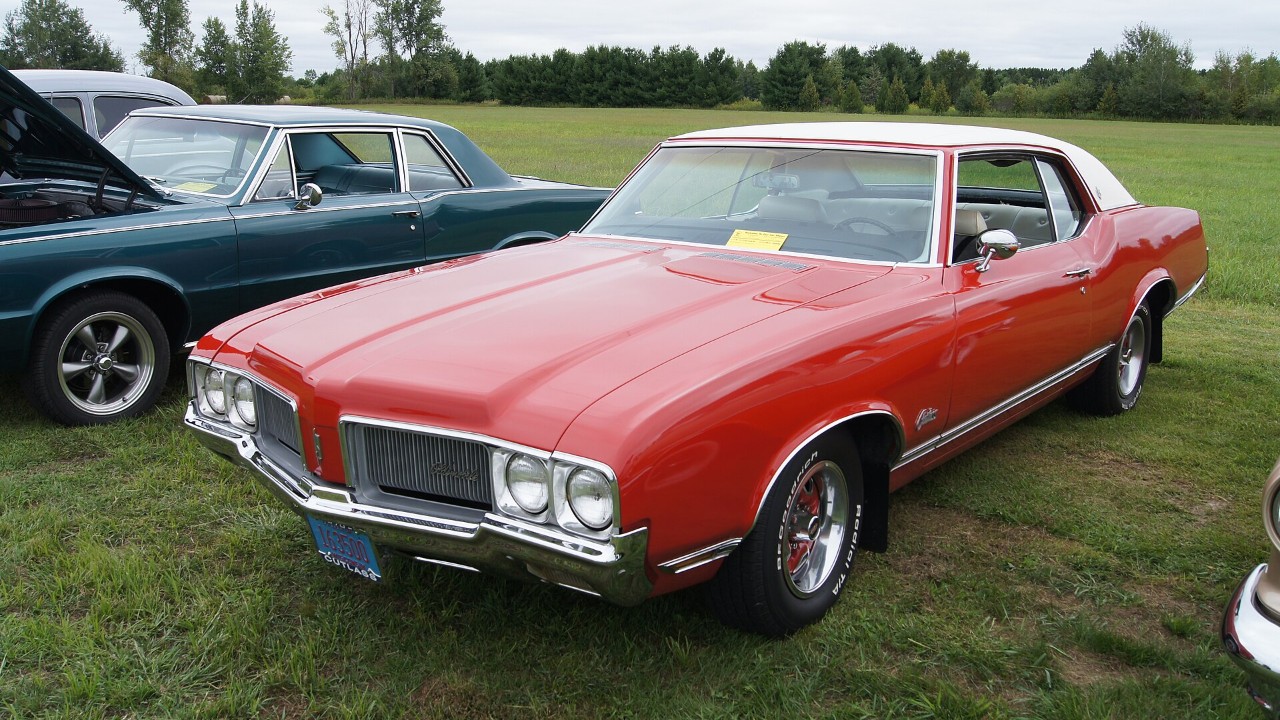
Oldsmobile aimed the Cutlass Supreme SX at buyers who wanted a quick car that didn’t shout about it. The SX package brought special badging and a Turbo Hydra-Matic 400 automatic. It also came with a choice of 455-cubic-inch V8s, so even the mildest SX had serious torque.
The middle engine, the W-32, shared its four-barrel carburetor, 10.5:1 compression, hotter cam and bigger valves with the 4-4-2. Old Cars Weekly’s feature on a 1970 SX says the W-32 reportedly made 365 horsepower, though it adds that figures vary by source. The same story puts W-32 production at about 860 cars for 1970. Even so, no official split between coupes and convertibles exists.
Some people called it a poor man’s 4-4-2. That label sells the car short, because the two shared so much hardware. It sits comfortably among the Oldsmobile Cutlasses that outlived their own hype.
Our take: the SX is a refined muscle car in the best sense. You get big-block pull and 4-4-2 parts with a classier, more understated look. That suits a driver who wants torque more than attention, and it makes a W-32 car the one to find.
6. 1971 Mercury Comet GT
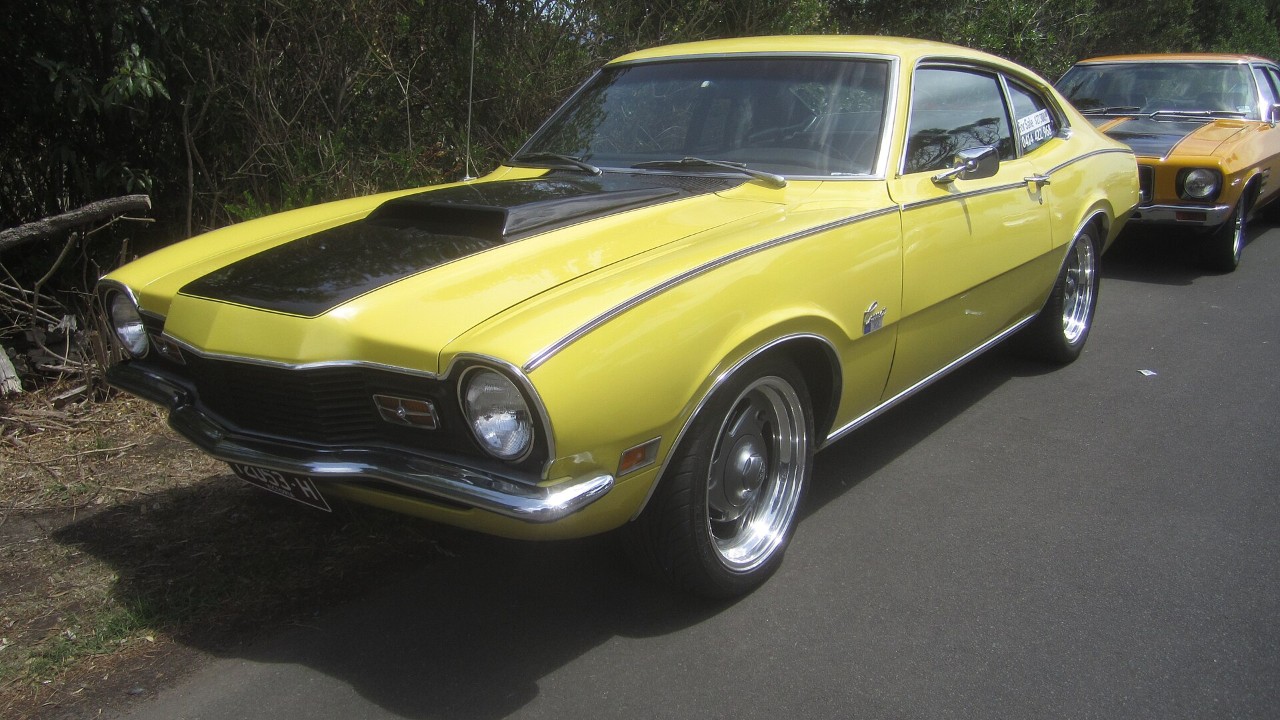
Mercury’s smallest car for 1971 was the Comet, a dressed-up cousin of the Ford Maverick on a 103-inch wheelbase. According to Hagerty’s look back at the 1971 Comet, a base two-door cost $2,217. Engines ran from a 100-horsepower 170 six up to a 210-horsepower 302 V8.
The GT added stripes, a hood scoop, bucket seats and a blacked-out grille. However, Mercury sold the GT as an option package rather than a separate model. It also skipped the factory spoiler that Ford offered on the Maverick Grabber, and it wore a single hood scoop instead of two.
Mercury built 54,884 Comet coupes that year, along with 28,116 sedans. Hagerty doesn’t break out how many of those coupes were GTs. It does note that every engine on the list ran on regular, 91-octane gas, which was a welcome detail for a young buyer on a budget.
In our view, a 302 Comet GT is one of the era’s most honest small performance cars. It’s light and simple, and the V8 gives it real punch in a compact body. Better still, the Mercury trim makes it feel a little more special than its Ford twin, which is exactly the point of a Mercury.
7. 1971 Ford Maverick Grabber
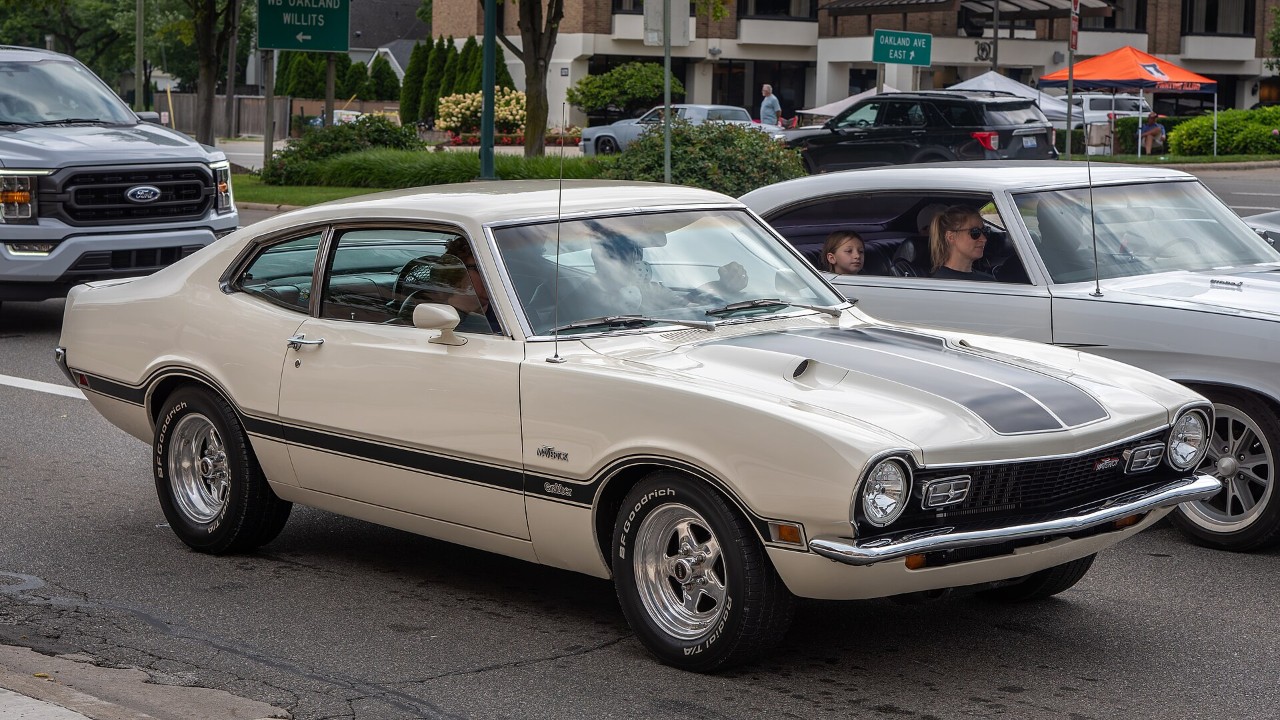
For 1971, the Grabber stopped being just a stripe package. Ford gave it its own trim code, 62D, according to a Maverick enthusiast site that tracks the Grabber’s yearly changes. It also gained a new Grabber hood and a blacked-out grille with built-in driving lights.
Oddly, the standard engine shrank that year. The 170 six became the Grabber’s base engine, down from the 200 of 1970. Then, starting with December production, a 210-horsepower 302 V8 joined the option list. Meanwhile, the dual racing mirrors, 14-inch wheels and black vinyl interior carried over, and the stripes turned reflective.
Buyers liked the formula anyway. Hagerty’s production figures show 38,963 Grabber coupes for 1971, against 159,726 regular Maverick coupes and 73,208 sedans. That’s a big number for a car that so few people mention now.
Our take: skip the six and find a 302 car. The Grabber’s stripes and mirrors look the part, and the V8 gives it the go to match. It’s also a simple, cheap-to-fix Ford, so you can drive it hard on weekends without worrying about rare trim.
8. 1971 Plymouth Duster Twister
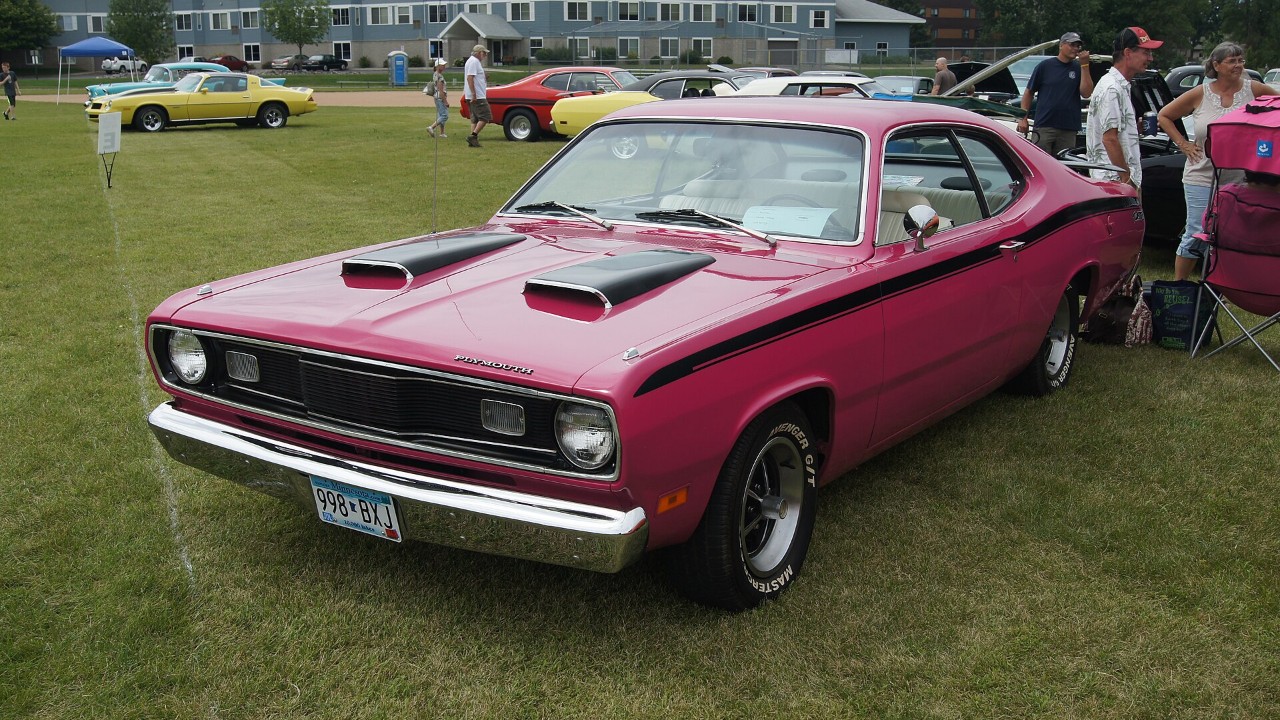
The Duster 340 had the look young buyers wanted, with wedge-shaped stripes and a shark-tooth grille. For 1971, Plymouth sold that look without the big engine. The Twister copied the 340’s side stripes and grille and added a matte-black hood. Under it sat either the base six or the 318 V8, and nothing larger.
Options let owners push the image further. Plymouth offered a nonfunctional dual hood scoop and a rear spoiler as appearance extras. It also listed high-back bucket seats and dual exhaust, so a well-optioned Twister looks almost identical to a 340 from the curb.
The Duster family sold very well. Plymouth built 186,478 Dusters for 1971, and only 12,886 of them carried the 340. That means the Twister and other small-engine Dusters made up most of the cars on the road, even if the 340 got the magazine covers.
Our take: the Twister is the fun-per-dollar pick of this list. A 318 car with dual exhaust gives you the look and a sweet small-block sound, which is plenty for a back-road Sunday. If you want more power later, the Duster’s engine bay leaves room to grow. Either way, check the paperwork, because stripes and a hood are easy to add to any Duster.
9. 1972 Chevrolet Chevelle Heavy Chevy
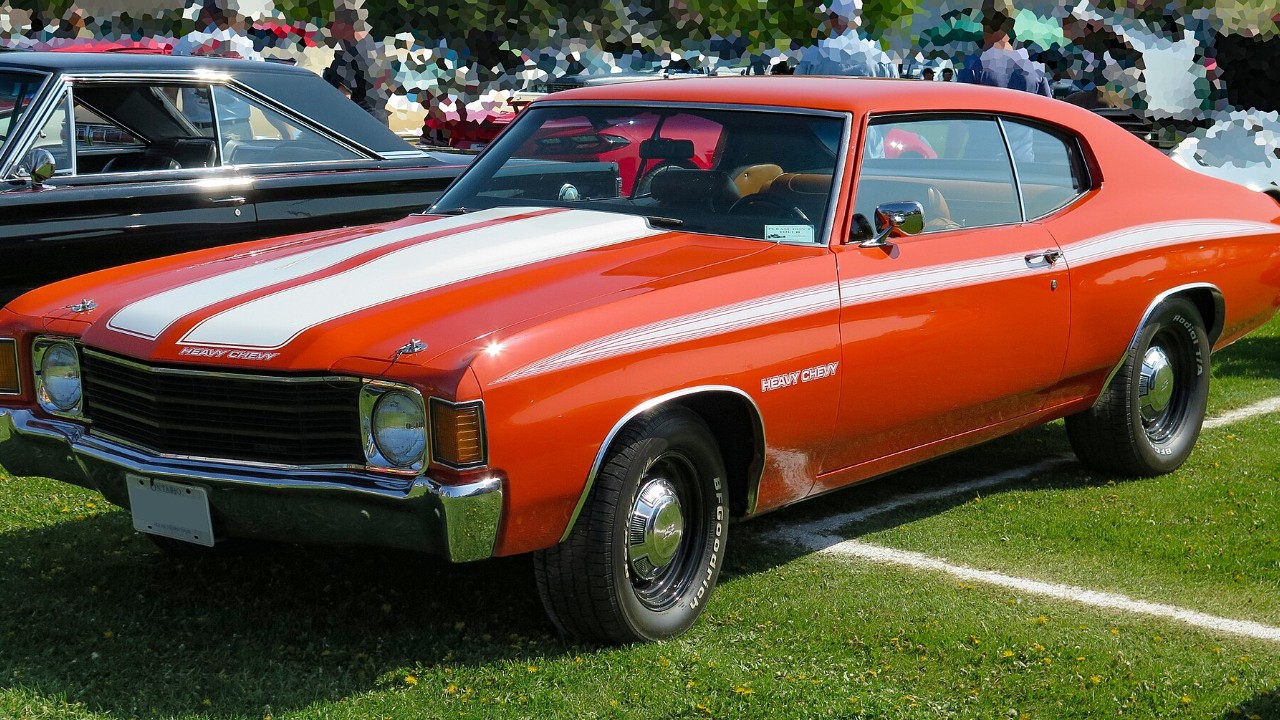
Chevrolet built the Heavy Chevy for younger buyers who wanted a performance Chevelle that cost less to insure than an SS. The YF3 package ran for 1971 and 1972 only. It brought a blacked-out grille without the bowtie, white or black side stripes, a cowl hood and 14-by-6 Rally wheels.
Inside, a bench seat was the only choice. For 1972, engines ranged from a 130-horsepower 307 up to a 402 Turbo-Jet V8 rated at 240 horsepower. The 454, however, stayed reserved for the SS, according to Muscle Cars Illustrated’s history of the Heavy Chevy.
That recipe made the Heavy Chevy a budget muscle car in the truest sense. You got the stance, the hood and the attitude, while the insurance company saw something milder than an SS. In our view, that trade made it one of the smartest buys of its day for a young driver.
In our view, a 402 Heavy Chevy is the one to chase, because it delivers most of the SS feel with a quieter badge. Buyers seemed to agree in period. Chevrolet built 9,508 Heavy Chevys in 1972, up from 6,727 the year before.
More from Fast Lane Only