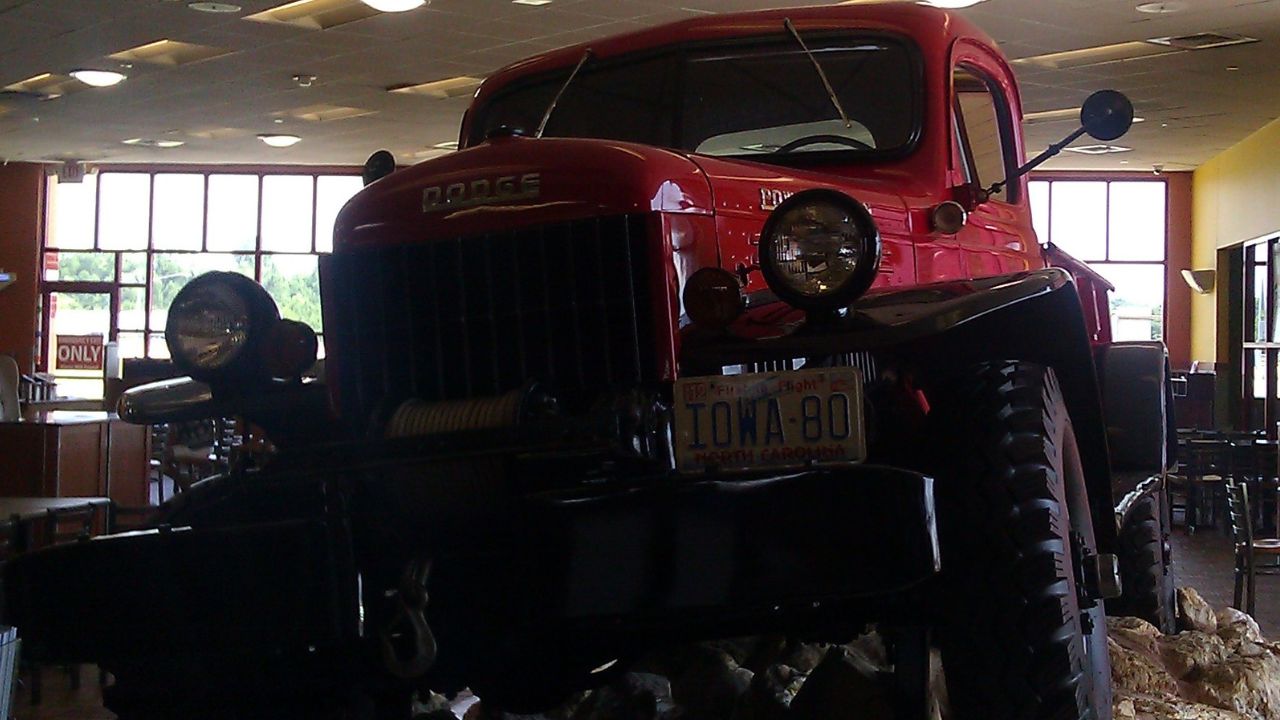
Dodge put a civilian Power Wagon WDX on sale in March 1946. The name carries real weight with truck buyers to this day. The postwar flat-fenders turned ex-Army hardware into a farm and fire-department tool. Decades later, Ram brought the badge back on a heavy-duty 2500 with lockers and a winch.
That reputation makes buyers move fast when one shows up for sale. But a Power Wagon is not one truck. It is 80 years of very different machines that share a name. Some of them make far more sense as a museum piece than as a truck you will drive or work.
These seven are our picks for the Power Wagons we would think twice about before handing over money. The verdicts are our opinion. Each one comes with the hard reason behind it, from gearing and brakes to fuel use and recalls. We also name the version we would look at instead.
1. 1946 Dodge Power Wagon WDX

The first civilian truck used a 230-cubic-inch flathead six rated at 94 horsepower at 3,200 rpm, with 185 lb-ft of torque. Dodge paired it with a four-speed manual, a two-speed transfer case and a 5.83 final drive. According to this Power Wagon history, the early truck weighed nearly 6,000 pounds and topped out at a cruising speed of about 45 mph.
Those numbers tell you how it drives. It crawls up anything, but it also holds up traffic on any road with a speed limit. The first trucks also rode on rigid engine mounts until Dodge added rubber mounts in 1951. Their rear axle carried 5,500 pounds before the 1951 upgrade to 6,500. If you want the backstory, we covered how the Power Wagon carried military roots into civilian life.
In our view, the 1946 truck is a collector’s object first. Its early four-stake-pocket bed and the tailgate Dodge changed in 1949 set it apart from later trucks. That means a buyer pays for history rather than for usability.
Buyer advice: buy a 1946 WDX for shows and parades, and do not plan on highway miles.
2. 1951 Dodge Power Wagon B-3-PW

The 1951 truck brought a long list of changes. A year-by-year change list from a Power Wagon owners’ site shows a new three-stake-pocket bed with sloped sides and gauges moved to the center of the dash. Dodge also revised the transfer case angle and added rubber mounts for the engine, cab and box.
So why would we hesitate? Because the engine itself barely changed. Compression stayed at 6.7:1 until Dodge raised it to 7.0:1 in 1953. The internal carburetor and governor also carried on until a standard B-3-D carburetor replaced them for 1952. As a result, a 1951 truck gives you the updated chassis with the oldest version of the powertrain.
That makes it a frustrating middle child. It looks like the later trucks, yet it pulls like the early ones, and the asking prices rarely reflect that gap. We would rather pay a little more for a truck with the later engine changes. After all, the body and bed carried over for years, and this one runs closer to the 1946 Power Wagon WDX than its looks suggest.
Buyer advice: if you like this body, look for a 1953 or later truck with the higher-compression engine.
3. 1954 Dodge Power Wagon C-1-PW
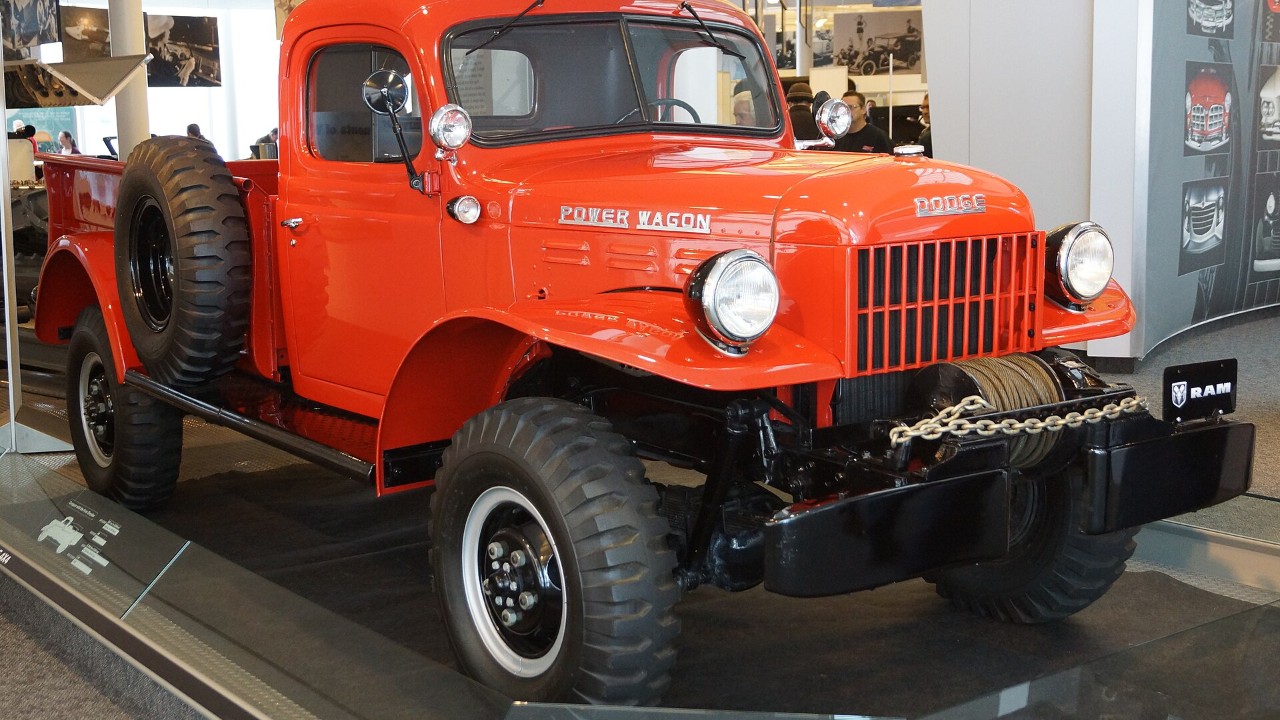
On paper, 1954 looks like a sweet spot. Dodge raised compression to 7.25:1 that year and added a redesigned manifold and a camshaft with longer valve duration. The truck also had a base price of $2,307. Dodge built 5,601 of them in 1954, according to the same Power Wagon history.
The problem is timing. A year later, the 1955 trucks gained a synchromesh transmission and a 12-volt electrical system. Then power steering became available during the 1956 run. That leaves the 1954 C-1-PW as one of the last trucks with an unsynchronized gearbox, a six-volt system and no power-steering option. That is a lot to give up for a one-year difference. Dodge also kept the sloped three-stake-pocket bed from 1951 through 1956, so the later trucks look almost the same.
Later trucks also served in some unusual jobs, such as the 1955 Power Wagon airport rescue trucks. In our view, those small mid-1950s upgrades make the bigger difference to anyone who plans to drive the truck.
Buyer advice: stretch for a 1956 or later truck with synchromesh and the option of power steering.
4. 1960 Dodge WM300 Power Wagon
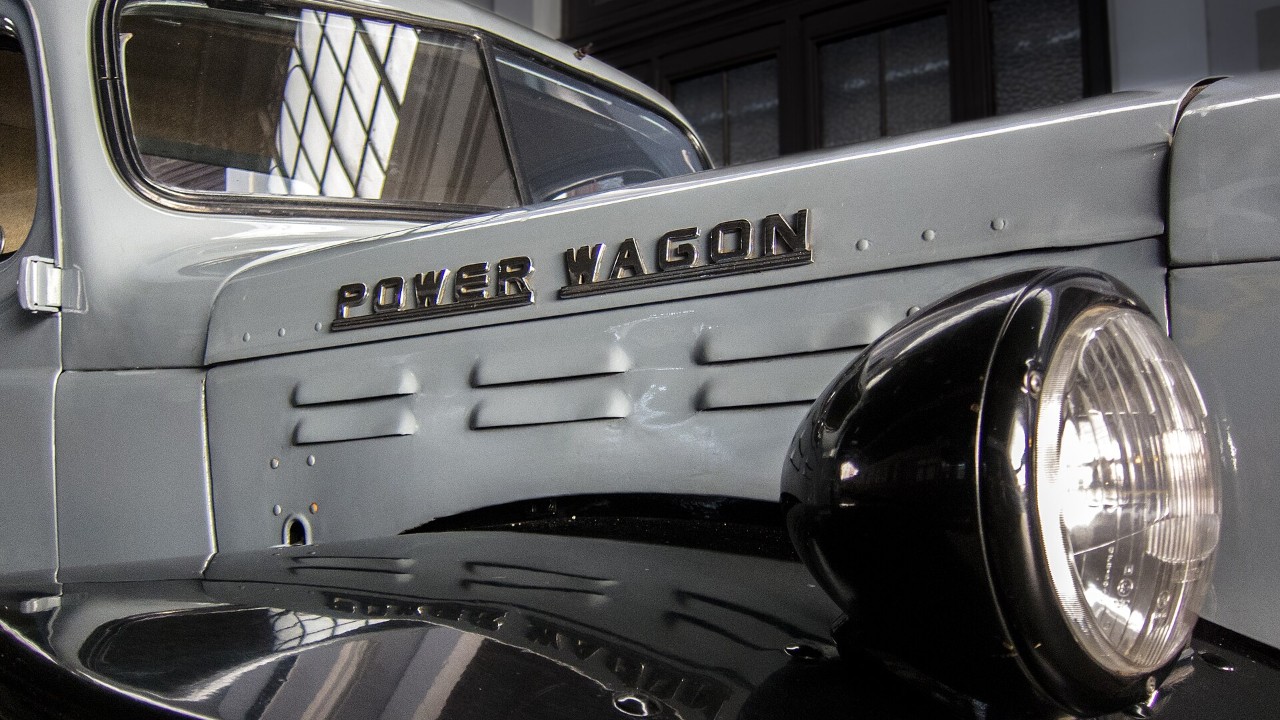
Dodge renamed the truck WM300 for 1960, and the military-style line lasted in the U.S. until 1968. At that point it could not meet new federal rules for light-duty trucks. Export sales carried on through 1978, which shows how long the basic design stayed useful. Dodge also listed a 10,000-pound winch from 1958, so many of these trucks left ready for real work.
The 1960 model has two drawbacks for buyers. First, it kept the 230-cubic-inch six for one more year, since the larger 251 flathead arrived in 1961. Second, it predates two features that owners value. Lock-out front hubs became available in 1962, and the dual master cylinder only arrived in 1967. Before that, the truck relied on a single-circuit brake system.
We like the WM300 a lot. However, a 1960 truck gives you the smallest engine and the oldest brakes of the WM300 run. By comparison, a late truck costs about the same to restore and makes a much safer daily tool.
Buyer advice: aim for a 1967 or 1968 WM300 with the dual master cylinder, or budget for a brake upgrade.
5. 1977 Dodge Macho Power Wagon
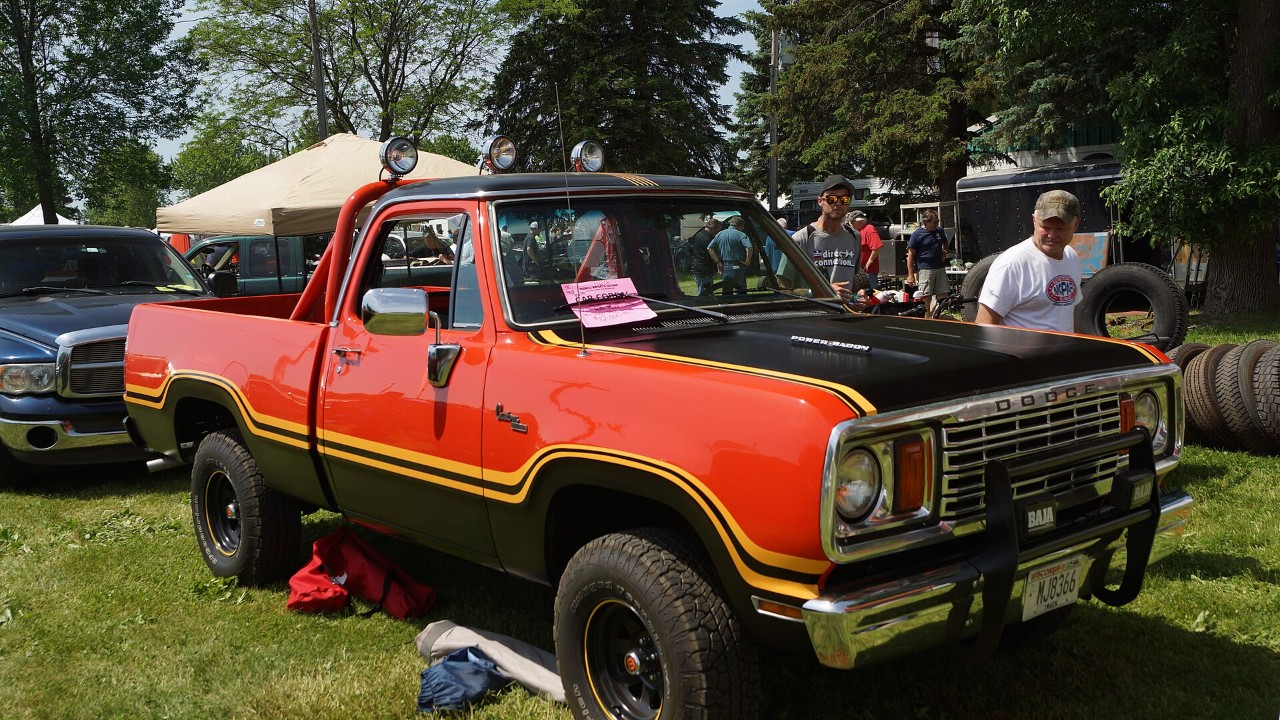
The Macho Power Wagon arrived for 1977 as part of Dodge’s “Adult Toy” line. It wore bright paint with a black lower stripe, a factory roll bar, special wheels and 10-15 LT-B tires. Buyers could choose a 318 V8 or a 440 big-block, on a 115-inch or 131-inch wheelbase.
The catch sits under the truck. From 1975, Dodge made a full-time four-wheel-drive transfer case standard on its 4×4 pickups. At the same time, it made the 440 optional on them. In 1980 Dodge went back to part-time four-wheel drive because of the energy crisis. A full-time system with a 440 makes for an expensive commute today.
There is also a naming wrinkle. Dodge redesignated heavier W100 trucks as W150s in the middle of the 1977 model year, so a 1977 truck could be either one. That matters when you order parts or check a seller’s paperwork. We love the look, but we would pass on a tired early Macho with the big-block.
Buyer advice: confirm which model the VIN shows, check the full-time transfer case, and favor the 318.
6. 1980 Dodge W150 Power Wagon
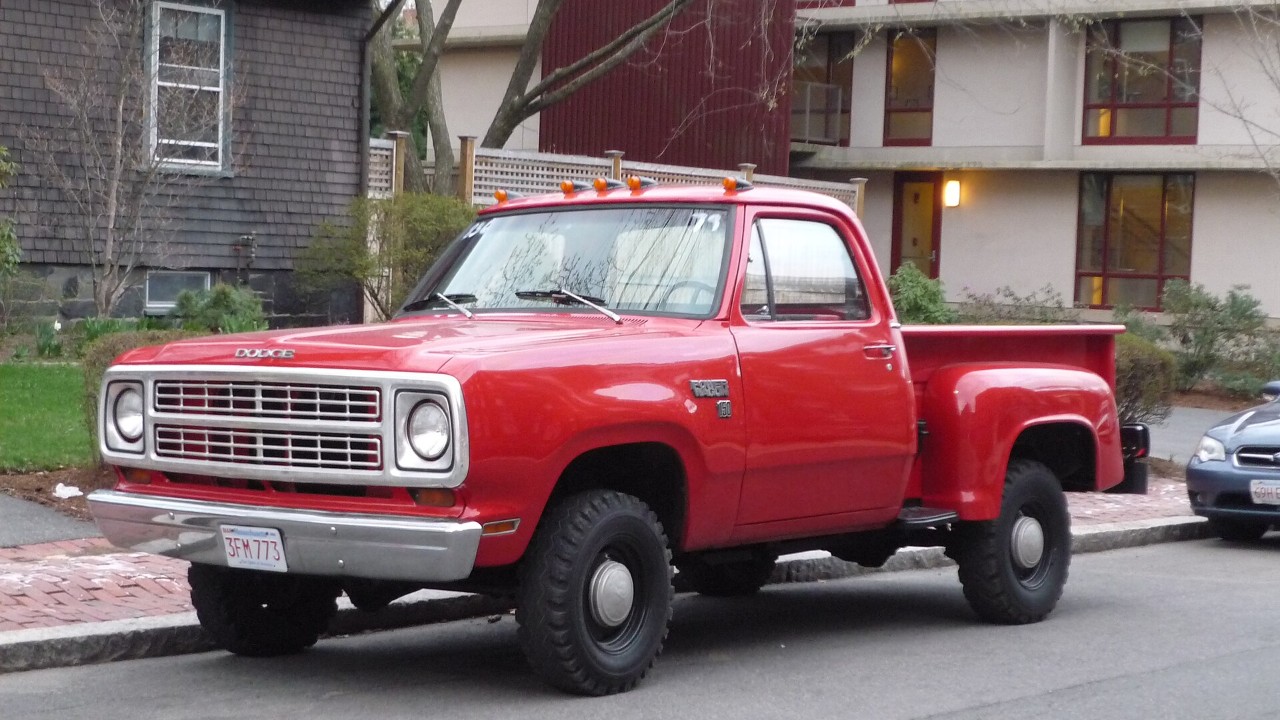
The Power Wagon name lived on the D-series pickups through the 1980 model year. Then Dodge dropped it in 1981 with the arrival of the Ram name. That makes a 1980 W150 the last of that line. That alone draws some buyers, and the year also brought part-time four-wheel drive back.
Our hesitation is power. In this era, the 318 V8 carried a net rating of 135 horsepower, while the 360 made 170. By 1980, neither the 400 nor the 440 V8 remained on the list. A half-ton 4×4 with the small V8 feels slow next to the big-block trucks that came only a few years earlier. We traced that earlier peak in our look at how heavy-duty roots made the 1978 Power Wagon such a tough truck.
There is good news, too. Dodge used galvanized tailgate and cowl panels from 1979, which helps in rust country. Even so, the last-year badge is not worth paying extra for when the truck underneath is so ordinary.
Buyer advice: hunt for a 1980 W150 with the 360 rather than the 318, and pay for condition, not the name.
7. 2014 Ram 2500 Power Wagon Laramie

For 2014, the Power Wagon gained a 6.4-liter Hemi V8 rated at 410 horsepower and a 4.10 axle ratio. It also carried locking front and rear axles, a disconnecting front stabilizer bar and an electric winch. The Laramie added leather, heated and ventilated seats and dual-zone climate control. In its 2014 Power Wagon test drive, Consumer Guide listed a $47,370 base price and an as-tested price of $59,580.
That same test showed the downside. The truck averaged 10.4 mpg, and the step-in height defeated one passenger. Meanwhile, the big tires made the ride feel “twitchy” on pavement. Consumer Guide’s second driver called it a poor commuter and said it is not meant for daily street driving. NHTSA also lists recall 15V541000 for 2014 Ram 2500 trucks, because welds on the front track bar brackets may fail.
Ram dropped the Laramie trim from the Power Wagon in 2018. In our view, a luxury interior on a rock-crawling truck is the wrong mix if you plan to drive it every day.
Buyer advice: check that recall 15V541000 is done, and consider a Tradesman if you want the hardware without the luxury price.
More from Fast Lane Only