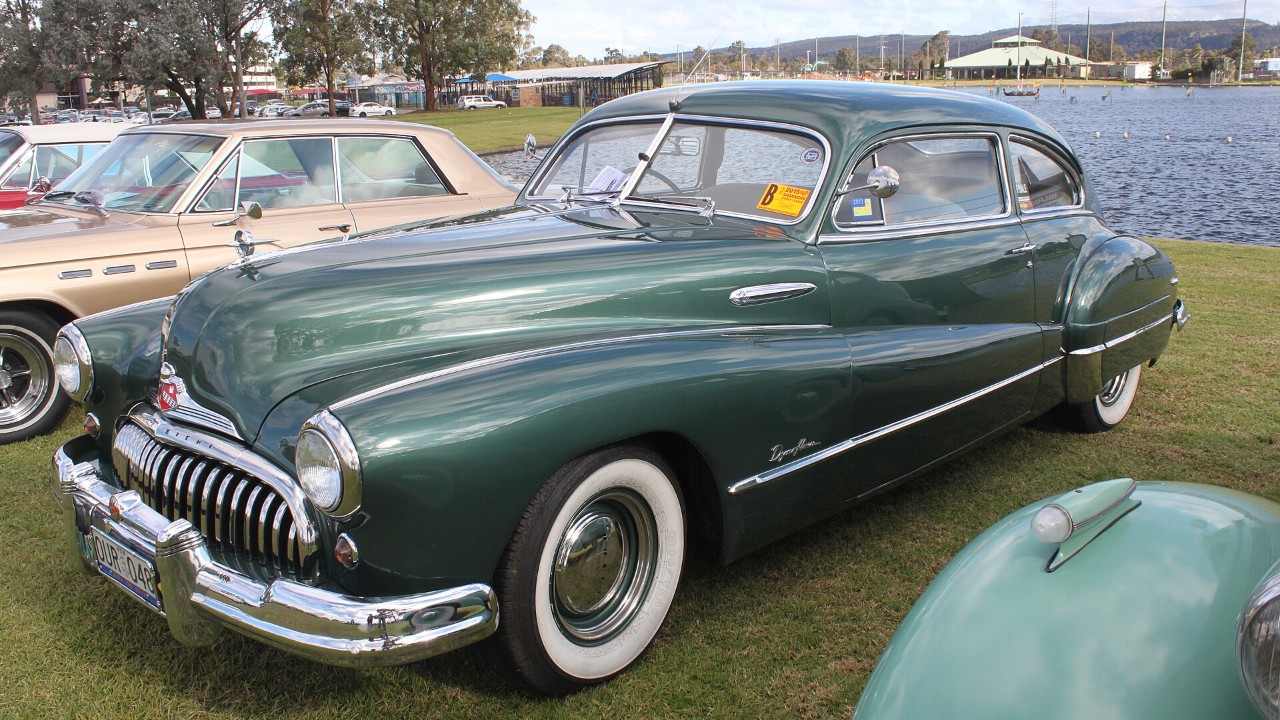
Buick’s Dynaflow transmission went on sale in 1948 as an option on the Roadmaster, and it worked differently from GM’s other automatic. A driver put the lever in Drive and pulled away in direct drive. From there, the car never changed gears by itself. Instead, a large torque converter did the work that gears did in other cars.
That made the Dynaflow smooth, quiet and a little slow. It also stayed in Buicks, in one form or another, through 1963. So here is how it worked, what it cost and how Buick changed it before the name went away.
First, some context. In 1948, the automatic most Americans knew was General Motors’ own Hydra-Matic, which used a fluid coupling and several planetary gearsets. As a result, it shifted on its own, and buyers could feel each shift. Buick wanted something different.
Where the Dynaflow transmission came from
The design came from GM engineer Oliver K. Kelley. According to Ate Up With Motor’s history of early GM automatics, Kelley filed a patent application in late 1944 for a torque converter transmission with a simple planetary gearset. By mid-1945, working prototypes were running in test mules. Buick chief engineer Charles A. Chayne showed the most interest, so he assigned Buick engineers to build a production version.
Buick had a practical reason, too. Mac’s Motor City Garage notes that the Hydra-Matic’s firm 2-3 upshift did not suit Buick’s rigid torque-tube driveline. In addition, Mac’s says the engineering drew in part on the Torqmatic, a transmission GM’s Detroit Transmission division built for the M-18 Hellcat tank destroyer in World War II.
GM announced the Dynaflow in January 1948. Sales began that March, and the option listed at $206, according to Ate Up With Motor. That was some $20 to $30 more than a Hydra-Matic at the time. For 1949, Buick made it standard on the Roadmaster and optional on its other models.
How it worked: one converter, two gears, no shifts
At its heart sat a five-element torque converter with two impellers and two stators. Behind it, Buick used a Ravigneaux planetary gearset with two sun gears, six planet gears and a single ring gear. That gearset gave a low range and a reverse of about 1.82:1, per Ate Up With Motor.
In Drive, a clutch locked the input shaft to the gearset. As a result, the gears turned as one unit at turbine speed, which is direct drive. All the extra pulling power at a standstill came from the converter itself. Ate Up With Motor puts the early converter’s stall ratio at 2.25:1.
There was also no hydraulic governor and no throttle valve. In other words, nothing in the case could decide on its own to shift. The selector position alone sent the oil where it needed to go. Mac’s Motor City Garage lists the quadrant as P-N-D-L-R.
Low worked the same way. When the driver chose Low, the clutch released and a band clamped the gearset into its 1.82:1 ratio. The transmission then stayed in Low until the driver moved the lever again. Buick itself called that range “emergency low,” according to Ate Up With Motor.
What it was like to drive
The smoothness came at a price. Ate Up With Motor describes off-the-line response as “lethargic” unless the driver picked Low by hand, which was possible at speeds up to about 45 mph. Fuel use was heavy as well. Drivers who used Low often also wore out the low band and the direct clutch, which Buick designed for occasional use.
Buick did try to help. The 1949 Roadmaster used a 320-cubic-inch straight eight rated at 150 gross horsepower and 280 lb-ft of torque. Dynaflow cars, however, got a higher-compression version with 6 more horsepower, according to Ate Up With Motor. They also used a taller axle ratio, which ate into that gain.
Owners noticed the slip. Mac’s Motor City Garage says the Dynaflow earned the nicknames “Dynaslush” and “Dynaflush,” because it slipped more than conventional automatics. Still, Mac’s adds that traditional Buick owners regarded it well. Manual transmissions stayed available on many Buicks, yet relatively few buyers chose them.
How Buick changed the Dynaflow transmission
Buick kept refining the idea. According to Mac’s Motor City Garage, the 1953 Twin Turbine Dynaflow switched to a single stator and a dedicated planetary gearset. Then, in 1956, Buick added another stator to make the transmission feel more like a conventional automatic.
For 1958, Buick offered the Flight Pitch Dynaflow at extra cost, and the company later renamed it Triple Turbine. Mac’s says it had many bugs, and Buick dropped it after 1959. Meanwhile, the Dynaflow name itself went away after 1958. The basic transmission carried on at Buick as “Turbine Drive” through 1963, when Turbo-Hydramatic units replaced it.
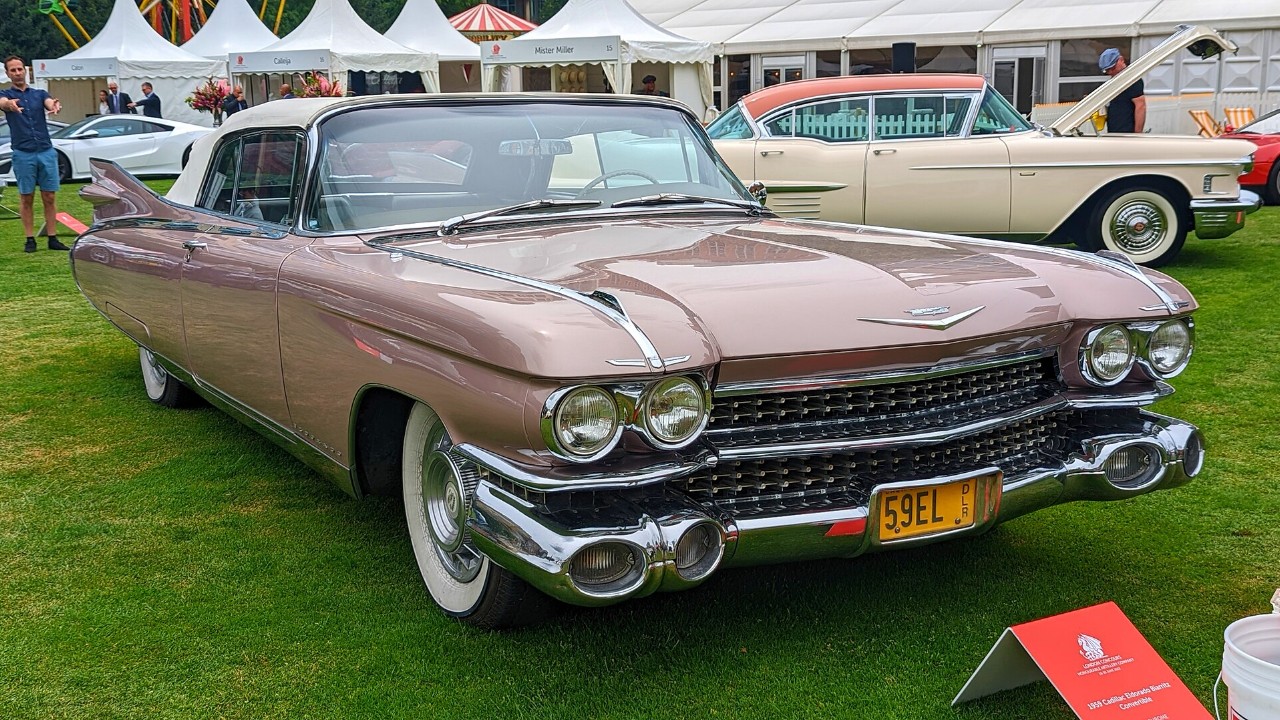
The Dynaflow also had one notable stint outside Buick. In August 1953, a fire destroyed GM’s Hydra-Matic plant in Livonia, Michigan. As a result, around 28,000 Cadillacs and several hundred Oldsmobiles left the factory that year with Buick Dynaflow transmissions, according to Mac’s Motor City Garage.
Why it still matters
Most automatics of the era chased efficiency with more gears and more shifts. The Dynaflow went the other way. It leaned on a big converter and let the driver choose the one gear change it offered. That trade cost fuel and acceleration, but it also gave Buick the seamless feel it wanted.
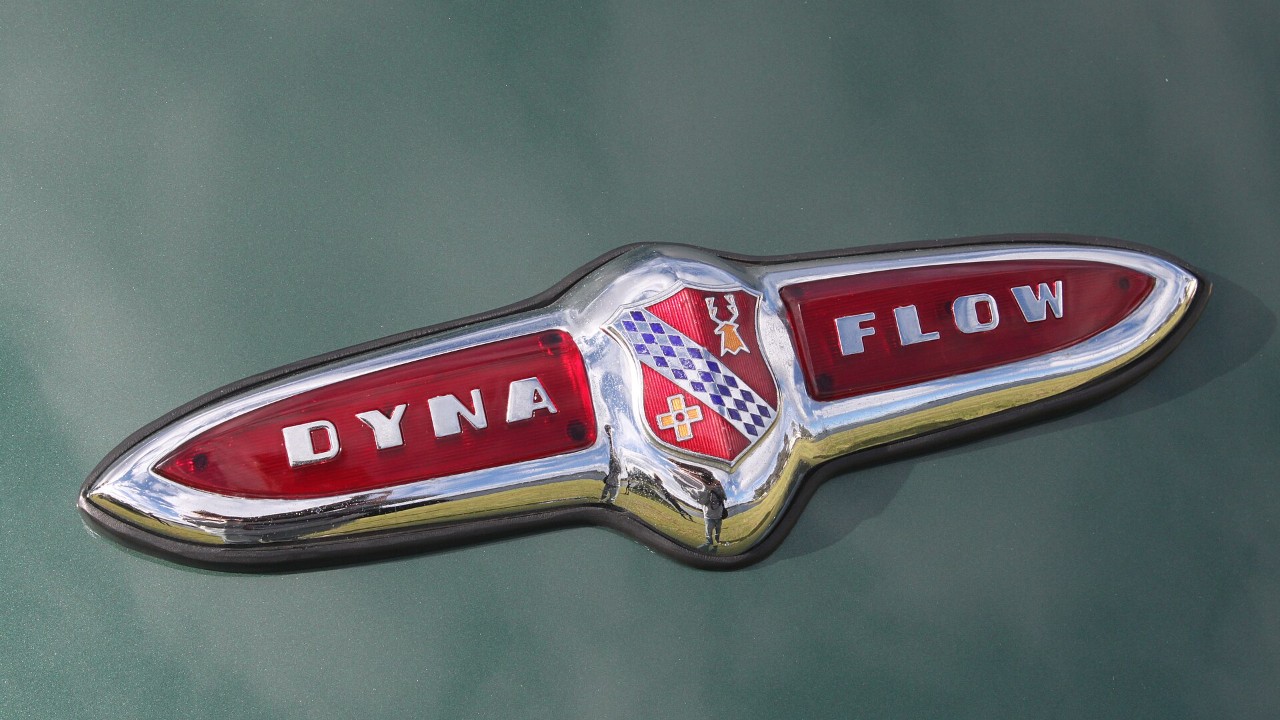
Today, the Dynaflow badge on a late-1940s Roadmaster still marks that choice. By the count of Mac’s Motor City Garage, the transmission served Buick for 16 years, from the 1948 Roadmaster option that listed at $206 through the last “Turbine Drive” cars of 1963.
More from Fast Lane Only
- Unboxing the WWII Jeep in a Crate
- 15 rare Chevys collectors are quietly buying
- 10 underrated V8s still worth hunting down
- Police notice this before you even roll window down
This article was created with the help of AI and was reviewed and edited by Fast Lane Only editors before publication.