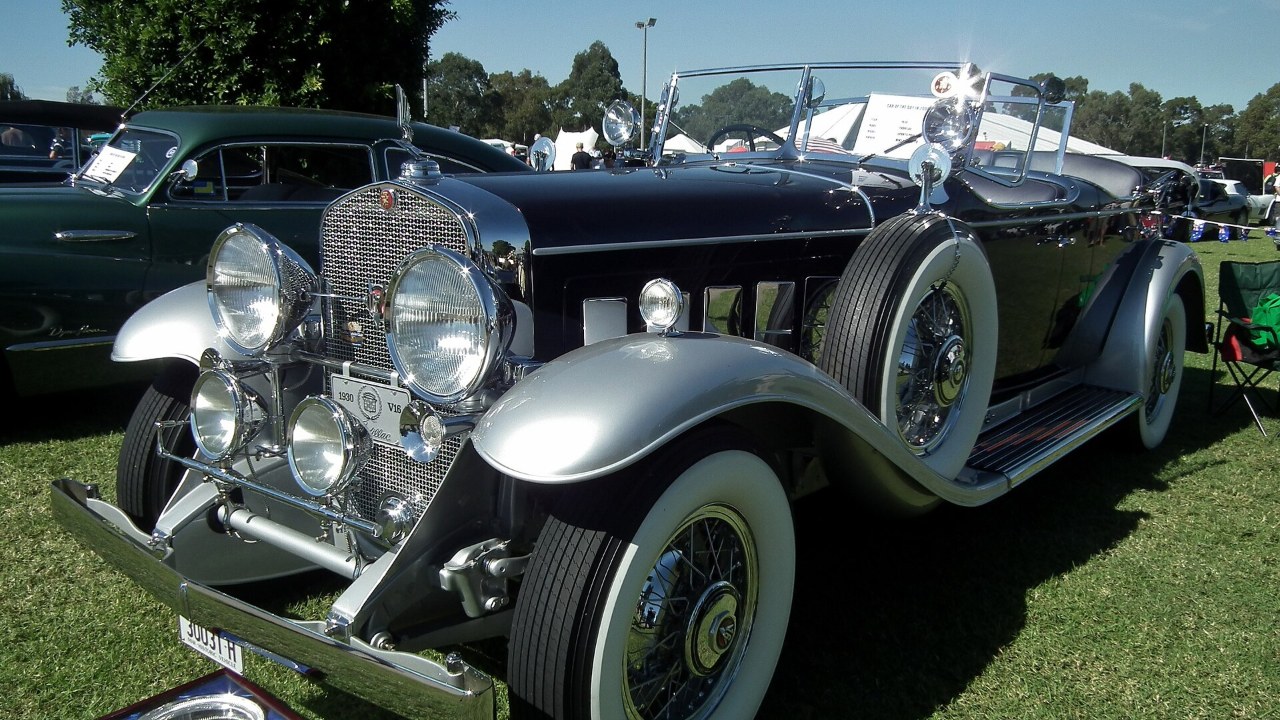
The Cadillac V-16 made its public debut at the New York Auto Show on January 4, 1930. Under its hood sat a 452-cubic-inch engine with sixteen cylinders in a narrow 45-degree V. GM’s own heritage collection credits Cadillac as the first domestic carmaker to put a production V-16 on sale. In fact, that claim came in the worst possible year to sell a luxury car, is why the car still matters.
Cadillac’s pitch wasn’t raw power. Instead, the V-16 offered smoothness and near silence at low speed. Sixteen cylinders gave eight firing pulses for every turn of the crankshaft, so the power came in a steady stream.
Timing worked against it, though. The car arrived barely two months after the October 1929 stock market crash. So here’s what Cadillac built, what made it different, and where you can see one today.
How the Cadillac V-16 came together
The project had a champion at the top. According to Ate Up With Motor’s history of the Cadillac V-16, Lawrence P. Fisher became Cadillac’s president in 1925 and pushed the idea forward. Meanwhile, the engine itself came from Owen Nacker, who had been a senior engineer at Marmon in Indianapolis.
Cadillac also worked hard to keep the engine a secret. The same history says the company described it in public as a V-12, not a V-16. Meanwhile, internal paperwork called it a “coach or bus engine.” Cadillac first told its dealers about the real car in a letter dated December 10, 1929.
Later, styling fell to Harley Earl, who drew on the European luxury cars of the day. Bodies came from Fisher Body and from Fleetwood, the coachbuilder based in Pennsylvania.
The 452-cubic-inch engine
First, the numbers explain the “452” badge. Ate Up With Motor lists the engine at 452 cubic inches, or 7,413 cc, with a 3-inch bore and a 4-inch stroke. It used overhead valves and hydraulic valve lifters, which kept the valvetrain quiet. Also, the two banks sat 45 degrees apart.
Horsepower is where the sources split. Ate Up With Motor says Cadillac first rated the engine at 175 gross horsepower, then quickly restated it as 165. Mac’s Motor City Garage also cites 175 horsepower at introduction. GM’s heritage collection, however, uses 165 horsepower, and that is the figure we’ll stand on.
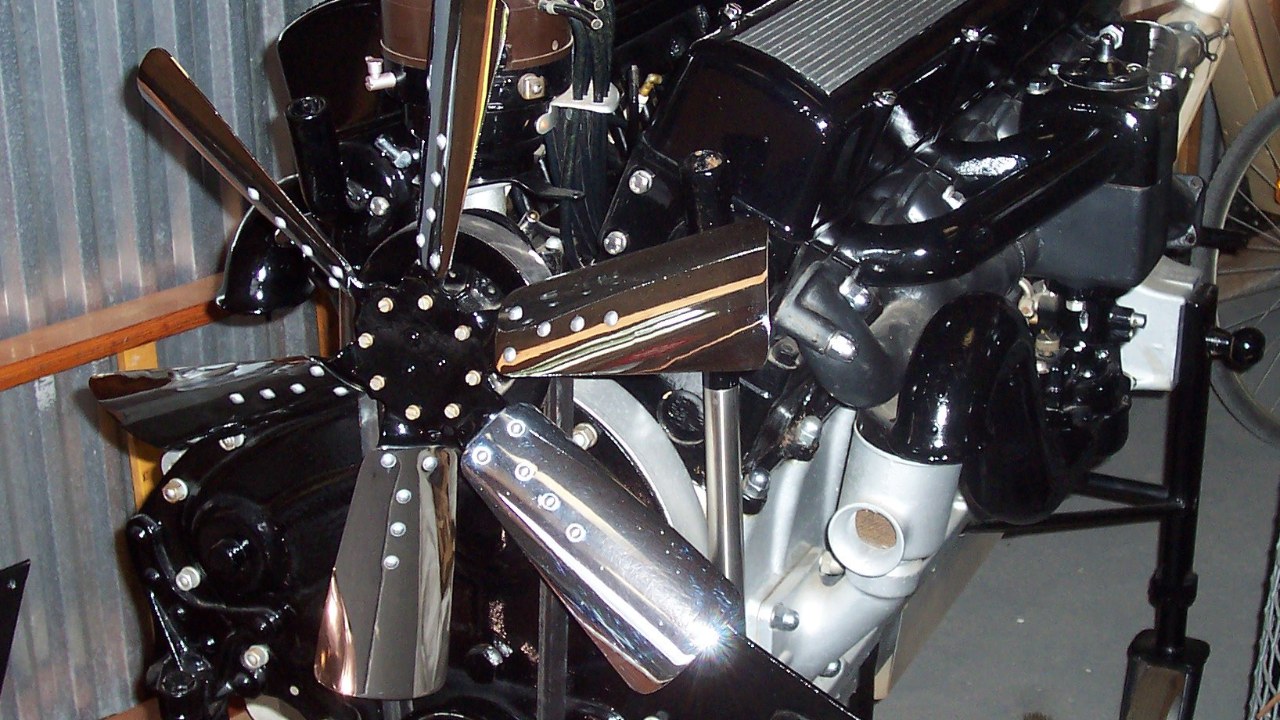
Cadillac also made the engine look the part. For example, Ate Up With Motor describes “concealed spark plug wires, polished aluminum ribbing, and lots of black enamel.” The whole engine weighed about 1,300 pounds, by that history’s count. Mac’s adds that the crankshaft alone weighed 135 pounds.
What “first” means here
The wording matters, so it’s worth being precise. GM Heritage says that “In 1930, Cadillac became the first domestic car manufacturer to release a production model version of a V16 automobile.” That is a claim about American carmakers selling a production V-16. It isn’t a claim about the whole world.
Still, a rival followed within the year. Ate Up With Motor notes that Marmon’s own V-16 debuted in October 1930. Marmon’s engine was bigger, at 491 cubic inches, and was rated at 200 horsepower. Even so, Cadillac’s V-16 reached showrooms first.
Prices, bodies and the chassis
This was a car for a very small slice of buyers. Ate Up With Motor lists a roadster at $5,350, a seven-passenger Le Baron sedan at $6,225 and a town brougham at $9,200. GM’s heritage page gives its own 1931 example a $6,500 price tag.
Buyers also had plenty of choice. Mac’s Motor City Garage counts 54 body styles on a 148-inch wheelbase. GM’s page, by comparison, describes 10 basic body styles with “nearly limitless color options.” Ate Up With Motor adds that the wheelbase grew to 153 inches in 1934.
How many Cadillac V-16s were sold
At first, the car sold well. According to Ate Up With Motor, Cadillac sold 2,887 V-16s for the 1930 model year. Mac’s puts the first-year figure at “more than 2,500,” which fits that count.
Then demand fell off fast. Ate Up With Motor lists 364 cars for 1931 and 296 for 1932. By the fall of 1930, that history says, V-16 sales had already slowed, partly because Cadillac’s own new V-12 gave buyers a cheaper option. GM’s heritage page also points to the crash, which “had diminished its consumer base.”
After that, the slide kept going. Mac’s says the final two years of the first-generation car managed barely 49 units a year. Then, for 1938, Cadillac launched a second-generation V-16 with its banks spread to 135 degrees. Mac’s says that engine was six inches shorter and 250 pounds lighter, and it stayed in production through 1940.
Where to see a Cadillac V-16 today
Today, GM keeps one in its own collection. The heritage center’s 1931 Cadillac V-16 can top 80 mph, according to GM. Its original owner, Augusta Little, donated the car to the GM Heritage Center collection.
More from Fast Lane Only
- Unboxing the WWII Jeep in a Crate
- 15 rare Chevys collectors are quietly buying
- 10 underrated V8s still worth hunting down
- Police notice this before you even roll window down
This article was created with the help of AI and was reviewed and edited by Fast Lane Only editors before publication.