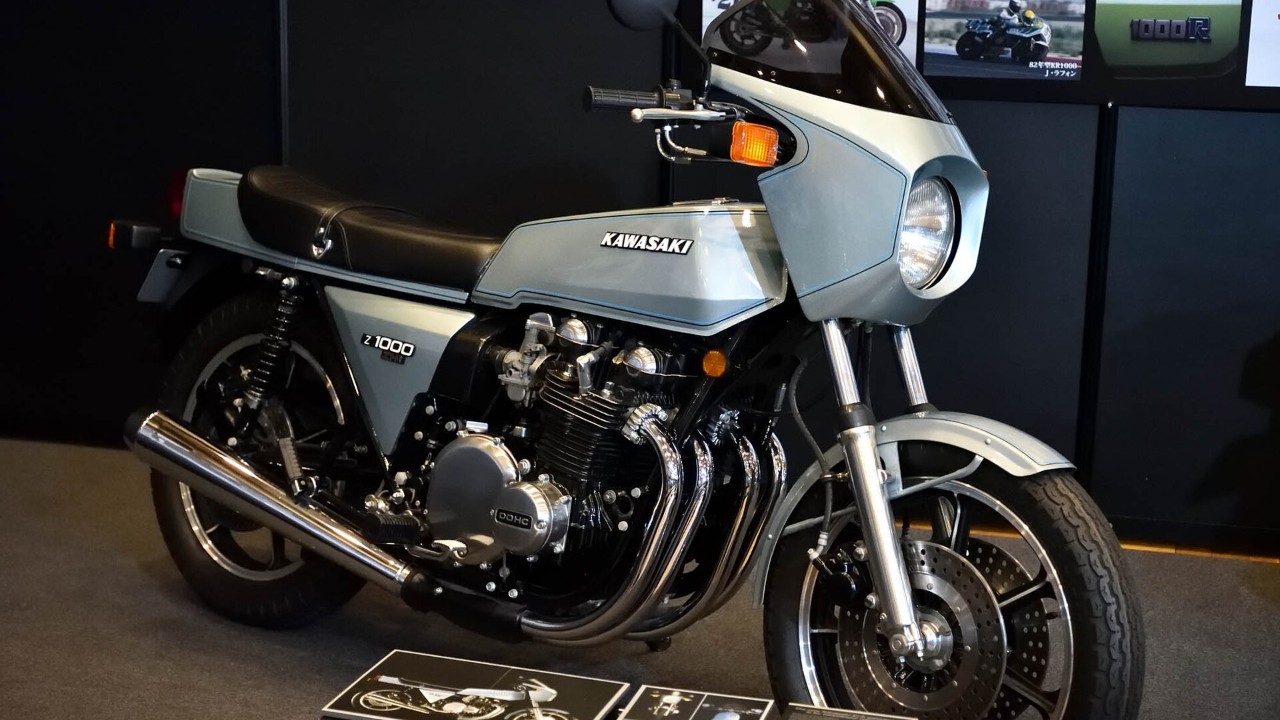
The 1978 Kawasaki Z1-R wore a quarter fairing, which Motorcycle Classics calls the first on a Japanese motorcycle. That small cowl borrowed its attitude from a scene that began on British roads. Café racers are said to date from early-1960s London, when young riders stripped their bikes and ran between cafés such as the Ace Cafe.
The look stuck, too. Low bars, rear-set footrests and a solo seat let the rider tuck in, and they still signal speed at a glance. Over time, factories from Japan to Italy and Britain built their own takes on the formula.
These are our picks, seven café racers we would refuse to sell at any price. That verdict is our own opinion. The facts behind each one come from period road tests, buyer guides and marque history, and we have included what to look for if you want one.
1. 1978 Kawasaki Z1-R
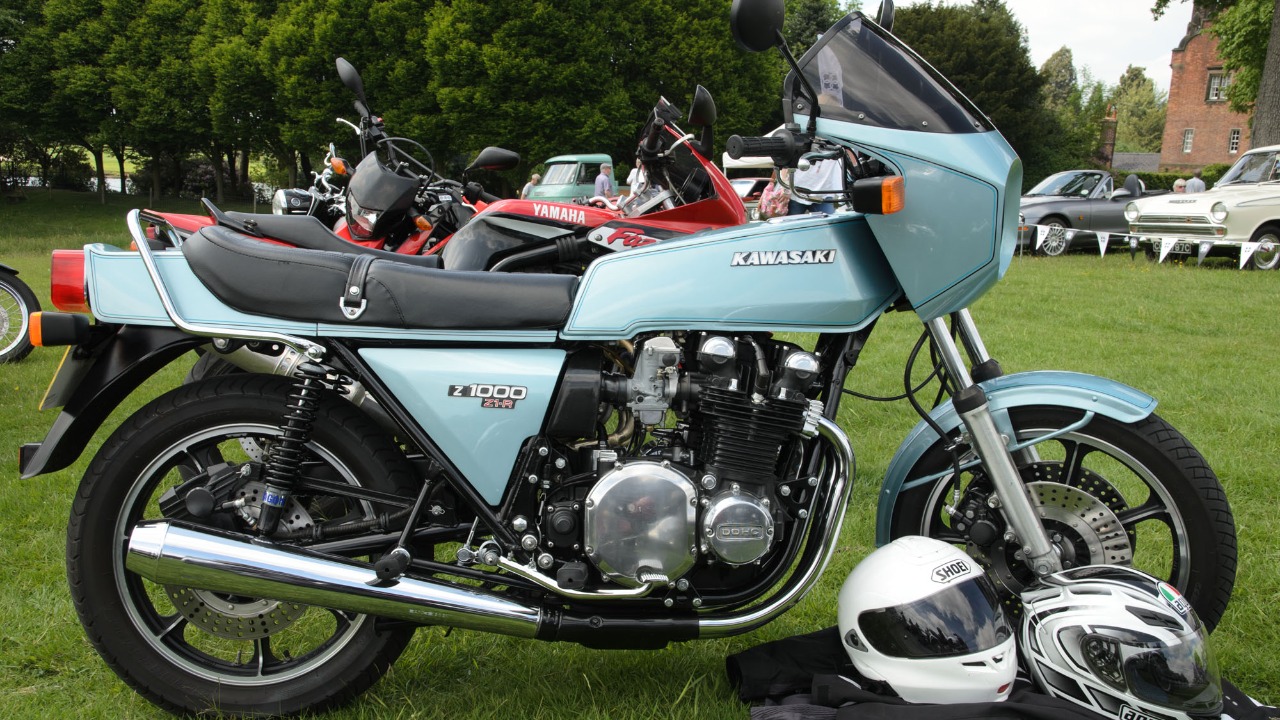
Kawasaki’s Z1-R was a café racer straight from the factory. According to Motorcycle Classics, the design began in 1974 with Graham Kirk and Wayne Moulton, working alongside H.P. Otsuki and T. Takahashi. A stylist known as “Cowboy Chris” Kurishima drew the sketches.
In the end, the result wore metallic silver bodywork and that famous quarter fairing. Under it, meanwhile, sat a 1,015 cc air-cooled, twin-cam inline-four. Kawasaki claimed 90 hp at 8,000 rpm and a top speed of 130 mph. Meanwhile, Cycle magazine ran the quarter-mile in 11.95 seconds. The bike also used triple disc brakes with drilled rotors, two up front and one at the rear.
Kawasaki built about 17,000 of the 1978 D1 model. It listed at $3,695 when new, and Motorcycle Classics now puts values at $4,000 to $13,000. Handling drew the most complaints in a 1980 Cycle World owner survey, yet 88 percent of the Kawasaki owners asked said they would buy another Kawasaki.
Our take: the Kawasaki Z1-R is the bike that proved a Japanese four could wear café clothes with real style. We would never let ours go, especially an original one with its paint intact.
2. 2016 Triumph Thruxton 1200 R
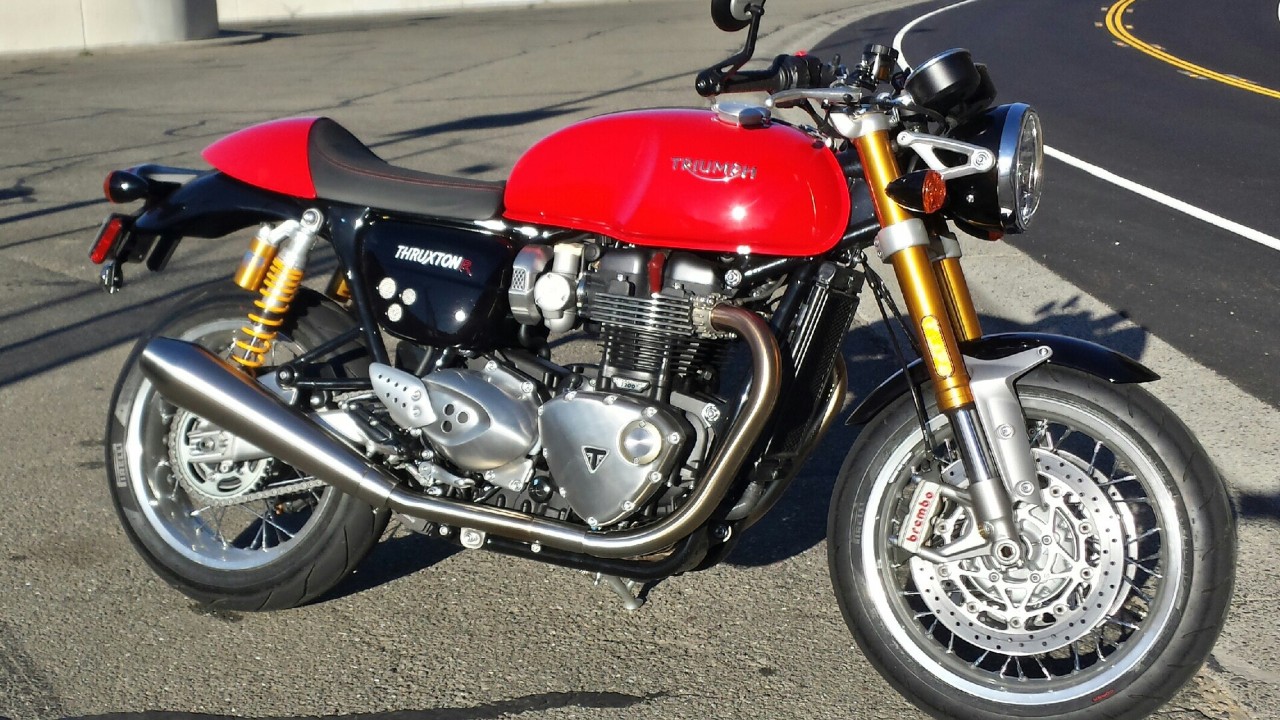
The Thruxton name comes from a Hampshire race track. Triumph’s Meriden race shop built a run of tuned Bonneville T120 Thruxtons from May 1965, and Triumph took the top three places in the Thruxton 500 endurance race in 1969. The modern 1200 R wears that history well.
Bennetts’ BikeSocial used guide lists 96 bhp at 6,750 rpm and 82.6 lb-ft at 4,950 rpm from the liquid-cooled “High Power” 1,200 cc twin. The R adds fully adjustable 43 mm Showa Big Piston forks and Öhlins piggyback rear shocks. Up front, twin 310 mm discs and Brembo four-piston radial calipers push braking toward superbike levels. Bennetts also reports that reliability and quality have proven good.
However, it is not a featherweight, at 203 kg kerb. It also cost £11,700 new in Britain, which Bennetts calls a high-ish price. Even so, used examples sell for £7,750 to £10,000.
In our view, the Thruxton R is the modern café racer that gives up the least. It looks period-correct, but it stops and steers like a new bike. For more bikes that feel this good on a back road, see our list of 20 classic bikes that still feel special on the open road.
3. Moto Guzzi V7 Racer
Moto Guzzi has deep café racer roots. Its 1971 V7 Sport was the company’s first café racer, built on a new frame with clip-on bars. In 1972, Motorcycle Mechanics quoted a factory claim of 70 bhp from its 748 cc twin.
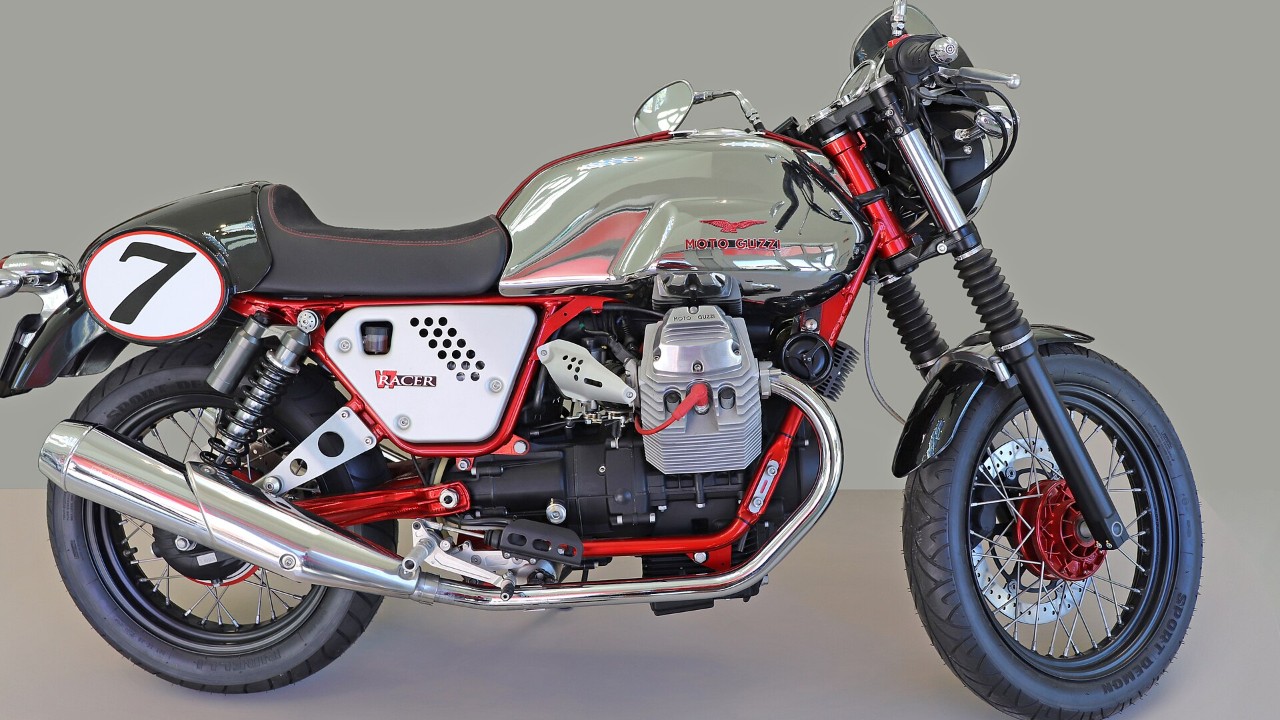
The V7 Racer brought that spirit back for the modern era. Rider Magazine’s road test of the 2011 V7 Racer describes a metallic red double-cradle frame, a solo seat with a removable cowl and racing number plates on the steering stem and seat hump. Meanwhile, the engine is a 744 cc air-cooled, pushrod V-twin with two valves per cylinder. Guzzi claimed 48.8 hp at 6,800 rpm, and the bike weighed 437 pounds wet.
Each bike carried a numbered plaque, and Rider’s test bike was “Number One!” On the other hand, the reviewers found the Bitubo shocks harsh and the Marzocchi fork underdamped. The bike listed at $9,790 and averaged 47.2 mpg.
Our take: the V7 Racer is about character, not lap times. Its red frame and number plates make it feel like a vintage race bike every time you walk into the garage. Better shocks can fix the ride, and that is a small price for a bike this charming.
4. 2018 Kawasaki Z900RS Cafe
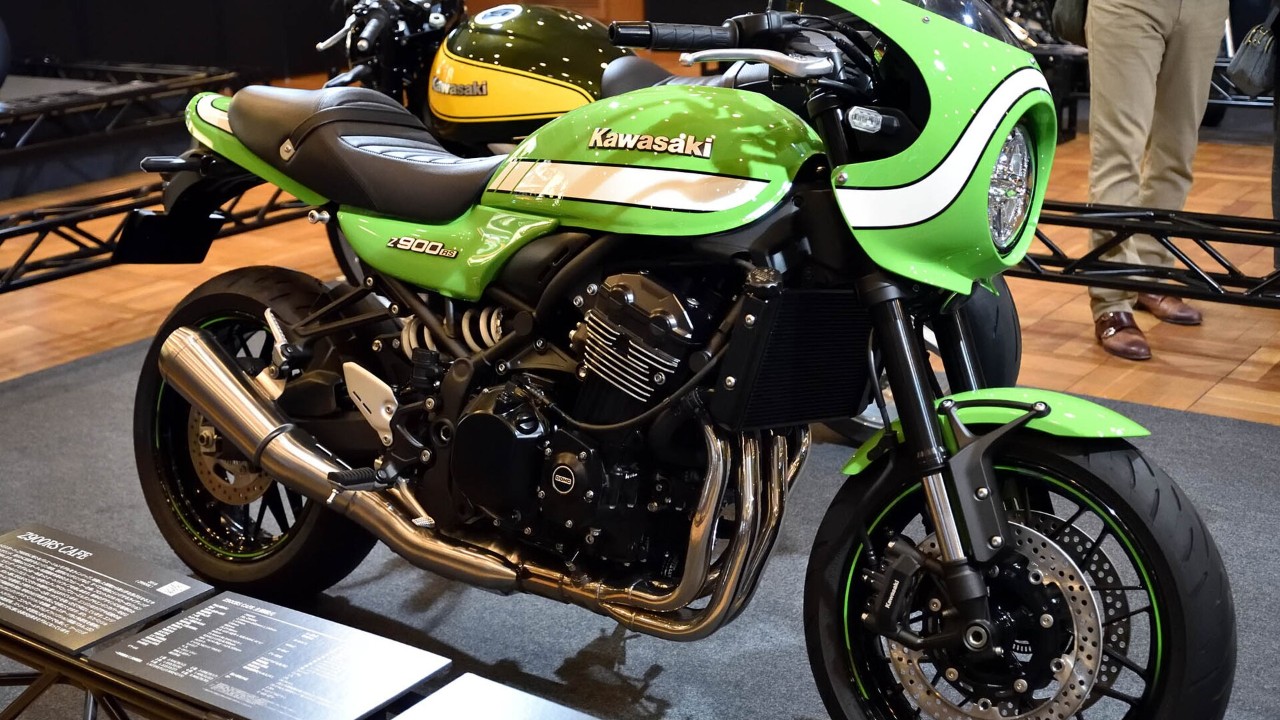
The Z900RS Cafe looks back to Kawasaki’s own racing past. One 2018 first-look report said its look “might be something from the days of Eddie Lawson snatching titles aboard his KZ1000R.” In America, it wore two-tone Vintage Lime Green paint.
The Cafe turns the standard Z900RS into a sportier machine. It adds a front cowl and lower, flatter handlebars for a more aggressive riding position. As a result, the seat height rises slightly, to 32.3 inches. Power comes from a 948 cc inline-four that makes a claimed 72 lb-ft of torque at 6,500 rpm. Curb weight is 474 pounds.
The bike also links back to the first item on this list. Kawasaki’s Z1-R wore a small factory fairing in 1978. Decades later, the Z900RS Cafe used the same trick to turn a retro roadster into something sharper.
In our view, this is the café racer for riders who want vintage looks without vintage habits. Its two-tone green paint seals the deal for us. If we had one in Vintage Lime Green, we would keep it in the family.
5. Triton cafe racer
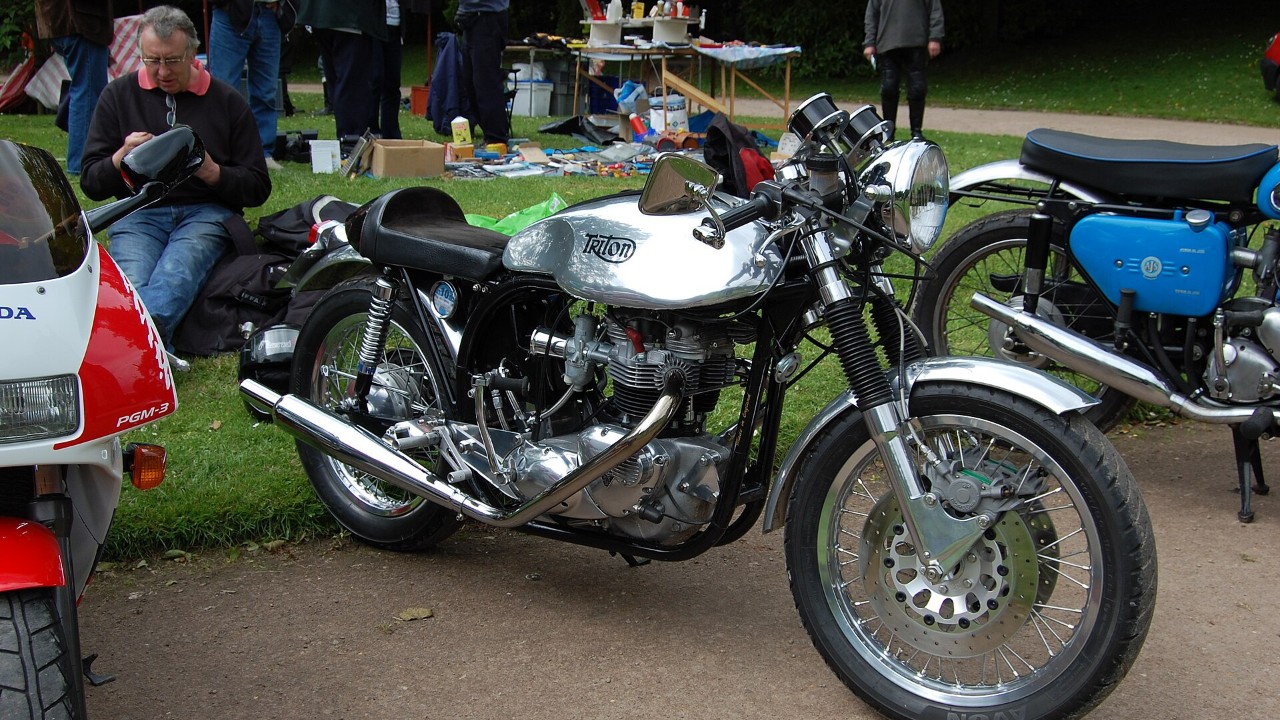
The Triton was never a factory model. Instead, it was a hybrid special that combined a Triumph engine with a Norton Featherbed frame. As Hagerty UK explains, Triumph made the strongest engines of the era, such as the 650 cc Bonneville. Norton’s Featherbed frame, meanwhile, handled best.
Even so, nobody knows who built the first one. Several people probably did so independently in the mid-1950s. Triumph was reportedly unhappy. London racer Doug Clark ran his Triton at Silverstone and then received a letter threatening legal action if he kept going.
Later, in the early 1960s, Dresda Autos of west London began selling Triton kits and complete bikes. Dave Degens won the Barcelona 24-hour race on a Triton in 1965 and went on to build hundreds more. Hagerty’s 1965 Dresda Triton used a 649 cc parallel twin rated at 50 bhp at 6,500 rpm and weighed 160 kg without fluids.
Our take: a good Triton is the purest café racer you can own, because riders invented it rather than a marketing department. We understand why so many British bike fans hang on to theirs, as in our list of 20 British motorcycles owners refuse to part with. Before you buy, check who built it, since every Triton is different.
6. Husqvarna Vitpilen 401
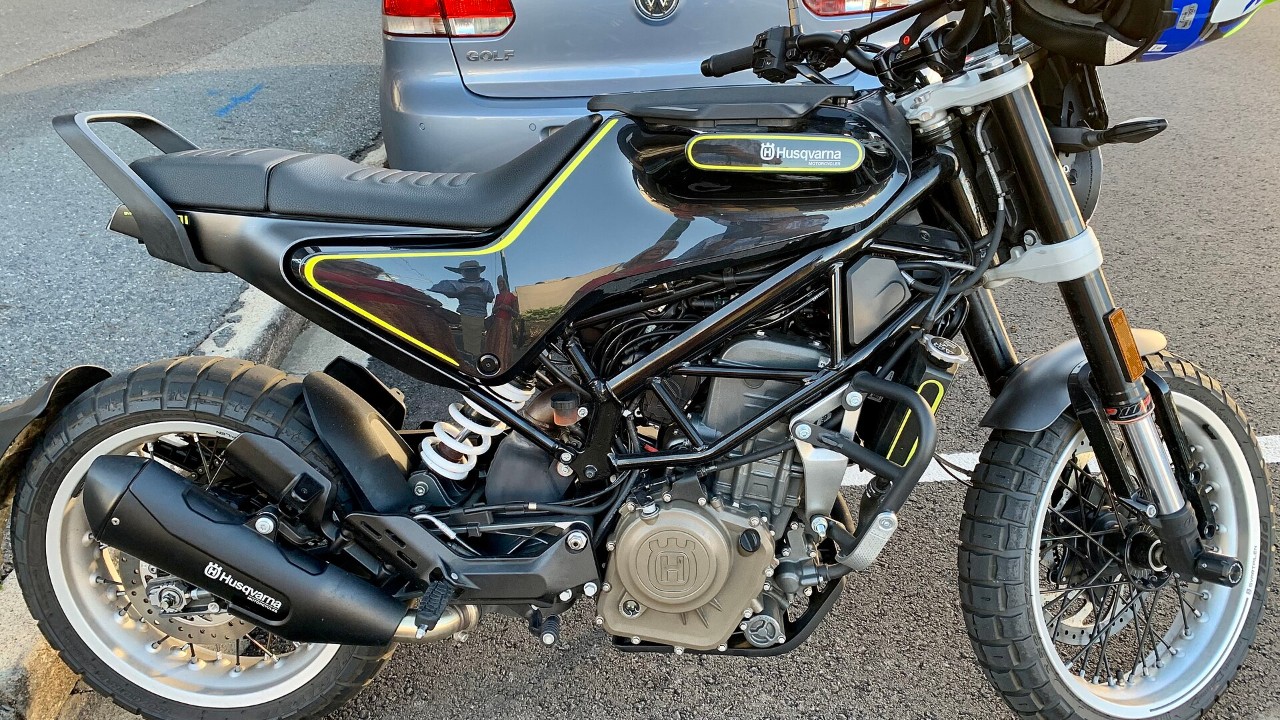
The Vitpilen 401 brought café racer style to a small, light single. According to Bennetts’ review, it uses a 375 cc four-valve single built by KTM and based on the 390 Duke. That engine makes 44 hp at 9,000 rpm and 37 Nm of torque, so it suits A2 licence holders in Europe.
At launch, Husqvarna described the bike as “subtle, style-focused and stripped of all that is unnecessary.” It has clip-on bars, a high flat seat and a 9.5-litre tank, and the whole bike weighs under 150 kg. However, that minimalism has a cost. Bennetts warned that the thin seat foam “means a numb bum,” and the downward grips make for a wrist-heavy ride. It also cost £5,599, which was £1,000 more than the KTM it is based on.
Those complaints are real, but they miss the point. The Vitpilen is a design object as much as a motorcycle. Few small bikes look this clean parked outside a coffee shop.
In our view, the Vitpilen 401 is the modern café racer we would most like to see preserved. We would keep a clean, original one and put the miles on something else. If you want one, look for a bike that has kept its stock bodywork and lights.
7. Ducati SportClassic Sport 1000S
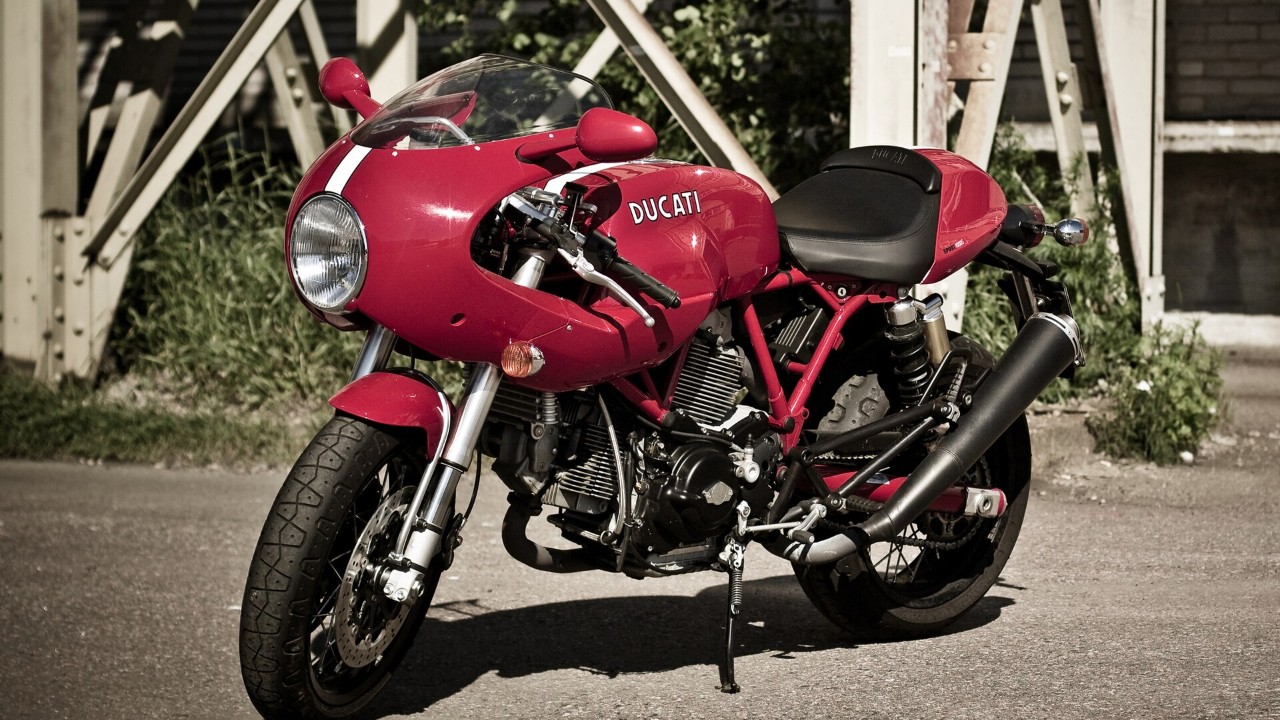
Ducati’s SportClassic family looked back to the company’s 1970s twins. Pierre Terblanche, Ducati’s design chief, gets the credit for the series. The Sport 1000S arrived as a 2007 model. It took the Sport 1000 and added a retro fairing styled like the one on the limited Paul Smart 1000 LE. It also needed lower handlebars than the naked bike so they would fit under the fairing.
As on the Sport 1000, power came from a 992 cc air- and oil-cooled desmodromic L-twin. Shannons’ review of the Sport 1000 lists a claimed 92 hp at 8,000 rpm and a measured 79 hp at 7,900 rpm. The reviewer also compares its feel with the original 750 Sport, calling it “a magical ride.” Brakes, on the other hand, could have been sharper.
The SportClassic line did not last long. Sport 1000 models ran from 2006 to 2009, and production had ended by 2010. Shannons says very few reached Australia, where a Sport 1000 can now fetch up to A$30,000.
Our take: the Sport 1000S is the SportClassic that puts the Paul Smart’s look on a regular-production bike. That is exactly why we would never sell one. If you are shopping, confirm the fairing and original parts are present, because they define this version.
More from Fast Lane Only