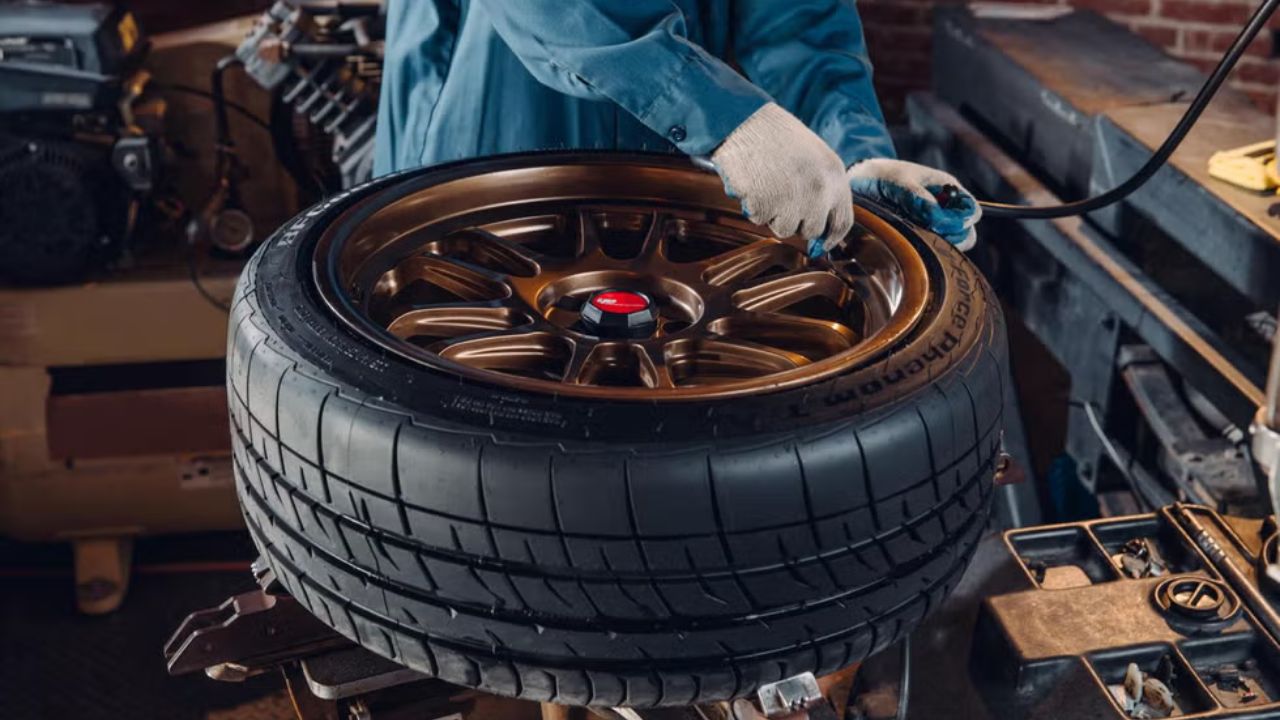
California regulators are advancing a tire-efficiency proposal that could sharply limit which replacement tires can be sold in the state, with potential ripple effects for drivers across the country. The plan targets rolling resistance in an effort to cut emissions, but critics warn it could sideline many popular aftermarket models and raise costs for enthusiasts, fleets, and everyday motorists.
The fight over how grippy, aggressive, or specialized a tire can be while still meeting new efficiency rules has become a fresh front in California’s broader push to clean up transportation. What appears to be a technical standard is quickly turning into a high-stakes battle over consumer choice and the future of the aftermarket.
How California’s tire-efficiency push evolved into a potential aftermarket squeeze
At the center of California’s proposal is rolling resistance, the energy a tire consumes as it rolls, which directly affects fuel economy and electric vehicle range. Regulators want replacement tires sold in the state to meet efficiency levels comparable to the original-equipment tires that come on new vehicles. According to analysis of the draft rule, the California Air Resources Board is working from test data that ranks tires by a rolling resistance coefficient and would set a cutoff that many current models fail to meet, especially aggressive all-terrain and performance options, as described in coverage of the proposed standard.
The effort is tied to California’s broader climate strategy. Replacement tires stay on vehicles for years, and regulators view them as an overlooked lever for reducing fuel consumption and emissions. Earlier reporting on the process notes that the state has studied European Union labeling schemes and federal research to identify ranges of rolling resistance that deliver measurable efficiency gains, then applied those benchmarks to the replacement market. In practice, the goal is to avoid a scenario where a highly efficient new car is later fitted with low-efficiency tires that erase part of the original fuel economy benefit.
What has changed over the past year is not the basic goal but the realization of how many tires sit on the wrong side of the proposed line. Technical breakdowns of the rule highlight that many ultra-high-performance summer tires, off-road mud-terrain models, and even some mainstream all-season lines would fall outside the acceptable rolling-resistance band if the standard is adopted as drafted. One analysis of rolling resistance rules notes that the proposal could affect a large share of the current catalog, especially in niche fitments where efficiency has historically taken a back seat to grip or durability.
California is also considering labeling and testing protocols that would require manufacturers to certify each tire line sold in the state. That adds another layer of complexity for brands with extensive size ranges, since a single tread pattern can exist in dozens of diameters, widths, and load ratings. Industry groups argue that the administrative burden, combined with the efficiency cutoff, would effectively push many low-volume enthusiast and specialty tires off the market, even if they technically could be redesigned over time.
Why the proposal’s timing and scope matter for drivers and the aftermarket
The stakes are high because California is not just any market. It is one of the largest car markets in the United States, and its environmental rules often become a template for other states. If replacement tires must meet California’s rolling-resistance threshold, manufacturers may decide it is simpler to build their national lineup around those limits rather than maintain separate product lines, which amplifies the impact beyond state borders. Reporting on potential replacement tire standards points out that the rule is expected to influence offerings nationwide, especially for high-volume models.
For drivers, the most immediate concern is choice. Enthusiasts who favor sticky summer tires for track days, owners of lifted trucks who rely on aggressive tread for off-road use, and drivers of older vehicles that need specific sizes could all see their preferred options disappear from California shelves. Some may be forced into more efficient but less capable tires, raising questions about braking distances, wet grip, and performance in snow or on trails. Tire makers routinely balance rolling resistance against traction and wear, and critics argue that pushing too hard on efficiency could compromise safety or capability in certain use cases.
Cost is another flashpoint. Industry representatives warn that redesigning and re-certifying large portions of their portfolios will require significant engineering and testing investments, which could feed into higher retail prices. The Specialty Equipment Market Association has urged lawmakers to halt or revise the proposal, arguing that it will harm drivers, small businesses, and the broader aftermarket. In its call to action, SEMA contends that the rule, as drafted, would remove many popular products from the market and reduce competition, which it says will ultimately raise costs for consumers and limit the ability of shops to serve niche segments of the car community, as outlined in its advocacy campaign.
Environmental advocates counter that the efficiency gains are significant at scale. They argue that even modest improvements in rolling resistance, multiplied across millions of vehicles and years of driving, can deliver large reductions in fuel use and greenhouse gas emissions. For electric vehicles, more efficient tires can extend range without adding battery weight, which also helps cut upstream emissions. Supporters of the rule note that many modern touring and all-season tires already achieve relatively low rolling resistance without obvious tradeoffs, and they see the standard as a way to pull lagging segments of the market toward best practices.
The proposal also intersects with California’s broader push to phase out sales of new gasoline cars over the coming years. Regulators view every piece of the vehicle system, from powertrain to tires, as part of an integrated efficiency strategy. By ensuring that replacement tires do not undercut the efficiency of electric and high-mpg vehicles, the state hopes to lock in the benefits of its zero-emission vehicle policies.
How the rule could reshape tire design, retail, and national policy
If adopted, the standard would likely trigger a wave of redesigns. Tire makers would face pressure to re-engineer compounds, tread patterns, and internal construction to cut rolling resistance while preserving grip and wear. Some have already moved in this direction for OEM fitments on vehicles like the Tesla Model 3 and Toyota Prius, which use specialized low-rolling-resistance tires. Translating that approach across broader product lines, including performance and off-road segments, is a more complex challenge.
Retailers and installers would also need to adapt. Shops that currently stock a wide range of aggressive all-terrain or track-focused tires might see those options shrink, replaced by more efficiency-oriented models. Sales staff would have to explain new efficiency labels and tradeoffs to customers, and some drivers might turn to online sellers in other states if they perceive local offerings as too limited. That raises enforcement questions about how California will handle out-of-state purchases shipped directly to consumers.
There is also a potential safety angle that regulators will need to address head-on. If drivers feel they cannot get the traction or load capacity they need from compliant tires, they may hold on to old sets longer than they should, which could increase risks from worn or aged rubber. Balancing efficiency with real-world performance across climates and use cases will be central to whether the rule gains public acceptance.
Nationally, the proposal could reignite debate over federal tire-efficiency standards. The United States has long discussed creating a uniform labeling or performance requirement similar to the European Union’s system. California’s move could serve as a de facto pilot, showing both the benefits and the friction that come with aggressive targets. Other states that typically align with California on vehicle emissions may watch closely and consider adopting parallel rules, which would further pressure manufacturers to standardize around the strictest benchmark.
More from Fast Lane Only
- Unboxing the WWII Jeep in a Crate
- 15 rare Chevys collectors are quietly buying
- 10 underrated V8s still worth hunting down
- Police notice this before you even roll window down
*Research for this article included AI assistance, with all final content reviewed by human editors.