You can still feel the pitch behind the 1975 Oldsmobile Ninety-Eight in your bones: when the world felt noisy and uncertain, this car promised a quiet, carpeted refuge. Instead of selling you on speed or rebellion, Oldsmobile leaned hard into serenity, reassuring you that life would feel smoother, softer and more controlled from behind that long hood. Calm, not drama, was the product.
Look past the opera lamps and vinyl roof and you see a strategy that speaks directly to how you weigh comfort against chaos today. The Ninety-Eight was a rolling argument that size, softness and predictability could be virtues, not vices, at a time when fuel shocks and cultural shifts were rattling drivers. If you have ever chosen a cushy crossover over a sharper sports sedan, you are still answering the same question Oldsmobile posed in 1975.
The Ninety-Eight as a sanctuary on wheels
When you picture a 1975 Oldsmobile Ninety-Eight, you are really picturing a room, not a machine. The car’s vast interior, thickly padded seats and hushed ride were designed to make you feel insulated from whatever was happening outside the glass. Even the name “Regency” signaled that you were stepping into a more formal, controlled space, one where the day’s worries were meant to stay at the curb. In a decade defined by inflation, fuel lines and political scandal, that sense of sanctuary was the real luxury being sold.
The body itself underlined the message. The 1975 model sat in the penultimate year of its huge body style, a period when the Ninety-Eight stretched across the driveway like a living room on wheels and wore its bulk with quiet confidence. Contemporary observers described the experience of having an Oldsmobile Ninety Eight around you as “bloated” and “wallowy,” but if you were the buyer Oldsmobile wanted, that softness was the point. You were not carving canyons, you were gliding home, cocooned in a car that turned every commute into a slow exhale.
Designing calm into a very large car
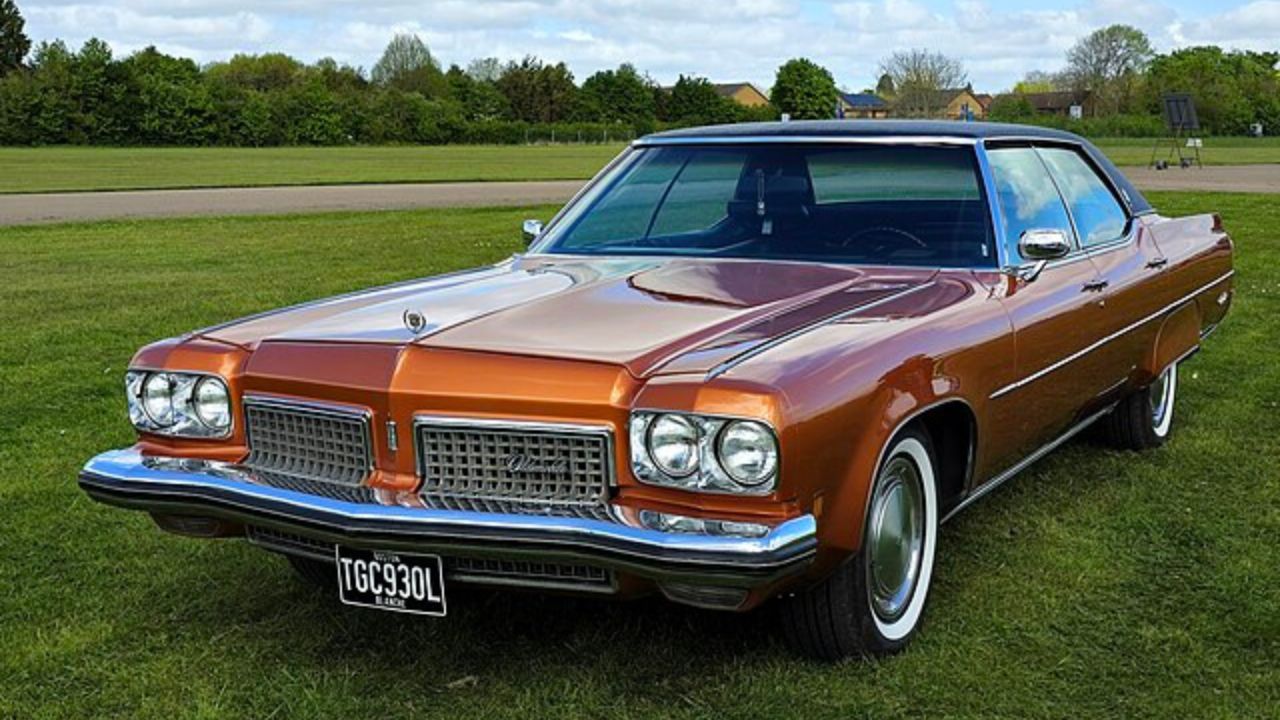
From the outside, the Ninety-Eight’s styling walked a careful line between drama and reassurance. The long hood, upright grille and squared-off fenders gave you the visual authority of a big American sedan, yet the edges were rounded just enough to avoid looking aggressive. You saw a car that looked substantial and permanent, not sharp or threatening. Details like the vinyl roof, opera windows and generous chrome trim added a kind of “Gothic luxury,” a slightly ornate, almost old-world calm that contrasted with the sharper, more angular designs starting to appear elsewhere in the market.
Underneath that sheet metal, the engineering choices backed up the visual promise. The chassis and suspension were tuned for a soft, almost floating ride, the sort of “wallowy” motion that critics might mock but owners often cherished on long highway runs. Period walkarounds of the 1975 Olds 98 highlight how this huge body style was nearing the end of its run, yet still delivered the kind of quiet, isolated cruising that defined the brand. In one detailed look at a 1975 Oldsmobile 98 Regency, the presenter notes how this was the penultimate year for this huge body style and underscores how the car embodied a particular kind of 98 luxury that prioritized smoothness over sharp reflexes.
Marketing reassurance in a jittery decade
If you were shopping for a new car in the mid‑1970s, you were not just comparing horsepower figures, you were trying to make sense of a world that felt like it was speeding up without your consent. Oldsmobile’s pitch for the Ninety-Eight leaned into that anxiety by offering you a familiar, almost conservative choice. The car’s size and traditional layout said you did not have to chase every new trend to feel successful or secure. Instead of promising you a new identity, the Ninety-Eight promised to stabilize the one you already had.
That is why the car’s sheer bulk, which some reviewers framed as excess, could be reframed as a selling point when you were the one signing the check. The “bloated” proportions and soft suspension that enthusiasts criticized translated into a sense of planted, predictable motion for everyday drivers. When one writer described the sensation of having an Oldsmobile Ninety Eight around you as a “wallowy feeling,” the subtext was clear: this was not a car that would surprise you, and that lack of surprise was exactly what many buyers wanted. In a market where smaller, more efficient cars were gaining ground, Oldsmobile doubled down on the idea that calm, even at the cost of agility, was still worth paying for.
How the Ninety-Eight feels to you today
Encounter a 1975 Ninety-Eight today and you are likely to feel the same calming effect, even if you arrive with modern expectations. Slide into the driver’s seat and you are greeted by a wide, flat dashboard, a broad steering wheel and seats that feel more like a sofa than a bucket. The car invites you to slow your inputs, to steer with your wrists and to let the suspension take the edge off every bump. You might notice the body roll and the long stopping distances, but you also notice how your shoulders drop a little as the car settles into a cruise.
That sense of relaxation is part of why survivors of this era still resonate with enthusiasts and casual drivers alike. When a garage find 1975 Oldsmobile 98 Coupe was brought back to life, the host, identified as Jul 23, 2025 as Chad with nobody else’s auto, described it as “big, beautiful and blue,” a phrase that captures both the physical presence and the emotional pull of the car. Watching that Chad walkaround, you can almost feel how the car’s size and softness still project a kind of easygoing confidence, even after decades in storage. For you as a modern driver, that makes the Ninety-Eight less a relic and more a rolling reminder that comfort can be its own kind of performance.
What this old Olds still teaches you about comfort
Spending time with the 1975 Ninety-Eight changes how you look at the cars you drive now. You start to see how much of today’s market still trades on the same promise of calm, just wrapped in different shapes and technologies. The plush ride of a full‑size SUV, the hushed cabin of an electric sedan, even the “comfort” mode in a modern adaptive suspension all echo the idea that your car should be a buffer between you and the world. The Ninety-Eight simply expressed that idea in steel, chrome and velour instead of software and sound deadening.
For you as a buyer or enthusiast, the lesson is not that every car should be as soft or as vast as a mid‑70s Olds, but that it is worth being honest about what you really want from the driver’s seat. If you crave feedback and razor‑sharp handling, the Ninety-Eight will feel like a barge. If you crave predictability and a sense of being looked after, it will feel like a friend. The calm it sold in 1975 is the same calm you still look for when you choose a quiet cabin over a louder exhaust or a cushy ride over a stiffer one. In that sense, the Oldsmobile Ninety-Eight did not just survive a transitional era, it helped define the enduring appeal of comfort in a chaotic world.
More from Fast Lane Only