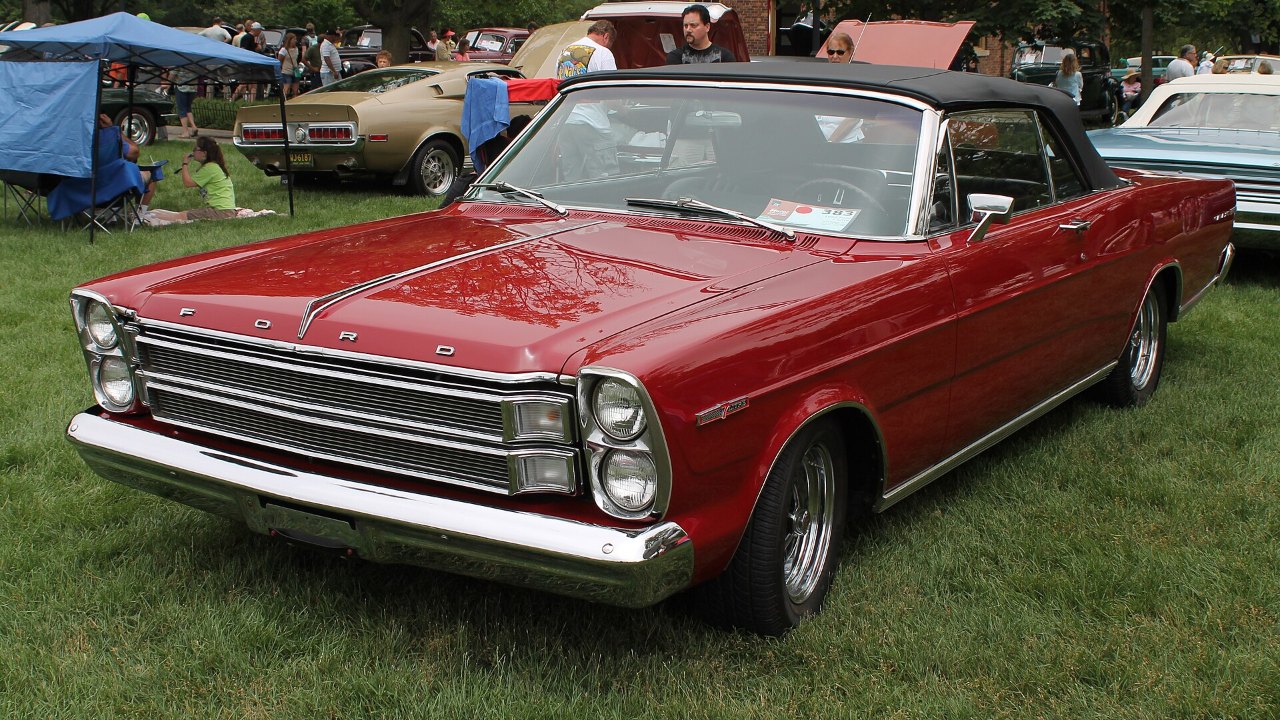
The 1966 Oldsmobile Starfire was built for a buyer who cared as much about presence as performance. You were meant to arrive in it, not just travel, and its final-year design leaned hard into that idea with crisp lines, rich trim, and an interior that treated you like a VIP. Style did not sit on top of the engineering, it shaped how the car was positioned, how it drove, and ultimately how it bowed out of the Oldsmobile lineup.
If you look closely at the Starfire’s last season, you see a car caught between eras, still rooted in early‑sixties glamour but facing a market that was shifting toward different kinds of excitement. That tension is exactly what makes the 1966 model so compelling for you today, whether you are hunting one to buy or just trying to understand why it still turns heads six decades on.
The Starfire’s place in Oldsmobile’s changing world
By the mid‑sixties, Oldsmobile was reshaping its full‑size offerings, and you can see that in how the Starfire evolved. For the 1965 model year, all Oldsmobiles received new styling, and the Starfire Coupe was treated as a showcase for that fresh look. The second‑generation Starfire Coupe sat in a premium space, sharing basic bones with other General Motors B‑bodies but dressed to stand apart. By 1966, that strategy reached its most refined form, with the Starfire wearing a sleeker, more formal body that signaled you were buying into a certain image as much as a car.
At the corporate level, General Motors was enjoying strong sales, and that included the activity over at the Ozemobile Division, which still saw value in a stylish halo model. A period walk‑through of the 1966 Oldsmobile Starfire notes that many of the vehicles that General Motors was selling were doing quite well, and that included the cars at the Ozemobile Division that leaned on upscale design. The Starfire’s role was to give you a taste of near‑Cadillac luxury without leaving the Oldsmobile showroom, and its styling was the primary way it justified that promise.
Why the 1966 body still stops you in your tracks
When you first see a 1966 Starfire in person, the shape is what hits you. For 1966, Starfires New Look Set This Oldsmobile Stylishly Apart From Everything Else On The Ro, with a long, straight body side, a crisp roofline, and carefully placed brightwork that made the car look lower and wider than it really was. One detailed listing describes a GORGEOUS example as SOLID, RUST, FREE, STARFIRE, underlining how much the clean, rust‑free sheetmetal matters to the car’s visual punch. You are not just looking at a big coupe, you are looking at a carefully tailored suit on wheels.
The Starfire’s design did not appear in a vacuum. Earlier in the decade, The Starfire had already been praised for exterior lines that were clean and assertive, with The Starfire’s exterior featuring clean lines, a wide grille, and distinctive chrome accents that set the Oldsmobile Starfire apart. By 1966, the fins that had defined fifties cars were completely absent, replaced by a more modern, linear look that still relied on Chrome to catch the light. A walk‑around of a white 1966 car notes that the exterior paint shows well and that the interior is one of the nicest to have come through the doors, with Chrome trim pieces accenting the body lines, which is exactly the kind of detail that keeps you staring.
Inside, you sat in a rolling lounge
Open the door of a Starfire and you understand immediately that Oldsmobile wanted you to feel indulged. Earlier in the run, Inside, it boasted bucket seats, a center console, and upscale materials that rivaled cadillac, and that same philosophy carried into the later cars. Enthusiasts still point to those Inside touches as the heart of the car’s appeal, because they made every drive feel like a special occasion. You were not perched on a bench, you were settled into a cockpit that wrapped around you.
Surviving cars show how that concept aged into the late sixties. One 1966 Oldsmobile Starfire is described as combining Performance, luxury, and a truly unique presentation, with the seller noting that they already know why you are attracted to this 1966 Oldsmobile Starfire. Another car is Still kept sporty by having the original floor‑shifter, and kept classy by the recently recovered front seats with new foam, a reminder that even when you restore one, you are chasing the same blend of comfort and sport that Oldsmobile baked in from the start. That mix of bucket seats, console, and bright trim is what makes you feel like you are in a rolling lounge rather than just a big coupe.
Shared bones, unique character
Underneath the glamour, the Starfire shared a lot with its corporate cousins, which matters if you are thinking about owning one. Owners note that Any 65-66 G M B‑body two‑door hardtop rear seat structure should work if it has the speaker grille, and that will include Chevrolet Im and other related models. That kind of interchangeability, documented in 65, 66 G body discussions, makes it easier for you to keep a Starfire on the road without hunting for unicorn parts. The structure may be shared, but the way Oldsmobile finished the car is what gives it its own personality.
That personality shows up clearly when you compare listings. One seller calls their 1966 example a GORGEOUS SOLID RUST FREE STARFIRE and emphasizes that Starfires New Look Set This Oldsmobile Stylishly Apart From Everything Else On The Ro, while another highlights the blend of Performance, luxury, and a truly unique presentation that defines their Performance oriented car. Even video tours of individual coupes, such as one Chicago‑area example that is Still kept sporty by its original floor shifter and refreshed seats, underline how the same basic platform can feel very different once Oldsmobile’s trim, colors, and detailing are in place. Watching that walk‑around of the Still sporty car, you can see how the styling choices continue to define the experience long after the car left the showroom.
The stylish end of the line
For the final 1966 model year, the Starfire was already living on borrowed time. The Starfire Coupe hardtop joined the convertible for the 1962 model year, but For the final 1966 model year, the convertible was dropped to make room for the all‑new Oldsmobile Toronado, a front‑wheel‑drive statement car that would carry the brand’s image into a new era. That shift is documented in period histories that note how The Starfire Coupe hardtop had once been the glamorous addition, only to see its open‑top sibling sacrificed as priorities changed. Apparel and memorabilia collections echo that timeline, pointing out that The Starfire Coupe hardtop joined the convertible and that, For the final 1966 season, the focus shifted as the name would later be reused on a subcompact powered by a Buick V6 engine, a very different kind of car from the original The Starfire Coupe.
The arrival of the Toronado helps explain why the Starfire’s stylish exit matters so much. Oldsmobile shattered the belief that a big American car could not be front‑wheel drive in 1966 with the Toronado, earning Motor Trend’s Car of the Year award and proving wrong the old assumptions about what a personal luxury coupe could be. That achievement is celebrated in enthusiast accounts of the Oldsmobile Toronado, which show how the brand’s design energy was being redirected. Another detailed history notes that Oldsmobile shattered this belief in 1966 with the Toronado, earning Motor Trend’s Car of the Year and proving wrong the old doubts about such a layout. In that context, the 1966 Starfire feels like the last expression of an older idea of luxury, one that relied on rear‑drive heft, rich trim, and a sense of occasion every time you slid behind the wheel.
More from Fast Lane Only